Loading...
Done
Animals Yawning

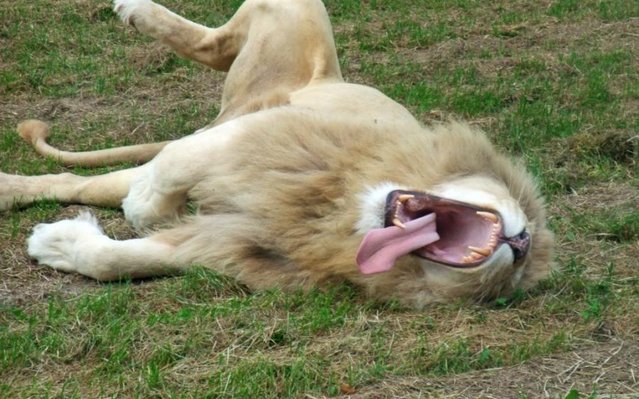
In animals, yawning can serve as a warning signal. For example, Charles Darwin, in his book The Expression of the Emotions in Man and Animals, mentioned that baboons yawn to threaten their enemies, possibly by displaying large canine teeth. Similarly, Siamese fighting fish yawn only when they see a conspecific (same species) or their own mirror-image, and their yawn often accompanies aggressive attack. Guinea pigs also yawn in a display of dominance or anger, displaying their impressive incisor teeth. This is often accompanied by teeth chattering, purring and scent marking.

Details
11 Aug 2012 09:12:00
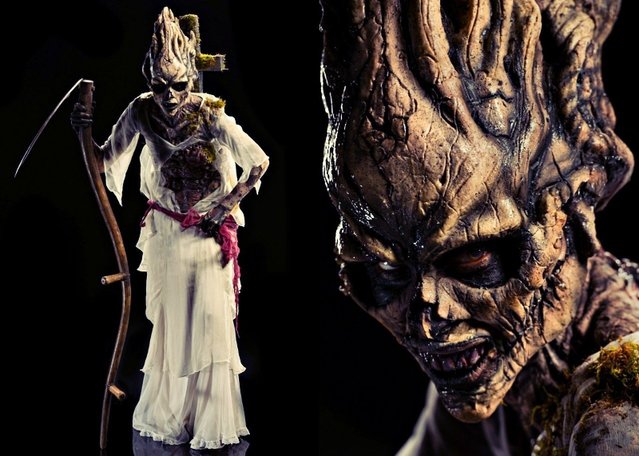
Face Off  Is An American Reality Television Show Part 3

Face Off is an American reality television game show on the Syfy cable network in which a group of prosthetic makeup artists compete against each other to create prostheses such as those found in science fiction and horror films.
Details
13 Sep 2014 11:14:00
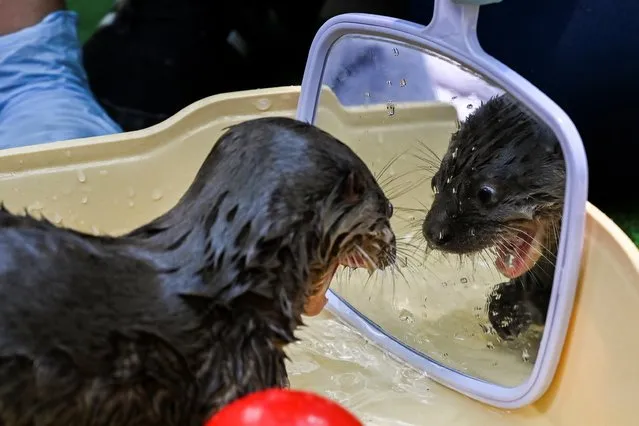
A river otter (lontra longicaudis) of 6-weeks-old looks in the mirror during a bath in the Animal Welfare Unit of the Zoo in Cali, Colombia, on October 22, 2019. The baby otter was found abandoned brought to the Cali Zoo for breeding, for its extensive experience in raising these species. According to the International Union for Conservation of Nature the river otter (lontra longicaudis) are in danger of extinction, because of mining, agriculture, pollution of rivers and housing construction in their habitat. (Photo by Luis Robayo/AFP Photo)

A river otter (lontra longicaudis) of 6-weeks-old looks in the mirror during a bath in the Animal Welfare Unit of the Zoo in Cali, Colombia, on October 22, 2019. The baby otter was found abandoned brought to the Cali Zoo for breeding, for its extensive experience in raising these species. According to the International Union for Conservation of Nature the river otter (lontra longicaudis) are in danger of extinction, because of mining, agriculture, pollution of rivers and housing construction in their habitat. (Photo by Luis Robayo/AFP Photo)
Details
27 Oct 2019 00:03:00
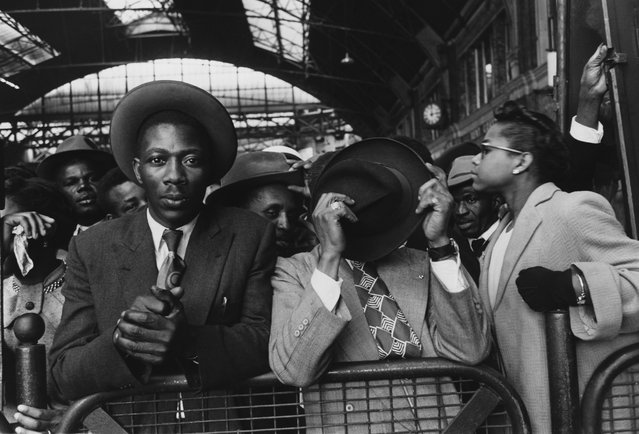
Immigrants from the West Indies at Victoria Station in London, 1956. (Photo by Hulton-Deutsch Collection/CORBIS/Corbis via Getty Images)

Immigrants from the West Indies at Victoria Station in London, 1956. (Photo by Hulton-Deutsch Collection/CORBIS/Corbis via Getty Images)
Details
08 Dec 2016 12:30:00
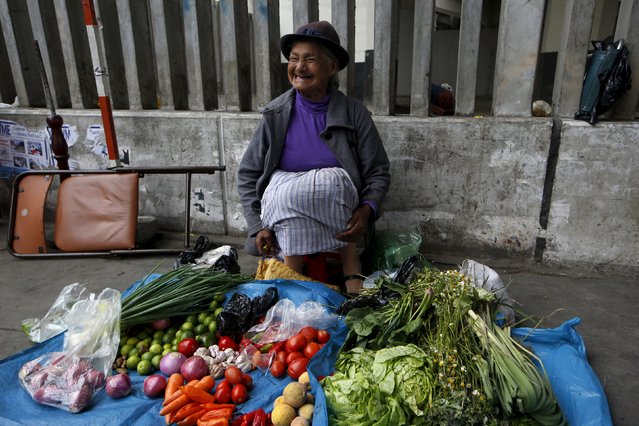
A woman sells vegetables near a Metro train station in downtown Lima, Peru December 1, 2015. (Photo by Mariana Bazo/Reuters)

A woman sells vegetables near a Metro train station in downtown Lima, Peru December 1, 2015. (Photo by Mariana Bazo/Reuters)
Details
09 Dec 2015 08:03:00
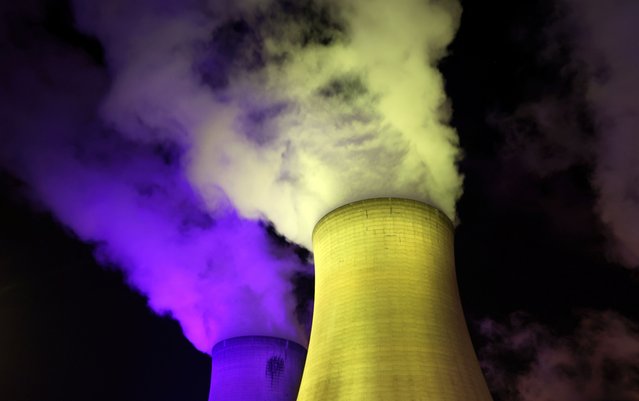
A general view of the Drax Power Station, illuminated in the colours of the Ukrainian flag, in North Yorkshire, Britain on April 1, 2022. (Photo by Lee Smith/Reuters)

A general view of the Drax Power Station, illuminated in the colours of the Ukrainian flag, in North Yorkshire, Britain on April 1, 2022. (Photo by Lee Smith/Reuters)
Details
09 Apr 2022 05:37:00
Anamorphic Art By Jonty Hurwitz

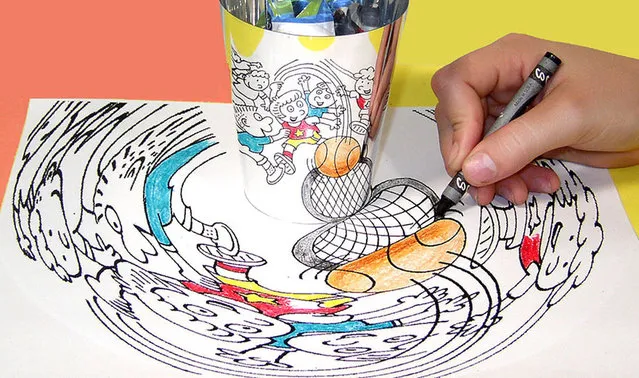
The truth can never be seen right away. Only by looking from a certain angle can we view the true nature of things. At other times, only with the help of some special object can we discern order in chaos. Anamorphosis is a form of art that allows us to see an object only by viewing it from a certain angle or by using cylindrical or conical mirror. Unsurprisingly, the first person in history to ever use this type of technique was the Leonardo Da Vinci. During late Renaissance period this technique was popularized as a children’s toy. Now, however, few people use this form of imagery due to its intricacy. Istvan Orosz, born in 1951, is one of the few people who specialize in anamorphosis. In our opinion, his most stunning piece of art is the one where a shipwreck scene turns into a portrait when viewed through a cylindrical mirror. (Photo by Jonty Hurwitz)
Details
05 Jan 2015 13:07:00
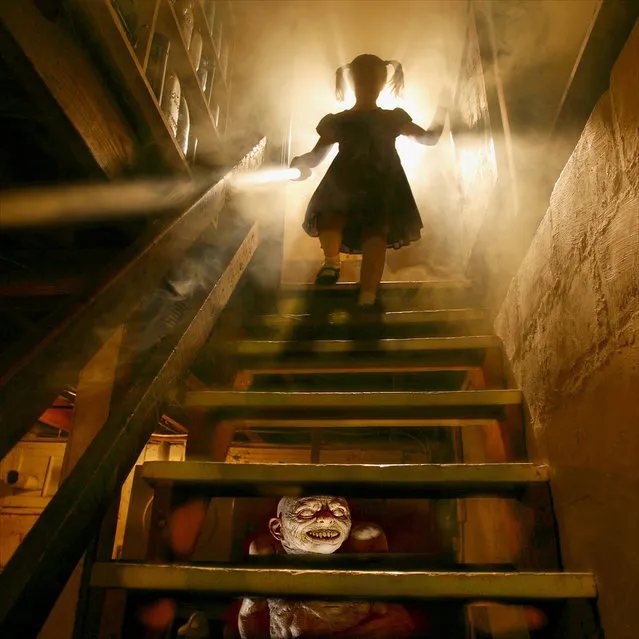
“Basement”. (Photo by Joshua Hoffine/The Washington Post)

Joshua Hoffine, based in Kansas City, Mo., and a self-proclaimed “Horror Photographer”, is interested in the psychology of fear. In his project “After Dark, My Sweet”, Hoffine’s surreal and staged images render these fears visible with the “visual grammar of a child”. Through elaborate sets, costumes, makeup and fog machines, Hoffine’s children act out these terrifying scenes in front of his camera. Here: “Basement”. (Photo by Joshua Hoffine/The Washington Post)
Details
29 Oct 2016 11:47:00