Loading...
Done
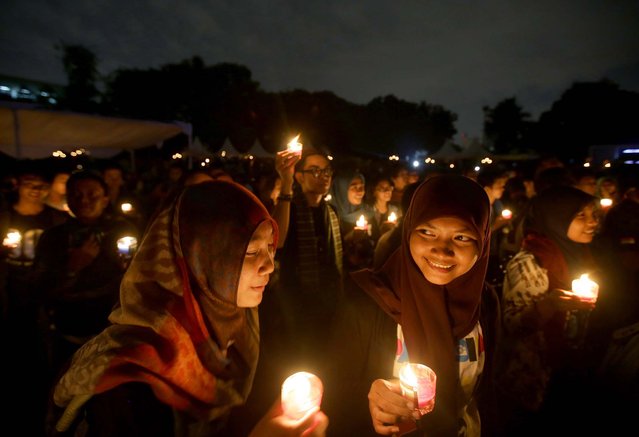
Muslim women light candles during the “EarthHour” in Jakarta, Indonesia, on March 23, 2013. Hundreds of people observed the global event that encourages people to turn off their lights for 60 minutes. (Photo by Dita Alangkara/Associated Press)

Muslim women light candles during the “EarthHour” in Jakarta, Indonesia, on March 23, 2013. Hundreds of people observed the global event that encourages people to turn off their lights for 60 minutes. (Photo by Dita Alangkara/Associated Press)
Details
24 Mar 2013 09:20:00
Joe Smith, 60, Boca Raton. (Photo by Thomas Cordy/The Palm Beach Post)

The zombies, cowgirls, and witches were out in force Saturday night on Clematis Street as thousands of people came to Moonfest to celebrate Halloween. They came from Broward County, Boynton Beach, Wellington, Port St. Lucie, and as far away as Germany and Sweden. Photo: Joe Smith, 60, Boca Raton. (Photo by Thomas Cordy/The Palm Beach Post)
Details
30 Oct 2013 10:17:00
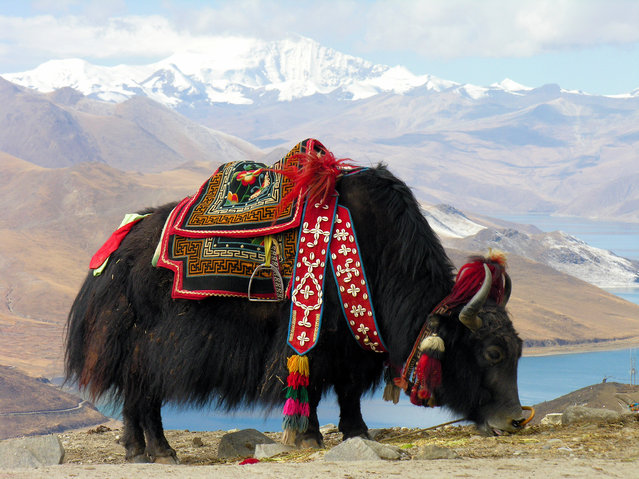
Yak near Yamdrok lake, Tibet. It is a long-haired bovinae found throughout the Himalayan region of south Central Asia, the Tibetan Plateau and as far north as Mongolia and Russia. The Tibetan economy is dominated by subsistence agriculture. Due to limited arable land, the primary occupation of the Tibetan Plateau is raising livestock, such as sheep, cattle, goats, camels, yaks, dzo, and horses. The Tibetan yak is an integral part of Tibetan life. (Photo by Dennis Jarvis)

Yak near Yamdrok lake, Tibet. It is a long-haired bovinae found throughout the Himalayan region of south Central Asia, the Tibetan Plateau and as far north as Mongolia and Russia. The Tibetan economy is dominated by subsistence agriculture. Due to limited arable land, the primary occupation of the Tibetan Plateau is raising livestock, such as sheep, cattle, goats, camels, yaks, dzo, and horses. The Tibetan yak is an integral part of Tibetan life. (Photo by Dennis Jarvis)
Details
10 Jun 2015 10:48:00
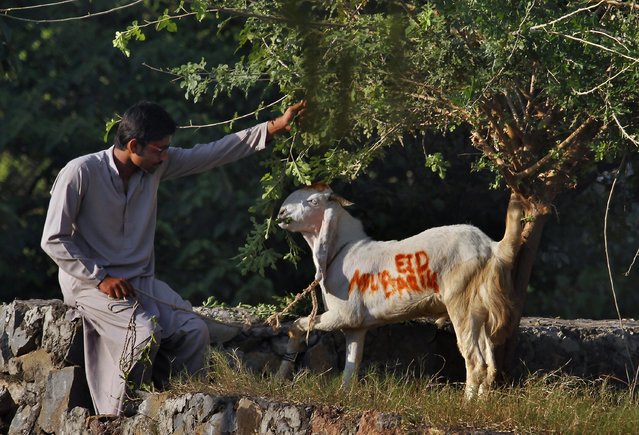
A Pakistani feeds his goat wearing the words “Eid Mubarak” or “Eid Greeting”, to be slaughtered on the Muslim holiday of Eid al-Adha, or “Feast of Sacrifice”, in Islamabad, Pakistan on Tuesday, October 15, 2013. Muslims all over the world are celebrating Eid al-Adha by sacrificing sheep, goats, cows and camels, to commemorate the Prophet Abraham's readiness to sacrifice his son, Ismail, on God's command. (Photo by Anjum Naveed/AP Photo)

A Pakistani feeds his goat wearing the words “Eid Mubarak” or “Eid Greeting”, to be slaughtered on the Muslim holiday of Eid al-Adha, or “Feast of Sacrifice”, in Islamabad, Pakistan on Tuesday, October 15, 2013. Muslims all over the world are celebrating Eid al-Adha by sacrificing sheep, goats, cows and camels, to commemorate the Prophet Abraham's readiness to sacrifice his son, Ismail, on God's command. (Photo by Anjum Naveed/AP Photo)
Details
17 Oct 2013 07:56:00
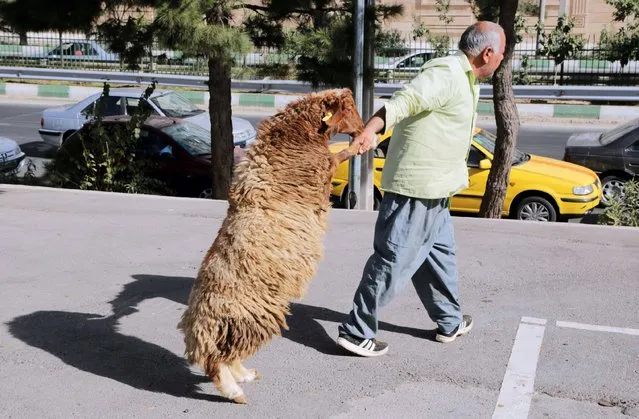
A Iranian man walks with a sheep he bought at a market in the capital Tehran on September 12, 2016, as Muslims mark the first day of the Eid al-Adha (Feast of the Sacrifice) holiday. Muslims across the world celebrate the annual festival of Eid al-Adha, or the festival of sacrifice, which marks the end of the Hajj pilgrimage to Mecca and commemorates prophet Abraham's readiness to sacrifice his son to show obedience to God. (Photo by AFP Photo/Stringer)

A Iranian man walks with a sheep he bought at a market in the capital Tehran on September 12, 2016, as Muslims mark the first day of the Eid al-Adha (Feast of the Sacrifice) holiday. Muslims across the world celebrate the annual festival of Eid al-Adha, or the festival of sacrifice, which marks the end of the Hajj pilgrimage to Mecca and commemorates prophet Abraham's readiness to sacrifice his son to show obedience to God. (Photo by AFP Photo/Stringer)
Details
13 Sep 2016 09:31:00
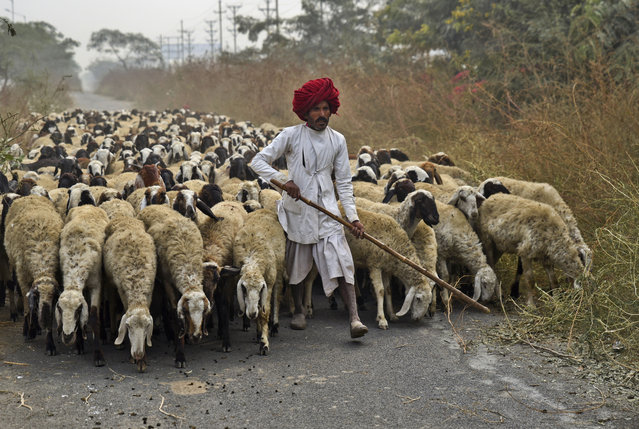
An Indian nomadic shepherd from the western Rajasthan state guides his flock of sheep through an access road in Greater Noida, outskirts of New Delhi, India, Tuesday, December 5, 2017. Looking for suitable pasture lands for grazing, shepherds migrate their flocks over extensive areas in the same state or to neighboring states in India. (Photo by R.S. Iyer/AP Photo)

An Indian nomadic shepherd from the western Rajasthan state guides his flock of sheep through an access road in Greater Noida, outskirts of New Delhi, India, Tuesday, December 5, 2017. Looking for suitable pasture lands for grazing, shepherds migrate their flocks over extensive areas in the same state or to neighboring states in India. (Photo by R.S. Iyer/AP Photo)
Details
11 Dec 2017 08:11:00
In this Sunday, April 6, 2014 photo, Valery Palma prepares to blow out the candle on a birthday cake for her one-year-old dachshund Camila, at Camila's birthday party in Mexico City. Palma, who has two dogs, spent $300 on the birthday party for 11 canines and 16 people, complete with cake, presents and snacks, at a dog hotel featuring a gym and massage and aromatherapy services. (Photo by Rebecca Blackwell/AP Photo)

In this Sunday, April 6, 2014 photo, Valery Palma prepares to blow out the candle on a birthday cake for her one-year-old dachshund Camila, at Camila's birthday party in Mexico City. Palma, who has two dogs, spent $300 on the birthday party for 11 canines and 16 people, complete with cake, presents and snacks, at a dog hotel featuring a gym and massage and aromatherapy services. (Photo by Rebecca Blackwell/AP Photo)
Details
21 Jul 2014 11:32:00
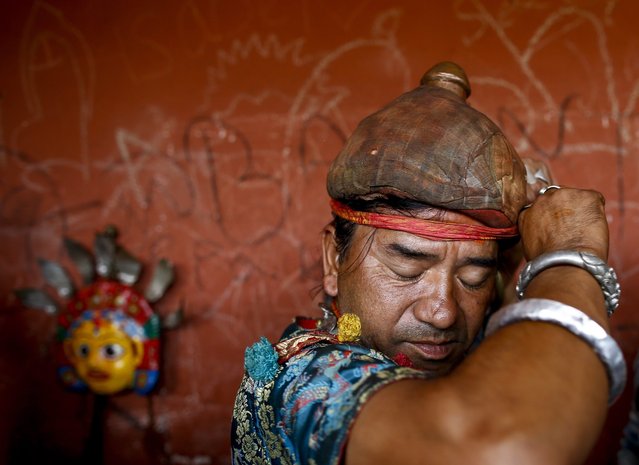
A Nepalese devotee prepares for a religious mask performance during the Seekaali Festival in Khokna village, near Kathmandu, Nepal, 07 October 2016. During the 300-year-old Seekali festival, elderly ethnic Newari devotees wear masks of 14 various goddesses including Lord Ganesha, Lord Shiva, Lord Laxmi, Lord Brahma and Lord Bishnu. The Khokna people celebrate the Seekaali festival as an alternative of the Dashain festival which is biggest festival of Nepalese Hindus that celebrates the victory of the gods over demons. (Photo by Narendra Shrestha/EPA)

A Nepalese devotee prepares for a religious mask performance during the Seekaali Festival in Khokna village, near Kathmandu, Nepal, 07 October 2016. During the 300-year-old Seekali festival, elderly ethnic Newari devotees wear masks of 14 various goddesses including Lord Ganesha, Lord Shiva, Lord Laxmi, Lord Brahma and Lord Bishnu. The Khokna people celebrate the Seekaali festival as an alternative of the Dashain festival which is biggest festival of Nepalese Hindus that celebrates the victory of the gods over demons. (Photo by Narendra Shrestha/EPA)
Details
09 Oct 2016 07:14:00