Loading...
Done
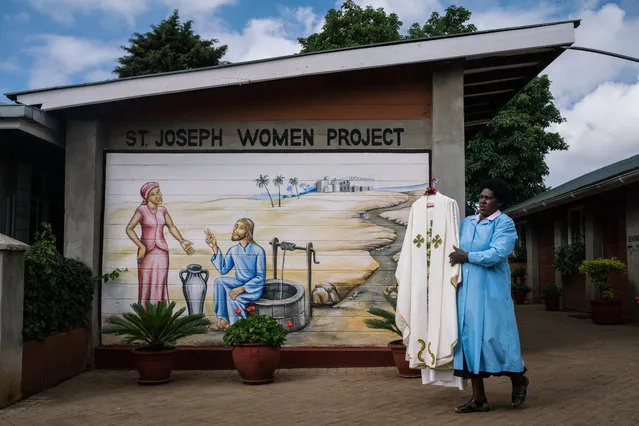
A parishioner of the St. Joseph the Worker Parish in Nairobi's Kangemi slum carries the vestments to be worn by Pope Francis during his visit to Kenya on November 24, 2015 in Kenya. Pope Francis makes his first visit to Kenya on a five day African tour that is scheduled to include Uganda and the Central African Republic. Africa is recognised as being crucial to the future of the Catholic Church with the continent's Catholic numbers growing faster than anywhere else in the world. (Photo by Nichole Sobecki/Getty Images)

A parishioner of the St. Joseph the Worker Parish in Nairobi's Kangemi slum carries the vestments to be worn by Pope Francis during his visit to Kenya on November 24, 2015 in Kenya. Pope Francis makes his first visit to Kenya on a five day African tour that is scheduled to include Uganda and the Central African Republic. Africa is recognised as being crucial to the future of the Catholic Church with the continent's Catholic numbers growing faster than anywhere else in the world. (Photo by Nichole Sobecki/Getty Images)
Details
26 Nov 2015 08:05:00
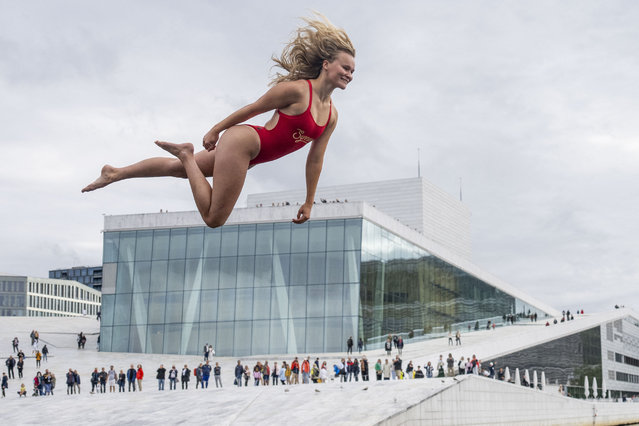
Asbjørg Nesje from Norway is a participant and trains in front of the Opera House in Oslo, Norway, on August 25, 2023, one day before the 2023 World Championship in Døds Diving (Death Diving). According to the organisers, Døds is “a form of extreme freestyle diving from heights jumping with stretched arms and belly first, landing in a cannonball or a shrimp position”. (Photo by Javad Parsa/NTB via AFP Photo)

Asbjørg Nesje from Norway is a participant and trains in front of the Opera House in Oslo, Norway, on August 25, 2023, one day before the 2023 World Championship in Døds Diving (Death Diving). According to the organisers, Døds is “a form of extreme freestyle diving from heights jumping with stretched arms and belly first, landing in a cannonball or a shrimp position”. (Photo by Javad Parsa/NTB via AFP Photo)
Details
14 Nov 2024 03:37:00
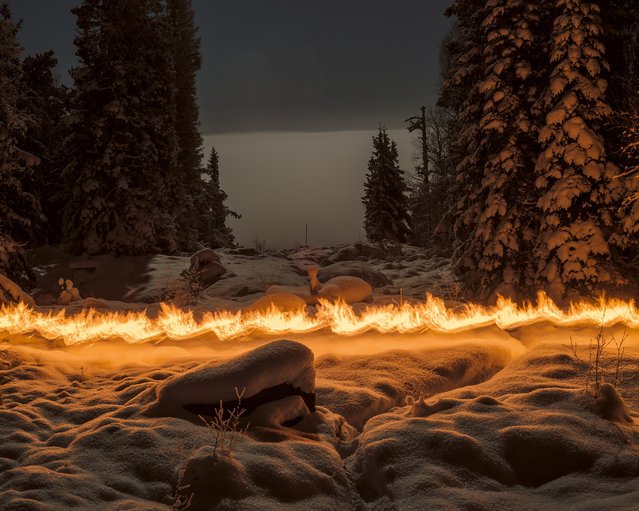
Border between Sweden and Norway at Moldusen. An approximately 20-meter wide clearing in the forest separates the two Scandinavian nations, consequently cutting Finnskogen in two. Grue Finnskog 2016. (Photo by Terje Abusdal/The Washington Post)

Border between Sweden and Norway at Moldusen. An approximately 20-meter wide clearing in the forest separates the two Scandinavian nations, consequently cutting Finnskogen in two. Grue Finnskog 2016. (Photo by Terje Abusdal/The Washington Post)
Details
12 Oct 2018 00:03:00
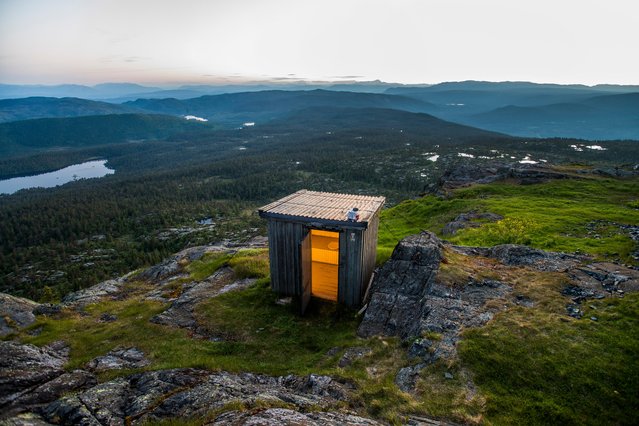
This restroom on the rubbly flanks of Jonsknuten in Norway looks up at the peak of the 904m mountain. Yu have to leave the door open to enjoy the view but the chances of being disturbed are minimal. (Photo by Olaf Menz/Lonely Planet)

This restroom on the rubbly flanks of Jonsknuten in Norway looks up at the peak of the 904m mountain. Yu have to leave the door open to enjoy the view but the chances of being disturbed are minimal. (Photo by Olaf Menz/Lonely Planet)
Details
13 Apr 2016 09:00:00
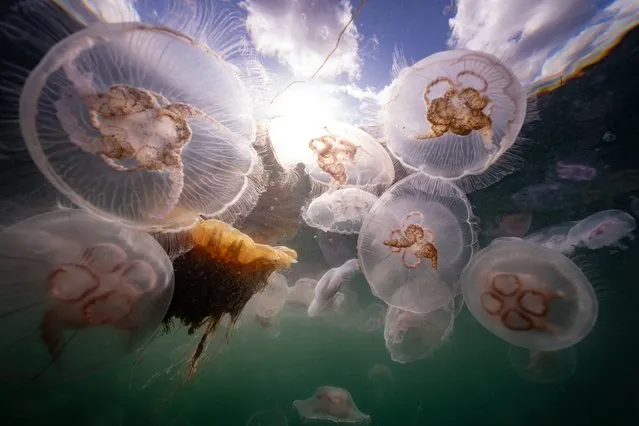
This picture taken on September 11, 2023 shows Moon Jellyfish (with rings) and Sting Jellyfish (yellow-orange inside) among a smack of a several thousand swimming off Seglvik, in northern Norway. (Photo by Olivier Morin/AFP Photo)

This picture taken on September 11, 2023 shows Moon Jellyfish (with rings) and Sting Jellyfish (yellow-orange inside) among a smack of a several thousand swimming off Seglvik, in northern Norway. (Photo by Olivier Morin/AFP Photo)
Details
07 Mar 2024 06:09:00
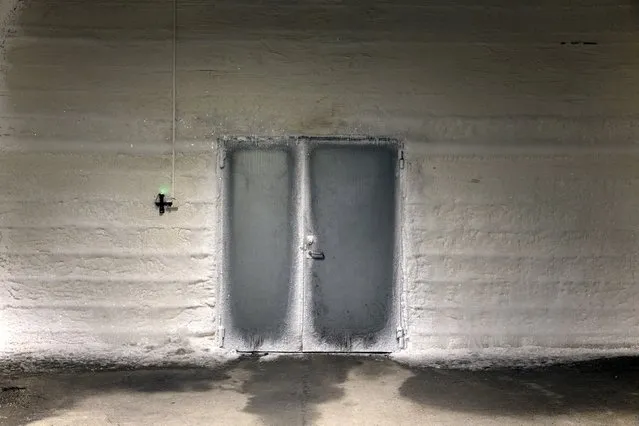
An ice covered entrance door to the international gene bank Svalbard Global Seed Vault (SGSV) near Longyearbyen on Spitsbergen, Norway, October 20, 2015. (Photo by Anna Filipova/Reuters)

An ice covered entrance door to the international gene bank Svalbard Global Seed Vault (SGSV) near Longyearbyen on Spitsbergen, Norway, October 20, 2015. Two consignments of crop seeds will be deposited next year in a “doomsday vault” built in an Arctic mountainside to safeguard global supplies. The vault, which opened on the Svalbard archipelago in 2008, is designed to protect crop seeds, such as beans, rice and wheat against the worst cataclysms of nuclear war or disease. (Photo by Anna Filipova/Reuters)
Details
17 Dec 2015 08:01:00
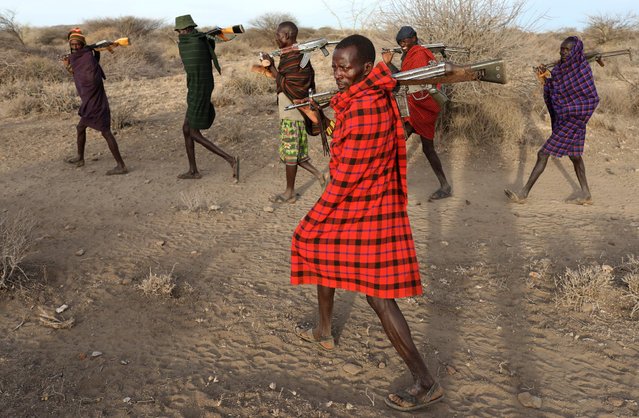
Turkana tribesmen walk with guns in order to protect their cattle from rival Pokot and Sambur tribesmen near Baragoy, Kenya February 14, 2017. Cattle rustling and competition for grazing have long troubled northern Kenya, but severe drought and political rivalries ahead of the elections have exacerbated the situation between ethnic tribes. (Photo by Goran Tomasevic/Reuters)

Turkana tribesmen walk with guns in order to protect their cattle from rival Pokot and Sambur tribesmen near Baragoy, Kenya February 14, 2017. Cattle rustling and competition for grazing have long troubled northern Kenya, but severe drought and political rivalries ahead of the elections have exacerbated the situation between ethnic tribes. (Photo by Goran Tomasevic/Reuters)
Details
16 Feb 2017 00:01:00
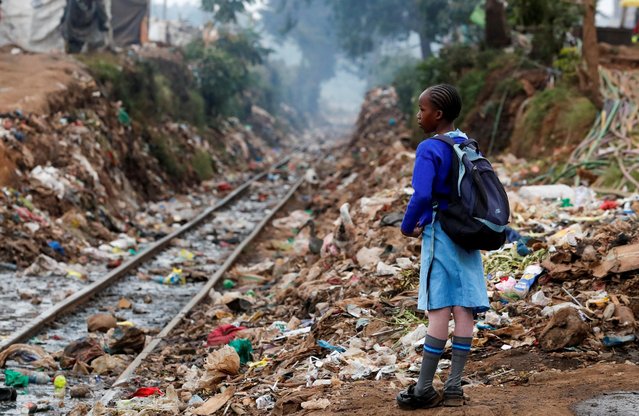
A schoolgirl stands next to the Kenya-Uganda railway line during the partial reopening of schools, after the government scrapped plans to cancel the academic year due to the coronavirus disease (COVID-19) pandemic, in Kibera slums of Nairobi, Kenya on October 12, 2020. (Photo by Thomas Mukoya/Reuters)

A schoolgirl stands next to the Kenya-Uganda railway line during the partial reopening of schools, after the government scrapped plans to cancel the academic year due to the coronavirus disease (COVID-19) pandemic, in Kibera slums of Nairobi, Kenya on October 12, 2020. (Photo by Thomas Mukoya/Reuters)
Details
23 Oct 2020 00:01:00