Loading...
Done
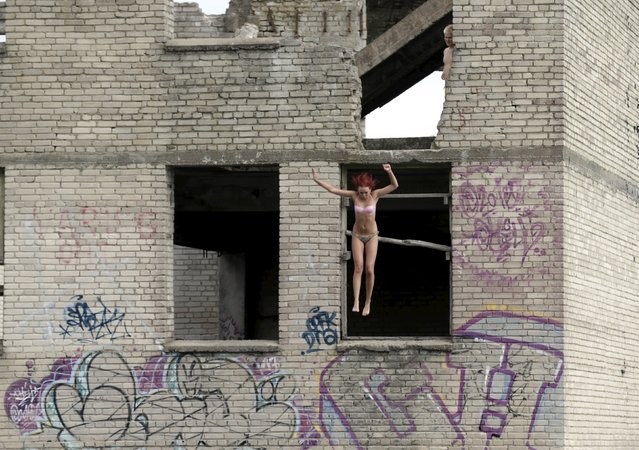
A woman jumps into water from the roof of Murru prison, an abandoned Soviet prison, in Rummu quarry, Estonia, during hot weather July 4, 2015. (Photo by Ints Kalnins/Reuters)

A woman jumps into water from the roof of Murru prison, an abandoned Soviet prison, in Rummu quarry, Estonia, during hot weather July 4, 2015. During the Soviet time, Rummu quarry was used as a mining site for Vasalemma marble and most of the workforce came from among the detainees of Murru prison. When the prison closed after 1991, pumps that once kept the quarry and the prison dry were shut down, causing water to fill the quarry. It has become an unofficial and unguarded swimming and diving spot, attracting locals and tourists. (Photo by Ints Kalnins/Reuters)
Details
05 Jul 2015 09:52:00
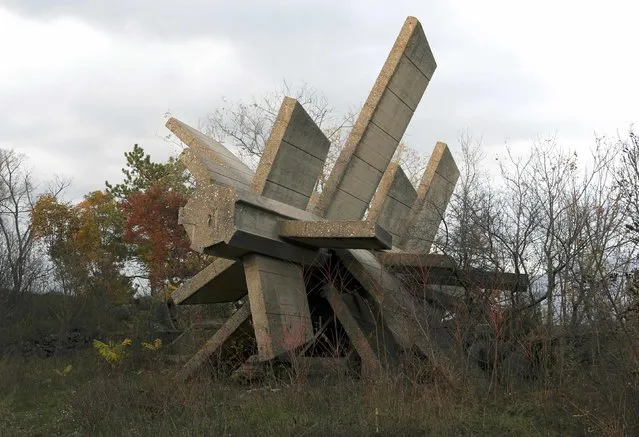
General view of the monument to memory of soldiers who liberated the city of Knin, in Knin, Croatia November 10, 2014. (Photo by Antonio Bronic/Reuters)

General view of the monument to memory of soldiers who liberated the city of Knin – in Knin, Croatia on November 10, 2014. Across the former Yugoslavia stand giant monuments to a state that no longer exists, once visited and celebrated during public holidays such as Republic Day on November 29, marking the creation of socialist Yugoslavia. Many are now neglected or ignored, aging symbols of a joint state forged during World War Two but torn apart by nationalism half a century later. Republic Day is no longer marked in any of the seven independent states that emerged from its ashes. (Photo by Antonio Bronic/Reuters)
Details
01 Dec 2014 14:00:00
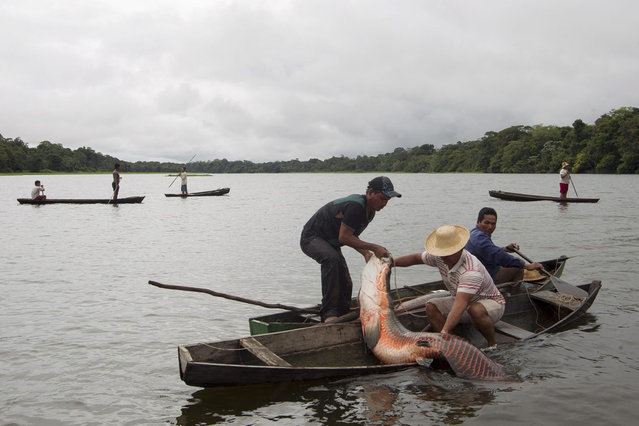
Villagers from the Porto Novo community load into their canoes arapaima or pirarucu, the largest freshwater fish species in South America and one of the largest in the world, while fishing in Poco Fundo lake along a branch of the Solimoes river, one of the main tributaries of the Amazon, in the Mamiraua nature reserve near Fonte Boa about 600 km (373 miles) west of Manaus, November 26, 2013. (Photo by Bruno Kelly/Reuters)

Villagers from the Porto Novo community load into their canoes arapaima or pirarucu, the largest freshwater fish species in South America and one of the largest in the world, while fishing in Poco Fundo lake along a branch of the Solimoes river, one of the main tributaries of the Amazon, in the Mamiraua nature reserve near Fonte Boa about 600 km (373 miles) west of Manaus, November 26, 2013. Catching the arapaima, a fish that is sought after for its meat and is considered by biologists to be a living fossil, is only allowed once a year by Brazil's environmental protection agency. The minimum size allowed for a fisherman to keep an arapaima is 1.5 meters (4.9 feet). (Photo by Bruno Kelly/Reuters)
Details
17 Dec 2013 08:03:00
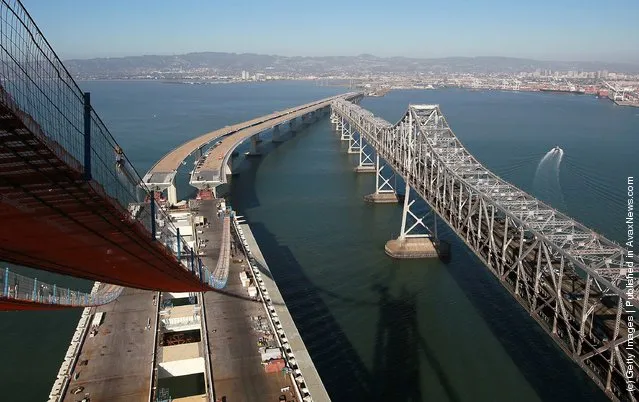
World's Largest Self-Anchored Suspension Bridge

Catwalks hang over a section of the newly constructed eastern span of the San Francisco-Oakland Bay Bridge during a media tour of the self-anchored suspension span tower on August 29, 2011 in Oakland, California. Contruction crews have erected twelve foot wide catwalks that connect to the San Francisco-Oakland Bay Bridge self-anchored suspension span's tower and crews will begin to lay the nearly one mile of main cable beginning in early 2012. The bridge has been under constrution since 2002 with an estimated price tag of $6.3 billion and will have the world's tallest Self-Anchored Suspension (SAS) tower once completed. (Photo by Justin Sullivan/Getty Images)
Details
31 Aug 2011 09:04:00
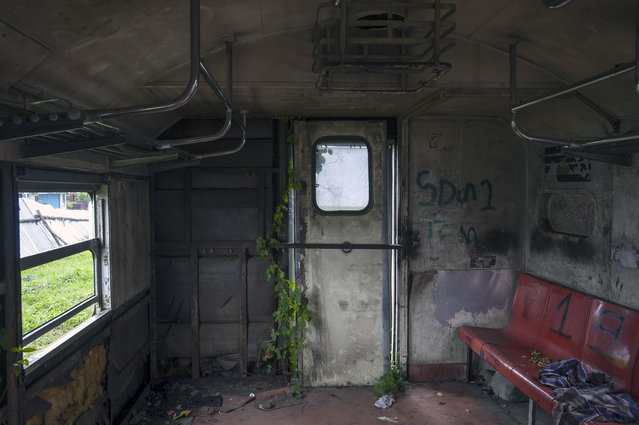
The carriages have decayed over time, on February 27, 2015, in Purwakarta, Indonesia. Dozens of trains are stacked on top of each other in what looks like a post-apocalyptic world. The old electric trains that travelled in and out of Jakarta, Indonesia, are weathered and decayed over time. The trains were used everyday since the 1980s and carried thousands of people to work. (Photo by HKV/Barcroft Media)

The carriages have decayed over time, on February 27, 2015, in Purwakarta, Indonesia. Dozens of trains are stacked on top of each other in what looks like a post-apocalyptic world. The old electric trains that travelled in and out of Jakarta, Indonesia, are weathered and decayed over time. The trains were used everyday since the 1980s and carried thousands of people to work. Now the carriages, which were once the lifeblood of public transport in the south-Asian city, have been left to rust among shrubbery. (Photo by HKV/Barcroft Media)
Details
21 Apr 2015 11:13:00
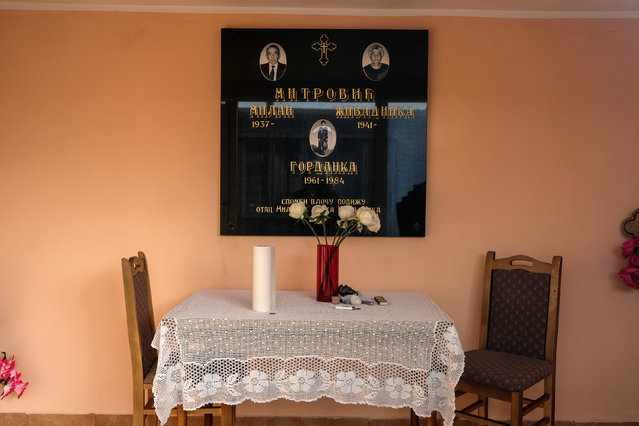
Pictures of deceased people are seen inside a chapel at a cemetery in the village of Smoljinac, Serbia, October 25, 2016. (Photo by Marko Djurica/Reuters)

Pictures of deceased people are seen inside a chapel at a cemetery in the village of Smoljinac, Serbia, October 25, 2016. From a distance, the cemetery in the eastern Serbian village of Smoljinac looks like a residential neighbourhood eerily placed among graves. But once inside the grounds, after passing a section with the usual stone slabs, visitors find rows of small bungalows painted in pastel colours. They have one or two rooms, large windows and ornate plaques – some inside, some outside – memorialising the deceased. These are the burial chapels of Smoljinac, cosy cabins with a furnished room inside, a storage place for wreaths and funeral paraphernalia, and the family crypt below. Some even have electric power inside. (Photo by Marko Djurica/Reuters)
Details
12 Nov 2016 10:37:00
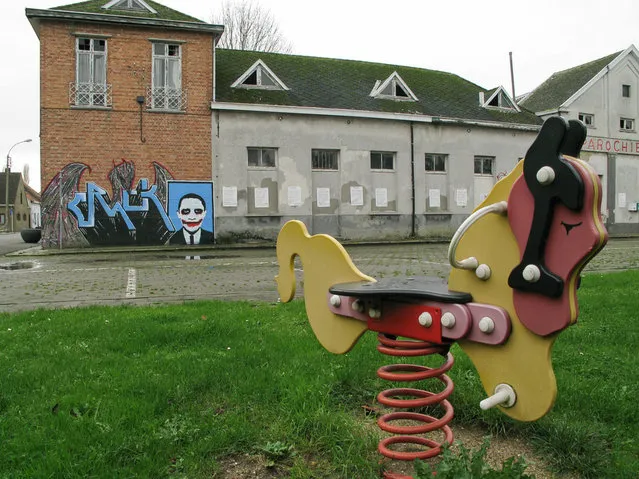
Abandon Village: Doel, Belgium

Doel is a 700 year old village on the river Scheldt in Belgium. Near to the local nuclear power plant, with its two giant cooling towers, it became the target for demolition not once but twice in order to make way for the ever expanding harbor. The successful protest groups of the seventies could not compete in the 90's and as residents began to leave, the government refused to rent out the properties again and instead let them fall into disrepair. On the 23rd of March 2007, the government decided that the village would be demolished by 2009 and in June 2008, residents received a letter informing them that they were to vacate their homes by the 1st of September 2009.
Details
20 Mar 2013 11:33:00
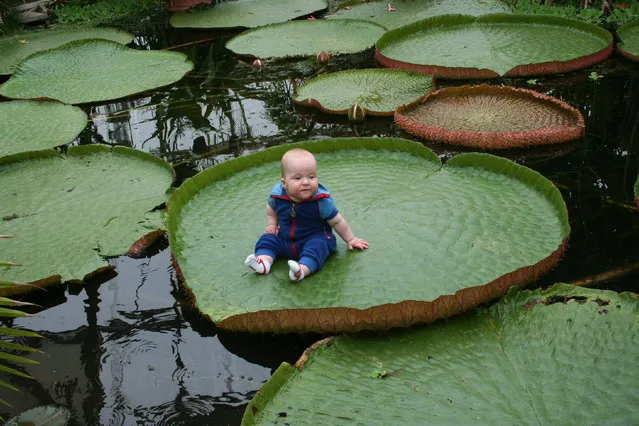
Victoria amazonica

The species has very large leaves, up to 3 m in diameter, that float on the water's surface on a submerged stalk, 7–8 m in length. The species was once called Victoria regia after Queen Victoria, but the name was superseded. V. amazonica is native to the shallow waters of the Amazon River basin, such as oxbow lakes and bayous. It is depicted in the Guyanese coat of arms. The flowers are white the first night they are open and become pink the second night. They are up to 40 cm in diameter, and are pollinated by beetles.
Details
03 Sep 2012 06:58:00