Loading...
Done
Dani tribeswoman smokes a cigarette and shows her amputated fingers in, Western New Guinea, Indonesia, August 2016. (Photo by Teh Han Lin/Barcroft Images)

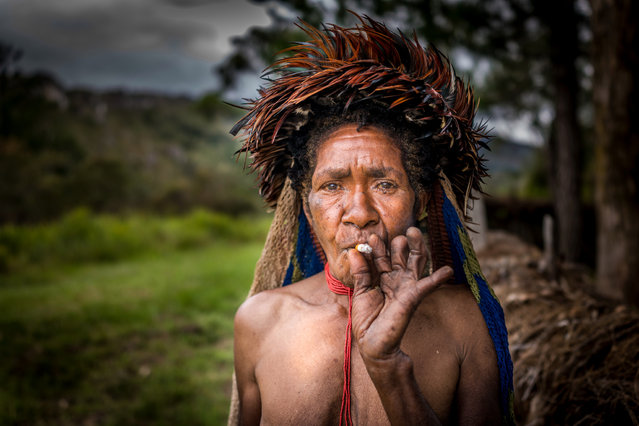
Dani tribeswoman smokes a cigarette and shows her amputated fingers in, Western New Guinea, Indonesia, August 2016. Deep in the highlands of Western New Guinea, Indonesia, lives one of the world’s most isolated tribes. Known as the Dani people, the tribe was unwittingly discovered by American philanthropist, Richard Archbold, after an expedition in 1938. (Photo by Teh Han Lin/Barcroft Images)
Details
18 Nov 2016 11:03:00
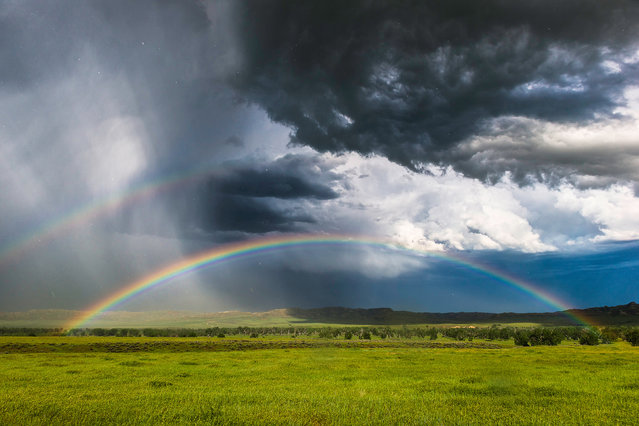
A photographer has weathered some of Americas most violent storms to capture these stunning snaps. (Photo by Caters News)

A photographer has weathered some of Americas most violent storms to capture these stunning snaps. Storm chaser Mike Mezeul II, 30, has travelled all over the US to shoot the likes of mammoth thunderstorms and surreal cloud patterns. His incredible collection of storm images are the result of more than 15 years of photography and thousands of miles of travel. The photographer, from Frisco in Texas, USA, became interested in storm chasing aged 16 when he got his first car. He has since shot ferocious storms as far north as the Canadian border and as far south as Mexico. (Photo by Caters News)
Details
04 Dec 2014 12:16:00


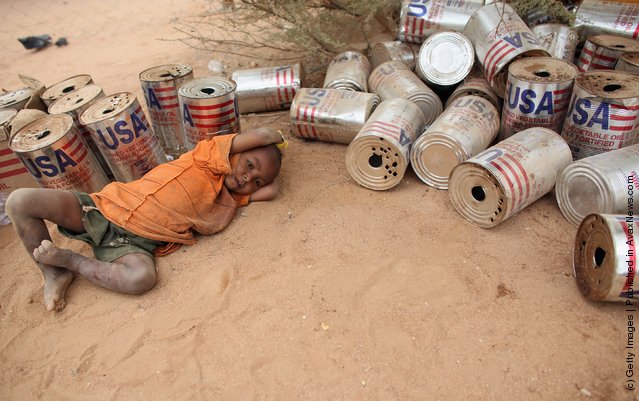
A young boy rests by empty USAID vegetable oil tins in the Dagahaley refugee camp which makes up part of the giant Dadaab refugee settlement on July 19, 2011 in Dadaab, Kenya. The refugee camp at Dadaab, located close to the Kenyan border with Somalia, was originally designed in the early 1990s to accommodate 90,000 people but the UN estimates over 4 times as many reside there. The ongoing civil war in Somalia and the worst drought to affect the Horn of Africa in six decades has resulted in an estimated 12 million people whose lives are threatened. (Photo by Oli Scarff/Getty Images)
Details
20 Jul 2011 12:08:00
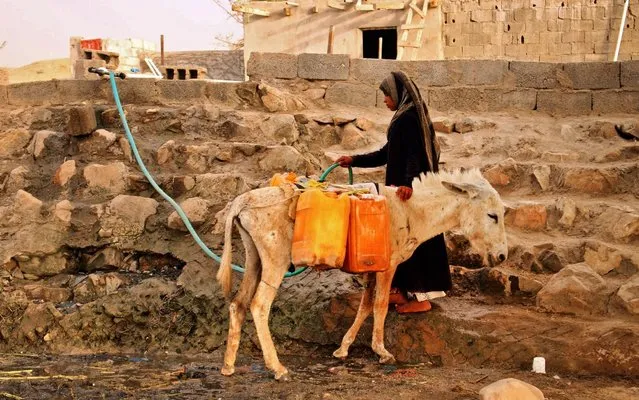
A displaced Yemeni woman from Hodeida fills water containers at a make-shift camp in a village in the northern district of Abs in the country's Hajjah province, on May 9, 2019. The Yemeni conflict has triggered what the United Nations describes as the world's worst humanitarian crisis, with 3.3 million people still displaced and 24.1 million in need of aid. (Photo by Essa Ahmed/AFP Photo)

A displaced Yemeni woman from Hodeida fills water containers at a make-shift camp in a village in the northern district of Abs in the country's Hajjah province, on May 9, 2019. The Yemeni conflict has triggered what the United Nations describes as the world's worst humanitarian crisis, with 3.3 million people still displaced and 24.1 million in need of aid. (Photo by Essa Ahmed/AFP Photo)
Details
13 May 2019 00:03:00
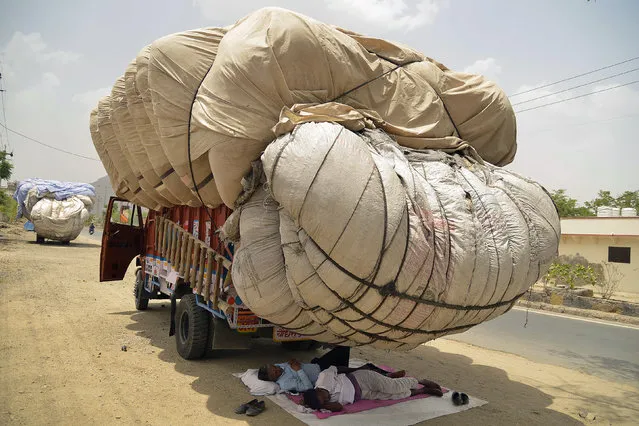
Indian men sleep in the shadow of an overflowing cloth container of hay, to be used as animal fodder, on a truck on a hot summer day in Ajmer in the western state of Rajasthan on May 30, 2018. (Photo by Shaukat Ahmed/AFP Photo)

Indian men sleep in the shadow of an overflowing cloth container of hay, to be used as animal fodder, on a truck on a hot summer day in Ajmer in the western state of Rajasthan on May 30, 2018. (Photo by Shaukat Ahmed/AFP Photo)
Details
05 Jun 2018 10:36:00
An elephant is used to demolish a house during an eviction drive inside Amchang Wildlife Sanctuary on the outskirts of Gauhati, Assam, India, Monday, November 27, 2017. Indian police on Monday took the unusual step of using elephants in an attempt to evict hundreds of people living illegally in the protected forest area in the country's remote northeast. Police used bulldozers and the elephants in a show of force, and the forest dwellers responded by hurling rocks. (Photo by Anupam Nath/AP Photo)

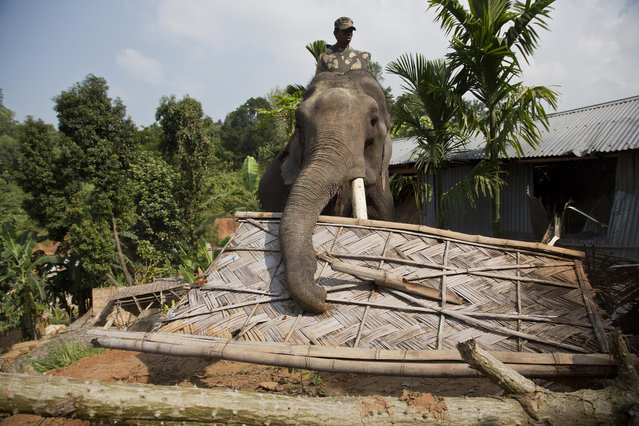
An elephant is used to demolish a house during an eviction drive inside Amchang Wildlife Sanctuary on the outskirts of Gauhati, Assam, India, Monday, November 27, 2017. Indian police on Monday took the unusual step of using elephants in an attempt to evict hundreds of people living illegally in the protected forest area in the country's remote northeast. Police used bulldozers and the elephants in a show of force, and the forest dwellers responded by hurling rocks. (Photo by Anupam Nath/AP Photo)
Details
29 Nov 2017 09:13:00
A illegal gold miner of Kamoro people, Tinus, pan for gold on February 4, 2017 in Timika, Papua Province, Indonesia. (Photo by Ulet Ifansasti/Getty Images)

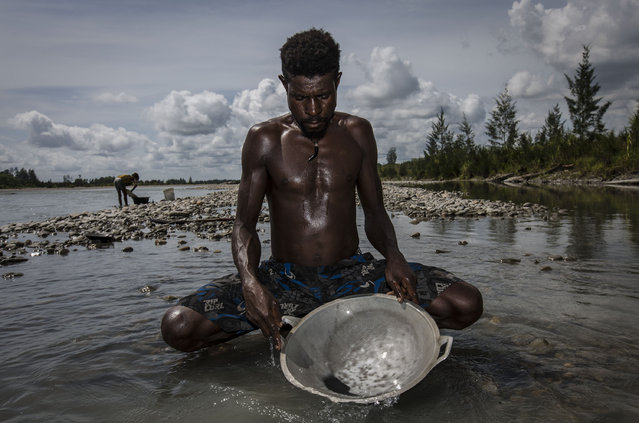
A illegal gold miner of Kamoro people, Tinus, pan for gold on February 4, 2017 in Timika, Papua Province, Indonesia. Indonesia produces over 70 billion dollars in gold a year and is home to the largest gold mine and the third largest copper mine in the world, the Grasberg mine, which is located at West Papua. (Photo by Ulet Ifansasti/Getty Images)
Details
09 Feb 2017 00:05:00
An Andean man and a woman, depicting Inca's legendary characters Manco Capac and Mama Ocllo, pose for a portrait in a Uros island at Lake Titicaca before a re-enactment in Puno November 5, 2014. The Uros islands are a group of 70 man-made totora reed islands floating on the lake, which according to Peru's tourism board iPeru is the world's highest navigable lake at over 4,000 meters above sea level. (Photo by Enrique Castro-Mendivil/Reuters)

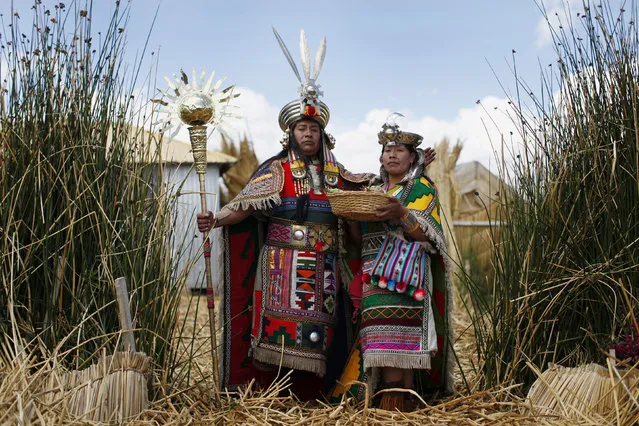
An Andean man and a woman, depicting Inca's legendary characters Manco Capac and Mama Ocllo, pose for a portrait in a Uros island at Lake Titicaca before a re-enactment in Puno November 5, 2014. The Uros islands are a group of 70 man-made totora reed islands floating on the lake, which according to Peru's tourism board iPeru is the world's highest navigable lake at over 4,000 meters above sea level. The Uros people fish and hunt, but tourism is their main source of livelihood. (Photo by Enrique Castro-Mendivil/Reuters)
Details
07 Nov 2014 12:52:00