Loading...
Done
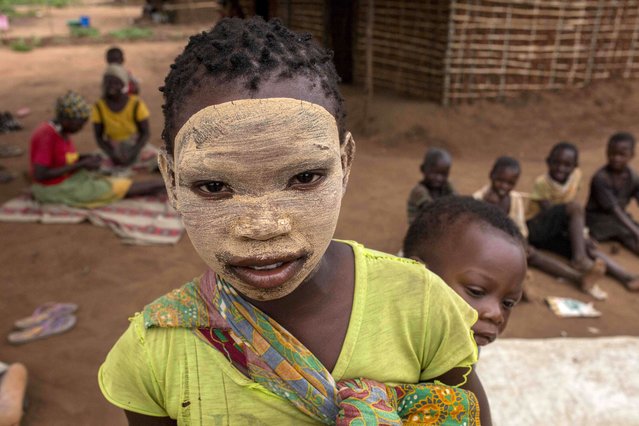
A young girl from the Makonde ethnic group wearing earth makeup on her facen, a beauty symbol, carries a baby on her back as she poses for pictures in the community of Marupa, a relocation center for internally displaced families in the Chiure district, on February 23, 2021. Thousands of families from different districts of the Cabo Delgado province who have been displaced have been located by the government in different areas of the province. (Photo by Alfredo Zuniga/AFP Photo)

A young girl from the Makonde ethnic group wearing earth makeup on her facen, a beauty symbol, carries a baby on her back as she poses for pictures in the community of Marupa, a relocation center for internally displaced families in the Chiure district, on February 23, 2021. Thousands of families from different districts of the Cabo Delgado province who have been displaced have been located by the government in different areas of the province. (Photo by Alfredo Zuniga/AFP Photo)
Details
04 Mar 2021 08:40:00
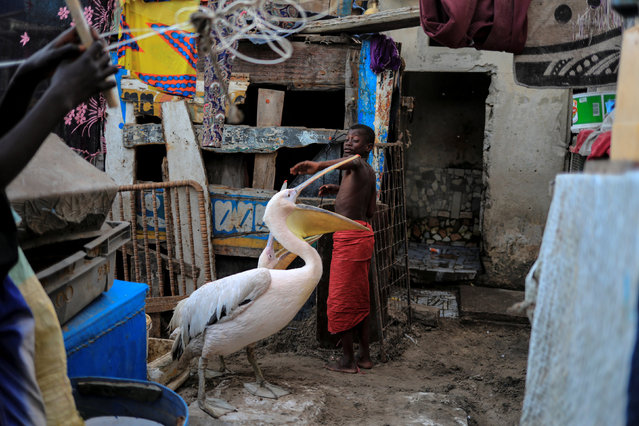
A boy plays with pelicans in Yoff, commune of Dakar, Senegal March 14, 2018. (Photo by Zohra Bensemra/Reuters)

A boy plays with pelicans in Yoff, commune of Dakar, Senegal March 14, 2018. (Photo by Zohra Bensemra/Reuters)
Details
28 Mar 2018 00:01:00
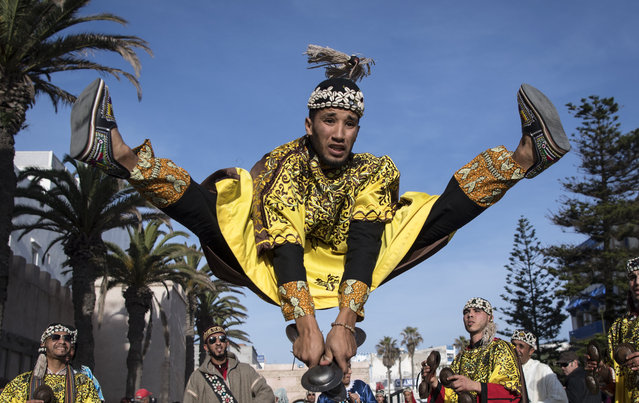
A Gnawa traditional group performs in the city of Essaouira on December 14, 2019, to celebrate the decision of adding the Gnawa culture to UNESCO's list of Intangible Cultural Heritage of Humanity. Gnawa culture, a centuries-old Moroccan practice rooted in music, African rituals and Sufi traditions, was added to UNESCO's list of Intangible Cultural Heritage of Humanity earlier in the week. Gnawa refers to a “set of musical productions, fraternal practices and therapeutic rituals where the secular mixes with the sacred”, according to the nomination submitted by Morocco. Often dressed in colourful outfits, Gnawa musicians play the guenbri, a type of lute with three strings, accompanied by steel castanets called krakebs. (Photo by Fadel Senna/AFP Photo)

A Gnawa traditional group performs in the city of Essaouira on December 14, 2019, to celebrate the decision of adding the Gnawa culture to UNESCO's list of Intangible Cultural Heritage of Humanity. Gnawa culture, a centuries-old Moroccan practice rooted in music, African rituals and Sufi traditions, was added to UNESCO's list of Intangible Cultural Heritage of Humanity earlier in the week. Gnawa refers to a “set of musical productions, fraternal practices and therapeutic rituals where the secular mixes with the sacred”, according to the nomination submitted by Morocco. Often dressed in colourful outfits, Gnawa musicians play the guenbri, a type of lute with three strings, accompanied by steel castanets called krakebs. (Photo by Fadel Senna/AFP Photo)
Details
18 Dec 2019 00:05:00
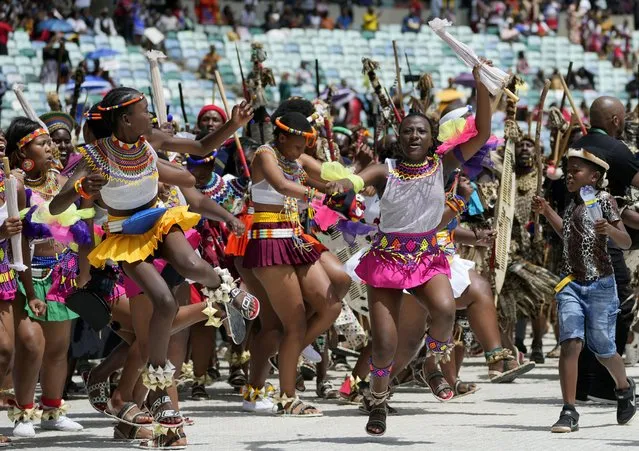
Zulu maidens sings and dance as they arrive for the coronation event, at the Moses Mabhida Stadium in Durban, South Africa, Saturday, October 29, 2022. South Africa President Cyril Ramaphosa on behalf of the government formally presented a certificate of recognition to His Majesty King MisuZulu ka Zwelithini of the AmaZulu. (Photo by Themba Hadebe/AP Photo)

Zulu maidens sings and dance as they arrive for the coronation event, at the Moses Mabhida Stadium in Durban, South Africa, Saturday, October 29, 2022. South Africa President Cyril Ramaphosa on behalf of the government formally presented a certificate of recognition to His Majesty King MisuZulu ka Zwelithini of the AmaZulu. (Photo by Themba Hadebe/AP Photo)
Details
10 Nov 2022 05:30:00
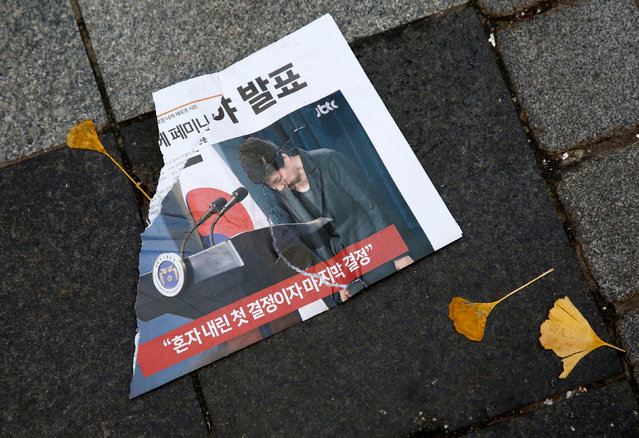
A leaflet denouncing South Korean President Park Geun-hye lies on the ground after it was torn at a protest calling Park to step down, in Seoul, South Korea, November 19, 2016. (Photo by Kim Hong-Ji/Reuters)

A leaflet denouncing South Korean President Park Geun-hye lies on the ground after it was torn at a protest calling Park to step down, in Seoul, South Korea, November 19, 2016. (Photo by Kim Hong-Ji/Reuters)
Details
20 Nov 2016 10:41:00
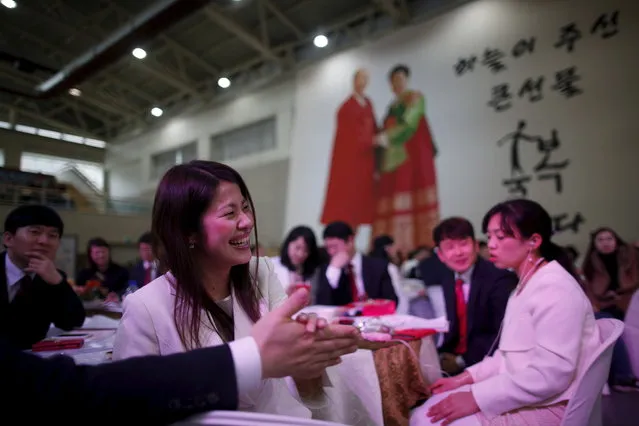
Noriko Takatory of Japan shares a moment with her groom Moon Byung-nam of South Korea during an opening ceremony for upcoming mass wedding ceremony of the Unification Church at Cheongshim Peace World Centre in Gapyeong, South Korea, February 19, 2016. (Photo by Kim Hong-Ji/Reuters)

Noriko Takatory of Japan shares a moment with her groom Moon Byung-nam of South Korea during an opening ceremony for upcoming mass wedding ceremony of the Unification Church at Cheongshim Peace World Centre in Gapyeong, South Korea, February 19, 2016. (Photo by Kim Hong-Ji/Reuters)
Details
20 Feb 2016 10:50:00
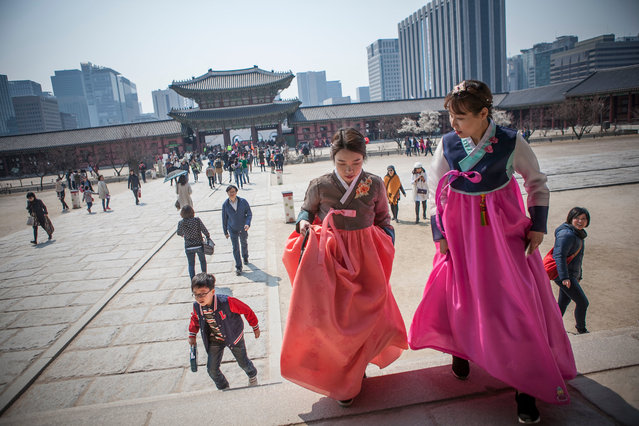
Young Korean women wearing  hanbok (Korean traditional dress) walk inside Gyeongbok Palace on March 27, 2016 in Seoul, South Korea. There has been a trend in recent years for the young Koreans to wear the traditional Korean dress, Hanbok. Wearing the traditional dress, they will walk around downtown Seoul on weekends taking selfies, and share their memories with friends on social media, and also to promote their traditional dress to foreign visitors. (Photo by Jean Chung/Getty Images)

Young Korean women wearing hanbok (Korean traditional dress) walk inside Gyeongbok Palace on March 27, 2016 in Seoul, South Korea. There has been a trend in recent years for the young Koreans to wear the traditional Korean dress, Hanbok. Wearing the traditional dress, they will walk around downtown Seoul on weekends taking selfies, and share their memories with friends on social media, and also to promote their traditional dress to foreign visitors. (Photo by Jean Chung/Getty Images)
Details
03 Apr 2016 11:31:00
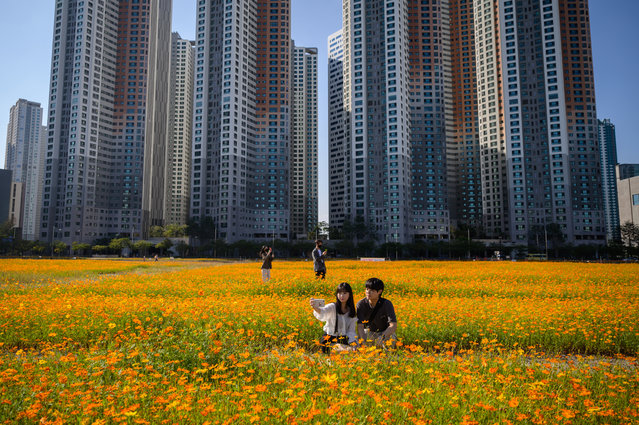
People pose for photos among a field of cosmos flowers in a car park before high-rise apartment buildings in Goyang, west of Seoul on September 22, 2020. (Photo by Ed Jones/AFP Photo)

People pose for photos among a field of cosmos flowers in a car park before high-rise apartment buildings in Goyang, west of Seoul on September 22, 2020. (Photo by Ed Jones/AFP Photo)
Details
02 Oct 2020 00:01:00