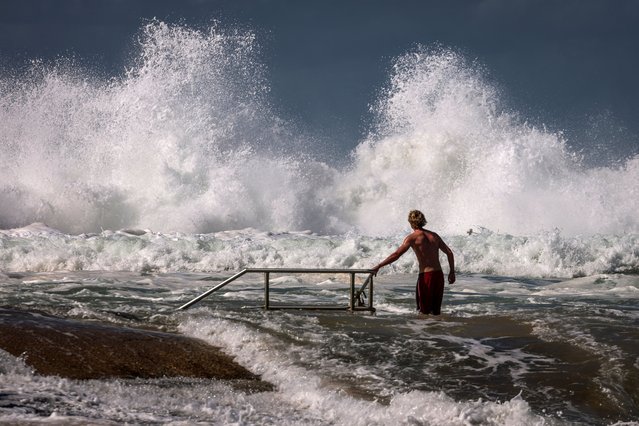
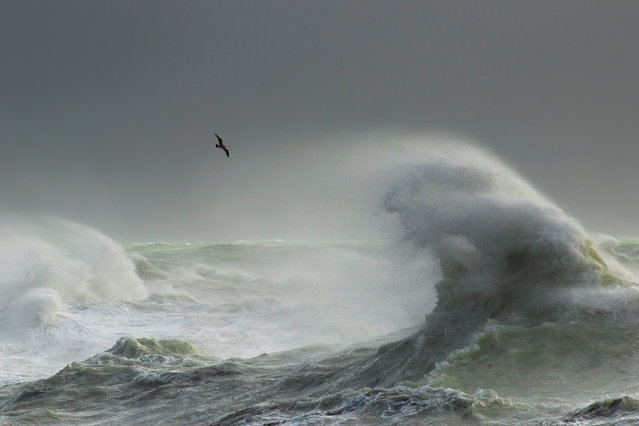
A man walks towards a wave breaking on a rock pool at North Narrabeen Beach in Sydney on April 18, 2025, as large swells hit the east coast of Australia. (Photo by David Gray/AFP Photo)
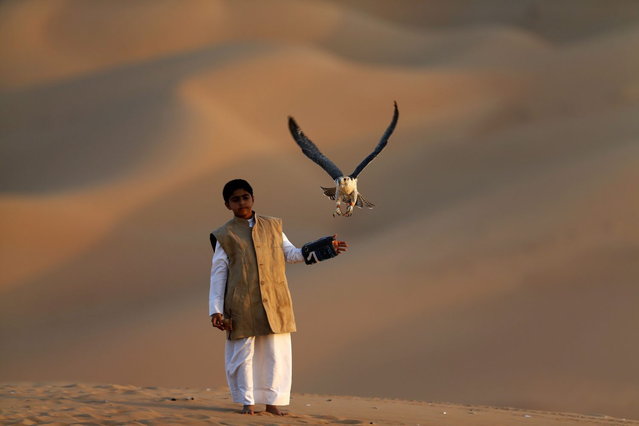
A young Emirati boy looks on as his falcon flies at the Liwa desert, 220 kms west of Abu Dhabi, on the sidelines of the Mazayin Dhafra Camel Festival on December 21, 2013. The festival, which attracts participants from around the Gulf region, includes a camel beauty contest, a display of UAE handcrafts and other activities aimed at promoting the country's folklore. (Photo by Karim Sahib/AFP Photo)
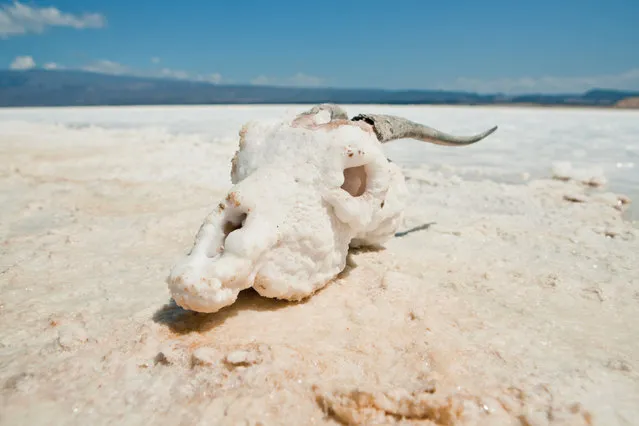
Lake Assal is a crater lake in central-western Djibouti. It is located at the western end of Gulf of Tadjoura in the Tadjoura Region, touching Dikhil Region, at the top of the Great Rift Valley, some 120 km (75 mi) west of Djibouti city. Lake Assal is a saline lake which lies 155 m (509 ft) below sea level in the Afar Triangle, making it the lowest point on land in Africa and the third-lowest land depression on Earth after the Dead Sea and Sea of Galilee.
A period of relative stability has put the Iranian capital No1 on the list of world cities that have achieved biggest improvements in liveability over the past five years, as calculated by the Economist Intelligence Unit. The “most improved” top 10 contains some unexpected names. So, eg, the fourth place: Abidjan, Ivory Coast. Latest ranking: 128; Ranking five years ago: 131; Five-year index movement: 3.8%. Here: A supporter of Ivory Coast president Alassane Ouattara campaigns in a market in the city’s Koumassi quarter. (Photo by Sia Kambou/AFP Photo)
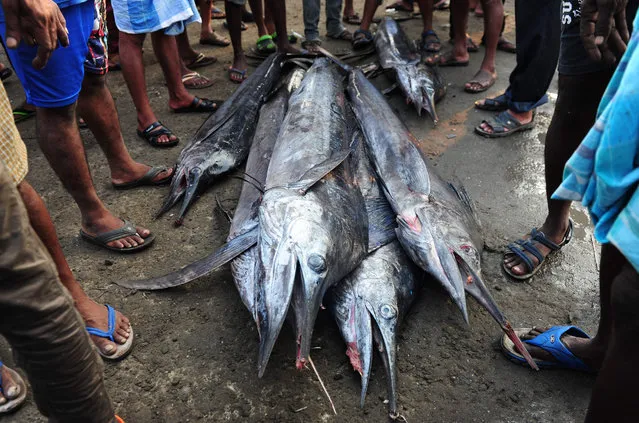
Indian men stand around sword fish for sale at a harbour a harbour in Chennai on June 5, 2016, as fishermen return with their catch after a 45-day fishing ban on the east coast of India. Authorities in the southern Indian state of Tamil Nadu had imposed a 45-day ban on fishing by mechanised vessels to protect marine life, with only “country boats” operating within five nautical miles off the coast. (Photo by Arun Sankar/AFP Photo)
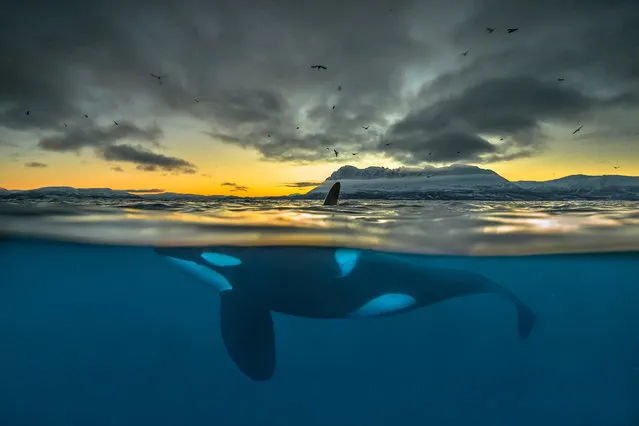
Split-view of a killer whale at sunrise off the coast of Northern Norway. At least half of the world’s killer whale populations are doomed to extinction due to pollution of the oceans, a new study says. (Photo by Audun Rikardsen/Science)
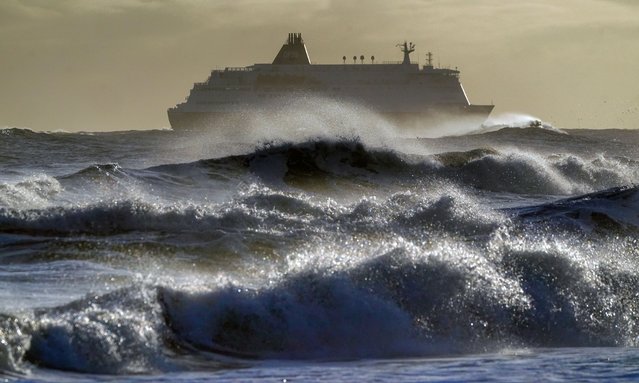
The DFDS King of seaways enters the Mouth of the Tyne on the North East coast in Rough sea on Wednesday, January 18, 2023. (Photo by Owen Humphreys/PA Images via Getty Images)