Loading...
Done
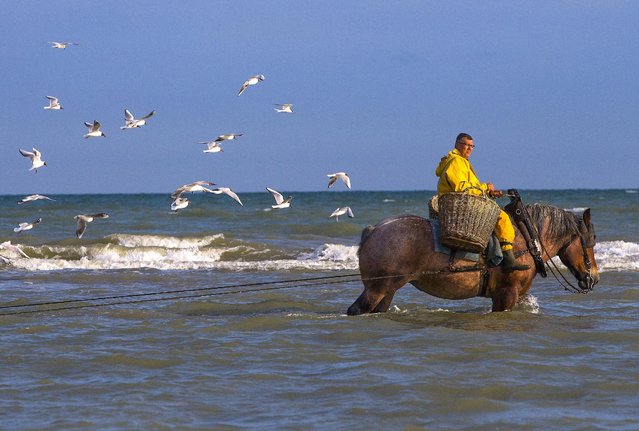
A Belgian shrimp fisherman rides a carthorse to haul a net out in the sea to catch shrimps during low tide at the coastal town of Oostduinkerke, Belgium July 3, 2015. (Photo by Yves Herman/Reuters)

A Belgian shrimp fisherman rides a carthorse to haul a net out in the sea to catch shrimps during low tide at the coastal town of Oostduinkerke, Belgium July 3, 2015. At the end of each fishing session, the fishermen and their mounts leave the water to empty the net's contents into two wicker baskets fixed on each side of the horse. This traditional method of catching shrimps along the North Sea coast, which dates back to some 500 years, attracts tourists every summer. In 2013, Unesco recognized shrimp fishing on horseback as an intangible cultural heritage. (Photo by Yves Herman/Reuters)
Details
04 Jul 2015 11:29:00
Visitors look at tropical fish transported from Japan's southern island of Okinawa displayed in a giant 14-ton fish tank at the Sony Square event space in Tokyo on July 17, 2016. The 45-day-long summer exhibition will be held through August 28 to display sea creatures common to the waters around Okinawa. (Photo by Kazuhiro Nogi/AFP Photo)

Visitors look at tropical fish transported from Japan's southern island of Okinawa displayed in a giant 14-ton fish tank at the Sony Square event space in Tokyo on July 17, 2016. The 45-day-long summer exhibition will be held through August 28 to display sea creatures common to the waters around Okinawa. (Photo by Kazuhiro Nogi/AFP Photo)
Details
18 Jul 2016 13:05:00
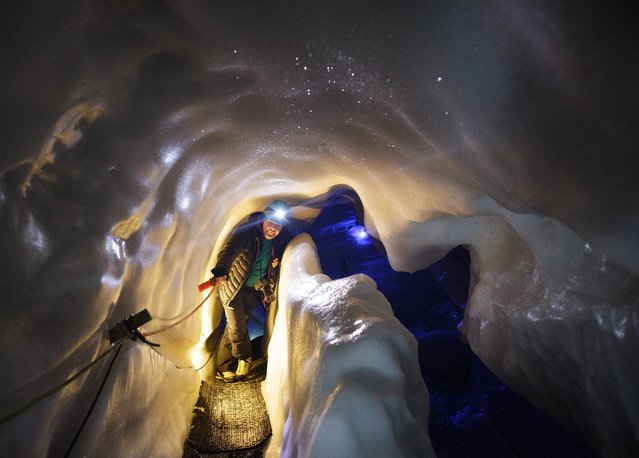
A tourist walks inside the Ice Palace glacier hollow at Hintertux glacier, located at around 3250 meters above sea level, in Zillertal, Austria, 02 March, 2016. The hollow's temperature remains constant at 0 degrees Celsius, in summer and winter alike, and is also used by the University of Innsbruck for scientific research projects. (Photo by Lisi Niesner/EPA)

A tourist walks inside the Ice Palace glacier hollow at Hintertux glacier, located at around 3250 meters above sea level, in Zillertal, Austria, 02 March, 2016. The hollow's temperature remains constant at 0 degrees Celsius, in summer and winter alike, and is also used by the University of Innsbruck for scientific research projects. (Photo by Lisi Niesner/EPA)
Details
03 Mar 2016 11:44:00
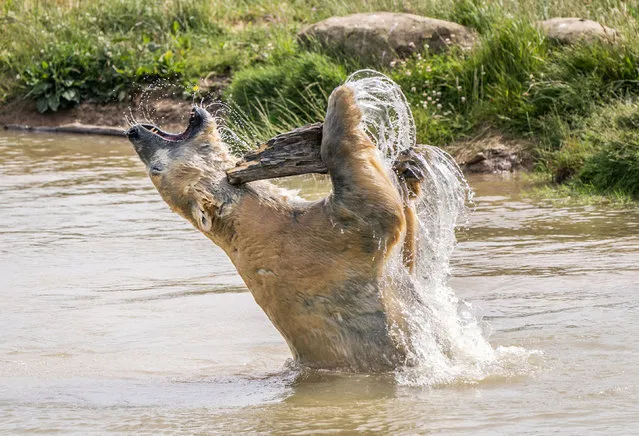
Nobby the polar bear cools down as he plays in a lake at the Yorkshire Wildlife Park in Doncaster, England, Friday June 17, 2022. A blanket of hot air stretching from the Mediterranean to the North Sea is giving much of western Europe its first heat wave of the summer, with temperatures forecast to top 30 degrees Celsius (86 degrees Fahrenheit) from Malaga to London on Friday. (Photo by Danny Lawson/PA Wire via AP Photo)

Nobby the polar bear cools down as he plays in a lake at the Yorkshire Wildlife Park in Doncaster, England, Friday June 17, 2022. A blanket of hot air stretching from the Mediterranean to the North Sea is giving much of western Europe its first heat wave of the summer, with temperatures forecast to top 30 degrees Celsius (86 degrees Fahrenheit) from Malaga to London on Friday. (Photo by Danny Lawson/PA Wire via AP Photo)
Details
26 Jun 2022 04:06:00
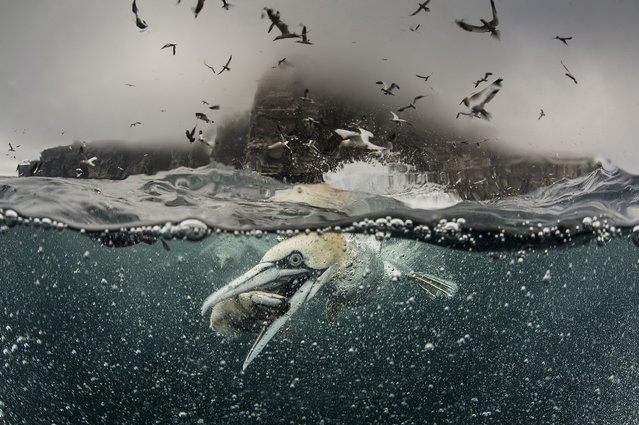
A gannet grabs a fish by its beak, 2014, in Shetland, Scotland. Hundreds of gannets crash into the sea in search of food – leaving a trail of air bubbles in their wake. Richard Shucksmith, 41, on the Shetland Isles, Scotland captured the remarkable scene as he took a boat to feed the large colony of seabirds that nested on the cliffs. The photographer has taken images of the gannets every summer for the last three years as the birds gather on the cliffs to breed. (Photo by Richard Shucksmith/Barcroft media)

A gannet grabs a fish by its beak, 2014, in Shetland, Scotland. Hundreds of gannets crash into the sea in search of food – leaving a trail of air bubbles in their wake. Richard Shucksmith, 41, on the Shetland Isles, Scotland captured the remarkable scene as he took a boat to feed the large colony of seabirds that nested on the cliffs. The photographer has taken images of the gannets every summer for the last three years as the birds gather on the cliffs to breed. (Photo by Richard Shucksmith/Barcroft media)
Details
26 Sep 2014 13:54:00
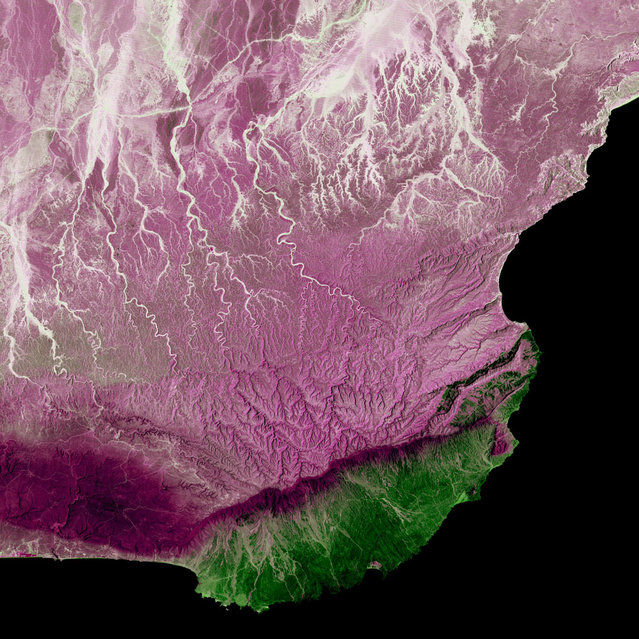
Dhofar Region, Oman. Much of Oman is desert, but the Arabian Sea coast in the Dhofar region represents a startling difference in climate. This coastal region catches the monsoon rains, or khareef, during the summer months. Drenching rains fall primarily on the mountainous ridge that separates the lush, fertile areas along the coast from the arid interior, recharging streams, waterfalls and springs that provide plentiful water supplies in the fertile lowlands for the remainder of the year. Image taken by Landsat 5 on April 2, 2005. (Photo by USGS/NASA)

Dhofar Region, Oman. Much of Oman is desert, but the Arabian Sea coast in the Dhofar region represents a startling difference in climate. This coastal region catches the monsoon rains, or khareef, during the summer months. Drenching rains fall primarily on the mountainous ridge that separates the lush, fertile areas along the coast from the arid interior, recharging streams, waterfalls and springs that provide plentiful water supplies in the fertile lowlands for the remainder of the year. Image taken by Landsat 5 on April 2, 2005. (Photo by USGS/NASA)
Details
25 Dec 2012 11:13:00
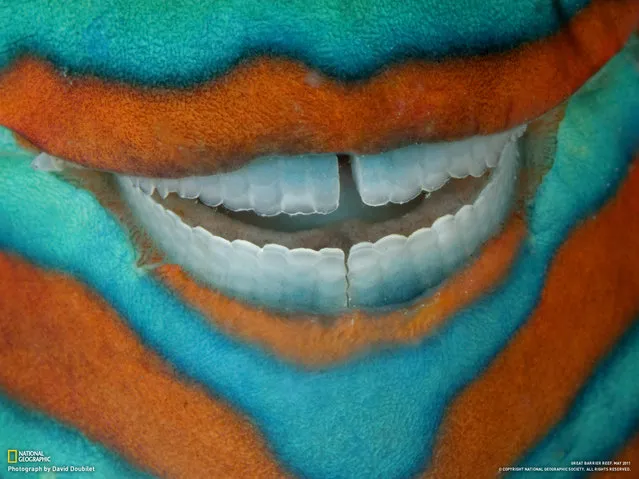
Photographers: David Doubilet

“David Doubilet (born 28 November 1946) is a well known underwater photographer known primarily for his work published in National Geographic Magazine. He was born in New York and started taking photos underwater at the young age of 12. He started with a Brownie Hawkeye in a rubber anesthesiologist's bag to keep the water out of the camera. During his summer holidays, he spent his time along the New Jersey coast. He later worked as a diver and photographer for the Sandy Hook Marine Laboratories in New Jersey. He also spent much time in the Caribbean. While a dive instructor in the Bahamas he found his motivation to capture the beauty of the sea and everything in it”. – Wikipedia. (Photo by David Doubilet/National Geographic)
Details
16 May 2012 12:21:00
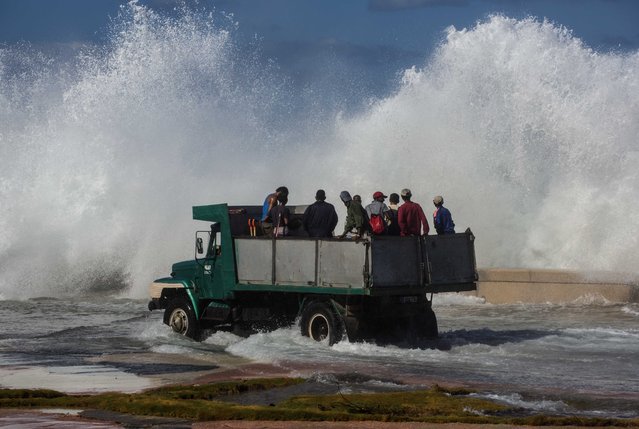
A dump truck carrying cleaning workers drives on Havana's malecon as a wave crashes on the sea wall, in Cuba, Tuesday, January 24, 2017. Due to high winds and tides, the sea pushed over the sea wall, flooding low parts of the Vedado neighborhood of Havana. (Photo by Desmond Boylan/AP Photo)

A dump truck carrying cleaning workers drives on Havana's malecon as a wave crashes on the sea wall, in Cuba, Tuesday, January 24, 2017. Due to high winds and tides, the sea pushed over the sea wall, flooding low parts of the Vedado neighborhood of Havana. (Photo by Desmond Boylan/AP Photo)
Details
25 Jan 2017 11:23:00