Loading...
Done
New Zealand photographer Niki Boon captured her children, who are growing up with limited electronics, in the photo series “Childhood in the Raw Photos”. Niki Boon began taking photos as a hobby while she was working as a physiotherapist in Scotland. However, the New Zealand native found her interest in the art waning while she travelled, and it wasn’t until she had returned home and started raising a family that her passion was rekindled. “Childhood in the Raw”, an ongoing photo series of her four children’s technology-free life on her 10-acre property in New Zealand, is the perennial fruit of this passion. (Photo by Niki Boon)

New Zealand photographer Niki Boon captured her children, who are growing up with limited electronics, in the photo series “Childhood in the Raw Photos”. Niki Boon began taking photos as a hobby while she was working as a physiotherapist in Scotland. However, the New Zealand native found her interest in the art waning while she travelled, and it wasn’t until she had returned home and started raising a family that her passion was rekindled. “Childhood in the Raw”, an ongoing photo series of her four children’s technology-free life on her 10-acre property in New Zealand, is the perennial fruit of this passion. (Photo by Niki Boon)
Details
20 Apr 2016 12:01:00
A dhobi, or a washerman washes cloths on the banks of the River Gomti in Lucknow, India, Saturday, September 12, 2020. Dhobis are traditional laundry workers who wash clothes by hand and dry them in the sun, an occupation which has been in existence for generations. Most cities in India have a Dhobi Ghat, or washermen's area, where the city's pile of clothes is laundered. This practice is still popular in India, despite of modern technology. Around 1,000 families work in Lucknow's Dhobi Ghat. However, in light of the novel coronavirus, their wages have decreased drastically. With each family earning around US$100-200 per month. (Photo by Rajesh Kumar Singh/AP Photo)

A dhobi, or a washerman washes cloths on the banks of the River Gomti in Lucknow, India, Saturday, September 12, 2020. Dhobis are traditional laundry workers who wash clothes by hand and dry them in the sun, an occupation which has been in existence for generations. Most cities in India have a Dhobi Ghat, or washermen's area, where the city's pile of clothes is laundered. This practice is still popular in India, despite of modern technology. Around 1,000 families work in Lucknow's Dhobi Ghat. However, in light of the novel coronavirus, their wages have decreased drastically. With each family earning around US$100-200 per month. (Photo by Rajesh Kumar Singh/AP Photo)
Details
25 Sep 2020 00:03:00


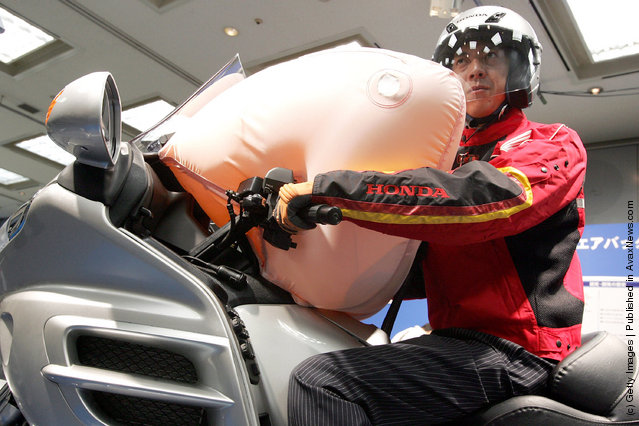
“The technology was designed to address the risk associated with head-on or nearly head-on motorcycle collisions, which account for a large percentage of motorcycle crashes. The airbag was designed to deploy during a severe frontal collision in which a rider could be thrown forward from the motorcycle. Once deployed, the airbag stands upright in front of the rider to help absorb the rider’s kinetic energy prior to leaving the motorcycle”. – Ohio.Honda.com

Photo: Honda Motor Co., Ltd.'s world's first production motorcycle airbag system is introduced at a press conference at Honda's HQ on September 8, 2005 in Tokyo, Japan. The motorcycle airbag system to be installed to lessen the injuries of the rider is comprised of the airbag module that include the airbag and the inflator, crash sensors that monitor acceleration changes and an ECU that performs calculation to determine when a collision is occuring. (Photo by Junko Kimura/Getty Images)
Details
20 Jun 2011 14:29:00
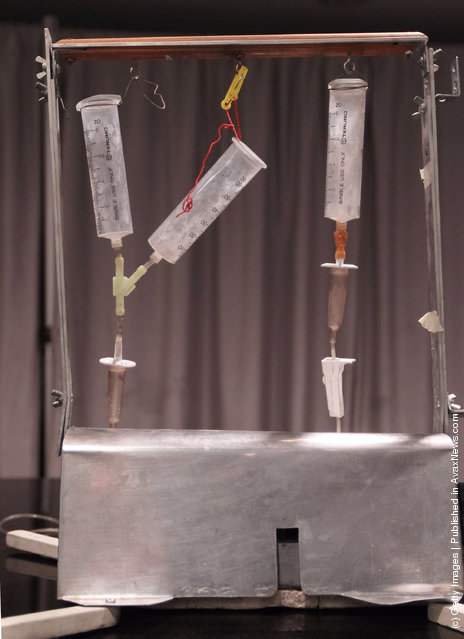
The Thanatron, often referred to as the Death Machine of Dr. Jack Kevorkian

“Jacob «Jack» Kevorkian (May 26, 1928 – June 3, 2011), commonly known as “Dr. Death”, was an American pathologist, euthanasia activist, painter, composer and instrumentalist. He is best known for publicly championing a terminal patient's right to die via physician-assisted suicide; he said he assisted at least 130 patients to that end. He famously said, «dying is not a crime»”. – Wikipedia

Photo: The “Thanatron”, often referred to as the “Death Machine”, is displayed during a press preview of an auction of the personal effects of Dr. Jack Kevorkian at the New York Institute of Technology on October 27, 2011 in New York City. The device was reportedly used by over 100 of Dr. Kevorkian's patients to terminate their lives. (Photo by Mario Tama/Getty Images)
Details
28 Oct 2011 12:26:00
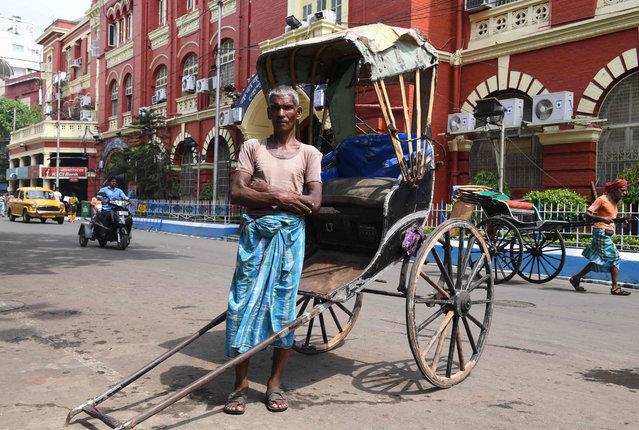
Mohammad Ashgar, 65, an Indian rickshaw puller, poses for a photograph next to his rickshaw in Kolkata on April 21, 2018. A mainstay of 19 th century transportation options, the hand- pulled rickshaw survives in India only in Kolkata after being outlawed elsewhere. The local puller's union puts the number of pullers in the city at 3,000. The union has resisted all previous attempts to ban their livelihood, previously organising mass protests of their members against moves to stamp out the practice. (Photo by Dibyangshu Sarkar/AFP Photo)

Ahead of May Day, AFP' s video and photo teams spoke to men and women around the globe whose jobs are becoming increasingly rare, particularly as technology transforms societies. Here: Mohammad Ashgar, 65, an Indian rickshaw puller, poses for a photograph next to his rickshaw in Kolkata on April 21, 2018. (Photo by Dibyangshu Sarkar/AFP Photo)
Details
02 May 2018 00:01:00


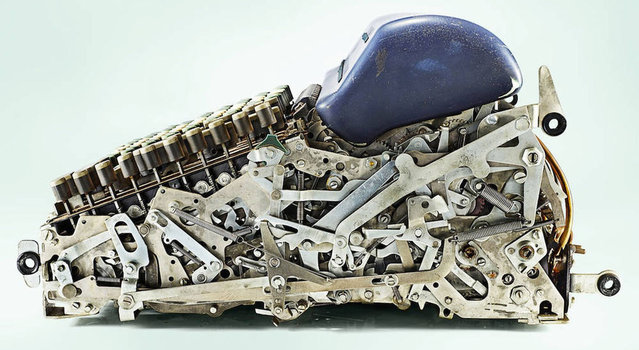
In his newest series of photos called Low Tech, Kevin Twomey artfully captures the complexity of old-style typewriters and similar machines. Despite being completely outdated, you cannot help being amazed at how complicated those “simple” devises really are. Hundreds of little parts were meticulously put together to form a machine that would perform such “basic” functions by today’s standards. Similarly, very few modern people actually think about how complicated the current technology really is. We take for granted streaming videos, GPS, and countless devises that we use every day, while in reality, these things would seem like magic to even the most prominent scientists from only half a century ago. (Photo by Kevin Twomey)
Details
21 Nov 2014 12:42:00
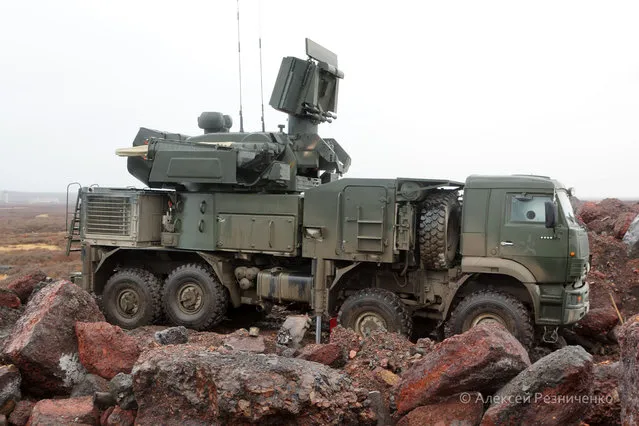
Test of the surface-to-air missile Pantsir-S rocket and gun system

“Pantsir-S1 (NATO reporting name SA-22 Greyhound) is a combined short to medium range surface-to-air missile and anti-aircraft artillery weapon system produced by KBP of Tula, Russia. The system is a further development of SA-19/SA-N-11 and represents the latest air defence technology by using phased-array radars for both target acquisition and tracking”. – Wikipedia

Photo: Test of the surface-to-air missile Pantsir-S rocket and gun system in the conditions of the Polar region on the range “Pemba” near Vorkuta, approximately on October 20 2012. According to the statement of military, during doctrines five cruise missiles from five were destroyed. (Photo by Alexey Reznichenko)

Details
28 Oct 2012 11:27:00
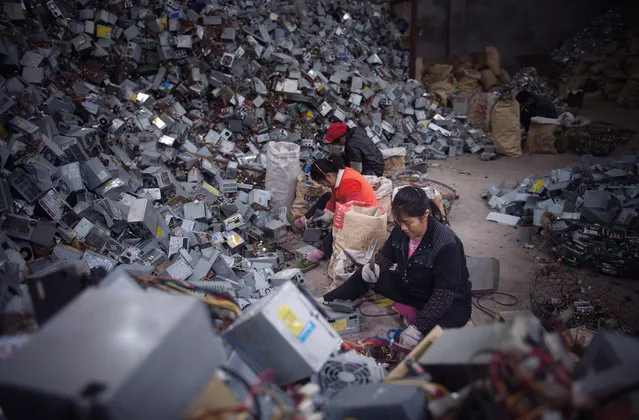
“The sustainable development goals cannot be met unless waste management is addressed as a priority”, says UK waste management charity Waste Aid. “E-waste is one of the fastest growing categories of the 7-10bn tonnes of waste produced globally every year”, adds director Mike Webster. “In our view, decent waste management is a basic right and we want governments around the world take this issue much more seriously – in 2012 only 0.2% of international aid went on improving solid waste management – it’s just not enough”. (Photo by Kai Loeffelbein/laif Agentur)

Sustainable development goal target 12.5 is to reduce waste. But with a planet increasingly dependent on technology, is that even possible? As of today, over 30m tonnes of electronic waste has been thrown out so far this year, according to the World Counts. Most e-waste is sent to landfills in Asia and Africa where it is recycled by hand, exposing the people who do it to environmental hazards. Kai Loeffelbein’s photographs of e-waste recycling in Guiyu, southern China show what happens to discarded computers. (Photo by Kai Loeffelbein/laif Agentur)
Details
19 Oct 2016 12:14:00