Loading...
Done
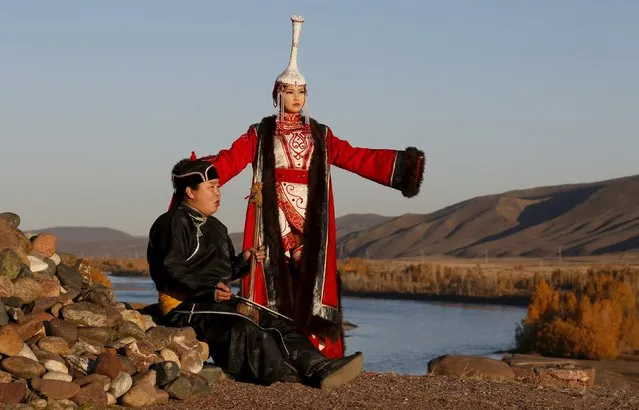
Master of throat singing (or Khoomei) Aikhan Orzhak (L) and model Choigana Kertek, dressed in traditional costume, perform during sunset at the Aldyn Bulak area on the bank of the Yenisei River outside the village of Ust-Elegest in Tuva region, Southern Siberia, Russia, October 7, 2015. The region is inhabited by Tuvans, historically cattle-herding nomads, who nowadays practise two main confessions - Buddhism and Shamanism. (Photo by Ilya Naymushin/Reuters)

Master of throat singing (or Khoomei) Aikhan Orzhak (L) and model Choigana Kertek, dressed in traditional costume, perform during sunset at the Aldyn Bulak area on the bank of the Yenisei River outside the village of Ust-Elegest in Tuva region, Southern Siberia, Russia, October 7, 2015. The region is inhabited by Tuvans, historically cattle-herding nomads, who nowadays practise two main confessions – Buddhism and Shamanism. (Photo by Ilya Naymushin/Reuters)
Details
17 Oct 2015 08:03:00
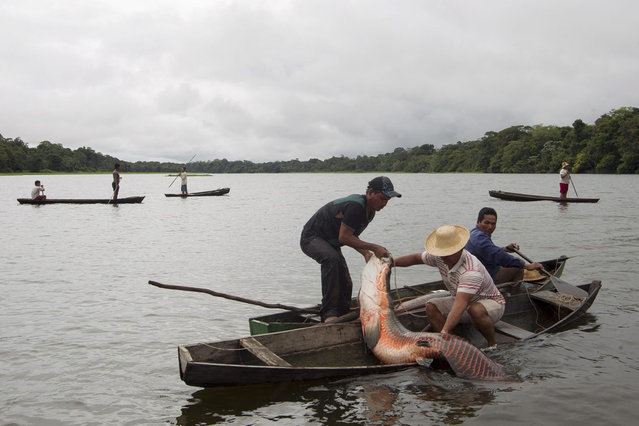
Villagers from the Porto Novo community load into their canoes arapaima or pirarucu, the largest freshwater fish species in South America and one of the largest in the world, while fishing in Poco Fundo lake along a branch of the Solimoes river, one of the main tributaries of the Amazon, in the Mamiraua nature reserve near Fonte Boa about 600 km (373 miles) west of Manaus, November 26, 2013. (Photo by Bruno Kelly/Reuters)

Villagers from the Porto Novo community load into their canoes arapaima or pirarucu, the largest freshwater fish species in South America and one of the largest in the world, while fishing in Poco Fundo lake along a branch of the Solimoes river, one of the main tributaries of the Amazon, in the Mamiraua nature reserve near Fonte Boa about 600 km (373 miles) west of Manaus, November 26, 2013. Catching the arapaima, a fish that is sought after for its meat and is considered by biologists to be a living fossil, is only allowed once a year by Brazil's environmental protection agency. The minimum size allowed for a fisherman to keep an arapaima is 1.5 meters (4.9 feet). (Photo by Bruno Kelly/Reuters)
Details
17 Dec 2013 08:03:00
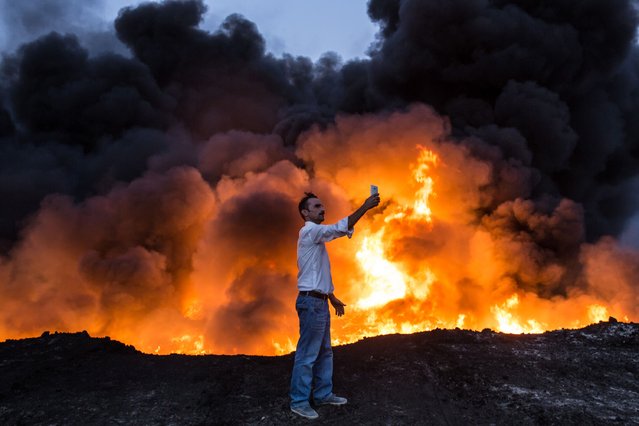
A man takes a selfie in front of a fire from oil that has been set ablaze in the Qayyarah area, some 60 kilometres (35 miles) south of Mosul, on October 19, 2016, during an operation by Iraqi forces against Islamic State (IS) group jihadists to retake the main hub city. In the biggest Iraqi military operation in years, forces have retaken dozens of villages, mostly south and east of Mosul, and are planning multiple assaults for October 20. (Photo by Yasin Akgul/AFP Photo)

A man takes a selfie in front of a fire from oil that has been set ablaze in the Qayyarah area, some 60 kilometres (35 miles) south of Mosul, on October 19, 2016, during an operation by Iraqi forces against Islamic State (IS) group jihadists to retake the main hub city. In the biggest Iraqi military operation in years, forces have retaken dozens of villages, mostly south and east of Mosul, and are planning multiple assaults for October 20. (Photo by Yasin Akgul/AFP Photo)
Details
21 Oct 2016 12:25:00
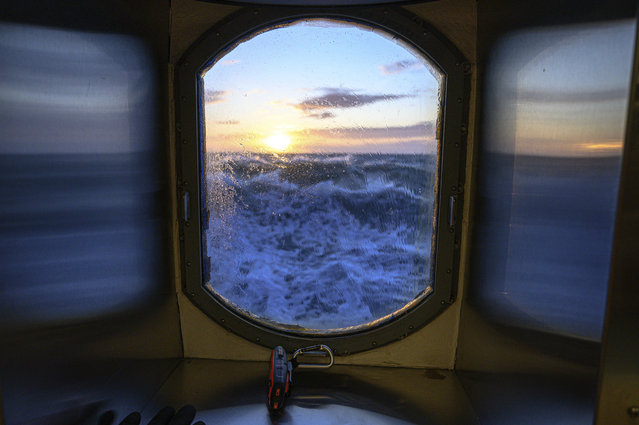
This November 8, 2019, photo provided by John Guillote shows a view from the main lab of the Sikuliaq in the Chukchi Sea. University of Washington scientists onboard the research vessel are studying the changes and how less sea ice will affect coastlines, which already are vulnerable to erosion because increased waves delivered by storms. More erosion would increase the chance of winter flooding in villages and danger to hunters in small boats. (Photo by John Guillote via AP Photo)

This November 8, 2019, photo provided by John Guillote shows a view from the main lab of the Sikuliaq in the Chukchi Sea. University of Washington scientists onboard the research vessel are studying the changes and how less sea ice will affect coastlines, which already are vulnerable to erosion because increased waves delivered by storms. More erosion would increase the chance of winter flooding in villages and danger to hunters in small boats. (Photo by John Guillote via AP Photo)
Details
26 Aug 2021 08:22:00
France's paralympic triple jumper Arnaud Assoumani poses in front of The Louvre Pyramide, designed by Ieoh Ming Pei, in Paris on April 20, 2024, ahead of the Paris 2024 Olympic and Paralympic games. The Louvre was originally built as a fortress in the late 12th century, became one of the main residences of the kings of France later and actually is one of the largest museum in the world. (Photo by Franck Fife/AFP Photo)

France's paralympic triple jumper Arnaud Assoumani poses in front of The Louvre Pyramide, designed by Ieoh Ming Pei, in Paris on April 20, 2024, ahead of the Paris 2024 Olympic and Paralympic games. The Louvre was originally built as a fortress in the late 12th century, became one of the main residences of the kings of France later and actually is one of the largest museum in the world. (Photo by Franck Fife/AFP Photo)
Details
03 Aug 2024 04:29:00
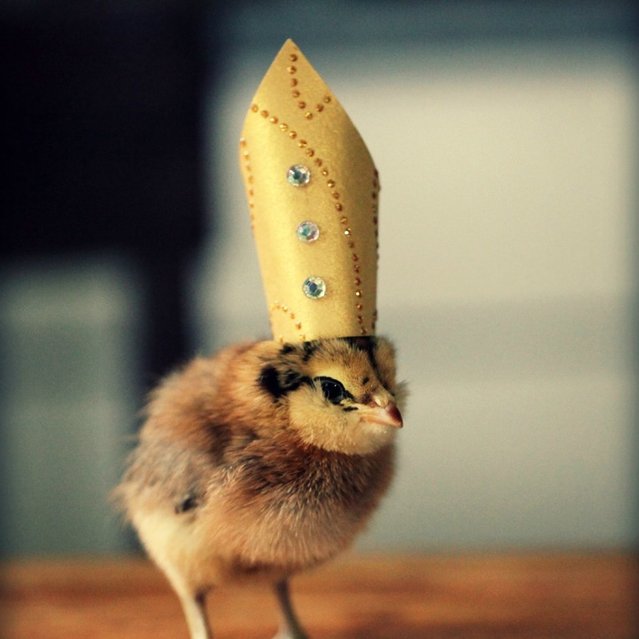
Adorable Baby Chicks Wearing Funny Little Hats

Chicks in Hats is one of those photo projects that will bring a huge smile to your face! There is something inherently funny about animals wearing people's clothing. Maine-based artist Julie Persons created this series simply because she says, "I like to put hats on my chicks and take photographs of them."
Details
06 Jan 2013 11:26:00
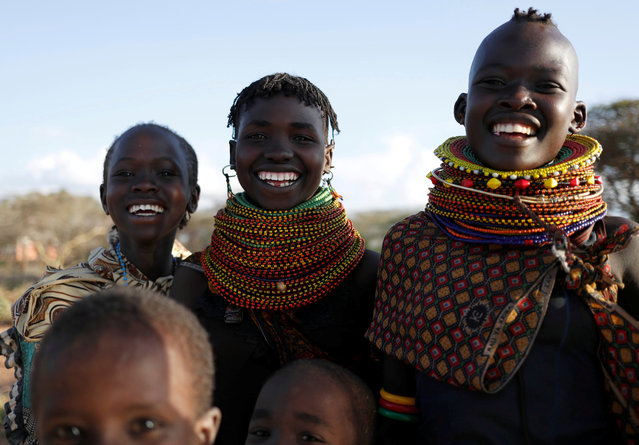
Young Turkana tribeswomen sing in a village near Baragoy, Kenya August 6, 2017. (Photo by Goran Tomasevic/Reuters)

Young Turkana tribeswomen sing in a village near Baragoy, Kenya August 6, 2017. Kenyans are due to go to the polls on Aug. 8. to vote in presidential elections after a tightly-fought race between President Uhuru Kenyatta and main opposition leader Raila Odinga. (Photo by Goran Tomasevic/Reuters)
Details
08 Aug 2017 07:05:00
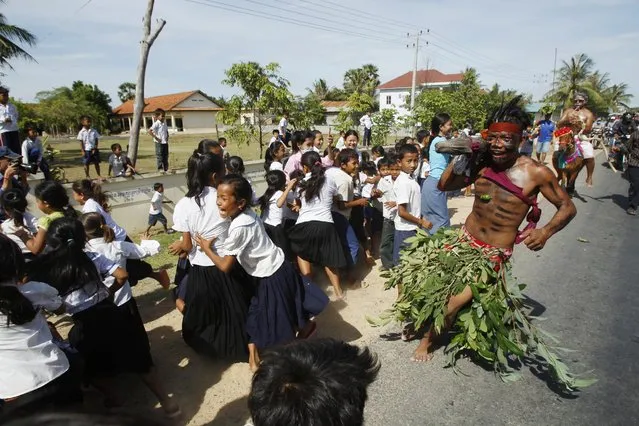
A local youth, front right, scares pupils on a street as he takes part in a ceremony to exorcize evil spirits and pray for rain amid the rice planting season at Pring Ka-ek village, northwest of Phnom Penh, Cambodia, Friday, May 22, 2015. Cambodia is a country which heavily relies on agriculture as over 80 percent of its 14 million people are farmers, growing rice as their main crop. (Photo by Heng Sinith/AP Photo)

A local youth, front right, scares pupils on a street as he takes part in a ceremony to exorcize evil spirits and pray for rain amid the rice planting season at Pring Ka-ek village, northwest of Phnom Penh, Cambodia, Friday, May 22, 2015. Cambodia is a country which heavily relies on agriculture as over 80 percent of its 14 million people are farmers, growing rice as their main crop. (Photo by Heng Sinith/AP Photo)
Details
25 May 2015 08:43:00