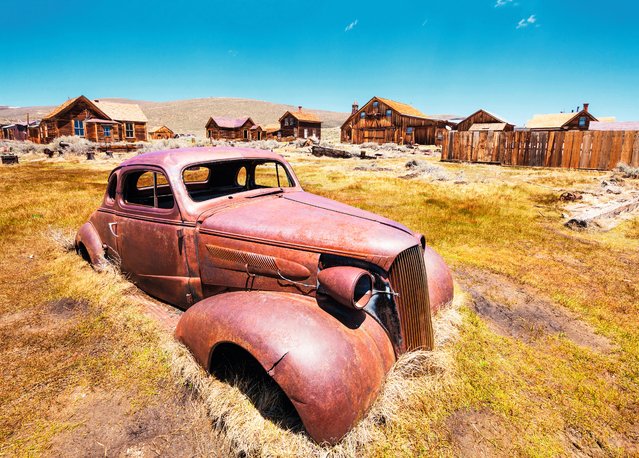
Kieron Connolly’s new book of photographs of more than 100 once-busy and often elegant buildings gives an idea of how the world might look if humankind disappeared. Here: Bodie, Mono County, California. Gold was discovered at Bodie in 1859 (just after the initial California gold rush) and it went from mining camp to boomtown. Its decline began in 1880, when word spread of new boomtowns elsewhere. The Standard Consolidated Mine closed in 1913, and four years later the Bodie Railway was abandoned. By 1940 the population was down to 40. Today, Bodie is maintained in a state of arrested decay as a visitor attraction. (Photo by Alamy Stock Photo)
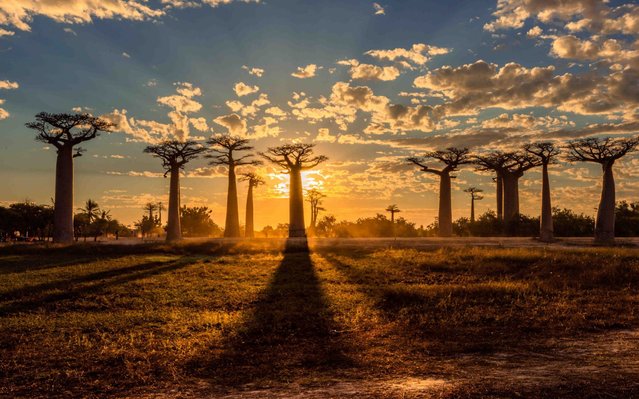
Madagascan sunset setting over the 98-foot-tall baobab trees of the Avenue of the Baobabs located in Menabe, Madagascar on August 2020. (Photo by Kim Paffen/MediaDrumImages)
A woman dressing the traditional clothes of a “cholita”, skates during a skate festival on September 30, 2020 in La Paz, Bolivia. According to the Johns Hopkins University Resource Center, Bolivia has over 130,000 confirmed cases of Covid-19 and more than 7,500 deceases. (Photo by Gaston Brito/Getty Images)
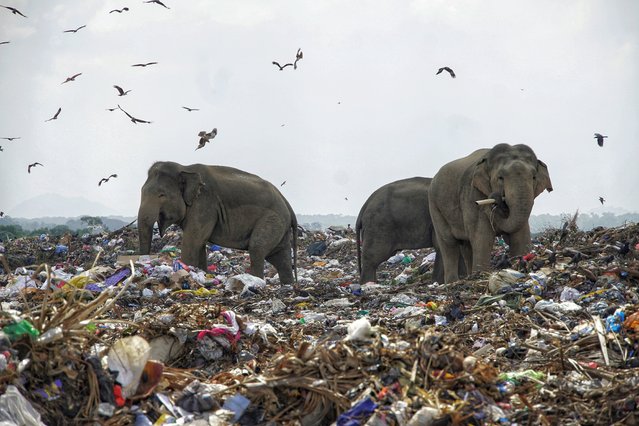
Elephants forage for food at a rubbish dump encroaching on their jungle habitat in Oluvil, Sri Lanka in September 2020. Examination of dead elephants has revealed undigested polythene and other plastic waste. (Photo by Tharmaplan Tilaxan/Cover Images)
A child wades through floodwater brought about by Super Typhoon Noru on September 26, 2022 in San Miguel, Bulacan province, Philippines. Super Typhoon Noru made landfall in the Philippines overnight, causing widespread flooding and leaving at least five dead. High winds and heavy rains have flattened villages and have increased the threat of landslides. (Photo by Ezra Acayan/Getty Images)