Loading...
Done
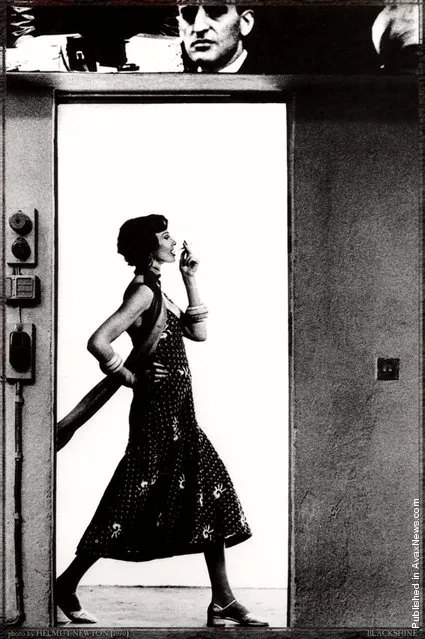
Photographers: Helmut Newton

“Newton was born in Berlin, the son of Klara “Claire” (Marquis) and Max Neustädter, a button factory owner. His family was Jewish. Newton attended the Heinrich-von-Treitschke-Realgymnasium and the American School in Berlin. Interested in photography from the age of 12 when he purchased his first camera, he worked for the German photographer Yva (Elsie Neulander Simon) from 1936. The increasingly oppressive restrictions placed on Jews by the Nuremberg laws meant that his father lost control of the factory in which he manufactured buttons and buckles; he was briefly interned in a concentration camp on “Kristallnacht”, November 9, 1938, which finally compelled the family to leave Germany. Newton's parents fled to South America. He was issued with a passport just after turning 18, and left Germany on December 5, 1938. At Trieste he boarded the “Conte Rosso” (along with about 200 others escaping the Nazis) intending to journey to China. After arriving in Singapore he found he was able to remain there, first and briefly as a photographer for the Straits Times and then as a portrait photographer”. – Wikipedia

Photo: Sigourney Weaver by Helmut Newton, 1995.
Details
08 Apr 2012 13:49:00
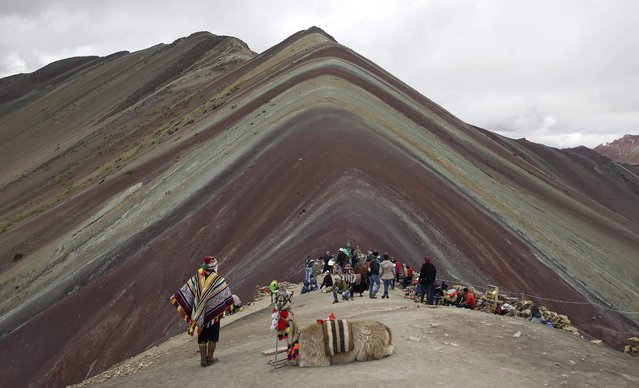
In this March 2, 2018 photo, an Andean man rests with his llama while tourists take in the natural wonder of Rainbow Mountain in Pitumarca, Peru. Tourists gasp for breath as they climb for two hours to the 16,404-foot (5,000-meter) peak in the Peruvian Andes, but stunned by the magical beauty that unfurls before them. (Photo by Martin Mejia/AP Photo)

In this March 2, 2018 photo, an Andean man rests with his llama while tourists take in the natural wonder of Rainbow Mountain in Pitumarca, Peru. Tourists gasp for breath as they climb for two hours to the 16,404-foot (5,000-meter) peak in the Peruvian Andes, but stunned by the magical beauty that unfurls before them. (Photo by Martin Mejia/AP Photo)
Details
07 May 2018 00:01:00
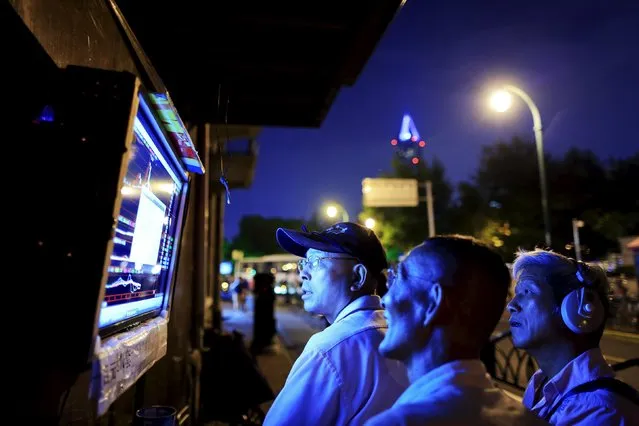
Shen Yuxi (L), introduces analysis software to investors at a “street stock salon” in central Shanghai, China, September 5, 2015. Shen carries a TV screen on his electronic bike to the "salon" every weekends where he sets it up on the wall outside a brokerage house. Shen's been selling analysis software at "the salon" for more than 10 years. (Photo by Aly Song/Reuters)

Some are in it just for the money, others to help buy a meal. Then there are those who trade for fun or to spend time among friends. Millions of investors – pensioners, security guards, high-school students – dominate China's stock markets, conducting about 80 percent of all trades. Retirees gather in brokerage houses dotted around China also to enjoy some company and savour the air conditioning on hot days. Some start as young as 13, trading from home with an eye on future careers in finance. Winning isn't guaranteed. This year, among the most turbulent in China's financial history, its stock markets more than doubled in the six months to May, only to crash amid concerns that growth in the country, which makes everything from cars to steel, is slowing faster than previously thought. (Photo by Aly Song/Reuters)
Details
13 Oct 2015 08:00:00
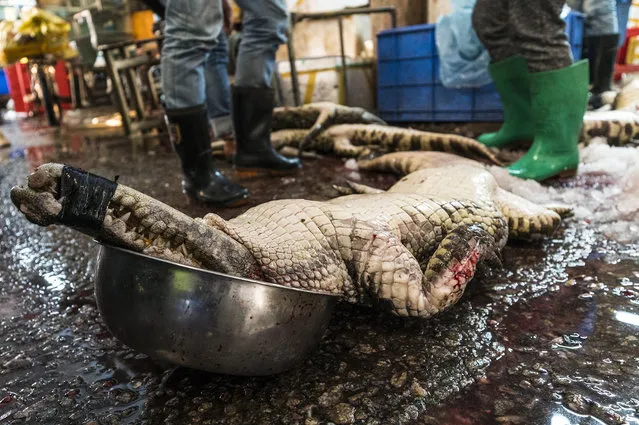
A dead crocodile is seen on Huangsha Seafood Market in Guangzhou, Guandong Province, China, 22 January 2018. Tsukiji Market of China or Huangsha Seafood Market is biggest one in Southern China and one of the biggest in China, as there are literally hundreds of different varieties of fish and seafood scattered throughout the market. Since the proximity of the fish market is so close to the Zhujiang River, it's quite easy for the large fishing vessels and fishermen to unload their fresh catch right at the market, which ensures that the fish and seafood remain fresh. Fish and other seafood are coming there from all around the globe. Seafood Market is full of different kinds of live fish, live shellfish, and live seafood on display in crystal clear tanks and it's common to see 5-star chefs, retailers and expats to source for fresh and high-quality seafood supplies for reasonable prices. While it is a wholesale fish market, since many Guangzhou restaurants and businesses come to purchase their seafood here, the public is welcome to come and even purchase. Many local Chinese have the vendors slice up fresh salmon fillets to take home or carry seafood into one of the nearby specialty restaurants, where they will cook if for them and serve it with vegetables and other side dishes of their choice. One of the biggest attractions for both, tourists and buyers, on market are crocodiles, which are brought there alive in wooden cases with taped jaws so they can?t accidentally bite. They are from crocodile farms from Guangdong, China and from Vietnam. Crocodile meat is popular in most Asian countries and it is consider as delicate one. Crocodiles weight from 10 to 25 kg and bigger ones are about 2 years old. They cost about 70 RMB (8.90 EURO) when bout as whole, or if you buy as parts most expensive and appreciated parts are paws 120 RMB (15.26 EURO) per kg, and tail 100 RMB (12.72 EURO) per kg. (Photo by Aleksandar Plavevski/EPA/EFE)

A dead crocodile is seen on Huangsha Seafood Market in Guangzhou, Guandong Province, China, 22 January 2018. Tsukiji Market of China or Huangsha Seafood Market is biggest one in Southern China and one of the biggest in China, as there are literally hundreds of different varieties of fish and seafood scattered throughout the market. (Photo by Aleksandar Plavevski/EPA/EFE)
Details
17 Apr 2020 00:05:00
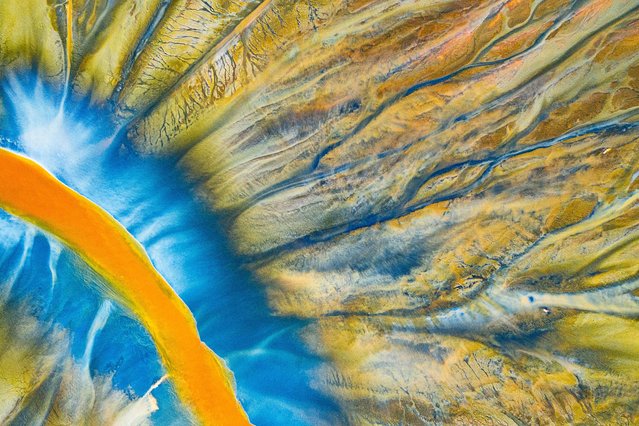
Poisoned River. Abstract Winner. A detailed photograph of a stream filled with poison. “Poisoned Beauty” is a personal project that tells the story of the natural disaster in the Apuseni Mountains in Transylvania, which was a result of chemical waste generated by copper and gold mining, but in a beautifully abstract way. (Photo by Gheorghe Popa/Drone Photography Awards 2021)

Poisoned River. Abstract Winner. A detailed photograph of a stream filled with poison. “Poisoned Beauty” is a personal project that tells the story of the natural disaster in the Apuseni Mountains in Transylvania, which was a result of chemical waste generated by copper and gold mining, but in a beautifully abstract way. (Photo by Gheorghe Popa/Drone Photography Awards 2021)
Details
19 Sep 2021 05:30:00
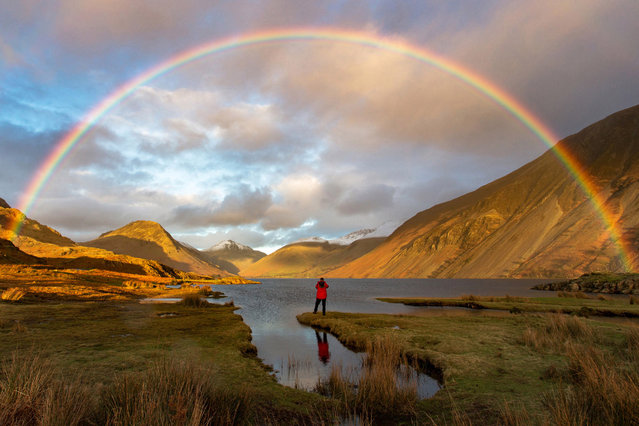
A selection of prizewinning images from the Take a View 2016 photography awards. Here: Finding Gold, taken in Wast Water in Cumbria, which won the Great Britain #OMGB “Home of Amazing Moments” award. (Photo by Mark Gilligan/PA Wire)

A selection of prizewinning images from the Take a View 2016 photography awards. Here: Finding Gold, taken in Wast Water in Cumbria, which won the Great Britain #OMGB “Home of Amazing Moments” award. (Photo by Mark Gilligan/PA Wire)
Details
24 Oct 2016 12:52:00


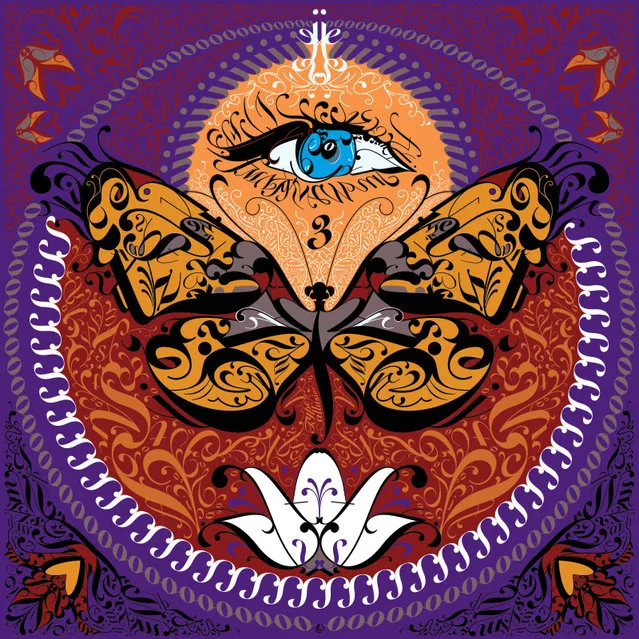
Eugene Lvovsky is a Graphic Designer/Artist from Toronto, Canada who makes art out of type - letterforms, outlines and fragments.
"Each letter, each little piece in my art is perfected by hand and placed very specifically to create a visually pleasing relationship between typographic characters and their unique shapes."
Details
08 Mar 2014 03:04:00


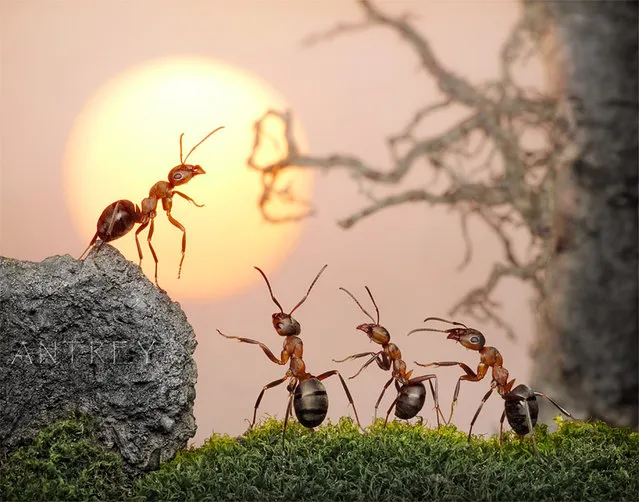
Andrey Pavlov is a photographer and he takes photographs of ants in stunning poses along with certain props that make the images even more fantasy-like. You’ve probably never seen ant photographs like these before.


See Also:Part2
Details
10 May 2012 05:56:00