Loading...
Done
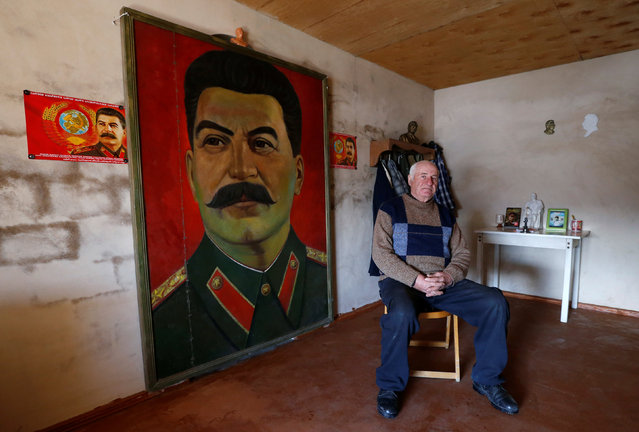
Retired builder Vasili Sidamonidze, 70, poses for a portrait at his home in Gori, Georgia, December 6, 2016. “Unfortunately, Stalin is not popular nowadays. Our people don't respect him. Only we, members of the (Communist) Party, respect him”, Sidamonidze said. “I always try to attend Stalin's birthday anniversaries in Gori. Unfortunately many people don't want to join us even if they live nearby. They look at us from their windows”. Stalin, who was born in Gori in 1878 and died in 1953, is largely reviled today in Georgia, which regained its independence during the 1991 collapse of the Soviet Union. Over the years, his memorials have been dismantled, most recently in 2010 when authorities removed a statue of the dictator from Gori's central square. But Stalin is still revered by a small group of mainly elderly supporters who stress his role in the industrialisation of the Soviet Union and in defeating Nazi Germany in World War Two. Each Dec. 21, a few dozen people mark his birthday by gathering outside a Gori museum dedicated to Stalin, where they make speeches and walk to the square where a 6-meter-high bronze statue of him once stood, calling for it to be reinstated. Opponents say it was a symbol of Moscow's still lingering shadow. In 2008, Russia fought a brief war with Georgia and recognised its breakaway regions of Abkhazia and South Ossetia as independent states. (Photo by David Mdzinarishvili/Reuters)

Retired builder Vasili Sidamonidze, 70, poses for a portrait at his home in Gori, Georgia, December 6, 2016. “Unfortunately, Stalin is not popular nowadays. Our people don't respect him. Only we, members of the (Communist) Party, respect him”, Sidamonidze said. “I always try to attend Stalin's birthday anniversaries in Gori. Unfortunately many people don't want to join us even if they live nearby. They look at us from their windows”. (Photo by David Mdzinarishvili/Reuters)
Details
17 Dec 2016 07:59:00
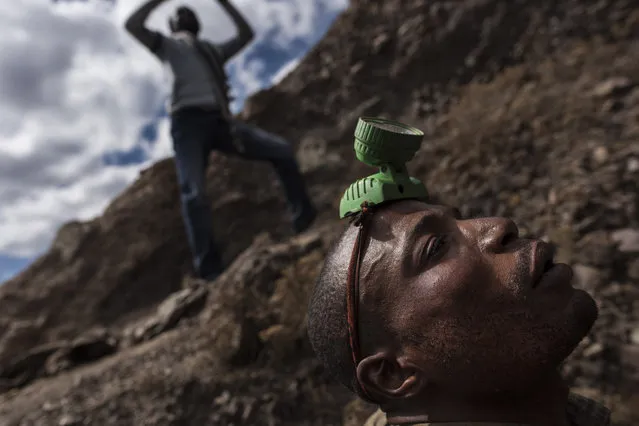
A “creuseur”, or digger, a plastic lantern on his head, readies to enter a copper and cobalt mine in Kawama, Democratic Republic of Congo on June 8, 2016. Cobalt is used in the batteries for electric cars and mobile phones. Working conditions are dangerous, often with no safety equipment or structural support for the tunnels. The diggers say they are paid on average US$2-3/day. (Photo by Michael Robinson Chavez/The Washington Post)

A “creuseur”, or digger, a plastic lantern on his head, readies to enter a copper and cobalt mine in Kawama, Democratic Republic of Congo on June 8, 2016. Cobalt is used in the batteries for electric cars and mobile phones. Working conditions are dangerous, often with no safety equipment or structural support for the tunnels. The diggers say they are paid on average US$2-3/day. (Photo by Michael Robinson Chavez/The Washington Post)
Details
30 Dec 2016 10:29:00
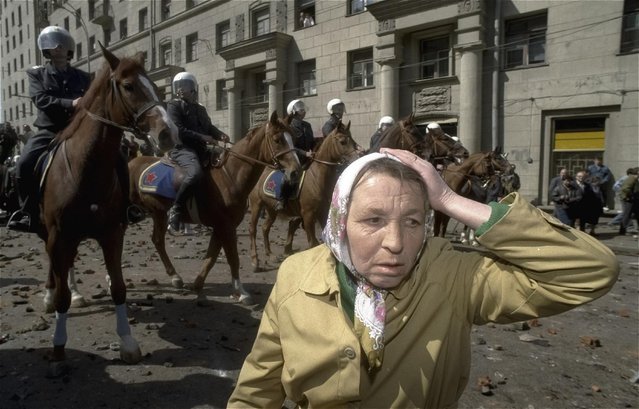
In this file photo taken on Saturday May 1, 1993, an elderly communist woman clutches her head as police on horseback patrol the streets in Moscow. When Alexander Zemlianichenko started working as an AP photographer in Moscow, the Soviet Union was nearing its demise. (Photo by Alexander Zemlianichenko/AP Photo)

In this file photo taken on Saturday May 1, 1993, an elderly communist woman clutches her head as police on horseback patrol the streets in Moscow. When Alexander Zemlianichenko started working as an AP photographer in Moscow, the Soviet Union was nearing its demise. (Photo by Alexander Zemlianichenko/AP Photo)
Details
01 Jan 2017 09:37:00
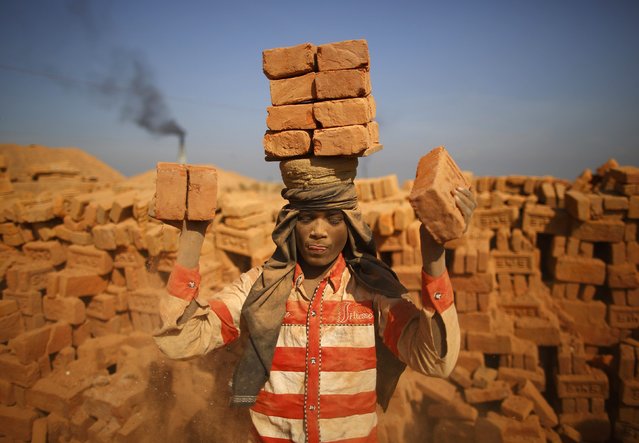
A worker stack bricks on his head at a brick factory in Lalitpur January 12, 2015. (Photo by Navesh Chitrakar/Reuters)

A worker stack bricks on his head at a brick factory in Lalitpur January 12, 2015. (Photo by Navesh Chitrakar/Reuters)
Details
16 Jan 2015 12:40:00
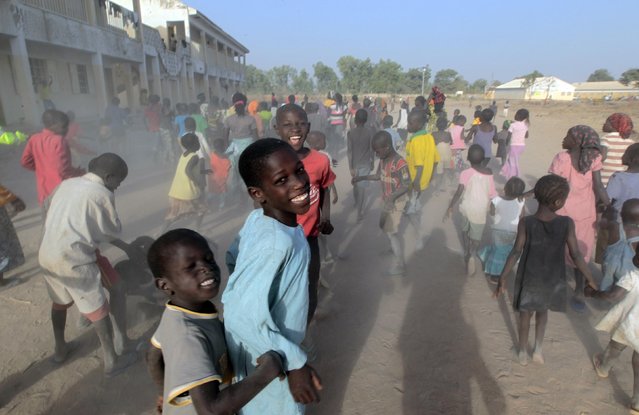
Children displaced as a result of Boko Haram attacks in the northeast region of Nigeria, run at a camp for internally displaced persons (IDP) in Yola, Adamawa State January 13, 2015. Boko Haram says it is building an Islamic state that will revive the glory days of northern Nigeria's medieval Muslim empires, but for those in its territory life is a litany of killings, kidnappings, hunger and economic collapse. (Photo by Afolabi Sotunde/Reuters)

Children displaced as a result of Boko Haram attacks in the northeast region of Nigeria, run at a camp for internally displaced persons (IDP) in Yola, Adamawa State January 13, 2015. Boko Haram says it is building an Islamic state that will revive the glory days of northern Nigeria's medieval Muslim empires, but for those in its territory life is a litany of killings, kidnappings, hunger and economic collapse. (Photo by Afolabi Sotunde/Reuters)
Details
21 Jan 2015 13:12:00
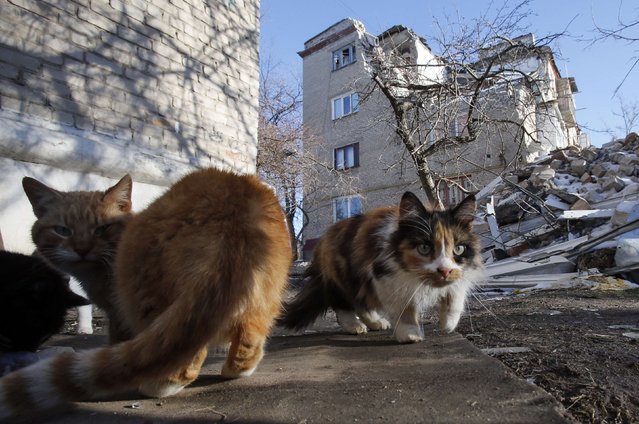
Cats gather in front of a house damaged by shelling in the town of Dokuchayevsk, south of Donetsk, February 12, 2015. (Photo by Maxim Shemetov/Reuters)

Cats gather in front of a house damaged by shelling in the town of Dokuchayevsk, south of Donetsk, February 12, 2015. (Photo by Maxim Shemetov/Reuters)
Details
19 Feb 2015 14:17:00
A beauty contestant waits backstage during the final of the annual Miss Tiffany's Universe 2016 transvestite contest in the beach resort town of Pattaya, Thailand, May 13, 2016. (Photo by Athit Perawongmetha/Reuters)

A beauty contestant waits backstage during the final of the annual Miss Tiffany's Universe 2016 transvestite contest in the beach resort town of Pattaya, Thailand, May 13, 2016. (Photo by Athit Perawongmetha/Reuters)
Details
14 May 2016 11:35:00
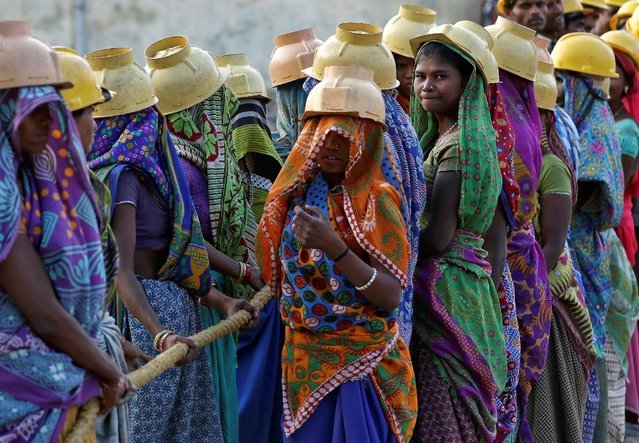
Female labourers wearing helmets take a break from laying underground electricity cables in Ahmedabad, India, March 7, 2016. (Photo by Amit Dave/Reuters)

Female labourers wearing helmets take a break from laying underground electricity cables in Ahmedabad, India, March 7, 2016. (Photo by Amit Dave/Reuters)
Details
01 Jun 2016 12:06:00