Loading...
Done
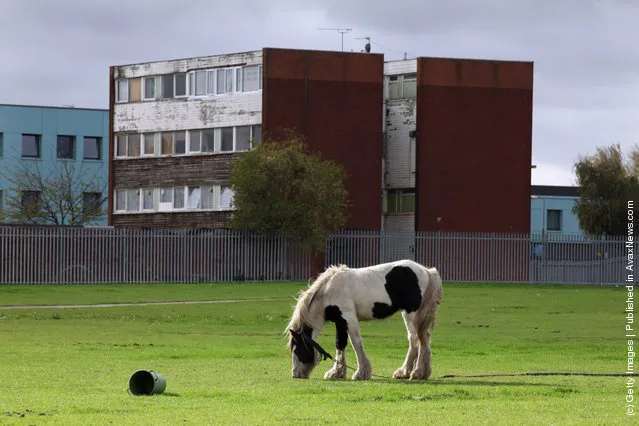
A pet horse

A pet horse tethered on land known as “The Cracker” in Tipton that may be seized by bailiffs on October 10, 2011 in Dudley, England. Horse lovers in Tipton are battling the local council over the tradition of keeping their horses tethered on public land near their homes. Locals say tradition that has been in existence for generations and believe it stems from the age of the canal when many local men used their horses to tow canal barges along the industrial Black Country canals. After a spate of horses running free Sandwell Council are now enforcing the law and impounding tethered horses. Locals are planning their next protest with a horse drive to the council headquarters to try and save their traditions. (Photo by Christopher Furlong/Getty Images)
Details
14 Oct 2011 09:10:00
Afghan children have ice cream during the Afghan New Year (Newroz) celebration in Kabul March 21, 2014. (Photo by Ahmad Masood/Reuters)

Afghan children have ice cream during the Afghan New Year (Newroz) celebration in Kabul March 21, 2014. Afghanistan uses the Persian calendar which runs from the vernal equinox. The calendar takes as its start date the time when the Prophet Mohammad moved from Mecca to Medina in 621 AD. The current Persian year is 1393. (Photo by Ahmad Masood/Reuters)
Details
24 Mar 2014 08:19:00
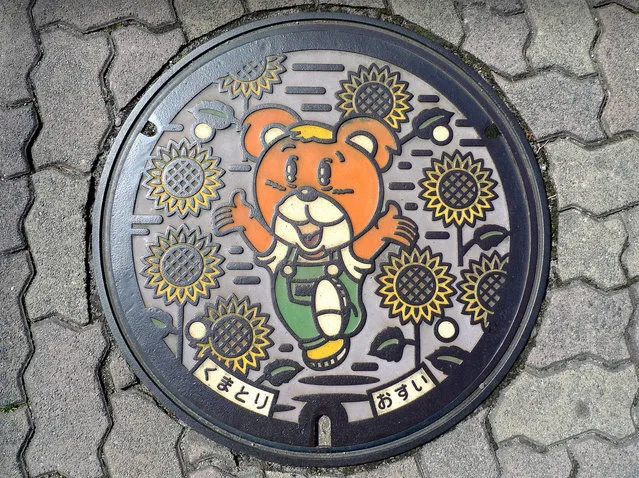
Japanese Manhole Covers Photos By S. Morita Part 1

Japan is a country full of art. Much of this is housed in museums and galleries, but others are right under our feet. We speak, of Japan’s peculiar obsession with manhole covers. Almost anywhere in the country you can find manhole covers with spectacular grounds, each more beautiful and complex than the previous. In recent years, S. Morita photographer has traveled around Japan and leave us this great gathering on the beautiful and artistic Japanese manhole covers.
Details
03 Apr 2014 14:31:00
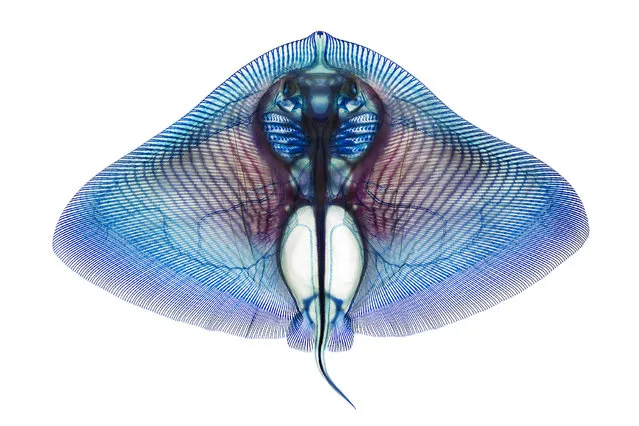
This image of the butterfly ray (Gymnura crebripunctata) helped scientists study the joints in its wings. (Photo by Adam Summers)

The photographs feature fish that have been specially treated to make the stained skeletal tissues visible through the skin and flesh. The technique, developed by Dr. Adam Summers, uses dyes, hydrogen peroxide, a digestive enzyme and glycerin to make the flesh seem to disappear. Photo: This image of the butterfly ray (Gymnura crebripunctata) helped scientists study the joints in its wings. (Photo by Adam Summers)
Details
23 Feb 2014 14:53:00
Group of clowns protested in the old center of Sao Paulo, Brazil on October 24, 2016. (Photo by Cris Faga via ZUMA Wire)

Group of clowns protested in the old center of Sao Paulo, Brazil on October 24, 2016. They are against false clowns scare people. They say they are clowns good and that people who dress to scare clown clowns are false. The wave of evil clowns started in the US and has spread to many countries. (Photo by Cris Faga via ZUMA Wire)
Details
26 Oct 2016 10:49:00
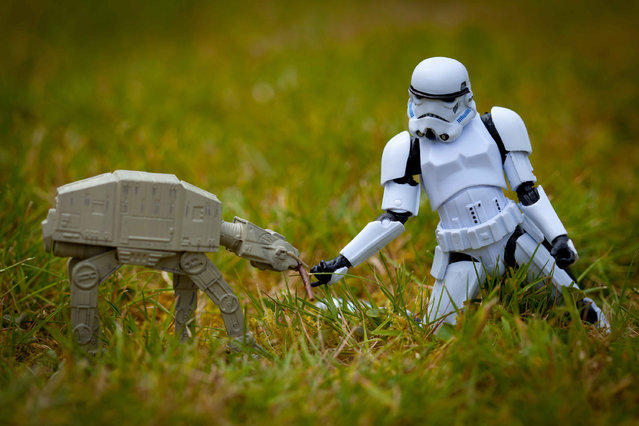
A storm trooper feeds a walker in the grass, taken in Glasgow, Scotland, December 2016. (Photo by David Gilliver/Barcroft Images)

A storm trooper feeds a walker in the grass, taken in Glasgow, Scotland, December 2016. Tiny Storm Troopers and a mini Darth Vader are captured doing everyday activities – from taking a bath, to wrapping presents. Scottish Artist and Photographer, David Giliver created these scenes over a period of two years using toys and miniature props. (Photo by David Gilliver/Barcroft Images)
Details
16 Dec 2016 10:20:00
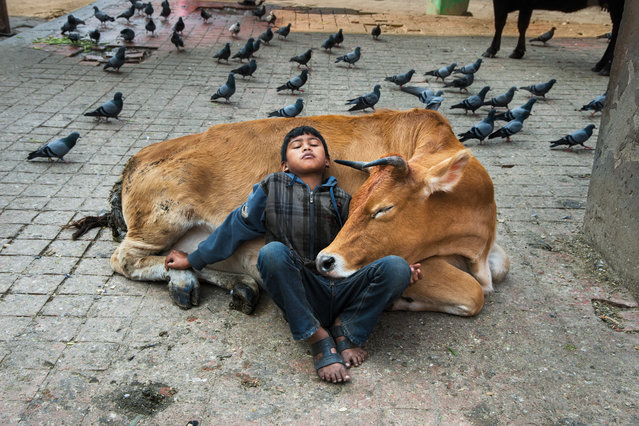
A boy rests against a cow, Kathmandu, Nepal, 2013. “Cows have been designated the national animal in Nepal. They roam freely, and are considered sacred by the 80% of Nepalis who are Hindu”. (Photo by Steve McCurry/The Guardian)

The legendary US photographer’s favourite shots of creatures and how they interact with humans feature in “Animals”, his latest book. Here: A boy rests against a cow, Kathmandu, Nepal, 2013. “Cows have been designated the national animal in Nepal. They roam freely, and are considered sacred by the 80% of Nepalis who are Hindu”. (Photo by Steve McCurry/The Guardian)
Details
07 Nov 2019 00:01:00
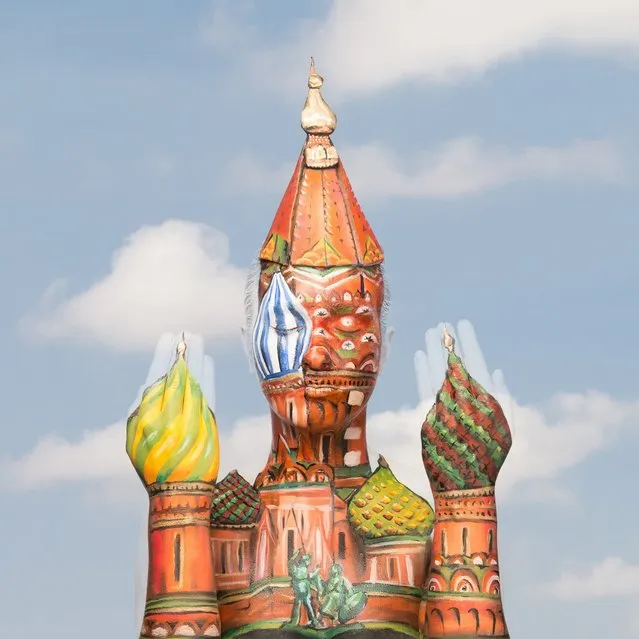
Body Painter By Emma Fay

There is something frightening and at the same time appealing in the living sculptures of 27-year-old British artist Emma Fay. Body art in conjunction with the flexibility of acrobats and fantasy of the artist using water-based paints, a brush and sponge, is transformed into a beautiful work of art. It is not immediately possible to make out the human body in the picture. First you look at the landscape and suddenly begin to distinguish someone’s arm, or neck. Or you look into the eyes of an amazing bull, and it turns out that it is perfectly folded back. Lovely people, temples are and wonderful people-insects are.
Details
10 Jan 2016 08:02:00