Loading...
Done
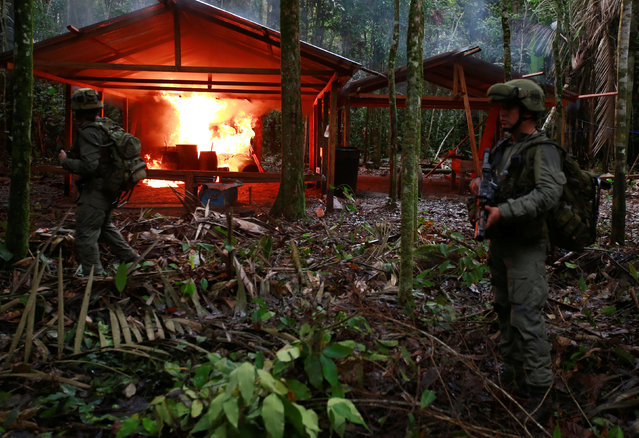
A Colombian anti-narcotics policeman stands guard after burning a cocaine lab, which police said belongs to criminal gangs, in a rural area of Calamar in Guaviare state, Colombia, August 2, 2016. (Photo by John Vizcaino/Reuters)

A Colombian anti-narcotics policeman stands guard after burning a cocaine lab, which police said belongs to criminal gangs, in a rural area of Calamar in Guaviare state, Colombia, August 2, 2016. Colombian law enforcement has destroyed 104 cocaine laboratories capable of producing some 100 tonnes of the drug annually, the head of the anti-narcotics police said on Tuesday. (Photo by John Vizcaino/Reuters)
Details
03 Aug 2016 11:28:00
Tourists from the Middle East take pictures at Vrelo Bosne nature park in Ilidza near Sarajevo, Bosnia and Herzegovina, August 19, 2016. (Photo by Dado Ruvic/Reuters)

Tourists from the Middle East take pictures at Vrelo Bosne nature park in Ilidza near Sarajevo, Bosnia and Herzegovina, August 19, 2016. They discovered mountainous Bosnia, where half the population is Muslim, after the Arab Spring which destabilized many traditional holiday destinations such as Libya, Tunisia and Egypt. (Photo by Dado Ruvic/Reuters)
Details
25 Aug 2016 09:37:00
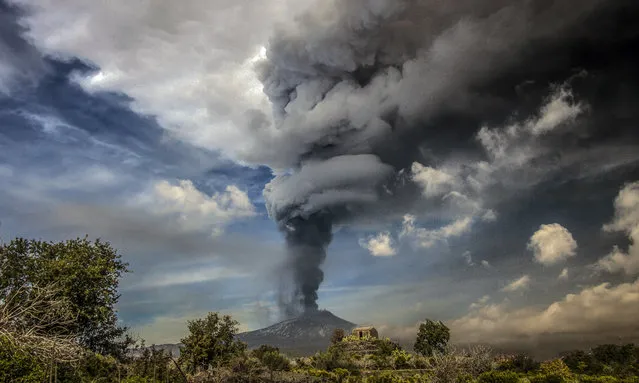
Smoke plumes rise from Mount Etna, one of the most active volcanoes in the world in Sicily, Italy on June 28, 2016. (Photo by Etna Walk/Rex Feature/Shutterstock)

Smoke plumes rise from Mount Etna, one of the most active volcanoes in the world in Sicily, Italy on June 28, 2016. (Photo by Etna Walk/Rex Feature/Shutterstock)
Details
12 Sep 2016 10:24:00
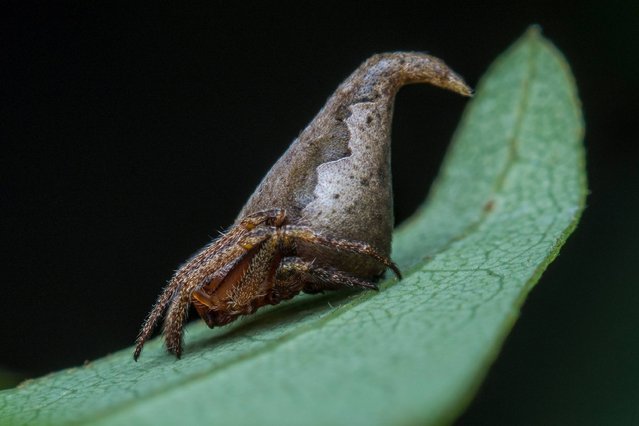
In this handout photograph received from Sumukha J.N on December 15, 2016, the newly-discovered spider Eriovixia Gryffindori sits on a leaf in the Kans in India's Western Ghats. (Photo by Sumukha J.N./AFP Photo)

In this handout photograph received from Sumukha J.N on December 15, 2016, the newly-discovered spider Eriovixia Gryffindori sits on a leaf in the Kans in India's Western Ghats. (Photo by Sumukha J.N./AFP Photo)
Details
17 Jun 2017 08:41:00
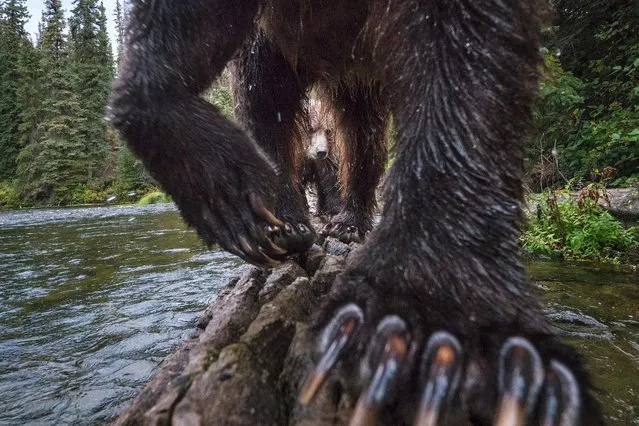
“The Salmon Catchers”. Terrestrial Wildlife. To capture this view of a mother grizzly bear and her cub, photographer Peter Mather set up a camera trap on a log that he knew the bears tended to traverse while fishing for salmon, in the Yukon River watershed in Canada. (Photo by Peter Mather/BigPicture Natural World Photography Competition 2017)

The fourth annual BigPicture Natural World Photography Competition aims to celebrate the diversity of life on Earth, and encourages people to protect and conserve it. Here: “The Salmon Catchers”. Terrestrial Wildlife. To capture this view of a mother grizzly bear and her cub, photographer Peter Mather set up a camera trap on a log that he knew the bears tended to traverse while fishing for salmon, in the Yukon River watershed in Canada. (Photo by Peter Mather/BigPicture Natural World Photography Competition 2017)
Details
02 Jul 2017 07:25:00
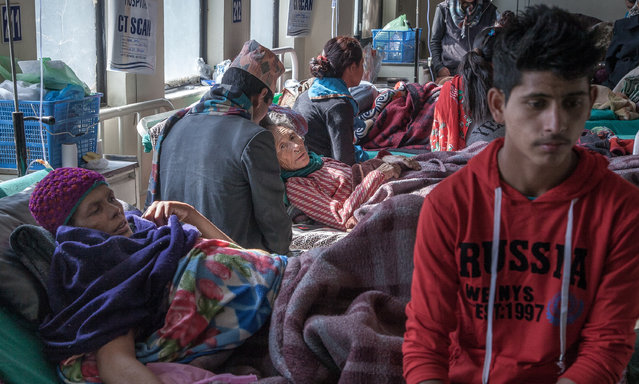
One of the most significant challenges related to cancer in Nepal is the lack of awareness around the prognosis of the disease, as many patients, their families and even healthcare professionals consider cancer to be an incurable disease at any stage. This results in significant delays in bringing patients to hospitals, and high rates of advanced stage cancers and mortality. (Photo by Omar Havana)

One of the most significant challenges related to cancer in Nepal is the lack of awareness around the prognosis of the disease, as many patients, their families and even healthcare professionals consider cancer to be an incurable disease at any stage. This results in significant delays in bringing patients to hospitals, and high rates of advanced stage cancers and mortality. (Photo by Omar Havana)
Details
06 Mar 2016 09:44:00
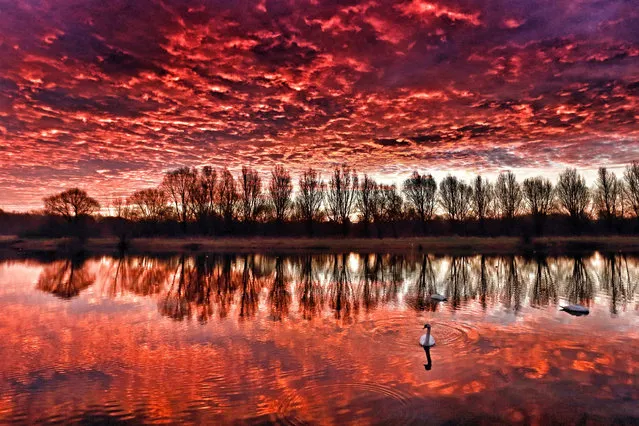
The sky looked on fire this morning, as it made the clouds glow red, just before sunrise at Peterborough Rowing Lake, in Nene Park, UK on January 18, 2017. (Photo by Paul Marriott/Rex Features/Shutterstock)

The sky looked on fire this morning, as it made the clouds glow red, just before sunrise at Peterborough Rowing Lake, in Nene Park, UK on January 18, 2017. (Photo by Paul Marriott/Rex Features/Shutterstock)
Details
23 Jan 2017 10:08:00
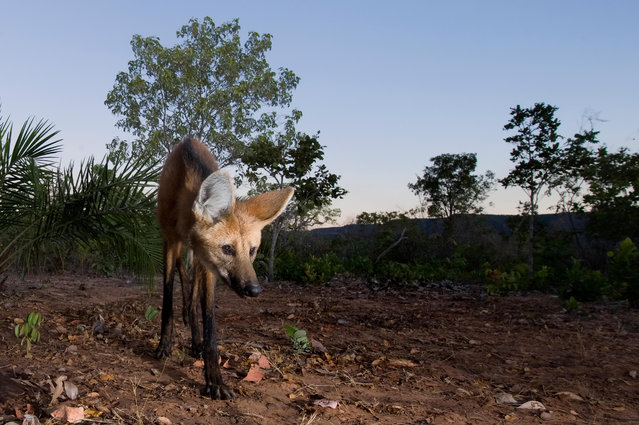
The maned wolf is among the large mammals in the Brazilian Cerrado that are threatened by the increasing conversion of grasslands into farmland for grazing and growing crops. (Photo by Ben Cranke/Nature Picture Library/Alamy Stock Photo)

Global wildlife populations will decline by 67% by 2020 unless urgent action is taken to reduce human impact on species and ecosystems, warns the biennial Living Planet Index report from WWF (World Wide Fund for Nature) and ZSL (Zoological Society of London). From elephants to eels, here are some of the wildlife populations most affected by human activity. Here: The maned wolf is among the large mammals in the Brazilian Cerrado that are threatened by the increasing conversion of grasslands into farmland for grazing and growing crops. (Photo by Ben Cranke/Nature Picture Library/Alamy Stock Photo)
Details
28 Oct 2016 10:47:00