An Aymara woman carries her albino dog on an aguayo during the Christmas parade in La Paz, Bolivia on December 7, 2024. (Photo by Claudia Morales/Reuters)
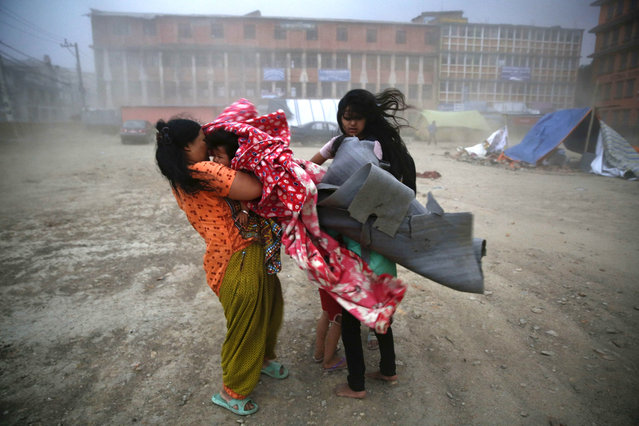
A storm whips through a tented area occupied by Nepalese earthquake survivors as a mother grabs her infant child and runs to find shelter in Kathmandu, Nepal 23 May 2015. Nepalese, who lost their homes in earthquake and fear aftershocks, have been living in temporary shelter in open ground which they had to flee because of the heavy rain and powerful wind. (Photo by Narendra Shrestha/EPA)
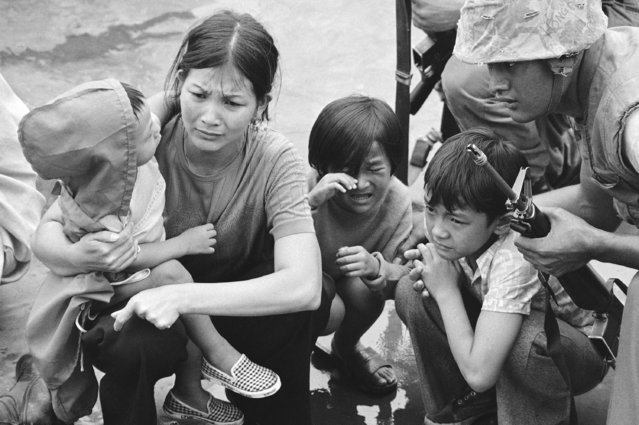
A weeping South Vietnamese mother and her three children are shown on the deck of this amphibious command ship being plucked out of Saigon by U.S. Marine helicopters in Vietnam, April 29, 1975. (Photo by AP Photo)
In this publication you can see some best pictures of photographer Chris Hondros, who was killed on April 20, 2011 by a rocket-propelled grenade (RPG) in Misrata, Libya.
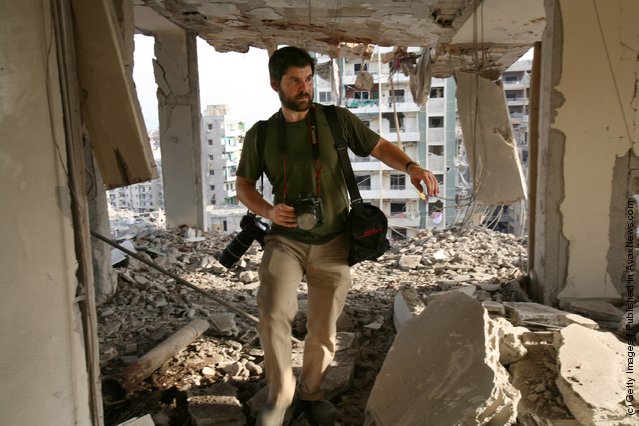
Photo: “Getty Images” photographer Chris Hondros (1970–2011) walks the ruins of a building August 21, 2006 in southern Beirut, Lebanon. (Photo by Getty Images)
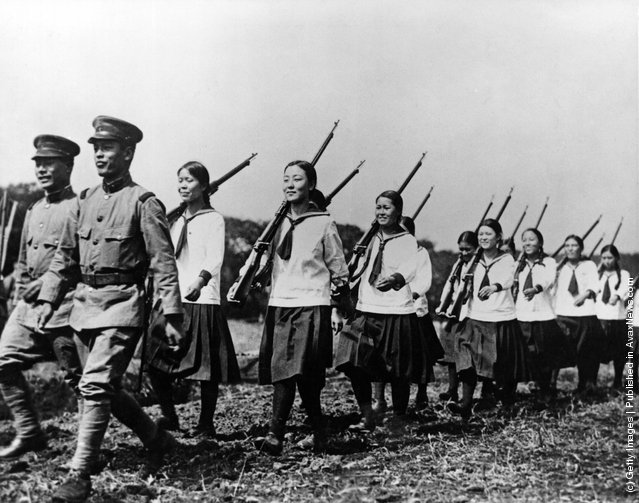
A group of Japanese schoolgirls marching in formation during a school visit to the third regiment to experience the soldier's way of life. (Photo by Fox Photos/Getty Images). Circa 1938
Yannis Behrakis, one of Reuters' most decorated and best-loved photographers, has passed away after a long battle with cancer. He was 58. Here: A pro-government Sierra Leonean fighter bites a bullet as he takes position in no man's land 2 km ahead of Rogberi junction where evidence of executed UN troops were found after heavy fighting between government troops and RUF rebels 100 km north east of Freetown, Sierra Leone, May 23, 2000. (Photo by Yannis Behrakis/Reuters)
On August 31, 2012, a long filament of solar material that had been hovering in the sun's atmosphere, the corona, erupted out into space at 4:36 p.m. EDT. The coronal mass ejection, or CME, traveled at over 900 miles per second. The CME did not travel directly toward Earth, but did connect with Earth's magnetic environment, or magnetosphere, causing aurora to appear on the night of Monday, September 3. (Photo by NASA/GSFC/SDO via The Atlantic)