Loading...
Done
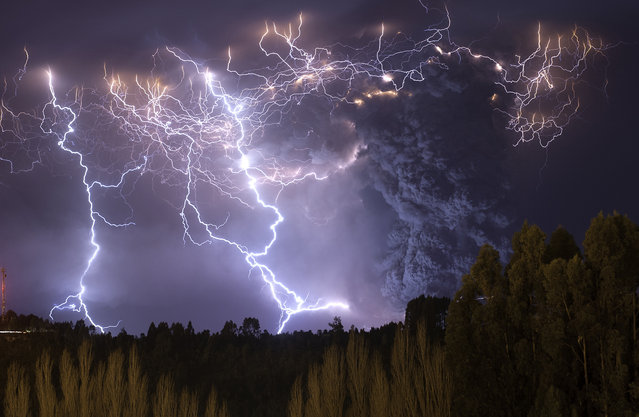
The eruption of Cordon Caulle began on June 4, 2011, located in the Region of Los Rios in Chile. For about 12 months, people and animals became accustomed to living with the daily fall of ash, which also caused problems in the air traffic in South America. The explosions and lightning during first days of the eruption could be seen from hundreds of miles around. This photograph was taken on the second night of eruption from the town of Lago Ranco. (Photo and caption by Francisco Negroni/National Geographic Traveler Photo Contest)

The eruption of Cordon Caulle began on June 4, 2011, located in the Region of Los Rios in Chile. For about 12 months, people and animals became accustomed to living with the daily fall of ash, which also caused problems in the air traffic in South America. The explosions and lightning during first days of the eruption could be seen from hundreds of miles around. This photograph was taken on the second night of eruption from the town of Lago Ranco. (Photo and caption by Francisco Negroni/National Geographic Traveler Photo Contest)

ATTENTION! All pictures are presented in high resolution. To see Hi-Res images – just TWICE click on any picture. In other words, click small picture – opens the BIG picture. Click BIG picture – opens VERY BIG picture.
Details
23 Jun 2013 11:24:00
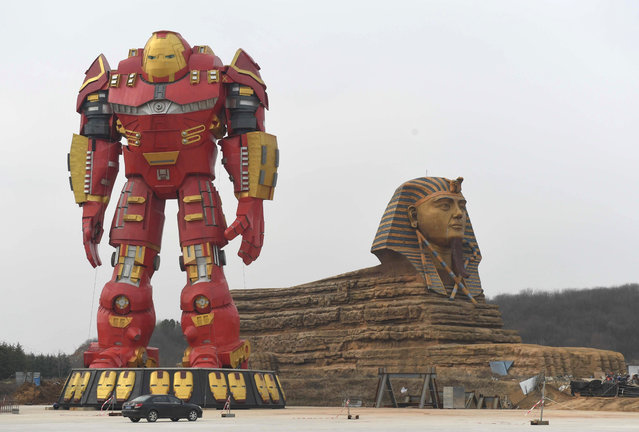
A giant Iron Man statue stands next to a replica Sphinx in Chuzhou, Anhui Province, China on February 21, 2017. (Photo by Sipa Asia/Rex Features/Shutterstock)

A giant Iron Man statue stands next to a replica Sphinx in Chuzhou, Anhui Province, China on February 21, 2017. (Photo by Sipa Asia/Rex Features/Shutterstock)
Details
01 Mar 2017 00:01:00
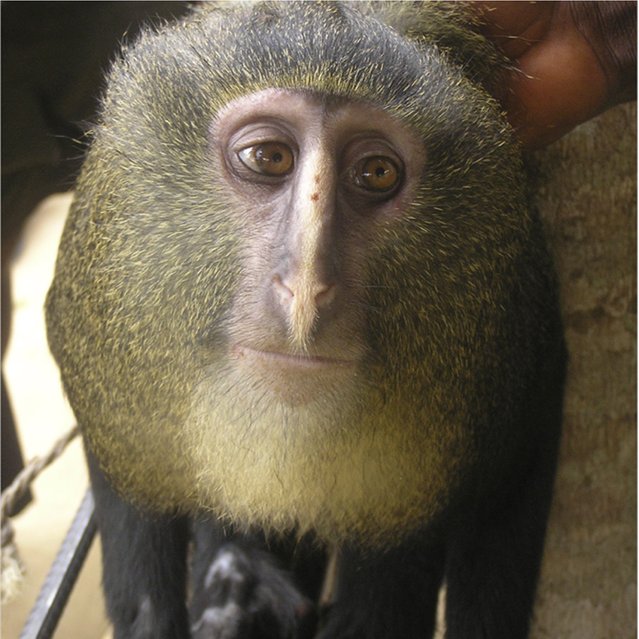
A new species of monkey found in the Democratic Republic of the Congo and identified as Lesula (Cercopithecus lomamiensis) is seen in this undated photograph from an article published September 12, 2012 in the science journal PLOS One. (Photo by Hart J. A., Detwiler K. M., Gilbert C. C./Reuters)

A new species of monkey found in the Democratic Republic of the Congo and identified as Lesula (Cercopithecus lomamiensis) is seen in this undated photograph from an article published September 12, 2012 in the science journal PLOS One. The monkey was first seen in 2007 by researchers John and Terese Hart of the Peabody Museum of Natural History at Yale Research Project. The finding of C. lomamiensis represents only the second new species of African monkey to be discovered in the past 28 years, according to the research article. (Photo by Hart J. A., Detwiler K. M., Gilbert C. C./Reuters)
Details
27 Sep 2012 08:17:00
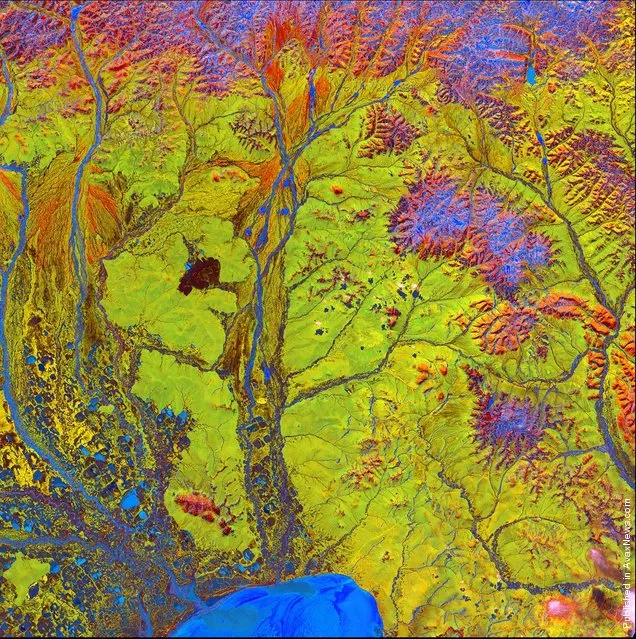
Vivid colors and bizarre shapes come together in a false-color image that could be an illustration for a fantasy story

Vivid colors and bizarre shapes come together in a false-color image that could be an illustration for a fantasy story. This labyrinth of exotic features winds its way along the edge of Russia’s Chaunskaya Bay in northeastern Siberia, seen as a vivid blue half-circle at the bottom of the image Two major rivers, the Chaun and Palyavaam, flow into the bay, which in turn opens into the Arctic Ocean. Ribbon lakes and bogs are present throughout the area, created by depressions left by receding glaciers. (Photo by USGS/NASA)
Details
14 Apr 2012 11:02:00
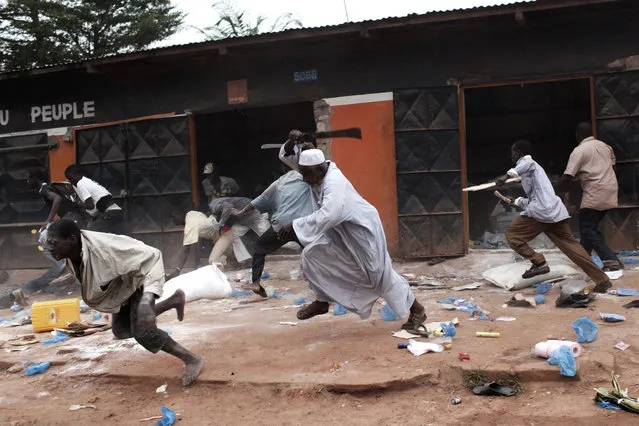
Christians looting a Muslim shop in the “Combattants” district of Bangui. (Photo by Pierre Terdjman/Paris Match)

The 26th annual Visa Pour l’Image, the “Cannes Film Festival” of photojournalism kicks off, filling the French city of Perpignan with more than 3,000 of the world’s best photojournalists and photo editors, along with agencies from around the world. This year’s Visa Pour l’Image showcases 26 exhibitions around the city. Photo: Christians looting a Muslim shop in the “Combattants” district of Bangui. (Photo by Pierre Terdjman/Paris Match)
Details
02 Sep 2014 12:47:00
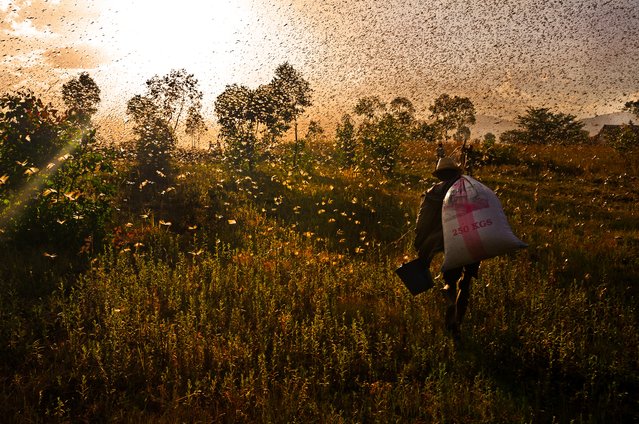
“Locusts & Men”. Oppression, interaction, collaboration. In the life cycle of nature nothing is lost, but the coexistence of different species is sometimes difficult. In Madagascar periodically returns the archaic antagonism between man and the migratory locust, in a circle of life where the two species are looking for space and food for their survival. Photo location: Madagascar, 2013. (Photo and caption by Michele Martinelli/National Geographic Photo Contest)

“Locusts & Men”. Oppression, interaction, collaboration. In the life cycle of nature nothing is lost, but the coexistence of different species is sometimes difficult. In Madagascar periodically returns the archaic antagonism between man and the migratory locust, in a circle of life where the two species are looking for space and food for their survival. At the end of the day a man walks home carrying on his shoulders the heavy bag which contains the locusts captured during the day. The insects provide nutritious meals for the man and his family. Photo location: Madagascar, 2013. (Photo and caption by Michele Martinelli/National Geographic Photo Contest)

ATTENTION! All pictures are presented in high resolution. To see Hi-Res images – just TWICE click on any picture. In other words, click small picture – opens the BIG picture. Click BIG picture – opens VERY BIG picture.
Details
03 Dec 2013 10:59:00
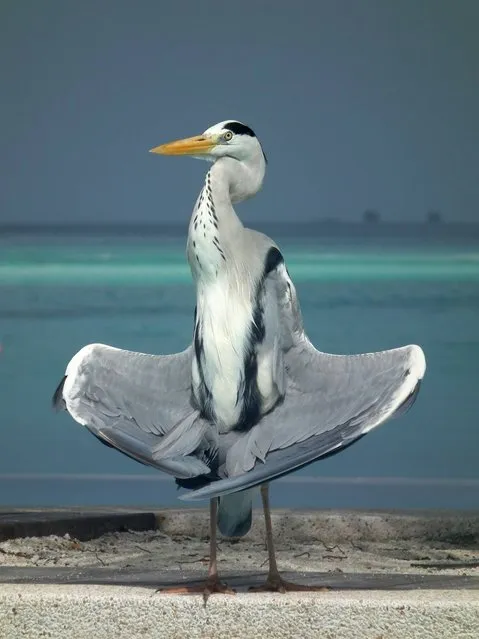
Category One – Perfect Moment. Junior Highly Commended. (Photo by Emma Collins)

Category One – Perfect Moment. Junior Highly Commended. (Photo by Emma Collins)
Details
27 Sep 2013 09:51:00
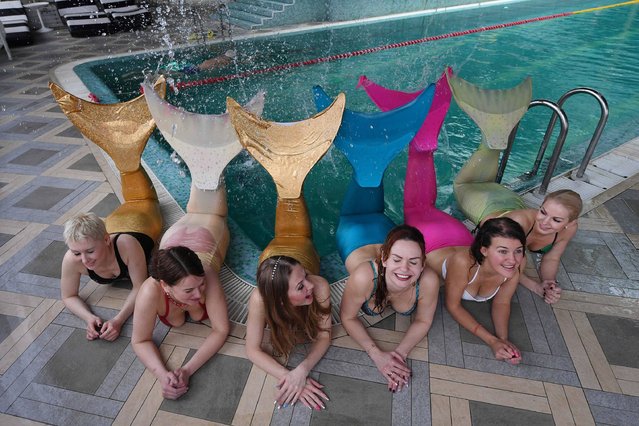
A picture taken on March 16, 2017 shows women dressed up as mermaids posing by a pool at a mermaid training school in Moscow. Russian women who have dreamt of becoming a mermaid since their youngest years, start turning their fantasies into reality with a new type of fitness – mermaid swimming. (Photo by Natalia Kolesnikova/AFP Photo)

A picture taken on March 16, 2017 shows women dressed up as mermaids posing by a pool at a mermaid training school in Moscow. Russian women who have dreamt of becoming a mermaid since their youngest years, start turning their fantasies into reality with a new type of fitness – mermaid swimming. (Photo by Natalia Kolesnikova/AFP Photo)
Details
18 Mar 2017 11:17:00