Loading...
Done
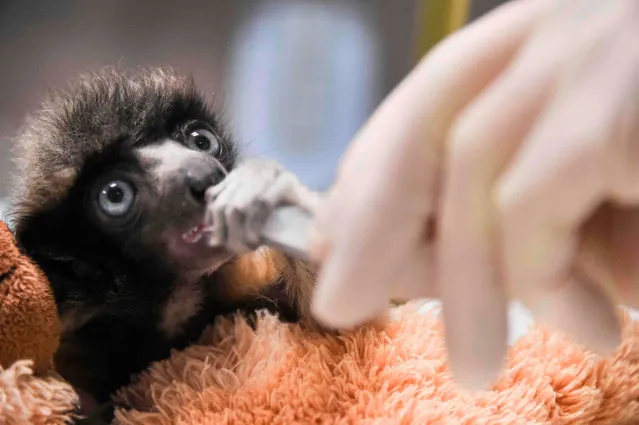
A veterinarian from the zoo of Besancon feeds “Soa”, a female crowned sifaka, in Besancon, eastern France, on February 18, 2019. The crowned sifaka is a critically endangered species from Madagascar. There were only 6 females over 20 individuals living in 7 zoos worldwide end of 2018. (Photo by Sébastien Bozon/AFP Photo)

A veterinarian from the zoo of Besancon feeds “Soa”, a female crowned sifaka, in Besancon, eastern France, on February 18, 2019. The crowned sifaka is a critically endangered species from Madagascar. There were only 6 females over 20 individuals living in 7 zoos worldwide end of 2018. (Photo by Sébastien Bozon/AFP Photo)
Details
24 Feb 2019 00:03:00
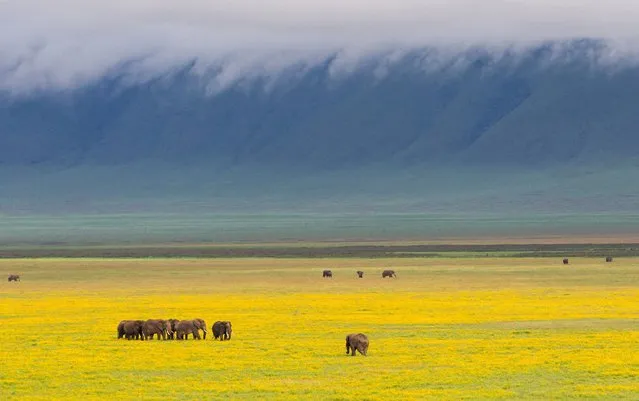
Ngorongoro Crater (Tanzania). At 610m deep and 260 sq km, this is the largest unflooded caldera in the world. A blue-green vision from above it's a haven for engangered wildlife and Maasai livestock. The crater was formed three million years ago when a giant volcano, which could have been as high as Kilimanjaro, exploded and collapsed. The caldera formed the concentric fractures in the crust cracked down to a magma reservoir deep underground. (Photo by John Bryant/Getty Images)

Ngorongoro Crater (Tanzania). At 610m deep and 260 sq km, this is the largest unflooded caldera in the world. A blue-green vision from above it's a haven for engangered wildlife and Maasai livestock. The crater was formed three million years ago when a giant volcano, which could have been as high as Kilimanjaro, exploded and collapsed. The caldera formed the concentric fractures in the crust cracked down to a magma reservoir deep underground. (Photo by John Bryant/Getty Images)
Details
28 Mar 2014 08:08:00
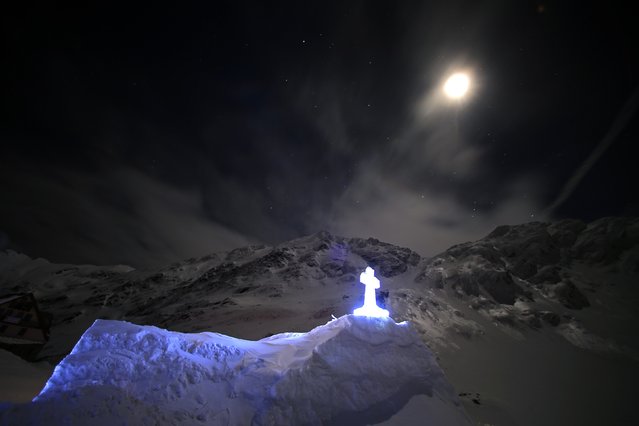
A church made entirely from ice is seen during the night at Balea Lac resort in the Fagaras mountains January 29, 2015. (Photo by Radu Sigheti/Reuters)

A church made entirely from ice is seen during the night at Balea Lac resort in the Fagaras mountains January 29, 2015. (Photo by Radu Sigheti/Reuters)
Details
30 Jan 2015 11:05:00
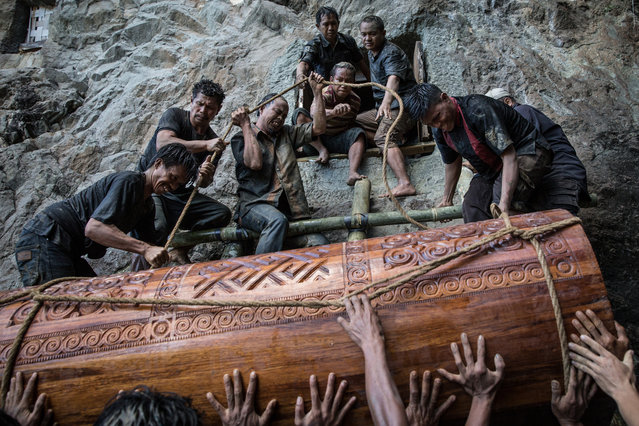
It is said that Torajans are people who “live to die”. For this Indonesian ethnic group, funerals are such extravagant events that they sometimes attract tourists. Families can postpone burials years (and the deceased are considered sick and hosted at home until the funeral) until the family can raise enough money and gather as many relatives as possible. And then it’s a jubilant multiday social event with a parade, dances and animal sacrifices. Agung Parameswara photographed these funerary practices when he traveled to South Sulawesi province, where the Torajans live. But often, their funeral isn’t the last time the dead are seen. In August, crypts are opened, coffins are slid back out and bodies delicately unsheathed. This tender ritual is known as Ma’Nene, which is customarily performed every few years. (Photo by Agung Parameswara/The Washington Post)

It is said that Torajans are people who “live to die”. For this Indonesian ethnic group, funerals are such extravagant events that they sometimes attract tourists. Families can postpone burials years (and the deceased are considered sick and hosted at home until the funeral) until the family can raise enough money and gather as many relatives as possible. And then it’s a jubilant multiday social event with a parade, dances and animal sacrifices. Agung Parameswara photographed these funerary practices when he traveled to South Sulawesi province, where the Torajans live. (Photo by Agung Parameswara/The Washington Post)
Details
06 Oct 2016 09:15:00
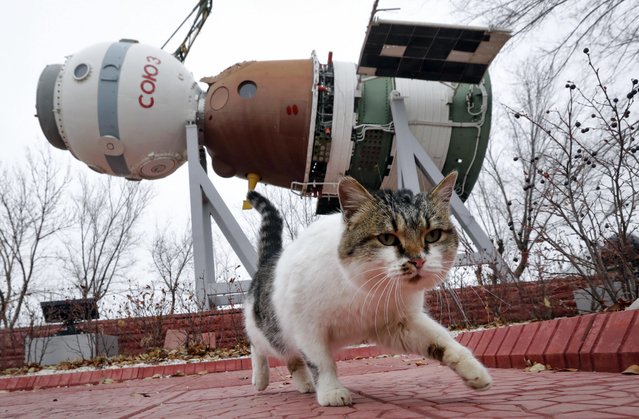
A cat walks past a Soyuz space ship installed at a museum, at the Russian leased Baikonur cosmodrome, Kazakhstan, Tuesday, November 15, 2016. The start of the new Soyuz mission to the International Space Station (ISS) is scheduled on early Friday, Nov. 18 local time. The Russian rocket will carry French astronaut Thomas Pesquet, Russian cosmonaut Oleg Novitsky and U.S. astronaut Peggy Annette Whitson. (Photo by Dmitri Lovetsky/AP Photo)

A cat walks past a Soyuz space ship installed at a museum, at the Russian leased Baikonur cosmodrome, Kazakhstan, Tuesday, November 15, 2016. The start of the new Soyuz mission to the International Space Station (ISS) is scheduled on early Friday, Nov. 18 local time. The Russian rocket will carry French astronaut Thomas Pesquet, Russian cosmonaut Oleg Novitsky and U.S. astronaut Peggy Annette Whitson. (Photo by Dmitri Lovetsky/AP Photo)
Details
16 Nov 2016 11:25:00
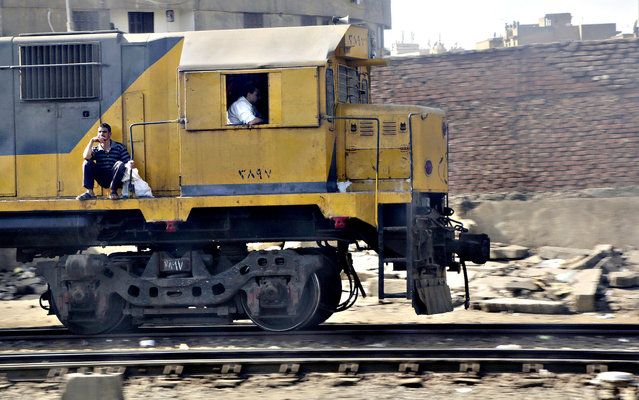
An Egyptian passenger sits on the locomotive of a train as it leaves Cairo train station in Egypt, Wednesday, October 14, 2015. (Photo by Amr Nabil/AP Photo)

An Egyptian passenger sits on the locomotive of a train as it leaves Cairo train station in Egypt, Wednesday, October 14, 2015. (Photo by Amr Nabil/AP Photo)
Details
12 Nov 2015 08:02:00
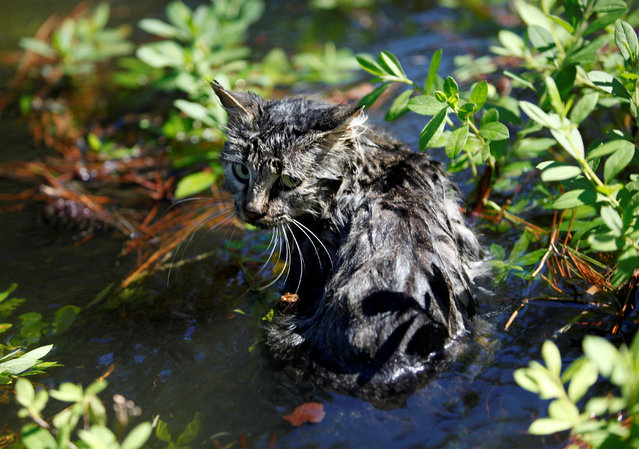
A cat sits in the flooding waters from Hurricane Matthew in downtown Nichols, South Carolina, October 10, 2016. (Photo by Randall Hill/Reuters)

A cat sits in the flooding waters from Hurricane Matthew in downtown Nichols, South Carolina, October 10, 2016. (Photo by Randall Hill/Reuters)
Details
14 Dec 2016 08:03:00
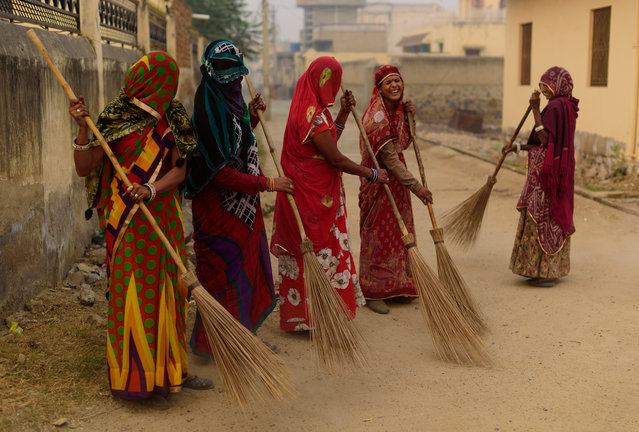
“Early morning in Mandawa, rural Rajasthan: it was the morning of Diwali and the streets were swept by smiling women in brightly coloured sarees as I took an early morning cup of chai. Celebrations started later, when darkness fell”. (Photo by Hamish Scott-Brown/Guardian Witness)

“Early morning in Mandawa, rural Rajasthan: it was the morning of Diwali and the streets were swept by smiling women in brightly coloured sarees as I took an early morning cup of chai. Celebrations started later, when darkness fell”. (Photo by Hamish Scott-Brown/Guardian Witness)
Details
20 Dec 2016 12:57:00