Loading...
Done
Anti-nuclear activists demonstrate during a Say to Goodbye to Nuclear Energy protest in Kobe, Japan

Anti-nuclear activists demonstrate during a “Say to Goodbye to Nuclear Energy” protest on September 11, 2011 in Kobe, Japan. Japan is marking sixth months since a magnitude 9.0 earthquake struck Japan offshore on March 11 at 2:46pm local time, triggering a tsunami wave of up to ten metres which engulfed large parts of north-eastern Japan and also damaged the Fukushima nuclear plant, causing the worst nuclear crisis in decades. The current number of dead and missing is reportedly estimated to be 22,900. (Photo by Buddhika Weerasinghe/Getty Images)
Details
12 Sep 2011 10:16:00
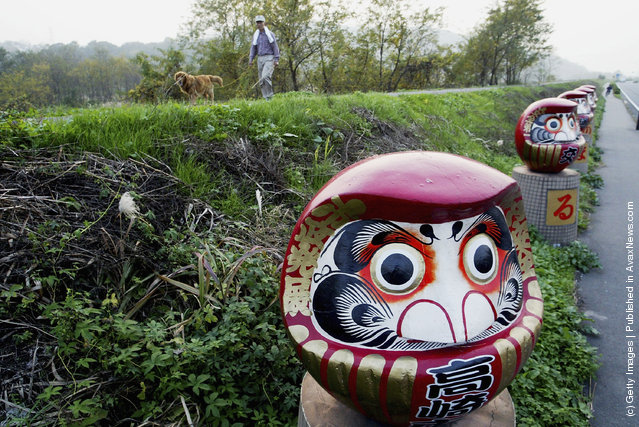
Daruma Dolls

A series of Japanese good luck charms, called “Daruma”, are lined up ahead of the major national elections November 9, 2003 in Takasaki, Japan. The Daruma is said to bring exceptional good luck in all walks of life, but is used especially during election time by all candidates. People think that if they face a difficult situation, as symbolized by the doll that returns to its original position when knocked over, they will always bounce back. (Photo by Koichi Kamoshida/Getty Images)
Details
05 Dec 2011 13:09:00
Arctic Hare

The arctic hare, or polar rabbit, is a species of hare which is adapted largely to polar and mountainous habitats. The arctic hare survives with a thick coat of fur and usually digs holes in the ground or under snow to keep warm and sleep. Arctic hares look like rabbits but have shorter ears, are taller when standing, and, unlike rabbits, can thrive in cold climates. They can travel together with many other hares, sometimes huddling with dozens or more, but are usually found alone, taking, in some cases, more than one partner. The arctic hare can run up to 60 kilometres per hour (40 mph). Its predators include the arctic wolf, arctic fox, and ermine.
Details
17 Mar 2014 13:56:00
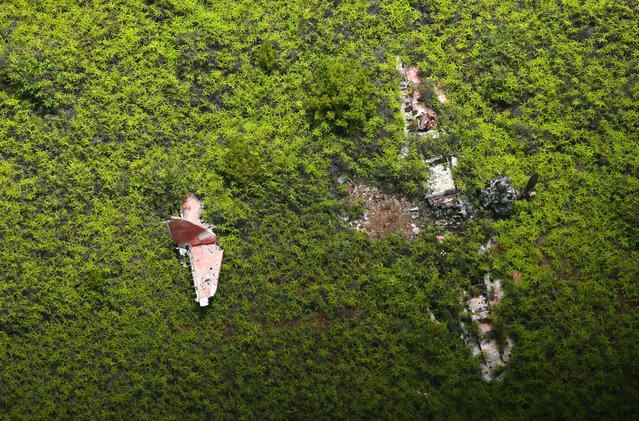
In this aerial image, debris of the Japanese Imperial Navy fighter A6M “Zero” is seen in the field on August 29, 2016 in Babeldaob Island, Palau. (Photo by The Asahi Shimbun via Getty Images)

In this aerial image, debris of the Japanese Imperial Navy fighter A6M “Zero” is seen in the field on August 29, 2016 in Babeldaob Island, Palau. The war was opened up 75 years ago by Imperial Japan against the allied forces, including the United States, by the Pearl Harbour attack on December 7, 1941, claimed more than 2 million lives until Japan's surrender in 1945. (Photo by The Asahi Shimbun via Getty Images)
Details
07 Dec 2016 12:10:00
Filipino Roman Catholic devotees climb the carriage to kiss and rub with their towels the image of the Black Nazarene to celebrate its feast day Monday, January 9, 2017 in Manila, Philippines. (Photo by Bullit Marquez/AP Photo)

Filipino Roman Catholic devotees climb the carriage to kiss and rub with their towels the image of the Black Nazarene to celebrate its feast day Monday, January 9, 2017 in Manila, Philippines. The raucous celebration drew tens of thousands of devotees in a barefoot procession that last for several hours around Manila streets and end up with several people injured. (Photo by Bullit Marquez/AP Photo)
Details
10 Jan 2017 13:49:00
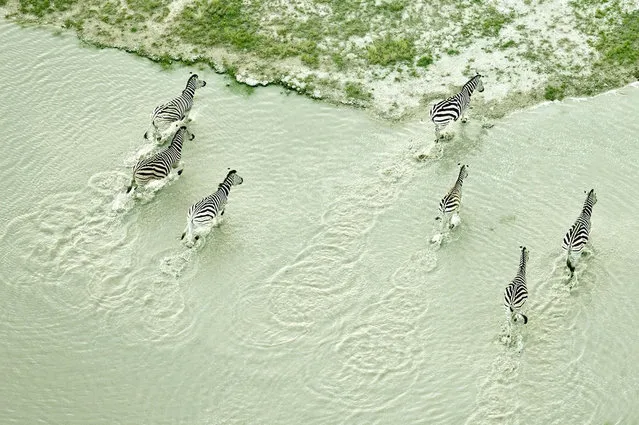
Botswana By Zack Seckler

Aerial shots always amaze us by their magnificence. Human-sized footprints look like ant trails, trees resemble little pieces of broccoli, and landscapes are transformed into breathtaking images, which look like something that can be seen under a microscope. This set of pictures features surreal aerial shots of Botswana taken by Zack Seckler. In the past, to make these kinds of shots, someone had to go up in a helicopter to take a picture. However, today, such images can be easily made using quadcopters, such as DJI Phantom or any other. Thanks to the new technology, we are able to view our world in new ways, allowing us to better appreciate its complexity and beauty. (Photo by Zack Seckler)
Details
14 Dec 2014 11:32:00
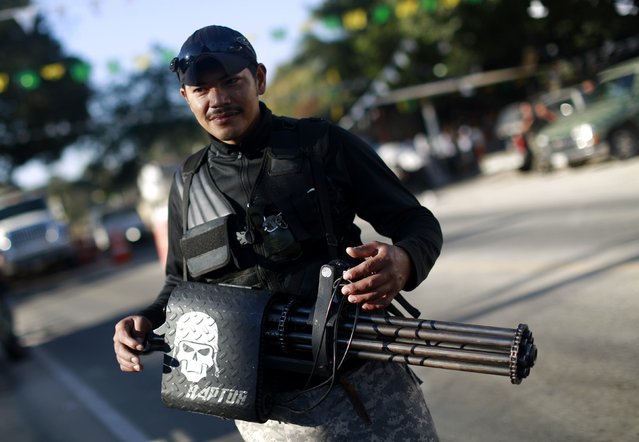
A member of the Community Police of the FUSDEG (United Front for the Security and Development of the State of Guerrero) poses with a weapon during events to mark the first anniversary of the force's operations in Ocotito, January 23, 2015. (Photo by Jorge Dan Lopez/Reuters)

A member of the Community Police of the FUSDEG (United Front for the Security and Development of the State of Guerrero) poses with a weapon during events to mark the first anniversary of the force's operations in Ocotito, January 23, 2015. Based on the traditional indigenous justice system, the Community Police is made up of volunteers from different communities of Guerrero, and was created in response to the spate of violence in several locations in the state. (Photo by Jorge Dan Lopez/Reuters)
Details
25 Jan 2015 09:19:00
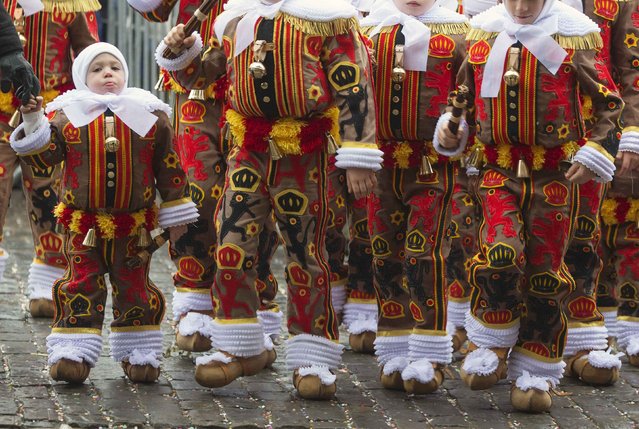
Hugo Belleri (L), a three-year-old boy and the youngest Gilles of Binche, takes part in the parade of Young Gilles of Binche during the carnival event in Binche February 17, 2015. (Photo by Yves Herman/Reuters)

Hugo Belleri (L), a three-year-old boy and the youngest Gilles of Binche, takes part in the parade of Young Gilles of Binche during the carnival event in Binche February 17, 2015. The Binche carnival, a UNESCO World Heritage event, is the biggest and the liveliest annual event in Belgium. Up to 1,000 Gilles parade in the city centre of Binche, wearing a red, yellow and black medieval costume hung with bells and decorated with fluffy lace at the neck, wrists and ankles. (Photo by Yves Herman/Reuters)
Details
18 Feb 2015 12:32:00