Loading...
Done
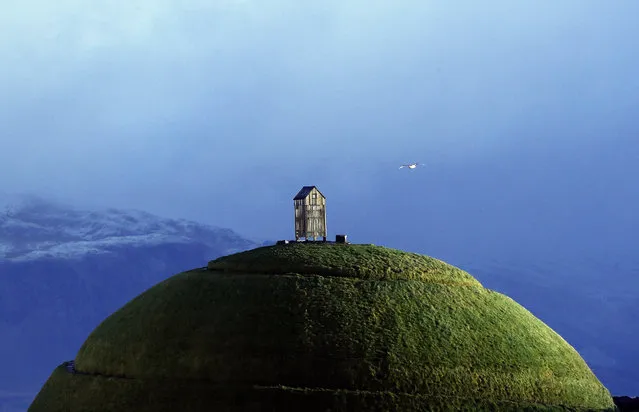
The Thufa hill in Reykjavik, Friday, October 28, 2016. Parliamentary elections will be held in Iceland on Oct. 29, 2016, more than 250,000 voters are called to elect the new parliament, 63 members of the Althing parliament. (Photo by Frank Augstein/AP Photo)

The Thufa hill in Reykjavik, Friday, October 28, 2016. Parliamentary elections will be held in Iceland on October 29, 2016, more than 250,000 voters are called to elect the new parliament, 63 members of the Althing parliament. (Photo by Frank Augstein/AP Photo)
Details
07 Nov 2016 12:28:00
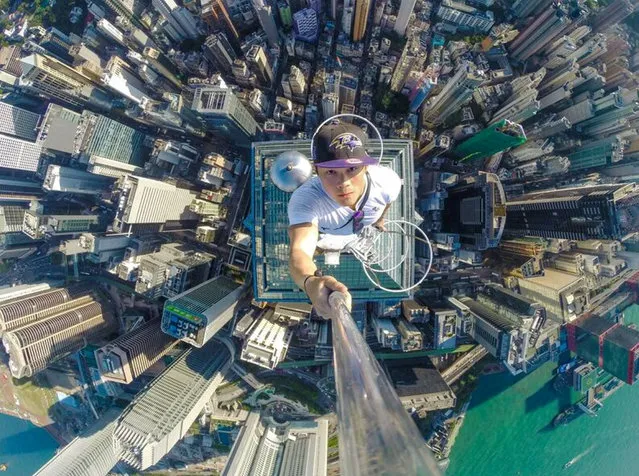
Roof-topping enthusiast Daniel Lau takes a selfie with high-rise buildings down below as he stands on the top of a skyscraper in Hong Kong, China on August 15, 2017. Welcome to “roof-topping”, where daredevils take pictures of themselves standing on the tops of tall buildings, or in some cases even dangling from them, without any safety equipment. A craze that began in Russia has now taken hold in Hong Kong, one of the world's most vertical cities, with dramatic results. “I'm an explorer”, said Daniel Lau, one of the three who climbed to the top of The Center. A student, he said roof-topping was “a getaway from my structured life”. “Before doing this, I lived like an ordinary person, having a boring life”, he said. “I wanted to do something special, something memorable. I want to let people see Hong Kong, the place they are living, from a new perspective”. Mr Lau said he had been inspired by Russian climbers and that he was unafraid of the vertiginous heights he scales. (Photo by ImagineChina/Rex Features/Shutterstock)

Roof-topping enthusiast Daniel Lau takes a selfie with high-rise buildings down below as he stands on the top of a skyscraper in Hong Kong, China on August 15, 2017. A craze that began in Russia has now taken hold in Hong Kong, one of the world's most vertical cities. Mr Lau said he had been inspired by Russian climbers and that he was unafraid of the vertiginous heights he scales. (Photo by ImagineChina/Rex Features/Shutterstock)
Details
16 Aug 2017 07:23:00
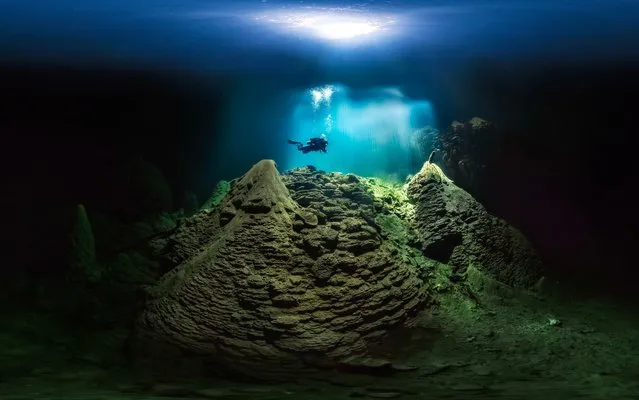
Cave Diver, Anhumas Abyss, Bonito, Brazil: The Anhumas Abyss is an underground cavern with a crystal-clear lake below, more than 260 feet (79 m) deep. A visitor must enter through a narrow opening at the top of the chamber and rappel into the cave. Snorkeling and scuba diving in the lake reveal amazing scenery. Distinctive, conical limestone stalagmites and stalactites occupy the lake and the surrounding area, some reaching 65 feet (20 m) high. “One must rappel about 235 feet (72 m) to get down into this deep lake. The photo was taken at a depth of 50 feet (15 m). It was a challenge to create the image because of the high contrast, plus the diver could not see into the darkness, making communication impossible”. (Photo by Marcio Cabral/Nature’s Best Photography Awards 2017)

Cave Diver, Anhumas Abyss, Bonito, Brazil: The Anhumas Abyss is an underground cavern with a crystal-clear lake below, more than 260 feet (79 m) deep. A visitor must enter through a narrow opening at the top of the chamber and rappel into the cave. Snorkeling and scuba diving in the lake reveal amazing scenery. Distinctive, conical limestone stalagmites and stalactites occupy the lake and the surrounding area, some reaching 65 feet (20 m) high. (Photo by Marcio Cabral/Nature’s Best Photography Awards 2017)
Details
26 Oct 2017 08:10:00
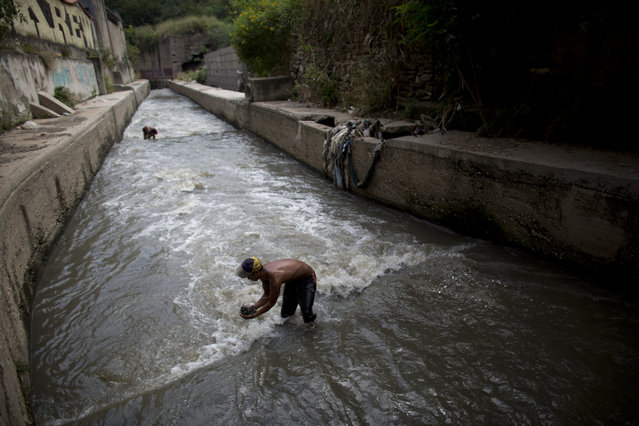
In this November 30, 2017 photo, Douglas scoops up mud from the bottom of the polluted Guaire River, in search of gold and anything valuable he can sell, in Caracas, Venezuela. Some stretches of the river smell of sewer while others emit a toxic odor of fuel, a stench that stays in ones nose for hours after leaving the water. (Photo by Ariana Cubillos/AP Photo)

In this November 30, 2017 photo, Douglas scoops up mud from the bottom of the polluted Guaire River, in search of gold and anything valuable he can sell, in Caracas, Venezuela. Some stretches of the river smell of sewer while others emit a toxic odor of fuel, a stench that stays in ones nose for hours after leaving the water. (Photo by Ariana Cubillos/AP Photo)
Details
11 Jan 2018 07:35:00
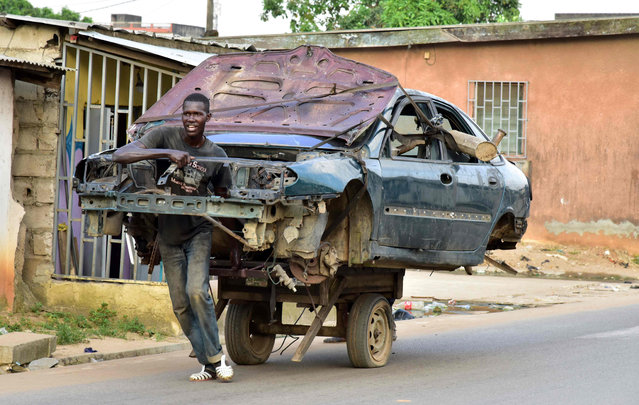
A man transports the carcass of a car on a two- wheeled carriage in a neighborhood in Abobo, a suburb of Abidjan, Côte d’Ivoire on December 1, 2017. (Photo by Issouf Sanogo/AFP Photo)

A man transports the carcass of a car on a two- wheeled carriage in a neighborhood in Abobo, a suburb of Abidjan, Côte d’Ivoire on December 1, 2017. (Photo by Issouf Sanogo/AFP Photo)
Details
21 Jan 2018 07:17:00
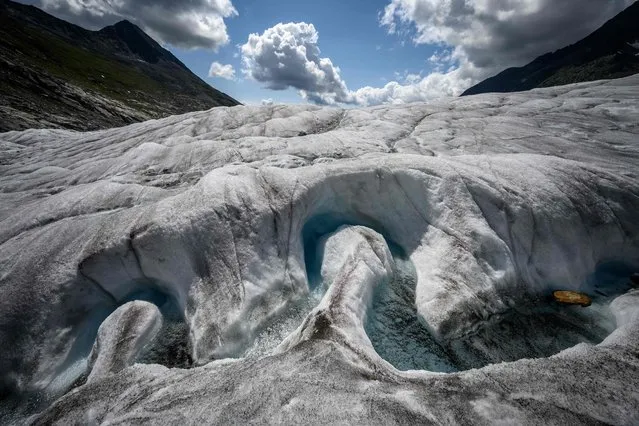
A picture taken on August 25, 2021 shows a view of the Aletsch Glacier. After hiking for hours across the mountain and a vast expanse of white, Swiss glaciologist Matthias Huss crouches down near the middle of the massive glacier and checks the measurements. Analysis of the data gathered from Aletsch, the largest glacier in the Alps, paints a dire picture of the toll that climate change is taking on the behemoth. (Photo by Fabrice Coffrini/AFP Photo)

A picture taken on August 25, 2021 shows a view of the Aletsch Glacier. After hiking for hours across the mountain and a vast expanse of white, Swiss glaciologist Matthias Huss crouches down near the middle of the massive glacier and checks the measurements. Analysis of the data gathered from Aletsch, the largest glacier in the Alps, paints a dire picture of the toll that climate change is taking on the behemoth. (Photo by Fabrice Coffrini/AFP Photo)
Details
21 Oct 2021 08:38:00
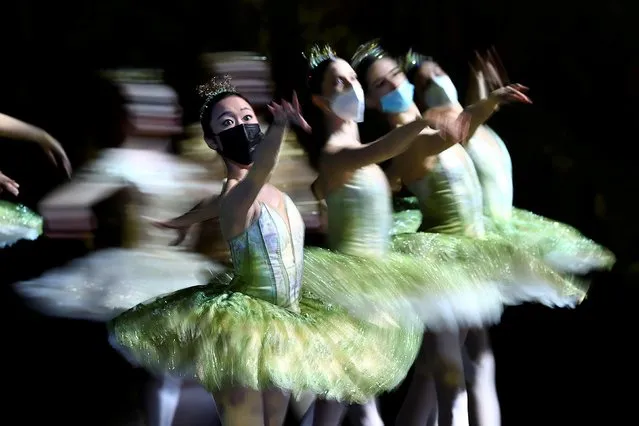
Dancer of the Berlin State Ballet (Staatsballett Berlin) wear face masks as they perform during the dress rehearsal of Don Quixote in a production choreographed by Victor Ullate, amid the coronavirus disease (COVID-19) pandemic at Deutsche Oper opera house in Berlin, Germany, December 1, 2021. (Photo by Fabrizio Bensch/Reuters)

Dancer of the Berlin State Ballet (Staatsballett Berlin) wear face masks as they perform during the dress rehearsal of Don Quixote in a production choreographed by Victor Ullate, amid the coronavirus disease (COVID-19) pandemic at Deutsche Oper opera house in Berlin, Germany, December 1, 2021. (Photo by Fabrizio Bensch/Reuters)
Details
03 Dec 2021 09:40:00
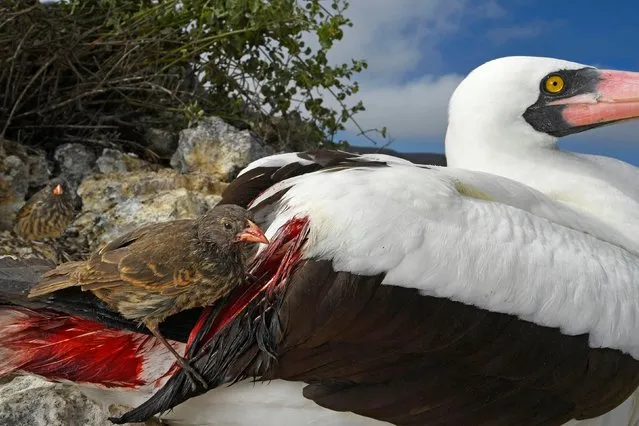
Bloodthirsty by Thomas P Peschak, Germany/South Africa — winner, Behaviour: birds. When rations run short on Wolf Island, in the remote northern Galápagos, the sharp-beaked ground finches become vampires. Their sitting targets are Nazca boobies and other large birds. The finches rely on a scant diet of seeds and insects, which regularly dries up, so they drink blood to survive. ‘I’ve seen more than half a dozen finches drinking from a single Nazca booby,’ says Tom. Rather than leave their nests the boobies tolerate the vampires, and the blood loss doesn’t seem to cause permanent harm. (Photo by Thomas P Peschak/2018 Wildlife Photographer of the Year)

Bloodthirsty by Thomas P. Peschak, Germany/South Africa — winner, Behaviour: birds. When rations run short on Wolf Island, in the remote northern Galápagos, the sharp-beaked ground finches become vampires. Their sitting targets are Nazca boobies and other large birds. The finches rely on a scant diet of seeds and insects, which regularly dries up, so they drink blood to survive. ‘I’ve seen more than half a dozen finches drinking from a single Nazca booby,’ says Tom. Rather than leave their nests the boobies tolerate the vampires, and the blood loss doesn’t seem to cause permanent harm. (Photo by Thomas P. Peschak/2018 Wildlife Photographer of the Year)

Details
19 Oct 2018 00:05:00