Loading...
Done
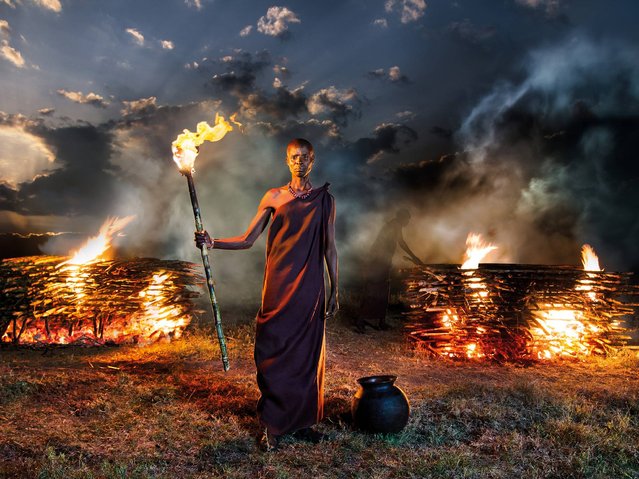
“The Salt of the Presidium”. Andrew Wanyonyi Sikanga is a salt producer in Nabuyole, western Kenya, who produces salt from an aquatic plant. (Photo by Steve McCurry/2015 Lavazza Calendar)

Extraordinary tales of everyday heroism have been illustrated beautifully by renowned US photographer Steve McCurry in the new 2015 Lavazza Calendar. The calendar which has been created in collaboration with the Slow Food movement, features twelve breathtaking pictures, capturing the spirit, strength and humanity of the Earth Defenders – women and men who protect their land and projects in Africa with passion and bravery. The proceeds from sales of the calendar and all donations will be contributed entirely to create 10,000 food gardens in African schools and villages by the end of 2016. (Photo by Steve McCurry/2015 Lavazza Calendar)
Details
27 Oct 2014 12:08:00
Illustration By Luna Portnoi Part 1

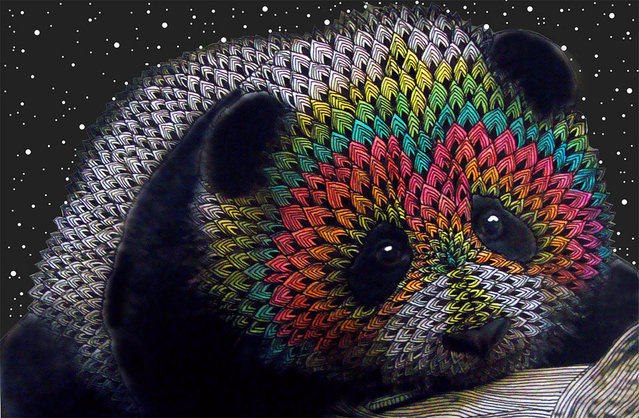
Luna Portnoi emerging Argentine Artist Luna Portnoi has been developing her practice in Buenos Aires for over five years. Her work is deeply connected to themes of color, nature, astronomy, childhood, magic, ancient civilizations, collaboration and the passions, openness and emotions we experience as children that are often left behind in adulthood. Already well known in Buenos Aires, the Artist has also received international press coverage.


See Also: Part 2 _ Part 3
Details
17 Sep 2014 07:47:00
Illustration By Luna Portnoi Part 3

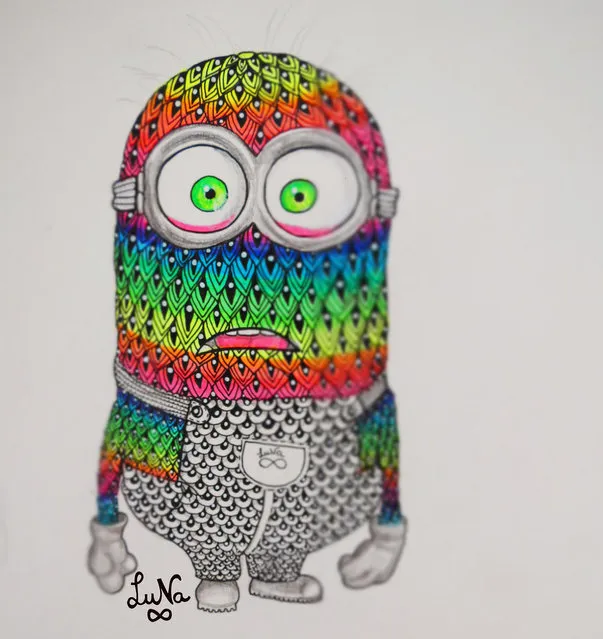
Luna Portnoi emerging Argentine Artist Luna Portnoi has been developing her practice in Buenos Aires for over five years. Her work is deeply connected to themes of color, nature, astronomy, childhood, magic, ancient civilizations, collaboration and the passions, openness and emotions we experience as children that are often left behind in adulthood. Already well known in Buenos Aires, the Artist has also received international press coverage.


See Also: Part 1 _ Part 2
Details
22 Sep 2014 08:59:00
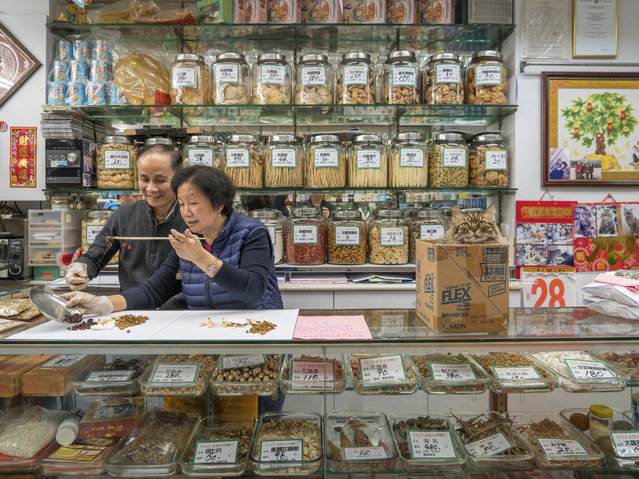
Hong Kong Shop Cats #17. Marcel Heijnen returned to Hong Kong in 2015 and found himself living without a cat for the first time in decades. Soon, though, he was indulging in what he calls “re-tail therapy” and found himself on a first-name basis with a number of cats in his neighbourhood, Sai Ying Pun. (Photo by Marcel Heijnen/Blue Lotus)

When Dutch photographer Marcel Heijnen moved to Hong Kong, the territory’s shop cats instantly caught his eye. While the “feline emperors” are the stars, his shots also offer insights into Hong Kong’s wares, from dried fish to paper. Here: Hong Kong Shop Cats #17. (Photo by Marcel Heijnen/Blue Lotus)
Details
03 Jan 2017 11:04:00
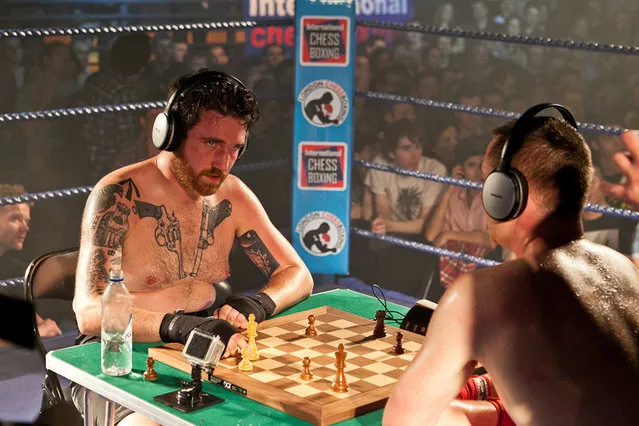
Chess boxing

Chess boxing is a hybrid sport that combines chess with boxing in alternating rounds. The sport was invented by Dutch artist Iepe Rubingh, who was inspired by a French comic book Le Froid Equateur by artist and filmmaker Enki Bilal. Chess boxing is a fast growing sport, with large followings in Berlin and London, where most events take place. Several other chessboxing events have taken place around the world, including in Los Angeles, Tokyo, Nantes (France), Reykjavík (Iceland), Amsterdam, Calcutta (India) and Krasnoyarsk (Russia). Participants must be skilled as both boxers and chess players, as a match may be won either way.
Details
17 Oct 2012 11:17:00
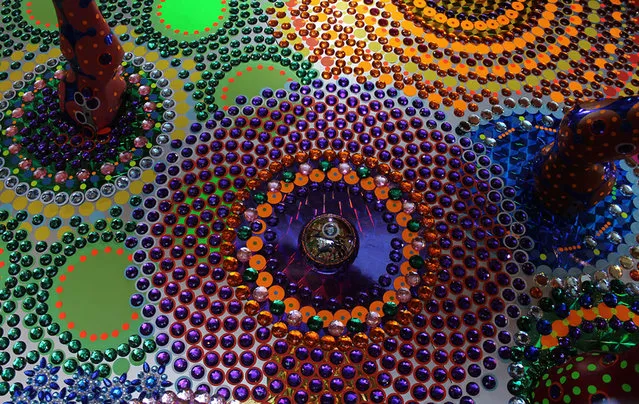
Kaleidoscopic Crystal Floor By Suzan Drummen

Dutch artist Suzan Drummen‘s large-scale floor installations are mesmerizing and complex circular patterns made out of mirrors and brightly colored glass. The fractal-like arrangements feature ornate and elaborate circles growing exponentially out of each other and vibrant rings of spiraling colors winding into the surface of the floor. They are composed of crystals, chromed metal, precious stones, mirrors and optical glass. A sensory experience, and visually stimulating, the glittering installations play with the architecture of the space — climbing up walls and sweeping across the surfaces — examining the idea of illusion and optical effects.
Details
27 May 2015 08:18:00
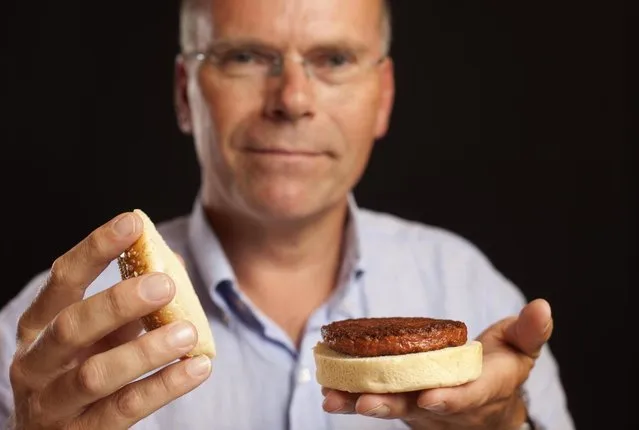
In this handout image provided by Ogilvy, a burger made from cultured beef, which has been developed by Professor Mark Post of Maastricht University in the Netherlands (pictured) is shown to the media during a press conference on August 5, 2013 in London, England. Cultured Beef could help solve the coming food crisis and combat climate change with commercial production of Cultured Beef beginning within ten to twenty years. (Photo by David Parry via Getty Images)

In this handout image provided by Ogilvy, a burger made from cultured beef, which has been developed by Professor Mark Post of Maastricht University in the Netherlands (pictured) is shown to the media during a press conference on August 5, 2013 in London, England. The in-vitro burger, cultured from cattle stem cells, the first example of what its creator says could provide an answer to global food shortages and help combat climate change, was fried in a pan and tasted by two volunteers. The burger is the result of years of research by Dutch scientist Mark Post, a vascular biologist at the University of Maastricht, who is working to show how meat grown in petri dishes might one day be a true alternative to meat from livestock.The meat in the burger has been made by knitting together around 20,000 strands of protein that has been cultured from cattle stem cells in Post's lab. (Photo by David Parry)
Details
06 Aug 2013 08:48:00
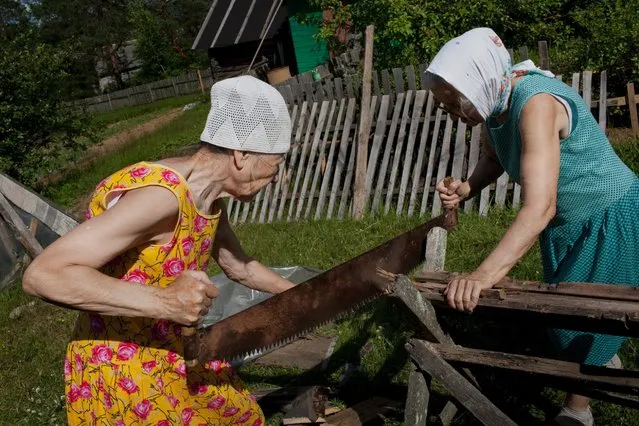
“Two-Handed Saw, 2014”. “Most of the neighbors have switched to power tools to run their households, the buzz of chain saws and weed-whackers overpowering the quieter sounds of country life, but my aunts hold on to the two-handed saw that's decades old, the sickle and scythe that need to be sharpened and polished after each use, the old axe that's becoming heavier each year. Each of these objects is familiar, holding memories of their brother, who succumbed to cancer a few years ago, of days before my grandfather lost his vision in the 50's, of busier days and longer futures”, Sablin told. (Photo by Nadia Sablin)

In northwest Russia, in a small village called Alekhovshchina, Nadia Sablin's aunts spend the warmer months together in the family home and live as the family has always lived, chopping wood to heat the house and making their own clothes. Sablin's book of photographs, “Aunties: The Seven Summers of Alevtina and Ludmila”, is published by Duke University Press. Here: “Two-Handed Saw, 2014”. (Photo by Nadia Sablin)
Details
25 Feb 2016 12:12:00