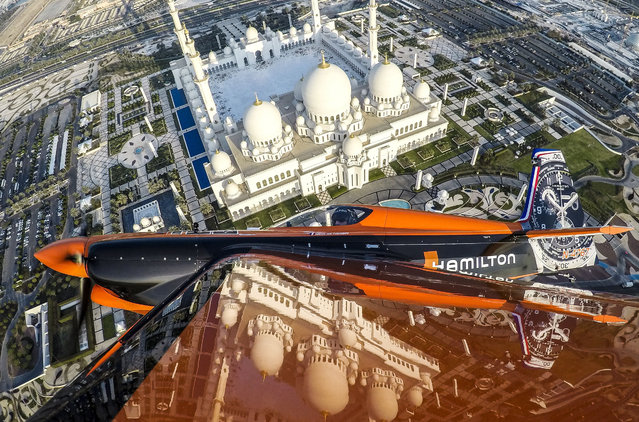
A participant prepares for the Red Bull Air Race World Championships in Abu Dhabi, United Arab Emirates on February 6, 2017. (Photo by Red Bull Content Pool/SIPA Press/Rex Features/Shutterstock)
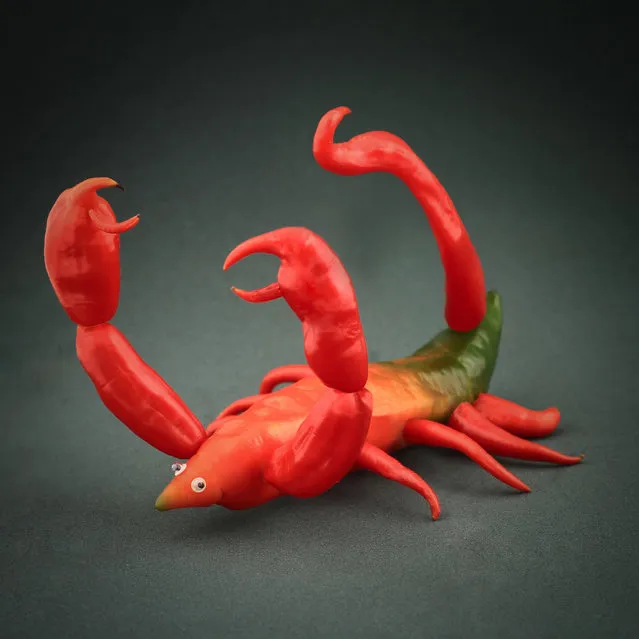
“Red Pepperpion. Red Pepperpions are secretive, nocturnal arachilli which can be spotted in kitchens of arid climates all around the world.
Red Pepperpions are equipped with a delicious (and depending on the quantity...deadly!) stinger at the end of its tail. If you happen to get bitten (or if you bite him!) it will produce a burning sensation on your taste nerves.
However, there is no need to worry, since the fact is that his potent stinger is usually only used when hunting or whenever the Pepperpion feels like he might become part of someones meal...
At daylight or when encountering a larger foe, such as a Saucier Chef, they retreat into burrows inside the fridge or hide beneath the oven”. (Photo and comment by Vanessa Dualib)
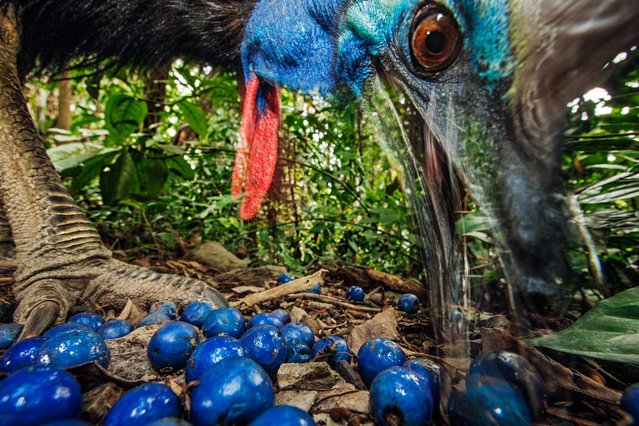
“Cassowaries are large, flightless birds related to emus and (more distantly) to ostriches, rheas, and kiwis”, writes Olivia Judson in the September issue of National Geographic magazine. How large? People-size: Adult males stand well over five foot five and top 110 pounds. Females are even taller, and can weigh more than 160 pounds. Dangerous when roused, they’re shy and peaceable when left alone. But even birds this big and tough are prey to habitat loss. The dense New Guinea and Australia rain forests where they live have dwindled. Today cassowaries might number 1,500 to 2,000. And because they help shape those same forests – by moving seeds from one place to another – “if they vanish”, Judson writes, “the structure of the forest would gradually change” too. (Photo by Christian Ziegler/National Geographic)
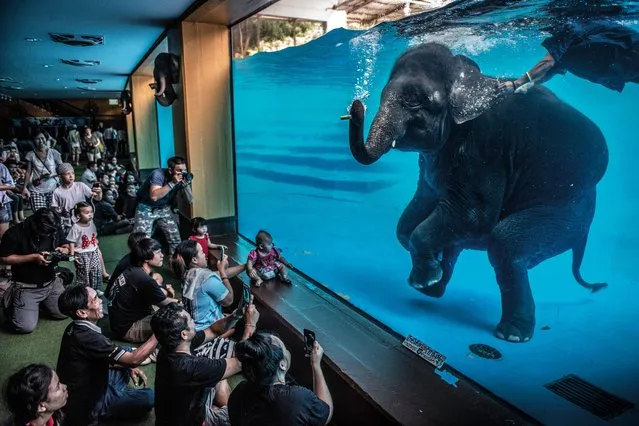
Winner, photojournalism. Elephant in the room, by Adam Oswell, Australia Zoo. Visitors watch a young elephant performing underwater. Oswell was disturbed by this scene, and organisations concerned with the welfare of captive elephants say performances like this encourage unnatural behaviour. In Thailand, there are now more elephants in captivity than in the wild. With the Covid pandemic causing tourism to collapse, elephant sanctuaries are becoming overwhelmed with animals that can no longer be looked after by their owners. (Photo by Adam Oswell/Wildlife Photographer of the Year 2021)
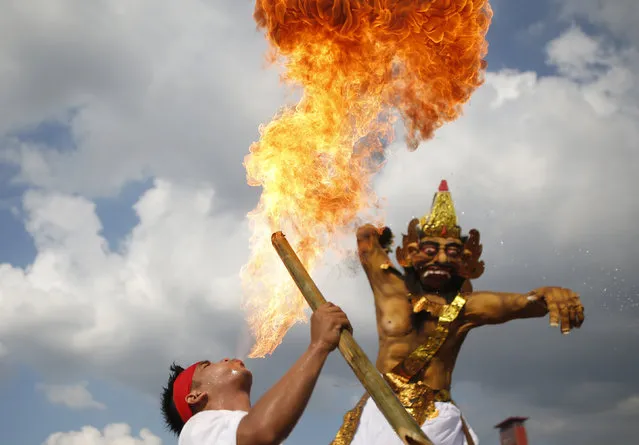
A Balinese Hindu blows fire, during a parade carrying Ogoh-ogoh effigies symbolising evil spirits, during a ritual before Nyepi, the day of silence, in Palembang, South Sumatra province, Indonesia March 8, 2016. Nyepi is a day of silence for self-reflection celebrating the Balinese Hindu new year, where people may not use lights, light fires, work, travel nor enjoy entertainment. (Photo by Darren Whiteside/Reuters)
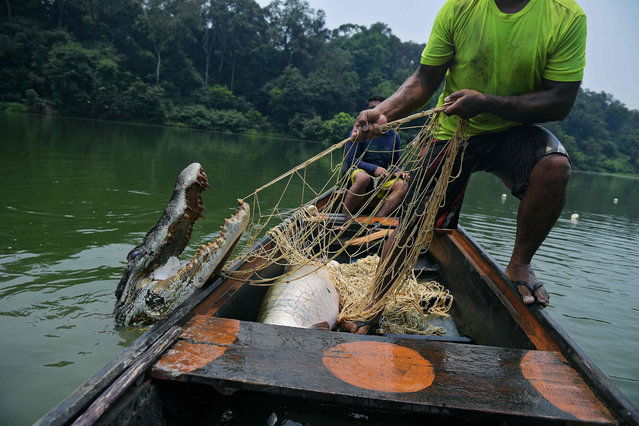
Fishermen pull up a live 2.5 metre crocodile in their net in the Western Amazon region, Brazil on September 20, 2017. The fishermen were fishing for a large river fish called Arapaima but sometimes crocodiles become stuck in the nets as well. (Photo by Carl de Souza/AFP Photo)
Ng Sin Nee (L) and Lee Shin May (R) from Malaysia take pictures with the panoramic view of the city from the Sky Box at KL Tower, the world's seventh tallest telecommunications tower, in Kuala Lumpur on May 24, 2016. Officially opened on May 20, the Sky Box has been the latest attraction for tourists arriving to the Malaysian capital. It stands 300 metres above ground and can fit six people at any one time, and offers spectacular views of the Kuala Lumpur skyline, including the iconic Petronas Twin Towers. (Photo by Mohd Rasfan/AFP Photo)