Victoria of Bulgaria performs during the second semi-final of the 2021 Eurovision Song Contest in Rotterdam, Netherlands, May 20, 2021. (Photo by Piroschka van de Wouw/Reuters)
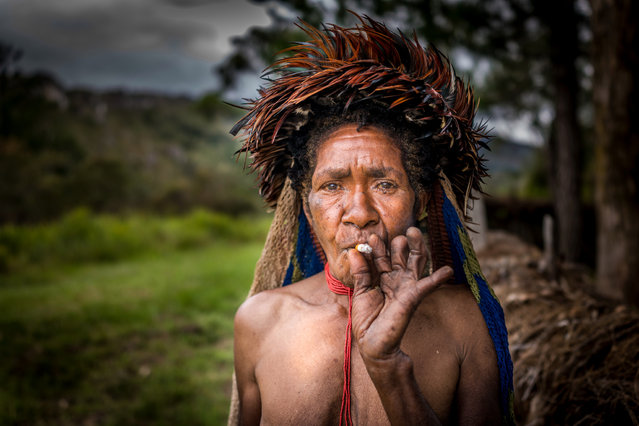
Dani tribeswoman smokes a cigarette and shows her amputated fingers in, Western New Guinea, Indonesia, August 2016. Deep in the highlands of Western New Guinea, Indonesia, lives one of the world’s most isolated tribes. Known as the Dani people, the tribe was unwittingly discovered by American philanthropist, Richard Archbold, after an expedition in 1938. (Photo by Teh Han Lin/Barcroft Images)
At the Krasnopresnenskaya station, the benches come from the Cathedral of Christ-Sauveur, which was built from 1839 to 1883 in memory of the victory of Russia against the army of Napoleon I. The cathedral was destroyed under Stalin in 1931, but the benches remained intact. Metro architects decided to install them in some stations. (Photo by Didier Bizet/The Washington Post)
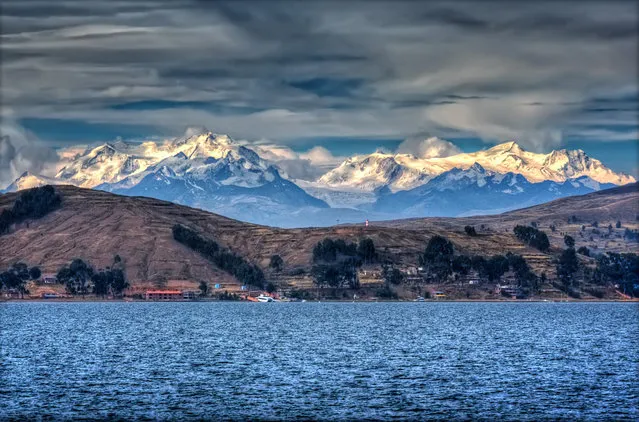
Titicaca or Titiqaqa is a large, deep lake in the Andes on the border of Peru and Bolivia. By volume of water, it is the largest lake in South America. Lake Maracaibo has a larger surface area, though some consider it to be a large brackish bay due to its direct connection with the sea.
Kamo Mphela, a South African dancer and singer performs Amapiano, a South African musical export that has crossed borders and cultural barriers, reaching as far as Japan, during a music concert in Pretoria, South Africa, July 22, 2022. (Photo by Shafiek Tassiem/Reuters)
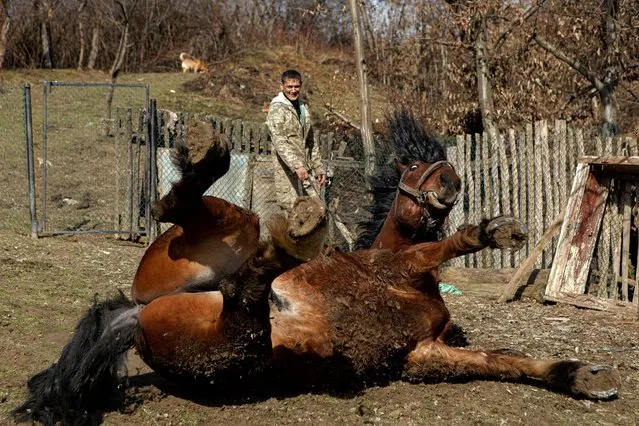
A horse rolls in mud in the Romani camp in Velykyi Bereznyi urban-type settlement, Zakarpattia Region, western Ukraine on February 28, 2021. (Photo by Ukrinform/Rex Features/Shutterstock)
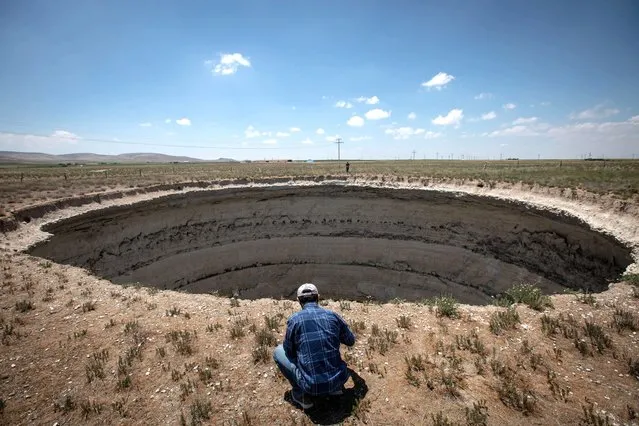
Geology Professor Fetullah Arik takes measurements next to a large sinkhole on June 03, 2021, in Karapinar, Turkey. In Turkey’s Konya province, the heart of the country's agriculture sector, extreme drought conditions over the past two years are taking a heavy toll on farmers and the land. (Photo by Chris McGrath/Getty Images)
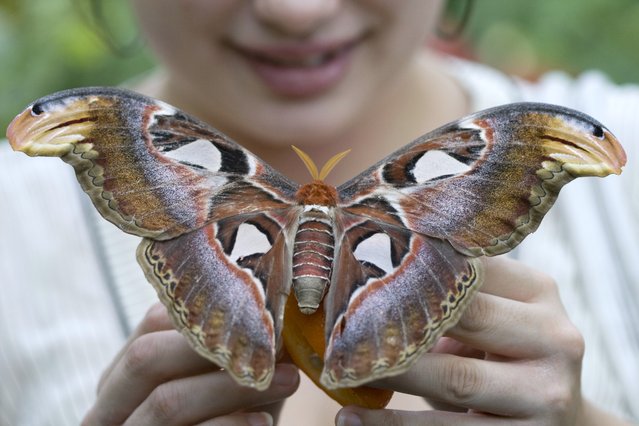
“The Atlas moth (Attacus atlas) is a large saturniid moth found in the tropical and subtropical forests of Southeast Asia, and common across the Malay archipelago. Atlas moths are considered the largest moths in the world in terms of total wing surface area [upwards of c. 400 cm2 (62 sq in)]. Their wingspans are also amongst the largest, reaching over 25 cm (10 in). Females are appreciably larger and heavier”. – Wikipedia. Photo: Atlas Moth. (Photo by Terri Oda)