Loading...
Done
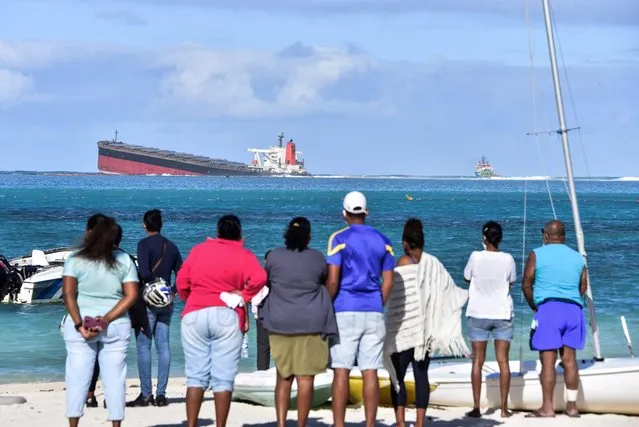
Bystanders look at MV Wakashio bulk carrier that had run aground and from which oil is leaking near Blue Bay Marine Park in south-east Mauritius on August 6, 2020. The carrier, belonging to a Japanese company but Panamanian-flagged, ran aground on July 25 and its crew was evacuated safely. The ship was empty at the time but was carrying 200 tonnes of diesel and 3,800 tonnes of bunker fuel, according to the local press. (Photo by Dev Ramkhelawon/L'Express Maurice/AFP Photo)

Bystanders look at MV Wakashio bulk carrier that had run aground and from which oil is leaking near Blue Bay Marine Park in south-east Mauritius on August 6, 2020. The carrier, belonging to a Japanese company but Panamanian-flagged, ran aground on July 25 and its crew was evacuated safely. The ship was empty at the time but was carrying 200 tonnes of diesel and 3,800 tonnes of bunker fuel, according to the local press. (Photo by Dev Ramkhelawon/L'Express Maurice/AFP Photo)
Details
27 Sep 2020 00:05:00
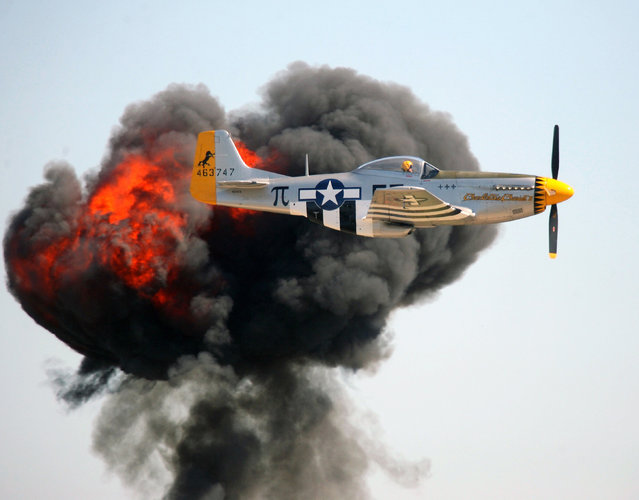
A P-51 Mustang named “Charlotte's Chariot” from the Southern Heritage Air Foundation flies past a cloud of smoke and fire from a nearby battle reenactment during the Wings Over Houston Airshow in Houston, on Saturday, November 1, 2014. Battle reenactments are part of the yearly show held at Ellington Airport. (Photo by Kar Hlava/AP Photo/Bay Area Citizen)

A P-51 Mustang named “Charlotte's Chariot” from the Southern Heritage Air Foundation flies past a cloud of smoke and fire from a nearby battle reenactment during the Wings Over Houston Airshow in Houston, on Saturday, November 1, 2014. Battle reenactments are part of the yearly show held at Ellington Airport. (Photo by Kar Hlava/AP Photo/Bay Area Citizen)
Details
08 Nov 2014 12:47:00
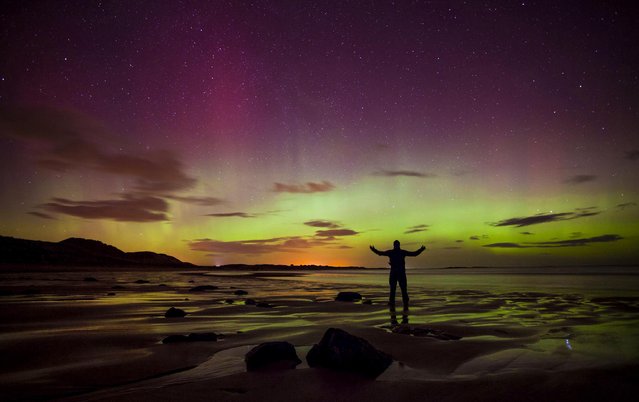
A man poses standing on a rock looking at the aurora borealis, or northern lights, illuminating the night sky at Embleton Bay in Northumberland, England, on February 27, 2014. The northern lights is a fantastical natural light display with fast moving light effects caused by particles charged by the sun colliding with particles in Earth's upper atmosphere. (Photo by Tom White/PA Wire)

A man poses standing on a rock looking at the aurora borealis, or northern lights, illuminating the night sky at Embleton Bay in Northumberland, England, on February 27, 2014. The northern lights is a fantastical natural light display with fast moving light effects caused by particles charged by the sun colliding with particles in Earth's upper atmosphere. (Photo by Tom White/PA Wire)
Details
02 Mar 2014 10:12:00
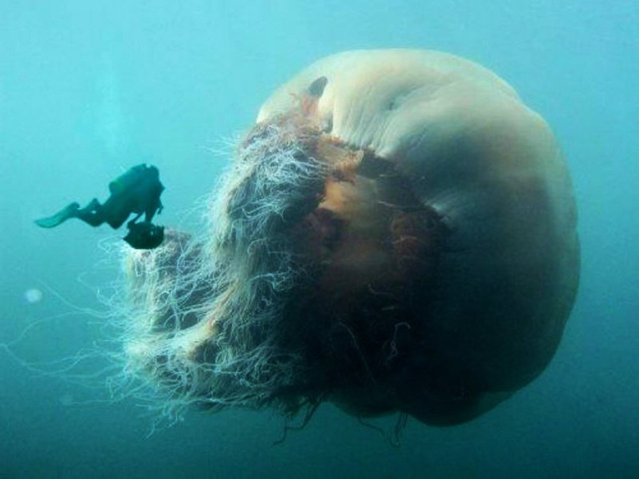
Giant Jellyfish Cyanea capillata

Cyanea capillata is the largest known species of jellyfish. Its range is confined to cold, boreal waters of the Arctic, northern Atlantic, and northern Pacific Oceans, seldom found farther south than 42°N latitude. Similar jellyfish, which may be the same species, are known to inhabit seas near Australia and New Zealand. The largest recorded specimen found, washed up on the shore of Massachusetts Bay in 1870, had a bell (body) with a diameter of 7 feet 6 inches (2.29 m) and tentacles 120 feet (37 m) long.Lion's mane jellyfish have been observed below 42°N latitude for some time—specifically in the larger bays of the east coast of the United States.
Details
24 Jul 2012 12:00:00
A sadhu, or a Hindu holy man, blesses a devotee as he smokes marijuana at a transit camp on the way to Gangasagar, in Kolkata, India, Sunday, January 7, 2018. Thousands of Hindu pilgrims are expected to take the annual holy dip at Gangasagar, where the Ganges River reaches the Bay of Bengal, on the auspicious Makar Sankranti festival day that falls on Jan. 14. (Photo by Bikas Das/AP Photo)

A sadhu, or a Hindu holy man, blesses a devotee as he smokes marijuana at a transit camp on the way to Gangasagar, in Kolkata, India, Sunday, January 7, 2018. Thousands of Hindu pilgrims are expected to take the annual holy dip at Gangasagar, where the Ganges River reaches the Bay of Bengal, on the auspicious Makar Sankranti festival day that falls on Jan. 14. (Photo by Bikas Das/AP Photo)
Details
10 Jan 2018 07:06:00
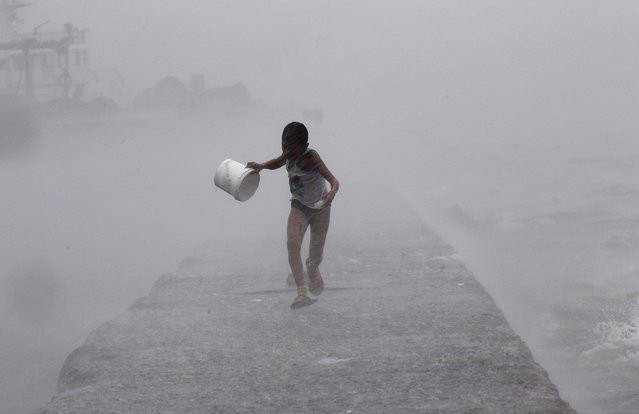
A boy runs as heavy rains and high waves brought by typhoon Linfa, locally named Egay, crash along a breakwater along Manila Bay at a slum area in Baseco, Tondo in Manila July 6, 2015. (Photo by Romeo Ranoco/Reuters)

A boy runs as heavy rains and high waves brought by typhoon Linfa, locally named Egay, crash along a breakwater along Manila Bay at a slum area in Baseco, Tondo in Manila July 6, 2015. All shipping was ordered to remain in harbor and some flights were canceled in the northern Philippines, while schools were closed in the capital, Manila, on Monday due to flooding and landslides from a tropical storm, disaster officials said. Storm warnings were issued in at least 14 areas of the main Philippine island of Luzon as tropical storm Linfa moved slowly across the north of the Southeast Asian archipelago. It was carrying maximum wind gusts of 100 km per hour (60 mph). (Photo by Romeo Ranoco/Reuters)
Details
07 Jul 2015 12:25:00


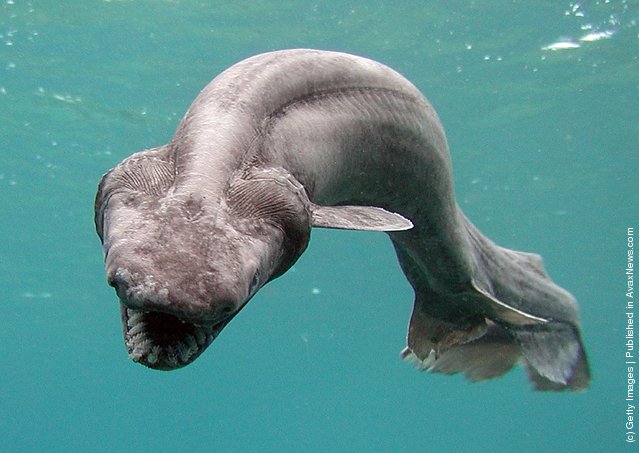
“The frilled shark (Chlamydoselachus anguineus) is one of two extant species of shark in the family Chlamydoselachidae, with a wide but patchy distribution in the Atlantic and Pacific Oceans. This uncommon species is found over the outer continental shelf and upper continental slope, generally near the bottom though there is evidence of substantial upward movements. It has been caught as deep as 1,570 m (5,150 ft), whereas in Suruga Bay, Japan it is most common at depths of 50–200 m (160–660 ft). Exhibiting several “primitive” features, the frilled shark has often been termed a «living fossil»”. – Wikipedia

Photo: A 1.6 meter long Frill shark swims in a tank after being found by a fisherman at a bay in Numazu, on January 21, 2007 in Numazu, Japan. The frill shark, also known as a Frilled shark usually lives in waters of a depth of 600 meters and so it is very rare that this shark is found alive at sea-level. It's body shape and the number of gill are similar to fossils of sharks which lived 350,000,000 years ago. (Photo by Awashima Marine Park/Getty Images)

Details
05 May 2011 10:01:00
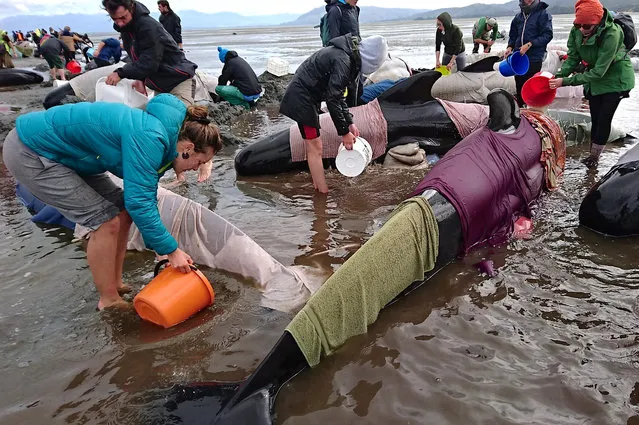
Volunteers try to keep alive some of the hundreds of stranded pilot whales after one of the country's largest recorded mass whale strandings, in Golden Bay, at the top of New Zealand's south island, February 10, 2017. (Photo by Ross Wearing/Reuters)

Volunteers try to keep alive some of the hundreds of stranded pilot whales after one of the country's largest recorded mass whale strandings, in Golden Bay, at the top of New Zealand's south island, February 10, 2017. Volunteers in New Zealand managed to refloat about 100 surviving pilot whales on Saturday, February 11, 2017 and are hoping they will swim back out to sea after more than 400 of the creatures swam aground at a remote beach. (Photo by Ross Wearing/Reuters)
Details
12 Feb 2017 00:06:00