Loading...
Done
Chinese Handmade Firecrackers For The Lunar New Year

A Chinese worker makes handmade firecrackers in the traditional way on February 1, 2005 in Liuan, Anhui Province, China. Chinese have the tradition of setting off firecrackers to celebrate the lunar New Year. (Photo by Cancan Chu/GettyImages)
Details
24 Dec 2011 12:57:00
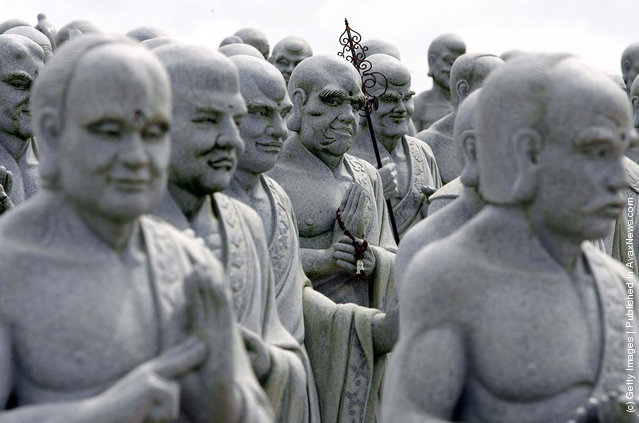
Buddha Statues Feature At Bintan Chinese Temple

Buddha statues with a variety of faces shapes and unique characters at Ksitigarbha Bodhisattva Temple on January 11, 2012 in Bintan Island, Indonesia. 500 statues are situated inside the temple featuring Ksitigarbha Hodhisattva, known as the Bodhisattva of Hell because of his vow not to achieve Buddha-hood until “all the hells are empty”. (Photo by Yuli Seperi/Getty Images)
Details
12 Jan 2012 12:25:00
Indonesian artists perform during the people's party and Chinese Cap Go Meh festival in Bogor, Indonesia, 05 March 2015. Chinese-Indonesians across the country celebrate Cap Go Meh on the 15th day in the first month of the Chinese lunar new year.  EPA/ADI WEDA

Indonesian artists perform during the people's party and Chinese Cap Go Meh festival in Bogor, Indonesia, 05 March 2015. Chinese-Indonesians across the country celebrate Cap Go Meh on the 15th day in the first month of the Chinese lunar new year. EPA/ADI WEDA
Details
07 Mar 2015 13:51:00
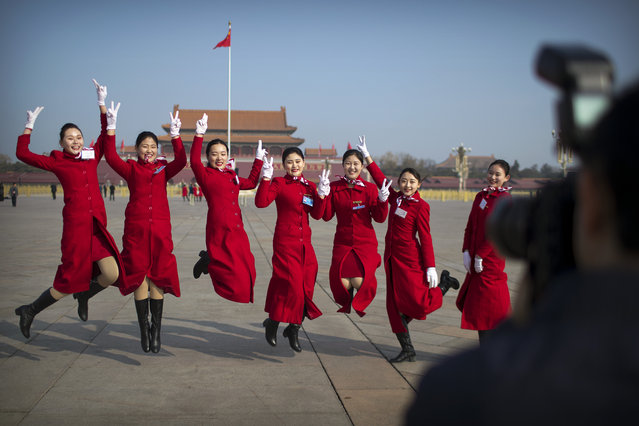
Bus ushers leap as they pose for a group photo during a meeting one day ahead of the opening session of China's National People's Congress (NPC) at the Great Hall of the People in Beijing, Monday, March 4, 2019. (Photo by Mark Schiefelbein/AP Photo)

Bus ushers leap as they pose for a group photo during a meeting one day ahead of the opening session of China's National People's Congress (NPC) at the Great Hall of the People in Beijing, Monday, March 4, 2019. (Photo by Mark Schiefelbein/AP Photo)
Details
05 Mar 2019 00:03:00
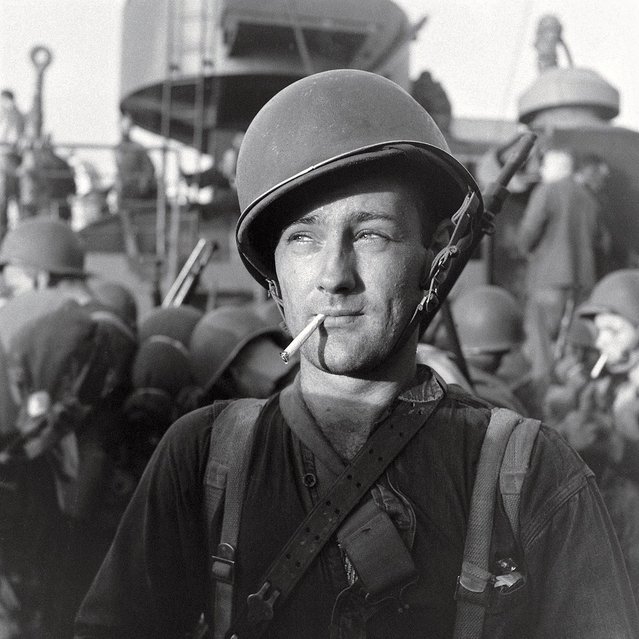
An American Marine readies to land on Guadalcanal during the five-month struggle for the island between late 1942 and early 1943. Three thousand miles south of Tokyo, Guadalcanal was a major shipping point for military supplies. The Allied victory there in February, 1943, marked a major turning point in the war after a string of Japanese victories in the Pacific. (Photo by Joe Scherschel/Time & Life Pictures)

An American Marine readies to land on Guadalcanal during the five-month struggle for the island between late 1942 and early 1943. Three thousand miles south of Tokyo, Guadalcanal was a major shipping point for military supplies. The Allied victory there in February, 1943, marked a major turning point in the war after a string of Japanese victories in the Pacific. (Photo by Joe Scherschel/Time & Life Pictures)
Details
10 Mar 2013 12:50:00
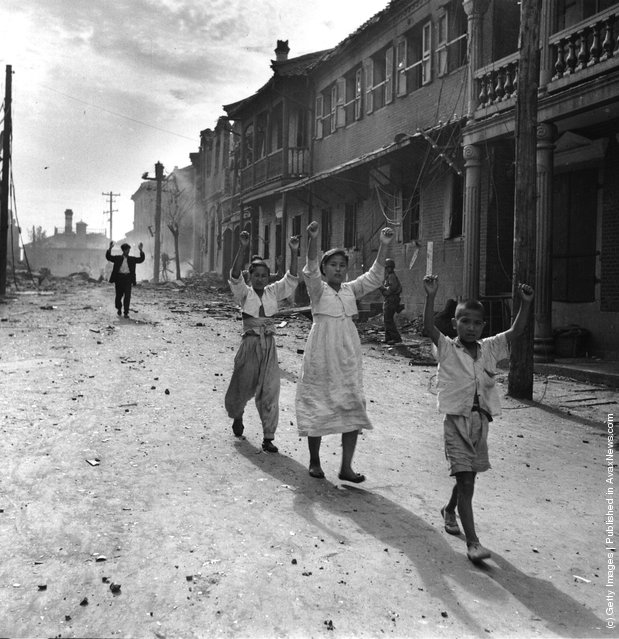
Residents of the Korean port of Inchon surrender to American troops

Residents of the Korean port of Inchon surrender to American troops. (Photo by Bert Hardy/Getty Images). 1950
Details
07 May 2011 10:24:00
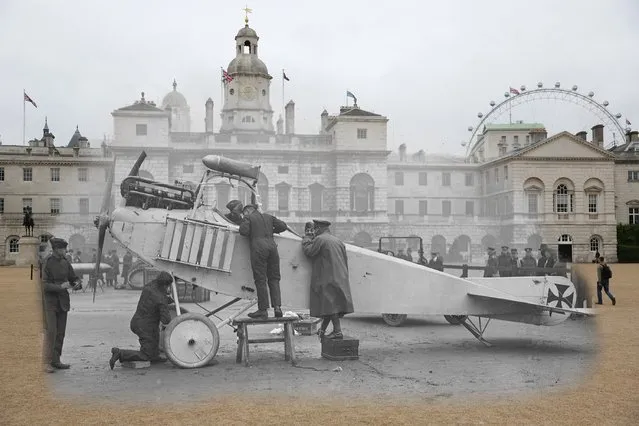
British soldiers inspect a captured German place in the Horseguards' Parade, London during World War I in November 1914, with the London Eye in the background as a reminder of just how much has changed in the last 100 years. (Photo by Peter Macdiarmid/Getty Images)

British soldiers inspect a captured German place in the Horseguards' Parade, London during World War I in November 1914, with the London Eye in the background as a reminder of just how much has changed in the last 100 years. (Photo by Peter Macdiarmid/Getty Images)
Details
29 Jul 2014 12:09:00
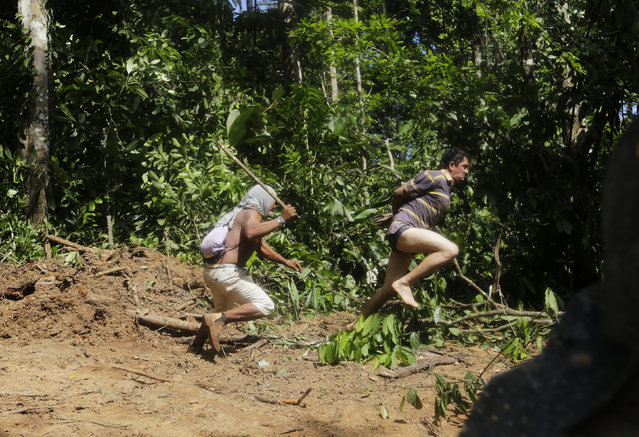
A Ka'apor Indian warrior (L) chases a logger who tried to escape after they captured him during a jungle expedition to search for and expel loggers from the Alto Turiacu Indian territory, near the Centro do Guilherme municipality in the northeast of Maranhao state in the Amazon basin, August 7, 2014. (Photo by Lunae Parracho/Reuters)

A Ka'apor Indian warrior (L) chases a logger who tried to escape after they captured him during a jungle expedition to search for and expel loggers from the Alto Turiacu Indian territory, near the Centro do Guilherme municipality in the northeast of Maranhao state in the Amazon basin, August 7, 2014. Tired of what they say is a lack of sufficient government assistance in keeping loggers off their land, the Ka'apor Indians, who along with four other tribes are the legal inhabitants and caretakers of the territory, have sent their warriors out to expel all loggers they find and set up monitoring camps in the areas that are being illegally exploited. (Photo by Lunae Parracho/Reuters)

Details
05 Sep 2014 11:41:00