Loading...
Done
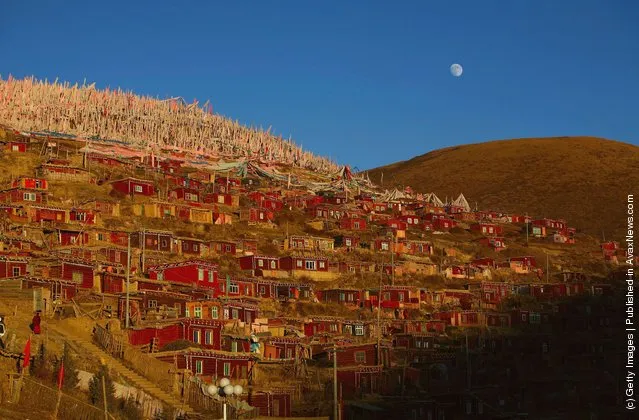
Monastic dormitories stand on the hillside at the Serthar Wuming Buddhist Study Institute in Serthar County of Garze Tibetan Autonomous Prefecture, Sichuan Province, China

Monastic dormitories stand on the hillside at the Serthar Wuming Buddhist Study Institute on November 4, 2006 in Serthar County of Garze Tibetan Autonomous Prefecture, Sichuan Province, China. The Wuming Buddhist Study Institute is located in Larung Gar Monastery on an altitude of 3,700 meters (about 12,136 feet). The institute has the largest conglomeration of monks and nuns in Tibetan Areas, with over 40,000 monastics from the Tibet Buddhism Nyingma School, Gelug School, Sakya School and Kagyu School, including more than 10,000 nuns. (Photo by China Photos/Getty Images)
Details
10 Feb 2012 11:39:00
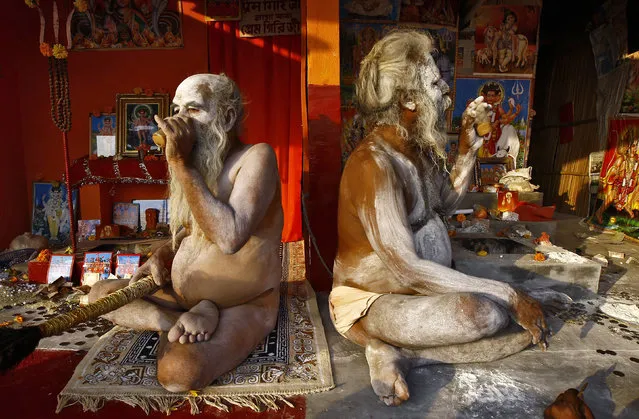
Naga Sadhus or Hindu holy men, smeared with ash, drink tea inside their makeshift camps near the confluence of river Ganges and the Bay of Bengal, ahead of Makar Sankranti festival at Sagar Island, south of Kolkata January 13, 2015. (Photo by Rupak De Chowdhuri/Reuters)

Naga Sadhus or Hindu holy men, smeared with ash, drink tea inside their makeshift camps near the confluence of river Ganges and the Bay of Bengal, ahead of Makar Sankranti festival at Sagar Island, south of Kolkata January 13, 2015. Hindu monks and pilgrims are making their annual trip to Sagar Island for the one-day festival of “Makar Sankranti” on Wednesday. (Photo by Rupak De Chowdhuri/Reuters)
Details
14 Jan 2015 12:22:00
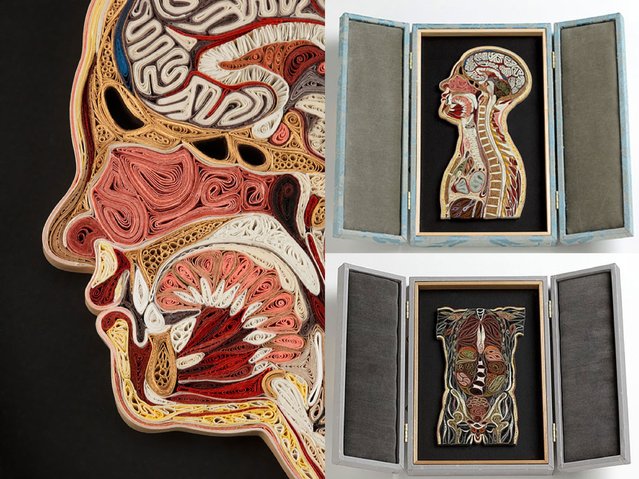
 Paper Anatomy By Lisa Nilsson

These pieces are made of Japanese mulberry paper and the gilded edges of old books. They are constructed by a technique of rolling and shaping narrow strips of paper called quilling or paper filigree. Quilling was first practiced by Renaissance nuns and monks who are said to have made artistic use of the gilded edges of worn out bibles, and later by 18th century ladies who made artistic use of lots of free time. I find quilling exquisitely satisfying for rendering the densely squished and lovely internal landscape of the human body in cross section.
Details
14 Apr 2013 11:07:00
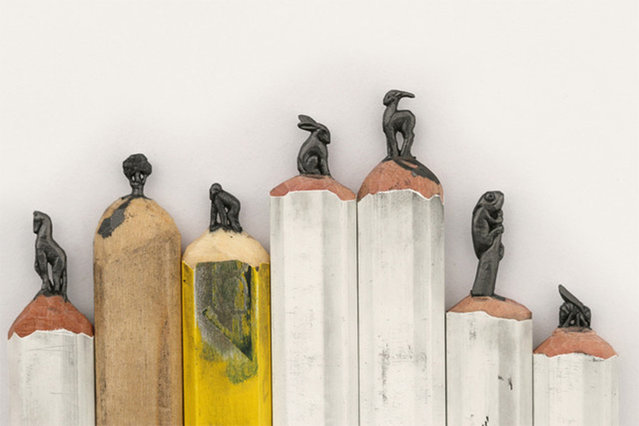
Pencil Carvings By Diem Chau

Seattle-based artist Diem Chau creates amazing miniature carvings from the graphite of pencils. Chau combines common mediums and common means to create delicate vignettes of fleeting memory, resulting in works that combine egalitarian sensibility and minimalist restraint.
Details
13 Apr 2013 09:42:00
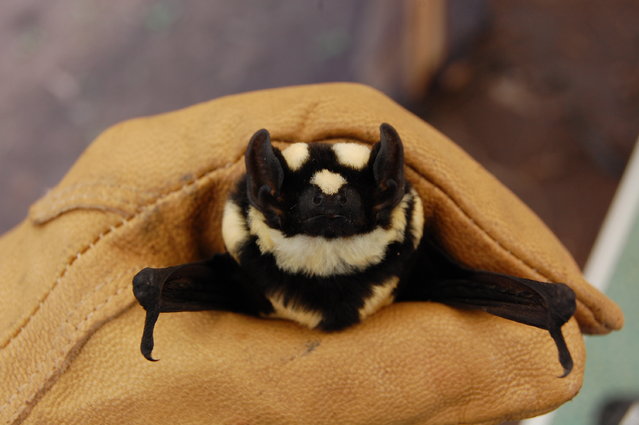
New Genus Of Bat Niumbaha superba

A new genus of bat has been discovered in South Sudan, the world’s newest country. The strikingly striped bat has been placed into the genus Niumbaha, which means “rare” or “unusual” in the Zande language of the region.
Details
17 Apr 2013 12:51:00
Icelandic Glacier Vatnajokull

Vatnajökull (meaning Glacier of Rivers), also known as the Vatna Glacier, is the largest and most voluminous Icelandic glacier, and one of the largest in area in Europe. It is located in the south-east of the island, covering more than 8 percent of the country.
Details
24 Sep 2013 14:44:00


The Last Bell (we mean the bell that informs the pupils about the beginning or the ending of the lessons) is the traditional feast of the Russian pupils who leave the school. The Last School Bell feast occurs in the end of May, when the school year has already finished, but the final examinations have not begun yet. (Read more...)
Details
02 Jun 2011 13:39:00
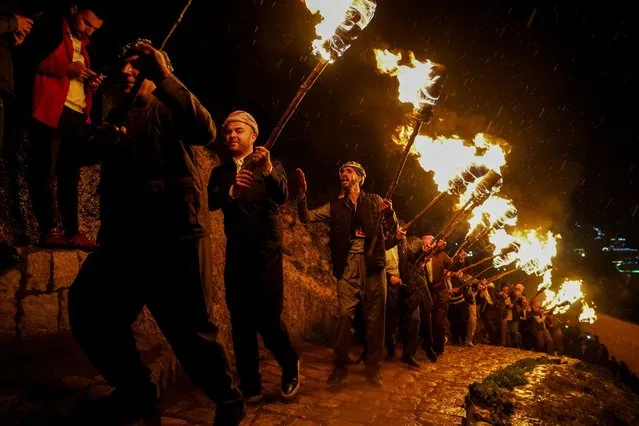
Iraqi Kurds carry fire torches as they celebrate Nowruz Day, a festival marking the first day of spring, Kurdish and Persian New Year in Akre, Iraq on March 20, 2024. Newroz or Nowruz means “new day” in Persian, and is celebrated to mark the arrival of spring and the first day of the Iranian calendar. It is widely celebrated in Persian and neighboring regions and is recognized on UNESCO's Intangible Cultural Heritage of Human List. (Photo by Ismael Adnan/SOPA Images/Rex Features/Shutterstock)

Iraqi Kurds carry fire torches as they celebrate Nowruz Day, a festival marking the first day of spring, Kurdish and Persian New Year in Akre, Iraq on March 20, 2024. Newroz or Nowruz means “new day” in Persian, and is celebrated to mark the arrival of spring and the first day of the Iranian calendar. It is widely celebrated in Persian and neighboring regions and is recognized on UNESCO's Intangible Cultural Heritage of Human List. (Photo by Ismael Adnan/SOPA Images/Rex Features/Shutterstock)
Details
29 Mar 2024 05:30:00