
13 Jan 2013 11:41:00,post received
0 comments

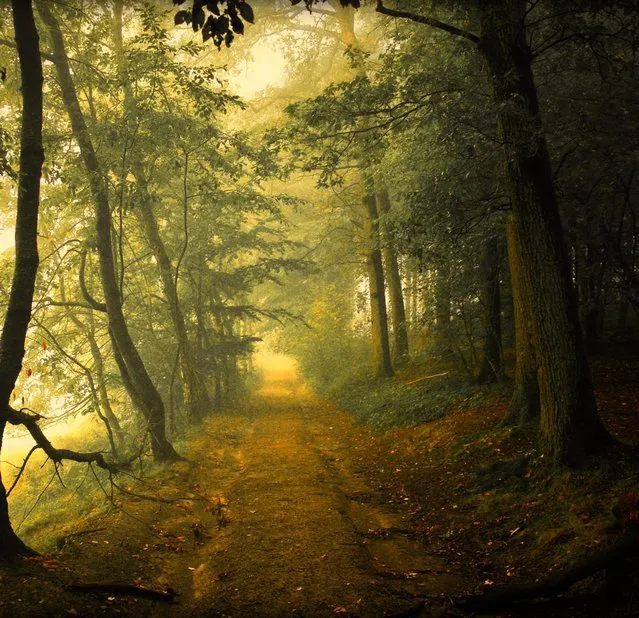
“Wer in der Natur, der Kunst oder dem Menschen Gott nicht finden kann, der findet ihn nirgendwo” (Who cannot find God in the nature, the art or the person, that nowhere finds him). Photo: Hunstiger Hohlweg. (Photo by Norbert)
23 Oct 2012 11:43:00,post received
0 comments
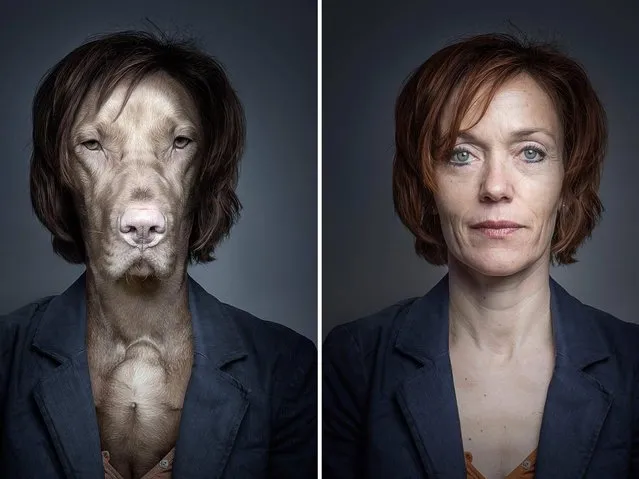
This barking set of images takes the saying “dogs look like their owners” to the ultimate conclusion. Photographer Sebastian Magnani, 28, has cleverly spliced the features of four-legged friends with the head and shoulders of their owners. In a series called “Underdogs”, the Swiss photographer shot the owners and their respective pets in the same portrait style. Then he used expert photo-manipulation techniques to seamlessly transplant the canine faces onto the human bodies. (Photo by Sebastian Magnani)
04 Jul 2013 12:05:00,post received
0 comments
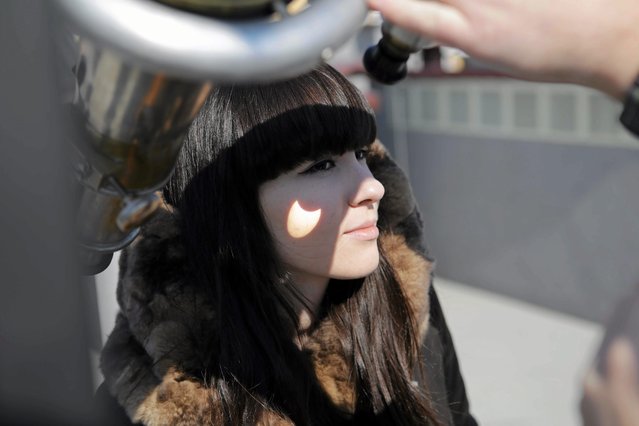
The shadow of a partial eclipse is cast on to the cheek of a student on the roof of the Jana Dlugosza Academy in Czestochowa, Poland March 20, 2015. (Photo by Grzegorz Skowronek/Reuters/Agencja Gazeta)
21 Mar 2015 12:12:00,post received
0 comments
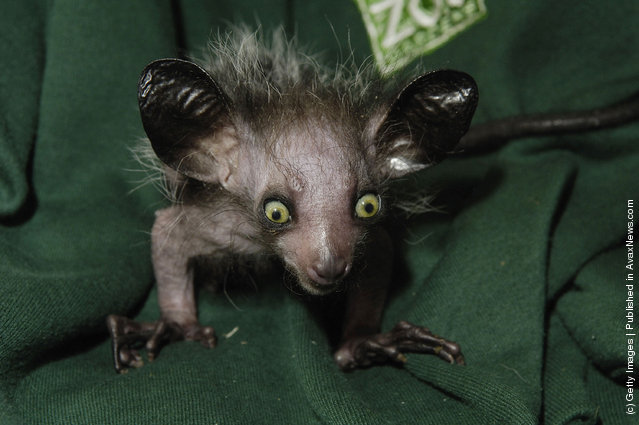
“The aye-aye (Daubentonia madagascariensis) is a lemur, a strepsirrhine primate native to Madagascar that combines rodent-like teeth and a special thin middle finger to fill the same ecological niche as a woodpecker. It is the world's largest nocturnal primate, and is characterized by its unusual method of finding food; it taps on trees to find grubs, then gnaws holes in the wood and inserts its narrow middle finger to pull the grubs out. The only other animal species known to find food in this way is the striped possum. From an ecological point of view the aye-aye fills the niche of a woodpecker as it is capable of penetrating wood to extract the invertebrates within”. – Wikipedia
Photo: In this handout image from Bristol Zoo is seen the first captive bred aye-aye in the UK named “Kintana” (meaning star in Malagasy) April 15, 2005 at Bristol Zoo Gardens, England. The zoo announced today only the second baby aye-aye to be hand-reared in the world (the first was in Jersey Zoo) and has now made his first public appearance since his birth on 11 February 2005. (Photo by Rob Cousins/Bristol Zoo via Getty Images)
Photo: In this handout image from Bristol Zoo is seen the first captive bred aye-aye in the UK named “Kintana” (meaning star in Malagasy) April 15, 2005 at Bristol Zoo Gardens, England. The zoo announced today only the second baby aye-aye to be hand-reared in the world (the first was in Jersey Zoo) and has now made his first public appearance since his birth on 11 February 2005. (Photo by Rob Cousins/Bristol Zoo via Getty Images)
13 Apr 2011 13:33:00,post received
0 comments

Women joke around as they pose for photographs in front of a large dragon made of flowers at the Sentosa Flowers festival on January 22, 2012 on Sentosa Island, Singapore. (Photo by Chris McGrath/Getty Images)
24 Jan 2012 13:50:00,post received
0 comments
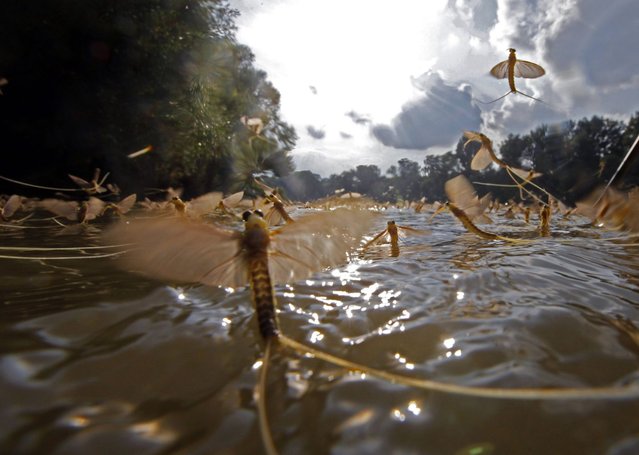
Long-tailed mayflies (Palingenia longicauda) at Tisza river near Tiszainoka 135km (84 miles) southeast of Budapest, June 23, 2013. Millions of these short-lived mayflies engage in a frantic rush to mate and reproduce before they perish in just a few hours during “Tiszaviragzas” or Tisza blooming season from late spring to early summer every year. (Photo by Laszlo Balogh/Reuters)
14 Jul 2013 11:20:00,post received
0 comments
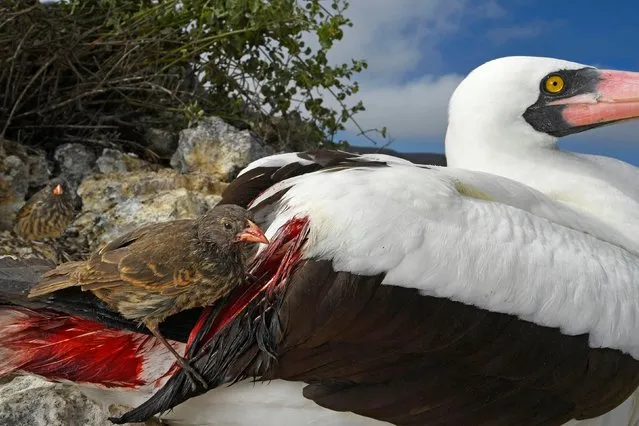
Bloodthirsty by Thomas P. Peschak, Germany/South Africa — winner, Behaviour: birds. When rations run short on Wolf Island, in the remote northern Galápagos, the sharp-beaked ground finches become vampires. Their sitting targets are Nazca boobies and other large birds. The finches rely on a scant diet of seeds and insects, which regularly dries up, so they drink blood to survive. ‘I’ve seen more than half a dozen finches drinking from a single Nazca booby,’ says Tom. Rather than leave their nests the boobies tolerate the vampires, and the blood loss doesn’t seem to cause permanent harm. (Photo by Thomas P. Peschak/2018 Wildlife Photographer of the Year)
19 Oct 2018 00:05:00,post received
0 comments