Loading...
Done
Plagued by Doubt By Thomas Wightman

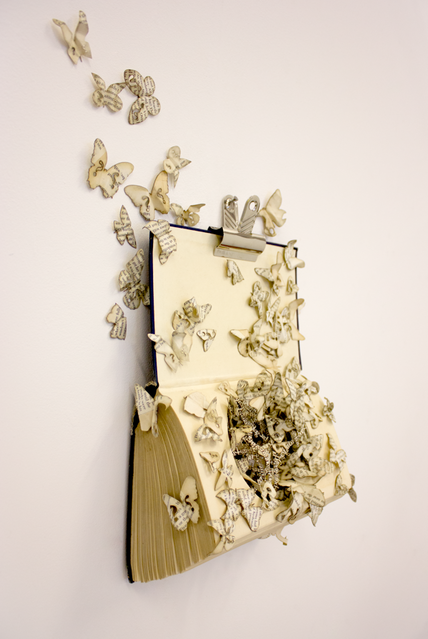
Thoughts. They fly through the broad expenses of our mind, floating gracefully in midair, going into the clouds, and then reemerging once again. Some are quick and furtive, others are grand and majestic. We reflect upon them as they enter our minds, and once they leave, they are usually gone for good. However, some thoughts are different. These thoughts resemble a flock of angry birds or a swarm of hungry moths that invade your mind, slowly eating away at your sanity, strength, and desire to live. Such thoughts often plague that minds of people with Obsessive Compulsive disorder. They completely occupy their time; constantly there; ever-present. With his book sculpture, Thomas Wightman was able to accurately convey the way these thoughts consume the mind, slowly building a nest within it, resisting all attempts to drive them away.

Thomas Wightman


See Also: Derailing My Train of Thought
Details
19 Mar 2015 09:11:00
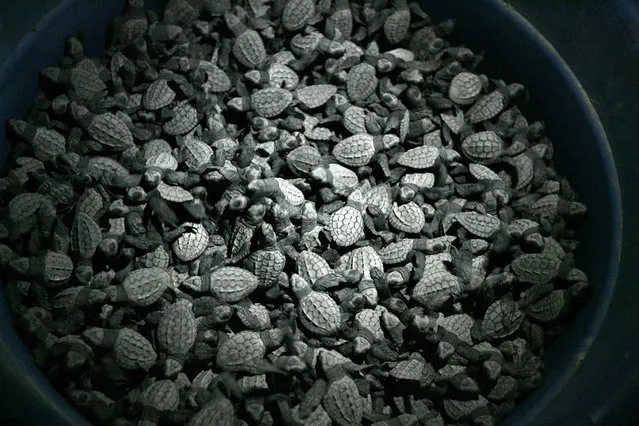
Olive Ridley turtle hatchlings (Lepidochelys olivacea) sit in baskets and trays at the turtle camp La Gloria, before their release into the ocean in Tomatlan November 15, 2013. (Photo by Alejandro Acosta/Reuters)

Olive Ridley turtle hatchlings (Lepidochelys olivacea) sit in baskets and trays at the turtle camp La Gloria, before their release into the ocean in Tomatlan November 15, 2013. Twenty years ago, Mexico's government implemented ecological plans to protect the sea turtles from being hunted for their leather and meat and established conservation areas and a pay system for local residents to protect turtle nests. Millions of baby turtles hatch on the shores in November and December, according to an environmental group. It is estimated that in 2012, there were 20 million newborns. Hatching season is still underway, but officials say they expect there will be even more turtles born this year. (Photo by Alejandro Acosta/Reuters)
Details
25 Nov 2013 08:54:00
Illustrations Out Of Clouds By Martin Feijoo

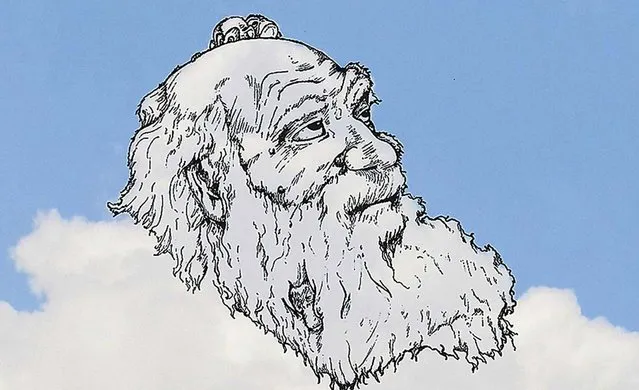
Few things are more beautiful than puffy white clouds floating in the bright blue sky. Do you remember the time when you would lay on the soft green grass, look up at the sky, and try to recognize shapes in the clouds floating overhead? Wasn’t it wonderful, just lying there, letting the wind caress your skin, as you imagine that the clouds in the sky are actually mystical or not-so-mystical creatures? Dragons, ducks, teddy bears, dinosaurs, everything was up there. It was good old times. As adults we forget about simple pleasures of life. However, an Argentinian artist Martin Feijoo didn’t forget those times, and took them a step further. After imagining what a particular cloud looks like, he draws that particular shape over the picture of the cloud, allowing the entire world to see what goes on in his mind. (Photo by Martin Feijoo)
Details
02 Nov 2014 10:44:00
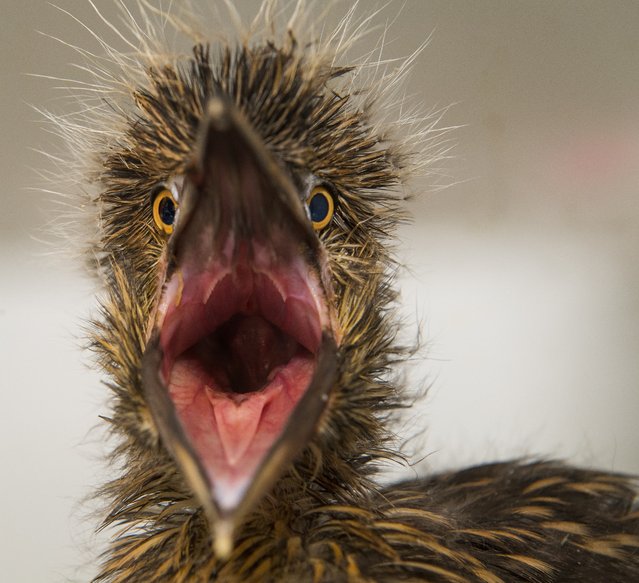
A baby Black-crowned Night Heron squawks in its incubator while being cared for at City Wildlife rescue and rehabilitation center in Washington, DC on May 31, 2017. The heron is one of several that have been brought to CW by the staff at The National Zoo over the past few years. The heron is a native bird and has made an established rookery inside the zoo grounds over a hundred years ago.  Every year at this time, some of the chicks get pushed or fall out of the nest and require human care.  Because the birds are native and not part of the Smithsonian collection, they partnered with CW to rehabilitate the herons for re-release back to the flock inside Zoo. They're reintroduced back to their flock so that they can migrate together in the Fall. The Black-crowned heron usually migrates from the DC area down to southeast North Carolina, some going as far as Jacksonville, FL in winter. The Black-crowned heron is the species of greatest conservation need in the District of Columbia because their numbers are in such rapid decline due to habitat loss. (Photo Linda Davidson/The Washington Post)

A baby Black-crowned Night Heron squawks in its incubator while being cared for at City Wildlife rescue and rehabilitation center in Washington, DC on May 31, 2017. The heron is one of several that have been brought to CW by the staff at The National Zoo over the past few years. (Photo Linda Davidson/The Washington Post)
Details
04 Jun 2017 08:04:00
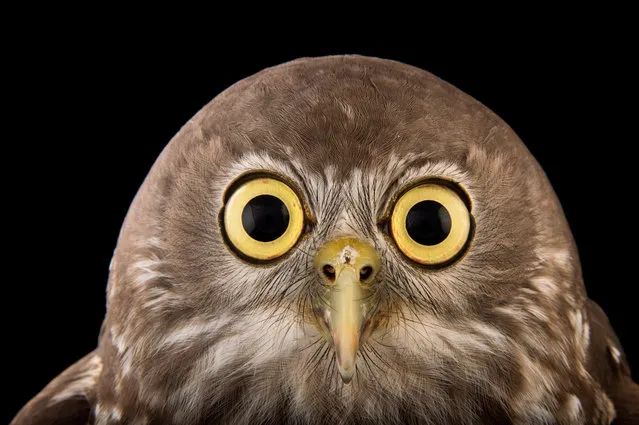
The National Geographic Photo Ark is a travelling exhibition of photographer Joel Sartore’s quest to create a photo archive of biodiversity around the world. So far, Sartore has captured studio portraits of more than 6,000 species – a number that he hopes to double. On 1 July, the ark will open at Melbourne zoo – the first time it has been exhibited in the southern hemisphere. More than 50 portraits will be on display, including many of Australian endangered animals being protected by programs at the zoo itself. These captions have been edited from text supplied by Melbourne zoo. Here: Barking owl. So-named because its call sounds like a barking dog, these birds are native to Australia, Indonesia and Papua New Guinea. In Victoria they are listed as an endangered species, and in 2003 there were estimated to be fewer than 50 breeding pairs. The main threat to the species in Victoria is loss of habitat, especially large trees with hollows in which they can nest and on which many of their prey depend. Apart from a bark, they may utter a chilling scream when they feel threatened. (Photo by Joel Sartore/National Geographic Photo Ark/The Guardian)

The National Geographic Photo Ark is a travelling exhibition of photographer Joel Sartore’s quest to create a photo archive of biodiversity around the world. So far, Sartore has captured studio portraits of more than 6,000 species – a number that he hopes to double. On 1 July, the ark will open at Melbourne zoo – the first time it has been exhibited in the southern hemisphere. More than 50 portraits will be on display, including many of Australian endangered animals being protected by programs at the zoo itself. These captions have been edited from text supplied by Melbourne zoo. Here: Barking owl. (Photo by Joel Sartore/National Geographic Photo Ark/The Guardian)
Details
01 Jul 2017 07:45:00
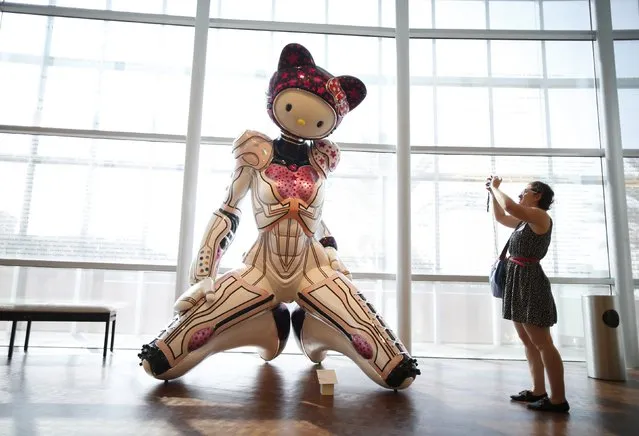
A woman photographs “Super Space Titan Kitty” by Colin Christian at the “Hello! Exploring the Supercute World of Hello Kitty” museum exhibit in honor of Hello Kitty's 40th anniversary, at the Japanese American National Museum in Los Angeles, California October 10, 2014. (Photo by Lucy Nicholson/Reuters)

A woman photographs “Super Space Titan Kitty” by Colin Christian at the “Hello! Exploring the Supercute World of Hello Kitty” museum exhibit in honor of Hello Kitty's 40th anniversary, at the Japanese American National Museum in Los Angeles, California October 10, 2014. (Photo by Lucy Nicholson/Reuters)
Details
11 Oct 2014 13:31:00
A woman poses for a picture during Lunar New Year's Eve on Yaowarat Road in Bangkok's Chinatown, Thailand, February 9, 2024. (Photo by Jorge Silva/Reuters)

A woman poses for a picture during Lunar New Year's Eve on Yaowarat Road in Bangkok's Chinatown, Thailand, February 9, 2024. (Photo by Jorge Silva/Reuters)
Details
19 Feb 2024 08:41:00
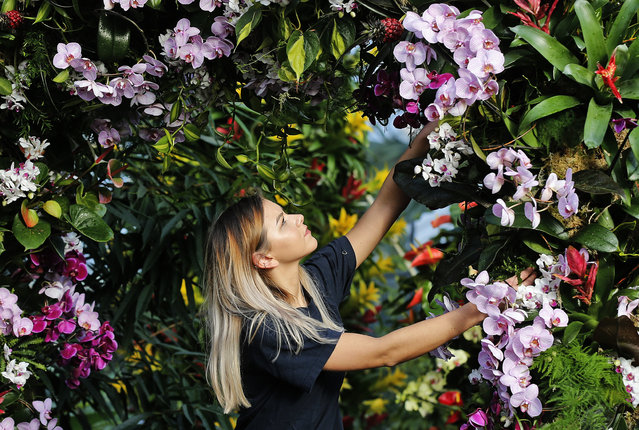
Employee Jenny Forgie works on an orchid display at Kew Gardens in London, Thursday, February 8, 2018. The 23rd annual Orchid Festival is the first one with a Thailand theme, 66 volunteers worked on the 6,950 exhibited orchids. The festival is open from Feb. 10, 2018 until March 11, 2018. (Photo by Frank Augstein/AP Photo)

Employee Jenny Forgie works on an orchid display at Kew Gardens in London, Thursday, February 8, 2018. The 23rd annual Orchid Festival is the first one with a Thailand theme, 66 volunteers worked on the 6,950 exhibited orchids. The festival is open from Feb. 10, 2018 until March 11, 2018. (Photo by Frank Augstein/AP Photo)
Details
11 Feb 2018 08:50:00