Loading...
Done
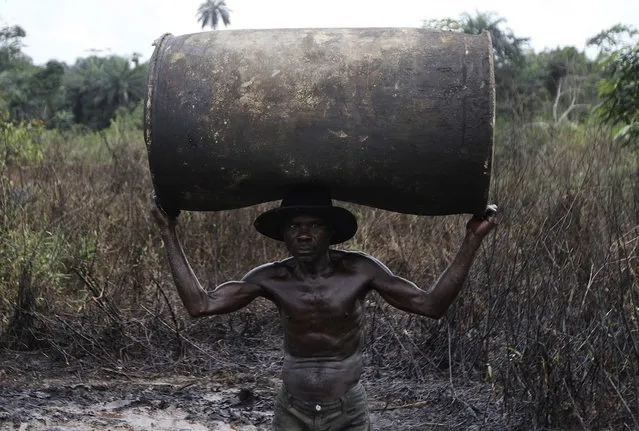
Ebiowei, 48, carries an empty oil container on his head to a place where it would be filled with refined fuel at an illegal refinery site near river Nun in Nigeria's oil state of Bayelsa November 27, 2012. (Photo by Akintunde Akinleye/Reuters)

Ebiowei, 48, carries an empty oil container on his head to a place where it would be filled with refined fuel at an illegal refinery site near river Nun in Nigeria's oil state of Bayelsa November 27, 2012. Locals in the industry say workers can earn $50 to $60 a day. Thousands of people in Nigeria engage in a practice known locally as “oil bunkering” – hacking into pipelines to steal crude then refining it or selling it abroad. The practice, which leaves oil spewing from pipelines for miles around, managed to lift around a fifth of Nigeria's two million barrel a day production last year according to the finance ministry. (Photo by Akintunde Akinleye/Reuters)
Details
18 Jan 2013 14:29:00
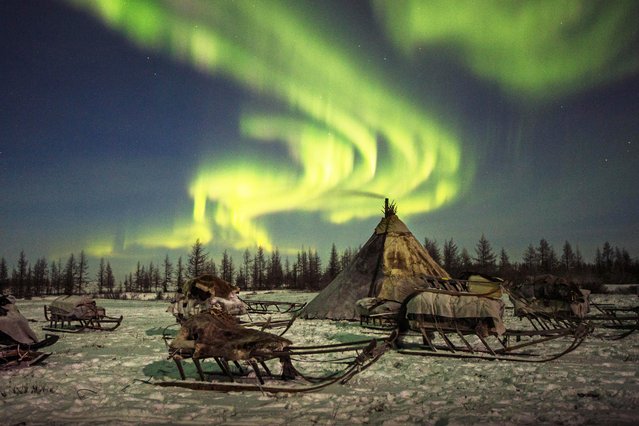
An empty camp is shown beneath a colourful sky in Siberia, December 2016. (Photo by Timothy Allen/Barcroft Productions)

A British photographer has captured life at the “edge of the world”. Timothy Allen, best known for his work on BBC's Human Planet, trekked through the freezing Siberian wilderness for 16 days as he joined part of an 800km migration of reindeer in the Yamal-Nenets region – a name that roughly translates to “edge of the world”. The stunning pictures feature the nomadic Nenets tribe, who drink blood to survive in -45°C temperatures. Timothy's epic journey, which will be revealed in an eight-minute documentary on Animal Planet USA, saw him travel across the bleak terrain of the frozen Ob River with the Nenets people in December last year. Here: An empty camp is shown beneath a colourful sky in Siberia, December 2016. (Photo by Timothy Allen/Barcroft Productions)
Details
19 Sep 2017 07:48:00
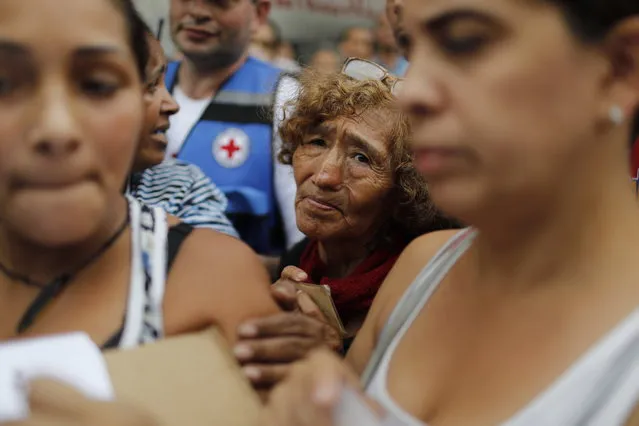
In this April 16, 2019 photo, people wait to be given empty water containers and water purification pills during the first aid shipment from the Red Cross in Caracas, Venezuela. In late March, the Red Cross federation announced it would soon begin delivering assistance to an estimated 650,000 people and vowed that it would not accept interference from either side of the polarized country. (Photo by Ariana Cubillos/AP Photo)

In this April 16, 2019 photo, people wait to be given empty water containers and water purification pills during the first aid shipment from the Red Cross in Caracas, Venezuela. In late March, the Red Cross federation announced it would soon begin delivering assistance to an estimated 650,000 people and vowed that it would not accept interference from either side of the polarized country. (Photo by Ariana Cubillos/AP Photo)
Details
02 May 2019 00:01:00
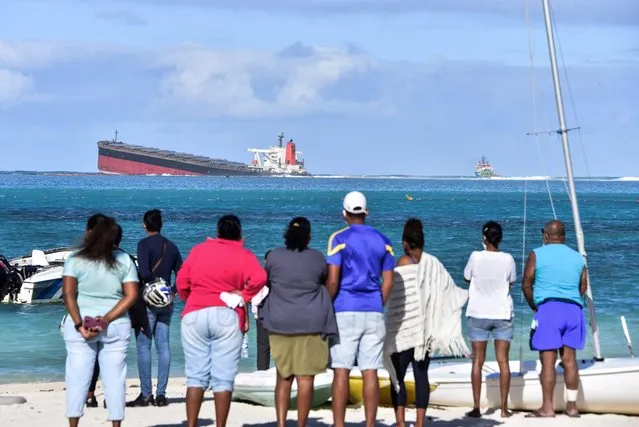
Bystanders look at MV Wakashio bulk carrier that had run aground and from which oil is leaking near Blue Bay Marine Park in south-east Mauritius on August 6, 2020. The carrier, belonging to a Japanese company but Panamanian-flagged, ran aground on July 25 and its crew was evacuated safely. The ship was empty at the time but was carrying 200 tonnes of diesel and 3,800 tonnes of bunker fuel, according to the local press. (Photo by Dev Ramkhelawon/L'Express Maurice/AFP Photo)

Bystanders look at MV Wakashio bulk carrier that had run aground and from which oil is leaking near Blue Bay Marine Park in south-east Mauritius on August 6, 2020. The carrier, belonging to a Japanese company but Panamanian-flagged, ran aground on July 25 and its crew was evacuated safely. The ship was empty at the time but was carrying 200 tonnes of diesel and 3,800 tonnes of bunker fuel, according to the local press. (Photo by Dev Ramkhelawon/L'Express Maurice/AFP Photo)
Details
27 Sep 2020 00:05:00
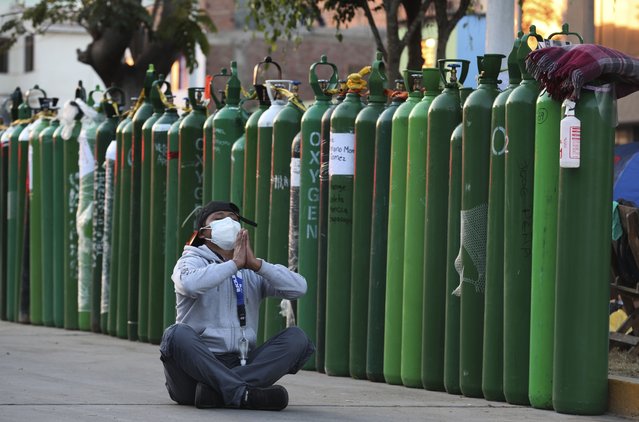
Alejandro Ccasa prays after waiting three days next to an empty oxygen tank for his uncle who has COVID-19 outside a refill shop where he is the first in line before it opens in Callao, Peru, early Tuesday, February 2, 2021. Ccasa said his family has one large tank and it gives about four hours of oxygen therapy. (Photo by Martin Mejia/AP Photo)

Alejandro Ccasa prays after waiting three days next to an empty oxygen tank for his uncle who has COVID-19 outside a refill shop where he is the first in line before it opens in Callao, Peru, early Tuesday, February 2, 2021. Ccasa said his family has one large tank and it gives about four hours of oxygen therapy. (Photo by Martin Mejia/AP Photo)
Details
03 Feb 2021 09:18:00
A New Orleans Saints fan parties in the stands in the first half of an NFL preseason football game against the Jacksonville Jaguars in New Orleans, Monday, August 23, 2021. Last season the team played with a marginal number of fans in a largely empty Superdome due to the coronavirus pandemic, but this year fans are allowed with proof of vaccination. (Photo by Derick Hingle/AP Photo)

A New Orleans Saints fan parties in the stands in the first half of an NFL preseason football game against the Jacksonville Jaguars in New Orleans, Monday, August 23, 2021. Last season the team played with a marginal number of fans in a largely empty Superdome due to the coronavirus pandemic, but this year fans are allowed with proof of vaccination. (Photo by Derick Hingle/AP Photo)
Details
30 Aug 2021 07:37:00
A receptionist dinosaur robot performs at the new robot hotel, aptly called Henn na Hotel or Weird Hotel, in Sasebo, southwestern Japan, Wednesday, July 15, 2015. From the receptionist that does the check-in and check-out to the porter that’s a stand-on-wheels taking luggage up to the room, the hotel, that is run as part of Huis Ten Bosch amusement park, is “manned” almost totally by robots to save labor costs. (Photo by Shizuo Kambayashi/AP Photo)

A receptionist dinosaur robot performs at the new robot hotel, aptly called Henn na Hotel or Weird Hotel, in Sasebo, southwestern Japan, Wednesday, July 15, 2015. From the receptionist that does the check-in and check-out to the porter that’s a stand-on-wheels taking luggage up to the room, the hotel, that is run as part of Huis Ten Bosch amusement park, is “manned” almost totally by robots to save labor costs. (Photo by Shizuo Kambayashi/AP Photo)
Details
16 Jul 2015 11:18:00
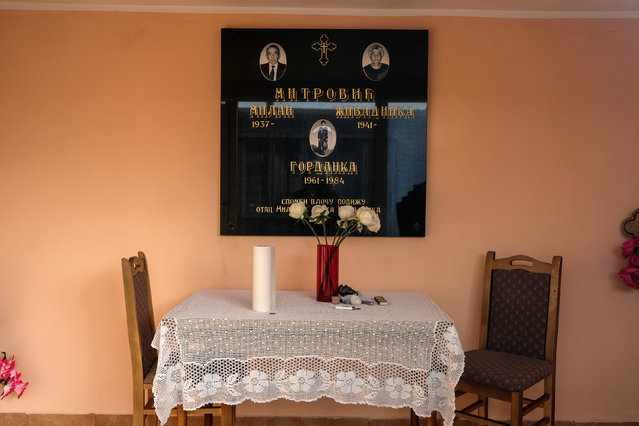
Pictures of deceased people are seen inside a chapel at a cemetery in the village of Smoljinac, Serbia, October 25, 2016. (Photo by Marko Djurica/Reuters)

Pictures of deceased people are seen inside a chapel at a cemetery in the village of Smoljinac, Serbia, October 25, 2016. From a distance, the cemetery in the eastern Serbian village of Smoljinac looks like a residential neighbourhood eerily placed among graves. But once inside the grounds, after passing a section with the usual stone slabs, visitors find rows of small bungalows painted in pastel colours. They have one or two rooms, large windows and ornate plaques – some inside, some outside – memorialising the deceased. These are the burial chapels of Smoljinac, cosy cabins with a furnished room inside, a storage place for wreaths and funeral paraphernalia, and the family crypt below. Some even have electric power inside. (Photo by Marko Djurica/Reuters)
Details
12 Nov 2016 10:37:00