Loading...
Done
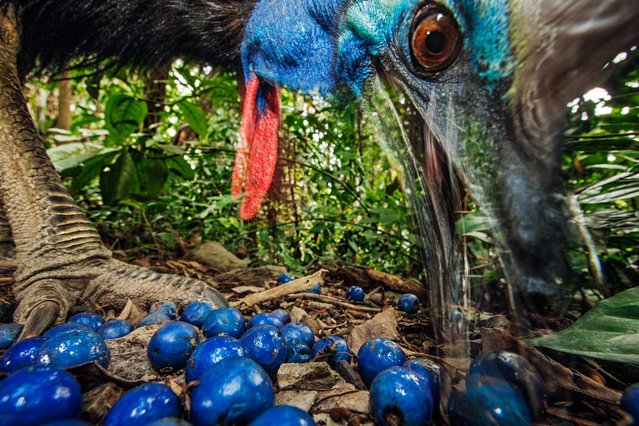
“Cassowaries are large, flightless birds related to emus and (more distantly) to ostriches, rheas, and kiwis”, writes Olivia Judson in the September issue of National Geographic magazine. (Photo by Christian Ziegler/National Geographic)

“Cassowaries are large, flightless birds related to emus and (more distantly) to ostriches, rheas, and kiwis”, writes Olivia Judson in the September issue of National Geographic magazine. How large? People-size: Adult males stand well over five foot five and top 110 pounds. Females are even taller, and can weigh more than 160 pounds. Dangerous when roused, they’re shy and peaceable when left alone. But even birds this big and tough are prey to habitat loss. The dense New Guinea and Australia rain forests where they live have dwindled. Today cassowaries might number 1,500 to 2,000. And because they help shape those same forests – by moving seeds from one place to another – “if they vanish”, Judson writes, “the structure of the forest would gradually change” too. (Photo by Christian Ziegler/National Geographic)
Details
06 Jan 2014 12:21:00
Protestors disperse color paint during a protest against the government, at central square, during an anti-government protest in Skopje on June 6, 2016, in a series of protests dubbed Colourful Revolution. Macedonia's president on June 6, 2016 said he was revoking all the controversial pardons he had granted in April to dozens of people implicated in a huge wiretapping scandal. President Gjorge Ivanov had on April 12 said he was halting probes into 56 Macedonians suspected of involvement in the scandal – a surprise decision that sparked international condemnation and angry street protests. (Photo by Robert Atanasovski/AFP Photo)

Protestors disperse color paint during a protest against the government, at central square, during an anti-government protest in Skopje on June 6, 2016, in a series of protests dubbed Colourful Revolution. Macedonia's president on June 6, 2016 said he was revoking all the controversial pardons he had granted in April to dozens of people implicated in a huge wiretapping scandal. President Gjorge Ivanov had on April 12 said he was halting probes into 56 Macedonians suspected of involvement in the scandal – a surprise decision that sparked international condemnation and angry street protests. (Photo by Robert Atanasovski/AFP Photo)
Details
08 Jun 2016 10:32:00
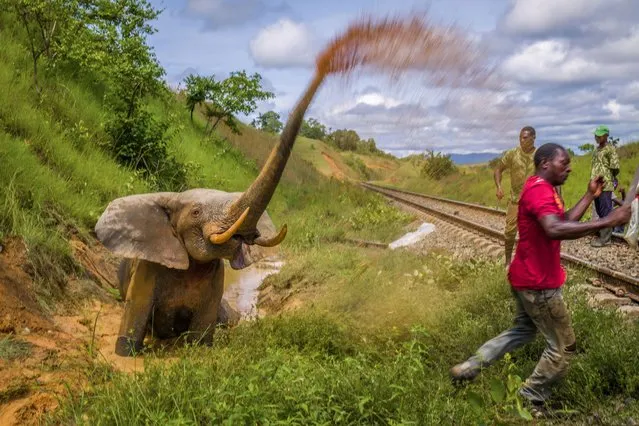
Grand prize winner: environmental photographer of the year 2023; also 1st place in the humanity v nature category; and winner of the 2023 public award. Lopé national park, Gabon, 2021. An angry elephant tries to defend itself after it was hit by a train that crosses paths the animals use within Lopé national park. Park officials decided the elephant was too severely injured to be saved. After it was killed, the park director distributed the meat to local people. As the forest loses its carrying capacity to sustain its megafauna, this kind of human-wildlife conflict is increasing. (Photo by Jasper Doest/Environmental Photography Award)

Grand prize winner: environmental photographer of the year 2023; also 1st place in the humanity v nature category; and winner of the 2023 public award. Lopé national park, Gabon, 2021. An angry elephant tries to defend itself after it was hit by a train that crosses paths the animals use within Lopé national park. Park officials decided the elephant was too severely injured to be saved. After it was killed, the park director distributed the meat to local people. As the forest loses its carrying capacity to sustain its megafauna, this kind of human-wildlife conflict is increasing. (Photo by Jasper Doest/Environmental Photography Award)
Details
09 Jul 2023 03:06:00
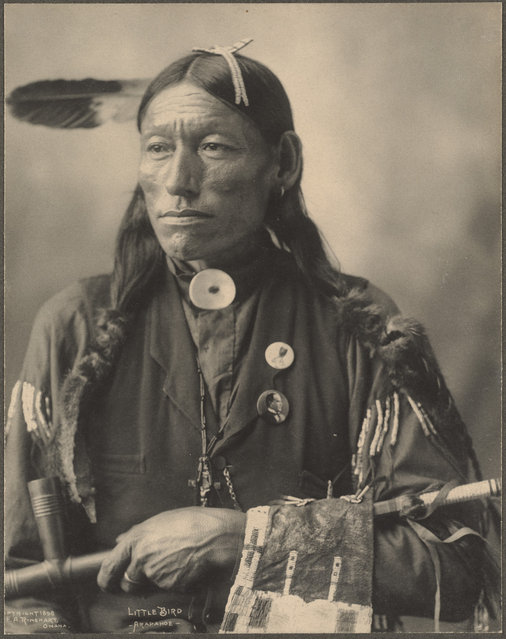
Little Bird, Arapahoe, 1899. (Photo by Frank A. Rinehart)

Frank A. Rinehart, a commercial photographer in Omaha, Nebraska, was commissioned to photograph the 1898 Indian Congress, part of the Trans-Mississippi International Exposition. More than five hundred Native Americans from thirty-five tribes attended the conference, providing the gifted photographer and artist an opportunity to create a stunning visual document of Native American life and culture at the dawn of the 20th century. Photo: Little Bird, Arapahoe, 1899. (Photo by Frank A. Rinehart)
Details
25 Apr 2013 11:30:00
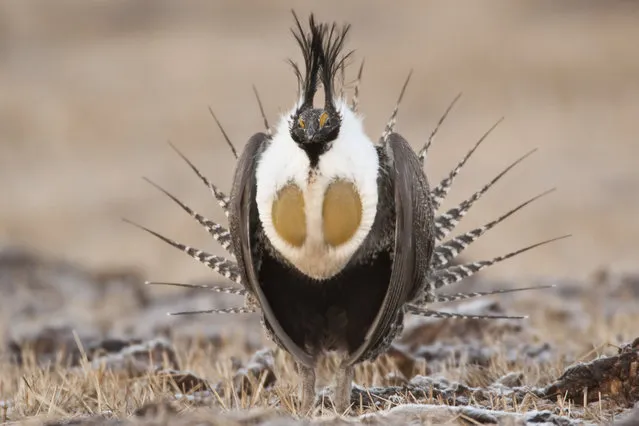
Greater Sage-Grouse

The Greater Sage-Grouse is certainly a formidable-looking bird. Being the largest grouse in North America and having tail feathers, which look like giant spikes, make for a ferocious sight. These birds are well known for their complicated courtship rituals, in which the males perform a special “strutting display” to attract the females. Another distinct feature of the Greater Sage-Grouse is two large yellow throat sacs (gular sacs), which are inflated by the males during the courtship display. Unlike pelicans, whose gular sacs are used to store fish while hunting, the throat sacks of the Greater Sage-Grouse are merely for display.
Details
21 Nov 2014 12:25:00
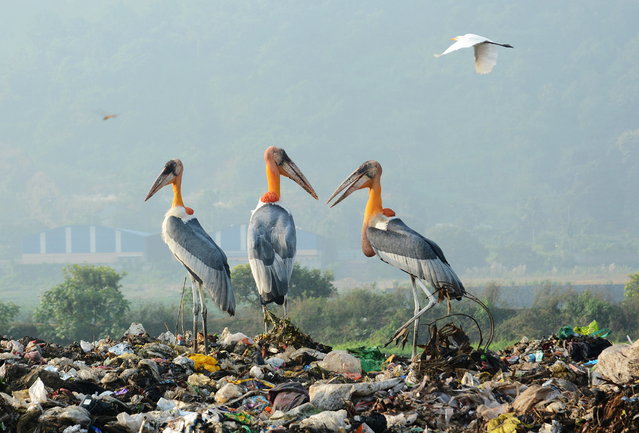
A flock of Adjutants storks sit on a garbage dump at Borgaon in Guwahati, Assam, India, 17 October 2019. Wildlife activists and environmentalists have protested in the past for shifting the garbage dump to another site since it is situated near the Deepor Beel Bird Sanctuary. (Photo by EPA/EFE/Stringer)

A flock of Adjutants storks sit on a garbage dump at Borgaon in Guwahati, Assam, India, 17 October 2019. Wildlife activists and environmentalists have protested in the past for shifting the garbage dump to another site since it is situated near the Deepor Beel Bird Sanctuary. (Photo by EPA/EFE/Stringer)
Details
20 Oct 2019 00:03:00
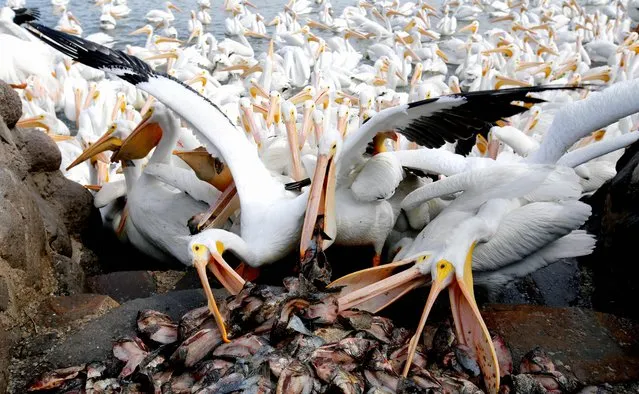
A pod of white pelicans, one of the largest birds in Canada and the US, are seen on the shore of the Chapala lagoon in Cojumatlan de Regules, Mexico, on January 28, 2022. White pelicans travel thousands of kilometers migrating from the cold temperatures of North America. (Photo by Ulises Ruiz/AFP Photo)

A pod of white pelicans, one of the largest birds in Canada and the US, are seen on the shore of the Chapala lagoon in Cojumatlan de Regules, Mexico, on January 28, 2022. White pelicans travel thousands of kilometers migrating from the cold temperatures of North America. (Photo by Ulises Ruiz/AFP Photo)
Details
06 Feb 2022 06:20:00
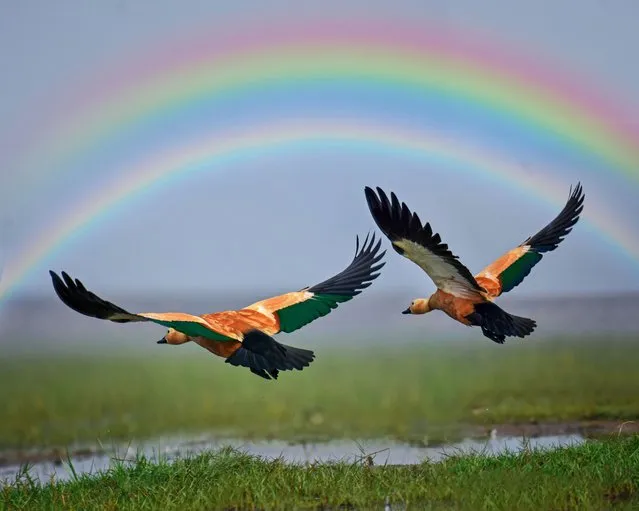
Two ruddy shelducks fly under a double rainbow in Odisha, India in July 2022. These birds are ruddy shelduck, known locally as the Brahminy duck. They have a wingspan of between 43 and 53 inches and stand at a maximum of 28 inches tall. (Photo by Suman Das/Media Drum Images)

Two ruddy shelducks fly under a double rainbow in Odisha, India in July 2022. These birds are ruddy shelduck, known locally as the Brahminy duck. They have a wingspan of between 43 and 53 inches and stand at a maximum of 28 inches tall. (Photo by Suman Das/Media Drum Images)
Details
18 Nov 2022 05:06:00