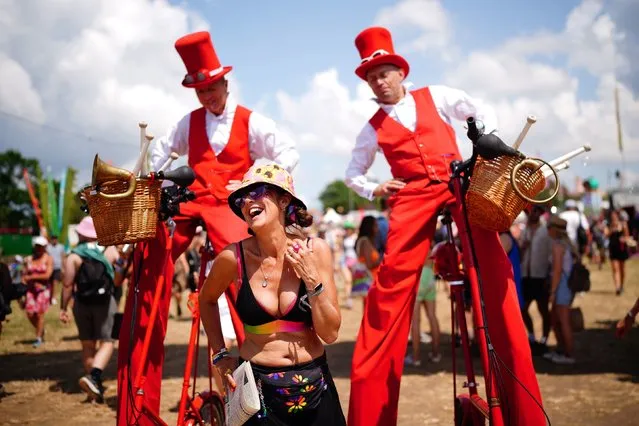
A festivalgoer enjoys the weather in the circus area at the Glastonbury Festival at Worthy Farm in Somerset, United Kingdom on Thursday, June 22, 2023. (Photo by Ben Birchall/PA Images via Getty Images)
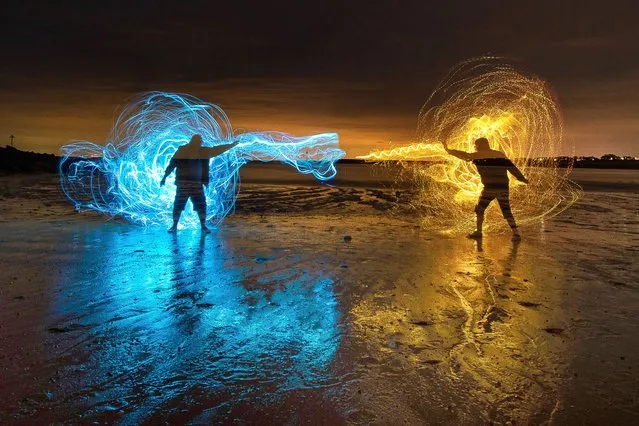
Nigel Cox and Kevin Jay paint with light using fibre optic whips on the beach at Clacton-on-Sea in Essex, United Kingdom on July 25, 2023 with a superhero fighting theme. (Photo by Kevin Jay/Picture Exclusive)
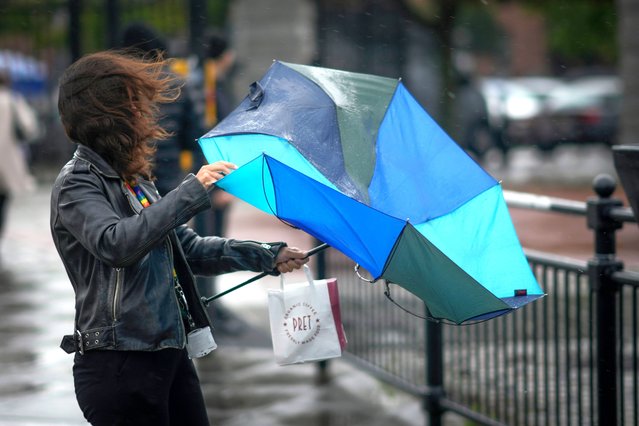
People brave the first rain and wind of Storm Agnes as it approaches the UK on September 27, 2023 in Liverpool, United Kingdom. (Photo by Christopher Furlong/Getty Images)
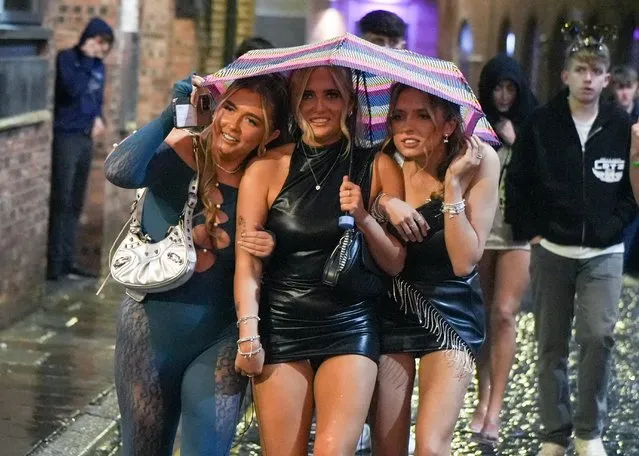
Revellers brave the rain as they make the most of New Year's Eve in Liverpool city centre, United Kingdom on December 31, 2023. (Photo by Ioannis Alexopoulos/London News Pictures)
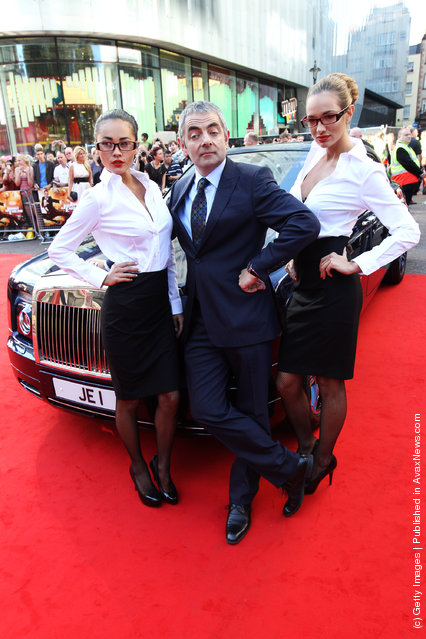
Rowan Atkinson attends the UK premiere of Johnny English Reborn at The Empire Leicester Square on October 2, 2011 in London, United Kingdom. (Photo by Dave Hogan/Getty Images)
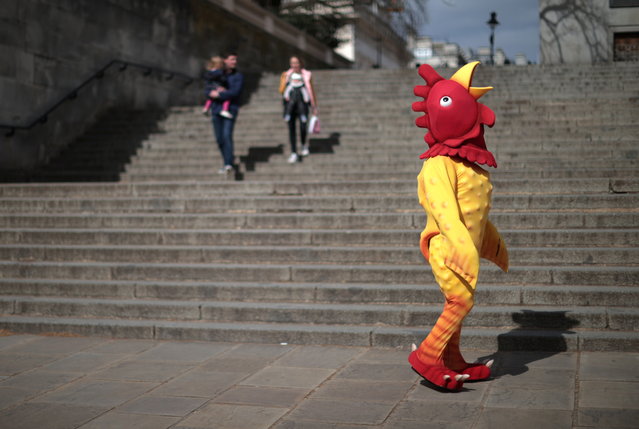
A person dressed in a chicken costume walks through Westminster on Good Friday in London, United Kingdom on April 2, 2021. (Photo by Hannah McKay/Reuters)
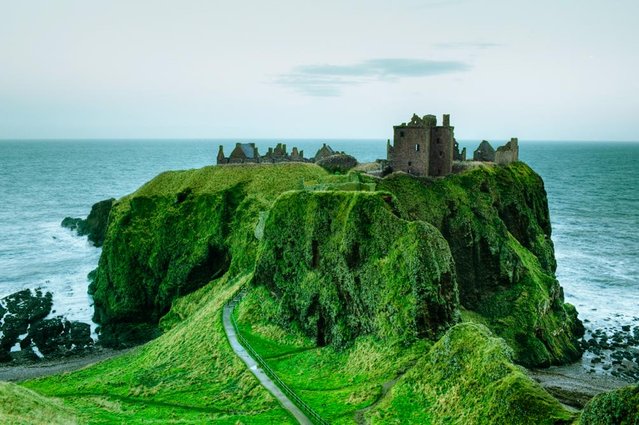
Dunnottar Castleis a ruined medieval fortress located upon a rocky headland on the north-east coast of Scotland, about 3 kilometres (1.9 mi) south of Stonehaven. The surviving buildings are largely of the 15th and 16th centuries, but the site is believed to have been fortified in the Early Middle Ages. Dunnottar has played a prominent role in the history of Scotland through to the 18th-century Jacobite risings because of its strategic location and the strength of its situation. Dunnottar is best known as the place where the Honours of Scotland, the Scottish crown jewels, were hidden from Oliver Cromwell's invading army in the 17th century. The property of the Keiths from the 14th century, and the seat of the Earl Marischal, Dunnottar declined after the last Earl forfeited his titles by taking part in the Jacobite rebellion of 1715. The castle was restored in the 20th century and is now open to the public.
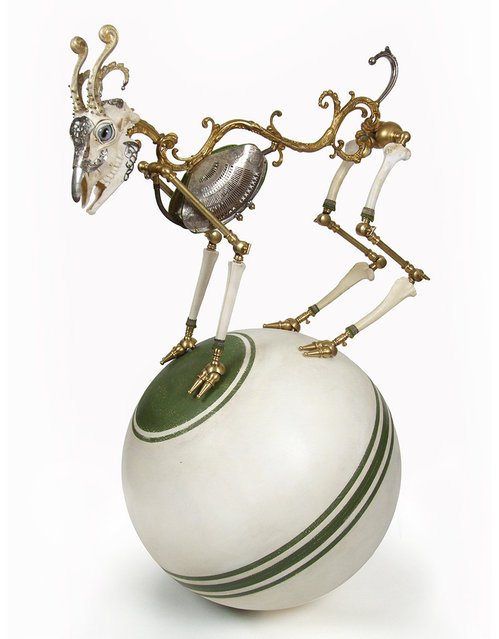
More great and peculiar work from Chicago based sculptor Jessica Joslin. Joslin assembles her hybrid creatures from objects found in obscure junk shops, flea markets, attics, taxidermy supply houses, specialty hardware distributors…or even just walking through the woods. “Miniature machine bolts, springs and couplings comprise anatomical structures. Many of the beasts have hidden movements: a spring loaded beak, snapping jaws, jointed legs and adjustable tails. Some creatures are free-standing but have mechanisms to allow for movement or multiple positions.”