Loading...
Done
Nepalese students of Himalayan agriculture college play in mud water in a paddy field to celebrate the National Paddy Day in Badegaun village, Lalitpur, Nepal, 29 June 2016. More than 100 students and teachers of Himalayan agriculture college participated in the National paddy day by planting rice and playing in mud water as Nepal is celebrating National Paddy Day with various event. On this day, known as Asar Pandra, farmers begin the annual rice planting season and mark the day with various festivities such as preparing rice meals with muddy water, mud being a symbol for a prosperous season. (Photo by Narendra Shrestha/EPA)

Nepalese students of Himalayan agriculture college play in mud water in a paddy field to celebrate the National Paddy Day in Badegaun village, Lalitpur, Nepal, 29 June 2016. More than 100 students and teachers of Himalayan agriculture college participated in the National paddy day by planting rice and playing in mud water as Nepal is celebrating National Paddy Day with various event. (Photo by Narendra Shrestha/EPA)
Details
30 Jun 2016 11:17:00
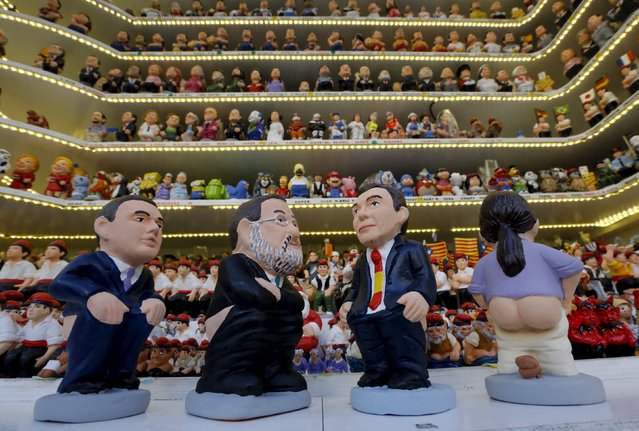
Clay "caganers" representing Spanish Prime Minister Mariano Rajoy (2nd L), Podemos's candidate Pablo Iglesias (R), Socialist Party (PSOE) leader Pedro Sanchez (2nd R) and Ciudadanos party leader Albert Rivera (L) are seen on display at the Santa Llucia Christmas market in central Barcelona, Spain, December 16, 2015. Catalans hide "caganers" or defecators, in Christmas Nativity scenes to let friends hunt for them during Christmas celebrations. The "caganers", which symbolise defecation and fertilization of the earth, are believed to bring prosperity and luck for the coming year. (Photo by Albert Gea/Reuters)

Clay "caganers" representing Spanish Prime Minister Mariano Rajoy (2nd L), Podemos's candidate Pablo Iglesias (R), Socialist Party (PSOE) leader Pedro Sanchez (2nd R) and Ciudadanos party leader Albert Rivera (L) are seen on display at the Santa Llucia Christmas market in central Barcelona, Spain, December 16, 2015. Catalans hide “caganers” or defecators, in Christmas Nativity scenes to let friends hunt for them during Christmas celebrations. The “caganers”, which symbolise defecation and fertilization of the earth, are believed to bring prosperity and luck for the coming year. (Photo by Albert Gea/Reuters)
Details
18 Dec 2015 08:00:00
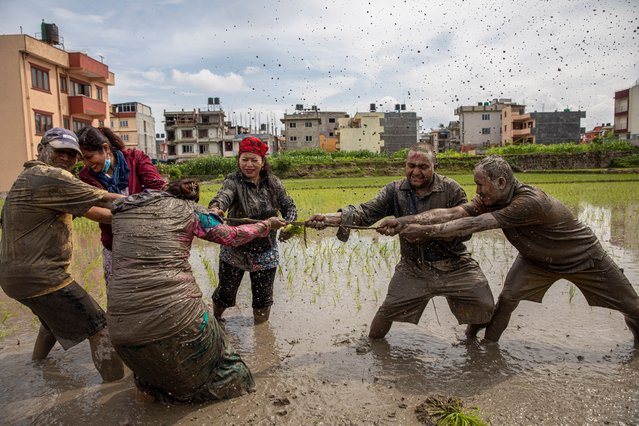
Farmers play tug of war in a paddy field on National Paddy Day in Tokha village, on the outskirt of capital Kathmandu, Nepal, 29 June 2021. Nepal is celebrating National Paddy Day with various events on 29 June. On this day, known as Asar Pandra, farmers begin the annual rice planting season and mark the day with various festivities such as preparing rice meals with muddy water, mud being a symbol for a prosperous season. Sixty percent of Nepal's agriculture industry relies on monsoon rain while 40 percent is carried out through irrigation. Agriculture is a major contributor to the country's GDP. (Photo by Narendra Shrestha/EPA/EFE)

Farmers play tug of war in a paddy field on National Paddy Day in Tokha village, on the outskirt of capital Kathmandu, Nepal, 29 June 2021. Nepal is celebrating National Paddy Day with various events on 29 June. On this day, known as Asar Pandra, farmers begin the annual rice planting season and mark the day with various festivities such as preparing rice meals with muddy water, mud being a symbol for a prosperous season. Sixty percent of Nepal's agriculture industry relies on monsoon rain while 40 percent is carried out through irrigation. Agriculture is a major contributor to the country's GDP. (Photo by Narendra Shrestha/EPA/EFE)
Details
26 Feb 2022 04:53:00
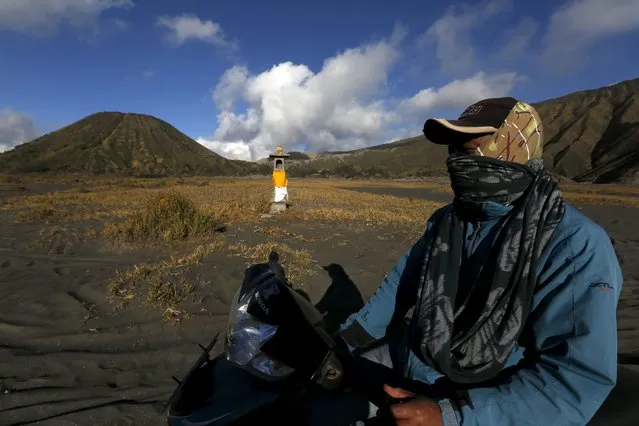
A Hindu villager rides a motorcycle past an altar ahead of the annual Kasada festival at the Mount Bromo in Indonesia's East Java province, July 30, 2015. (Photo by Reuters/Beawiharta)

A Hindu villager rides a motorcycle past an altar ahead of the annual Kasada festival at the Mount Bromo in Indonesia's East Java province, July 30, 2015. The Kasada festival will be held on August 1, when the worshippers throw offerings such as livestock and other crops into the volcanic crater of Mount Bromo to give thanks to the Hindu gods for ensuring their safety and prosperity. (Photo by Reuters/Beawiharta)
Details
31 Jul 2015 11:25:00
Charlize Theron and Kristen Stewart

“There’s so much that Snow White has been deprived of in terms of having the proper time to really develop and hone who she is. She’s put in jail at the beginning of her life, so she’s a stunted person. She has a really idealized concept of what the world is, and how people should live, and how wonderful things all can be, and there is this debilitating isolation that she feels because she has been locked away in a little cell for seven years. ...
Kristen Stewart
Details
12 May 2015 09:04:00


Defined according to wikipedia it is “a recent and informal geologic chronological term that serves to mark the evidence and extent of human activities that have had a significant global impact on the Earth’s ecosystems. The term was coined by ecologist Eugene Stoermer but has been widely popularized by the Nobel Prize-winning atmospheric chemist Paul Crutzen.”

The images here where created by Felix Pharand-Deschenes depicting how various human influences, from road and rail, to internet cables and airlines create significant patterns covering the Earth. What can we learn from these patterns in how they are influencing the environment
Details
19 Aug 2012 10:40:00
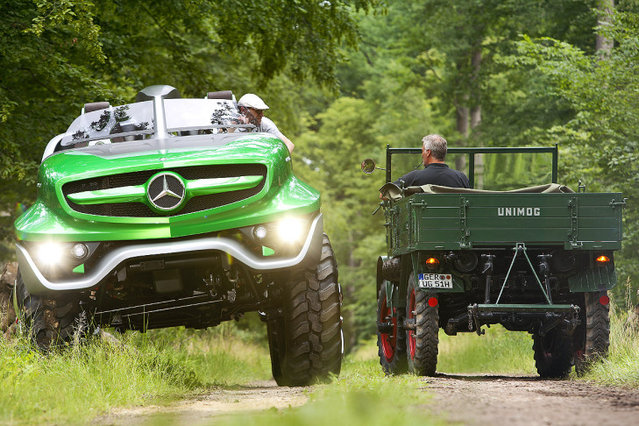
Mercedes-Benz Unimog Concept

How much do things change in 60 years? Sometimes the best answer to that kind of question is a picture. Here you can see an original Unimog (right), built sometime between the start of production in 1948 and 1951, when Mercedes bought the operation in order to expand it enough to keep up with demand. On the left is a “60th Anniversary” Unimog design concept, celebrating not the actual birth of the Unimog, but its purchase by Mercedes. Needless to say, the contrast between the two is… breathtaking. And if you’re curious about the evolution of this hugely influential vehicle, if you can’t help wondering how it grew from a (relatively) tiny, spartan utility vehicle to a garish, Mercedes-starred behemoth.
Details
31 Oct 2012 11:24:00


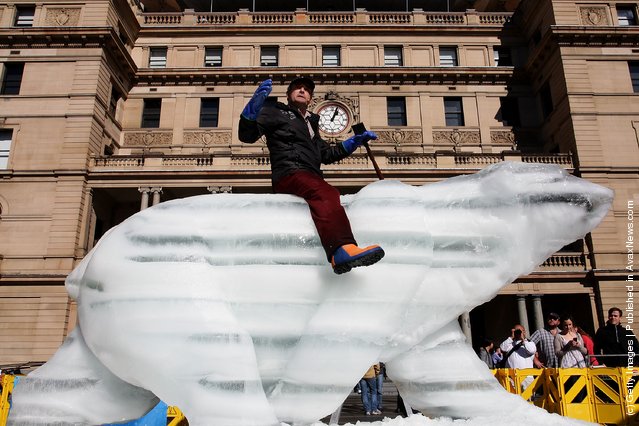
British artist, Mark Coreth sits on top of the “Sydney Ice Bear” carved from a 10 tonne block of ice to illustrate how humans affect climate change in the Arctic at Customs House on June 3, 2011 in Sydney, Australia. The public will be welcomed to touch the bear, and leave an imprint which will begin the melting process and act as a metaphor for how humans affect the environment. The ice bear's has visited six cities on it's global tour since 2009; the visit to Sydney coincides with World Environment Day on June 5. (Photo by Lisa Maree Williams/Getty Images)
Details
03 Jun 2011 08:21:00