Loading...
Done
A dhobi, or a washerman washes cloths on the banks of the River Gomti in Lucknow, India, Saturday, September 12, 2020. Dhobis are traditional laundry workers who wash clothes by hand and dry them in the sun, an occupation which has been in existence for generations. Most cities in India have a Dhobi Ghat, or washermen's area, where the city's pile of clothes is laundered. This practice is still popular in India, despite of modern technology. Around 1,000 families work in Lucknow's Dhobi Ghat. However, in light of the novel coronavirus, their wages have decreased drastically. With each family earning around US$100-200 per month. (Photo by Rajesh Kumar Singh/AP Photo)

A dhobi, or a washerman washes cloths on the banks of the River Gomti in Lucknow, India, Saturday, September 12, 2020. Dhobis are traditional laundry workers who wash clothes by hand and dry them in the sun, an occupation which has been in existence for generations. Most cities in India have a Dhobi Ghat, or washermen's area, where the city's pile of clothes is laundered. This practice is still popular in India, despite of modern technology. Around 1,000 families work in Lucknow's Dhobi Ghat. However, in light of the novel coronavirus, their wages have decreased drastically. With each family earning around US$100-200 per month. (Photo by Rajesh Kumar Singh/AP Photo)
Details
25 Sep 2020 00:03:00
1953: Students from Glasgow Art School modelling casual clothing and Buchan tartan in the annual Fashion Show for charities

Students from Glasgow Art School modelling casual clothing and Buchan tartan in the annual Fashion Show for charities. During Rag Week students parade in the city streets wearing costumes designed and made by themselves. (Photo by Haywood Magee/Picture Post/Getty Images). 7th February 1953
Details
17 Sep 2011 13:07:00
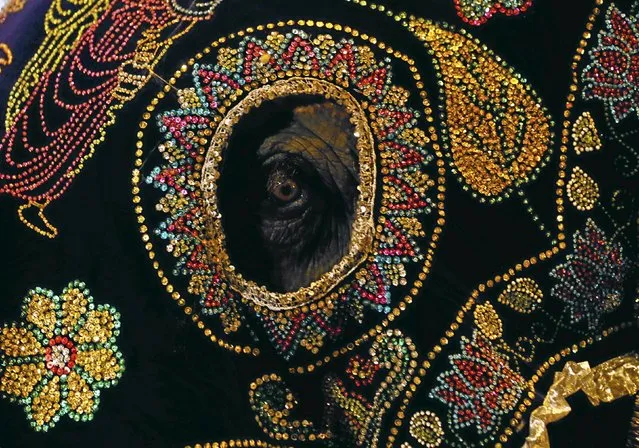
An elephant decorated with a cloth walk in the annual Nawam Perahera street parade in Colombo February 22, 2016. (Photo by Dinuka Liyanawatte/Reuters)

An elephant decorated with a cloth walk in the annual Nawam Perahera street parade in Colombo February 22, 2016. Over 50 elephants are participating in a street parade for Gangaramaya temple's annual Perahera festival, along with a nightly procession of traditional dancers, fire twirlers and traditional musicians. (Photo by Dinuka Liyanawatte/Reuters)
Details
23 Feb 2016 11:49:00
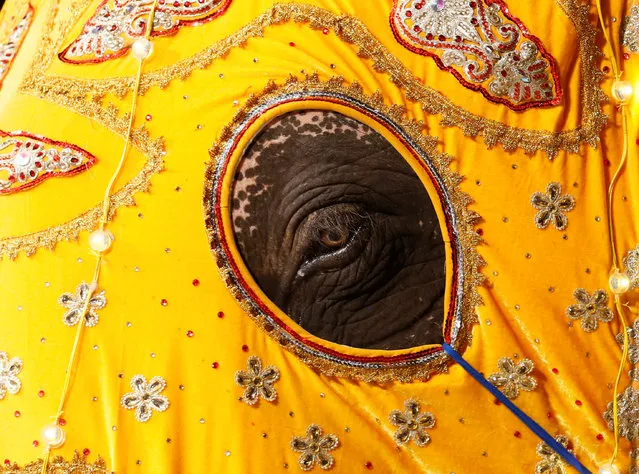
An elephant decorated with a cloth walk in the annual Perahera (street pageant) at Rajamaha viharaya Buddhist temple in Colombo, Sri Lanka September 10, 2016. (Photo by Dinuka Liyanawatte/Reuters)

An elephant decorated with a cloth walk in the annual Perahera (street pageant) at Rajamaha viharaya Buddhist temple in Colombo, Sri Lanka September 10, 2016. (Photo by Dinuka Liyanawatte/Reuters)
Details
11 Sep 2016 09:52:00
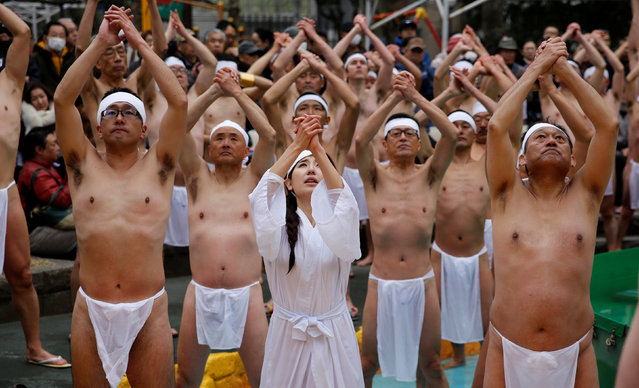
People wearing loin cloths pray after they bathe in ice-cold water outside the Teppozu Inari shrine in Tokyo, Japan, January 8, 2017. (Photo by Toru Hanai/Reuters)

People wearing loin cloths pray after they bathe in ice-cold water outside the Teppozu Inari shrine in Tokyo, Japan, January 8, 2017. (Photo by Toru Hanai/Reuters)
Details
09 Jan 2017 12:50:00
Fabrics dry on bamboo scaffolding on Inle lake in Myanmar, March 2024. The cloth will be made into a traditional garment called a longyi, worn by both sexes. (Photo by Hilton Chen/Solent news)

Fabrics dry on bamboo scaffolding on Inle lake in Myanmar, March 2024. The cloth will be made into a traditional garment called a longyi, worn by both sexes. (Photo by Hilton Chen/Solent news)
Details
02 Apr 2024 03:42:00
A storm trooper feeds a walker in the grass, taken in Glasgow, Scotland, December 2016. (Photo by David Gilliver/Barcroft Images)

A storm trooper feeds a walker in the grass, taken in Glasgow, Scotland, December 2016. Tiny Storm Troopers and a mini Darth Vader are captured doing everyday activities – from taking a bath, to wrapping presents. Scottish Artist and Photographer, David Giliver created these scenes over a period of two years using toys and miniature props. (Photo by David Gilliver/Barcroft Images)
Details
16 Dec 2016 10:20:00
For her series “Japanese Whispers”, Belgian photographer Zaza Bertrand headed inside the intimate world of rabuhos – Japanese love hotels. Love hotels became popular in Japan from the 1960s onwards, due to a lack of privacy in many family homes. There are now around 37,000 of these hotels in Japan, allowing short daytime “rests” or overnight stays. (Photo by Zaza Bertrand/The Guardian)

For her series “Japanese Whispers”, Belgian photographer Zaza Bertrand headed inside the intimate world of rabuhos – Japanese love hotels. Love hotels became popular in Japan from the 1960s onwards, due to a lack of privacy in many family homes. There are now around 37,000 of these hotels in Japan, allowing short daytime “rests” or overnight stays. (Photo by Zaza Bertrand/The Guardian)
Details
02 Dec 2016 11:30:00