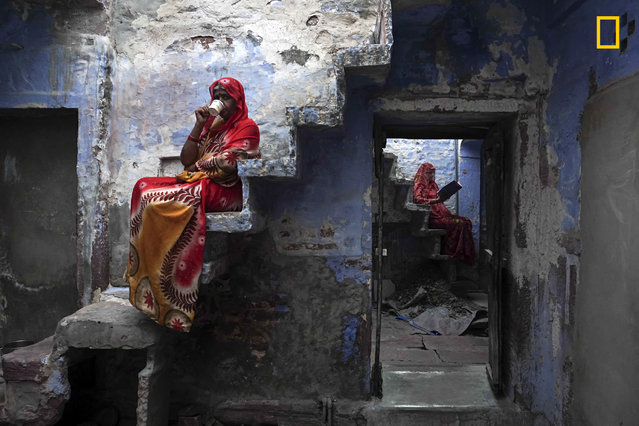
“These Rajasthani sisters were sitting on the staircase inside their house relaxing and enjoy a cup of masala chai”. (Photo by Firdaus Hadzri/National Geographic Travel Photographer of the Year Contest)
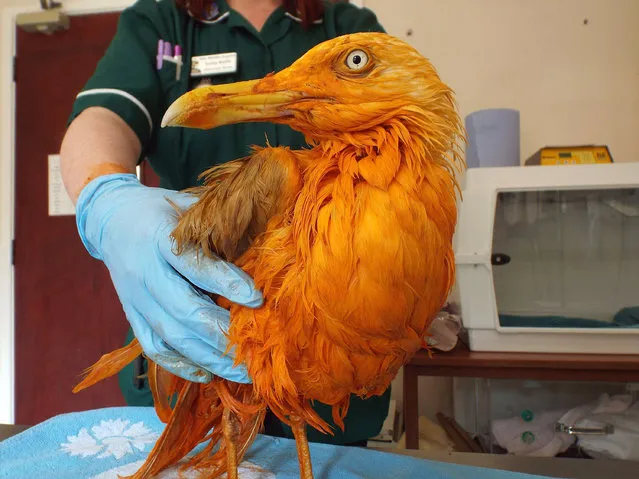
A seagull who turned bright orange after he plunged into a vat of chicken tikka masala in Beckford, England on June 9, 2016. The bird fell into a container of the food while trying to scavenge a piece of meat from a food factory bin in Wales. (Photo by Vale Wildlife Hospital/PA Wire)
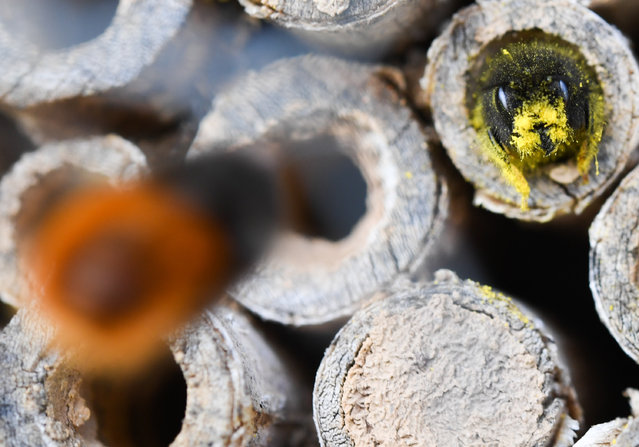
A mason bee deposits its collected pollen in an elderberry stick near Hessen, Germany on March 27, 2020. The food supply is sufficient for the eleven-month development of the brood from the egg to the finished bee. Wild bees are active in March and April and die before their offspring hatch. (Photo by Arne Dedert/dpa)
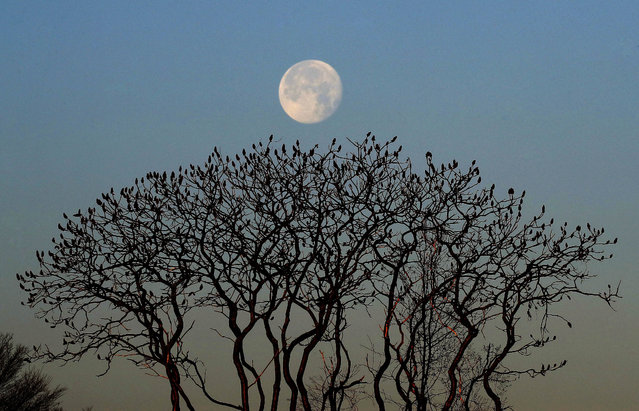
The waning moon sets behind leafless sumac trees on a crisp, clear morning, Thursday, December 15, 2016, in Portland, Maine. Much of the northern Mid-Atlantic and Northeast will stay cold for the next couple of days as the arctic air remains stuck over the northern Appalachians, the National Weather Service said. (Photo by Robert F. Bukaty/AP Photo)
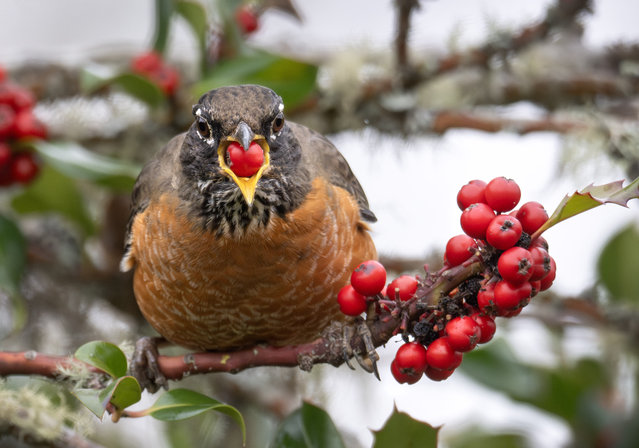
An American robin feeds on holly berries in a thicket near Elkton in southwestern Oregon on November 16, 2024. Many birds can safely consume holly berries, including blackbirds, redwings, and thrushes. There is an old wives tale that if you see a bird eating a berry, it is safe for humans to eat, but this is not true. Birds consume many plants that are poisonous to humans, holly berries included. (Photo by Robin Loznak/ZUMA Press Wire/Rex Features/Shutterstock)
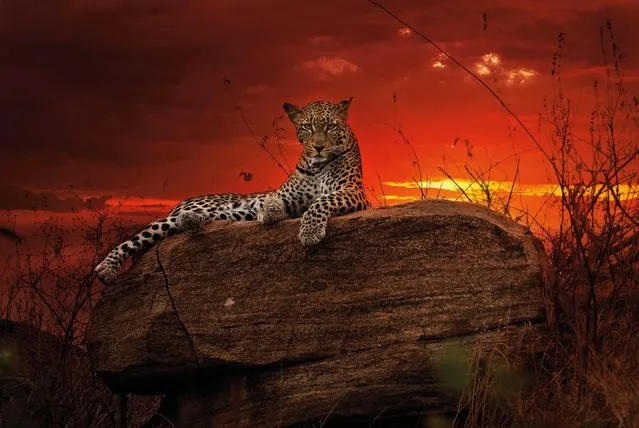
Award-winning photographer Alex Bernasconi has captured thousands of images – from hiding hippos to wandering zebras – in his travels across Africa. His amazing work features in a new edition of his book Wild Africa. These amazing pictures create a snapshot of the life of some of the planet’s most spectacular animals and natural habitats. Photo: “Wild Africa”. (Photo by Alex Bernasconi)