Loading...
Done
Afghan Dog Fighting

“Dog fighting is a form of blood sport in which game dogs are made to fight, sometimes to the death. It is illegal in most developed countries. Dog fighting is used for entertainment and may also generate revenue from stud fees, admission fees and gambling”. – Wikipedia

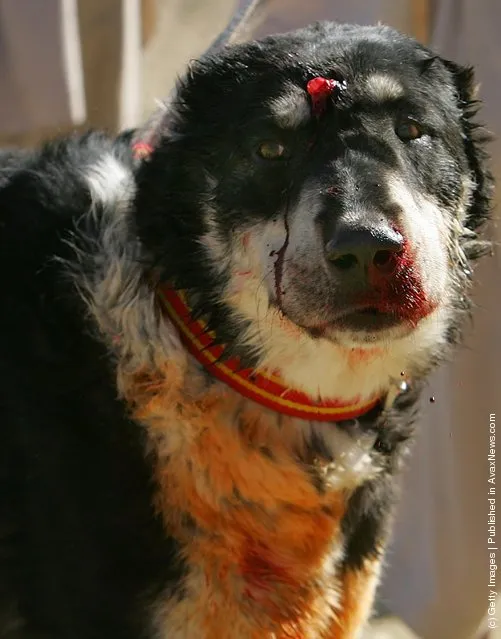
Photo: A bloody Afghan dog is bleeding with many wounds after he lost a dog fight November 24, 2006 in Kabul, Afghanistan. While the Afghan government is trying to ban the violent use of dogs for fighting, the unofficial sport remains a regular weekly event. Afghan dog fighting is popular among Afghan men who gamble on the dogs making upwards of 15,000 Afghanie (300 USD). (Photo by Paula Bronstein/Getty Images)
Details
07 Aug 2011 11:47:00
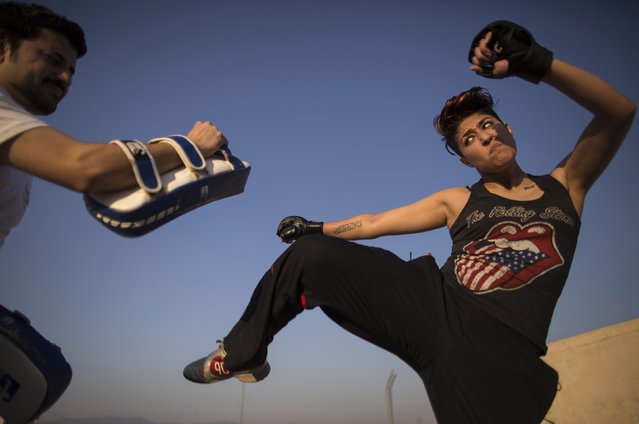
Interior designer Zahra Afridi (R) kicks a punching bag during a kickboxing training session at her home in Islamabad February 10, 2014. Afridi runs her own interior design company. Her most recent project was a Classic Rock Coffee cafe in Islamabad. (Photo by Zohra Bensemra/Reuters)

Interior designer Zahra Afridi (R) kicks a punching bag during a kickboxing training session at her home in Islamabad February 10, 2014. Afridi runs her own interior design company. Her most recent project was a Classic Rock Coffee cafe in Islamabad. Though instability continues to plague Pakistan and many areas are dominated by social conservatism, some of the country's more affluent residents have worked to fashion a very different kind of lifestyle for themselves. Pictures of men and women taking part in all sorts of activities and professions – from being a pilates instructor, to a textile retail entrepreneur, to a member of a rock band – offer a different view of Pakistan to images of conflict that often make the news. (Photo by Zohra Bensemra/Reuters)
Details
13 Jul 2014 10:47:00
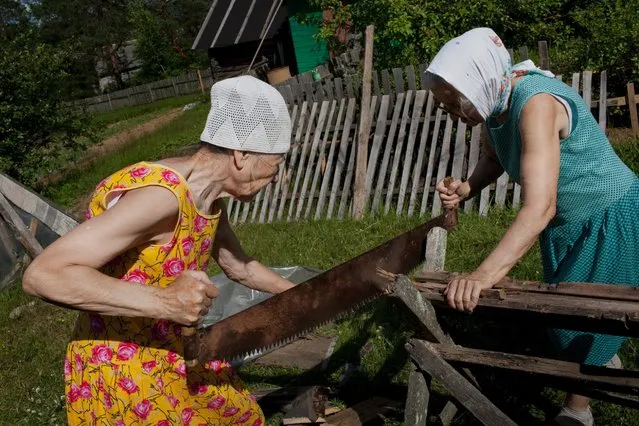
“Two-Handed Saw, 2014”. “Most of the neighbors have switched to power tools to run their households, the buzz of chain saws and weed-whackers overpowering the quieter sounds of country life, but my aunts hold on to the two-handed saw that's decades old, the sickle and scythe that need to be sharpened and polished after each use, the old axe that's becoming heavier each year. Each of these objects is familiar, holding memories of their brother, who succumbed to cancer a few years ago, of days before my grandfather lost his vision in the 50's, of busier days and longer futures”, Sablin told. (Photo by Nadia Sablin)

In northwest Russia, in a small village called Alekhovshchina, Nadia Sablin's aunts spend the warmer months together in the family home and live as the family has always lived, chopping wood to heat the house and making their own clothes. Sablin's book of photographs, “Aunties: The Seven Summers of Alevtina and Ludmila”, is published by Duke University Press. Here: “Two-Handed Saw, 2014”. (Photo by Nadia Sablin)
Details
25 Feb 2016 12:12:00
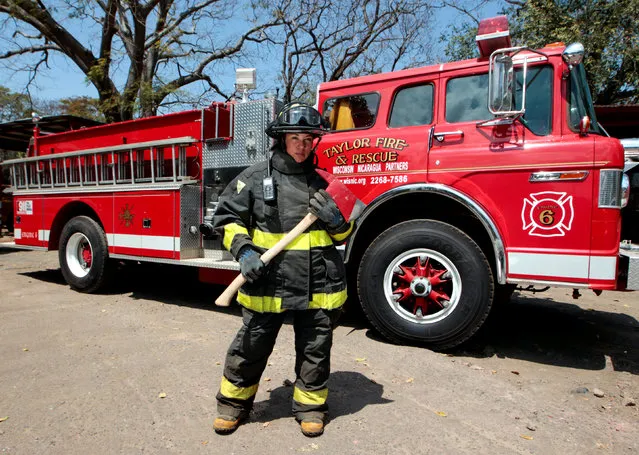
Yolaina Chavez Talavera, 31, a firefighter, poses for a photograph in front of a truck at a fire station in Managua, Nicaragua, February 22, 2017. “In my early days as a female firefighter, men, my team mates, thought that I would not last long in the organisation due to the hard training. However, in practice I showed them that I am able to take on tasks at the same level as men. I think women must fight to break through in all areas, in the midst of the machismo that still persists in Nicaragua and in Hispanic countries”, Talavera said. (Photo by Oswaldo Rivas/Reuters)

Wednesday March 8 marks International Women's Day, with festivals, concerts and exhibitions among the numerous events planned around the world to celebrate the achievements of women in society. The annual event has been held since the early 1900s and traditionally promotes a different theme each year, with this year's edition calling on people to #BeBoldForChange and push for a more gender-inclusive working world. Reuters photographers have been speaking with women in a range of professions around the world about their experiences of gender inequality. Here: Yolaina Chavez Talavera, 31, a firefighter, poses for a photograph in front of a truck at a fire station in Managua, Nicaragua, February 22, 2017. (Photo by Oswaldo Rivas/Reuters)
Details
04 Mar 2017 00:06:00
The Church of All Saints. (Photo by Matthias Haker/Caters News)

These illuminating images show the crumbling remains of some of the worlds places of worship. The shots include golden chapels, overgrown synagogues and eerily silent rooms that were once used for prayer. They were visited by Matthias Haker, a 31-year-old photographer from Potsdam, Germany. Adding to the general intrigue of his images, Matthias never discloses the location of a shot – not even the town, country or continent. Here: The Church of All Saints. (Photo by Matthias Haker/Caters News)
Details
29 Apr 2016 11:32:00
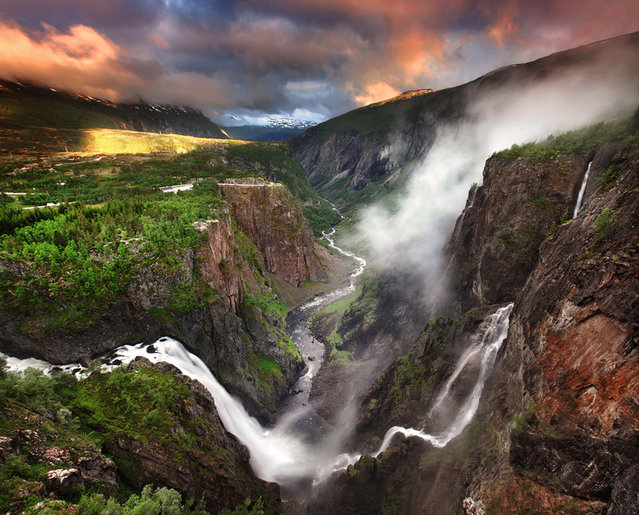
Voringfossen Waterfall In Norway

Vøringfossen is the 83rd highest waterfall in Norway on the basis of total fall. It lies at the top of Måbødalen in the municipality of Eidfjord, in Hordaland, not far from Highway 7, which connects Oslo with Bergen. It has a total drop of 182 meters, and a major drop of 163 meters. It is perhaps the most famous in the country and a major tourist attraction on the way down from Hardangervidda to Hardangerfjord. The name Vøringfossen (Old Norse Vyrðingr) is derived from the verb vyrða (English: esteem, revere). The last element fossen, the finite form of foss (waterfall), is a later addition.
Details
02 Dec 2013 10:58:00
Dan surrounded by seven days of her own rubbish in Pasadena, California. (Photo by Gregg Segal/Barcroft Media)

Dan surrounded by seven days of her own rubbish in Pasadena, California. If you've never thought about how much rubbish you throw away an honest photographic series will open your eyes. Men, women, couples and families with young children have been photographed lying on their backs surrounded by a week's worth of their own rubbish – from old cartons of milk, used nappies and even tampons. The startling series “Seven Days of Garbage” by Californian photographer Gregg Segal is an unforgettable reminder of the amount of waste a human collects in just seven days. (Photo by Gregg Segal/Barcroft Media)
Details
16 Jul 2014 14:41:00
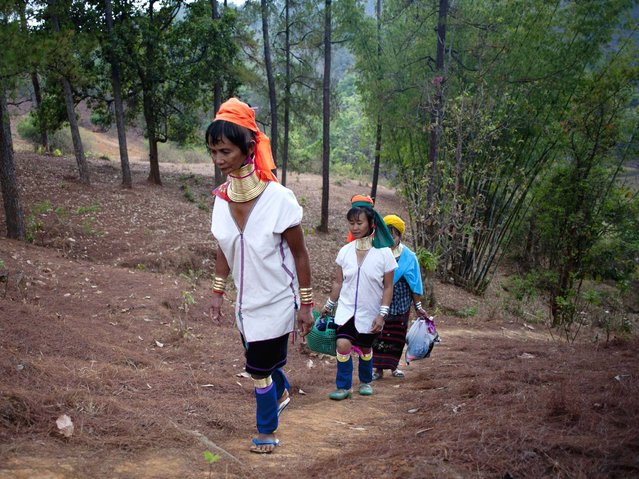
One of the theories says that the coils originate from the desire to look more attractive by exaggerating sexual dimorphism, as women have more slender necks than men. (Photo by Ye Aung Thu/AFP Photo)

This photo taken on April 16, 2014 shows ethnic Kayan women wearing traditional clothes and bronze rings around tbeir neck in Panpet village, Demoso township in Kayah state, eastern Myanmar. Some ethnic Kayan women, also known as Padaung, begin wearing the bronze rings on their neck and legs from a young age. Usually they start wearing six to ten rings when they are five to ten-years-old and then they put on one more ring a year for years after then. (Photo by Ye Aung Thu/AFP Photo)
Details
23 Apr 2014 08:56:00