Loading...
Done
How Snakeskin Handbags Are Made

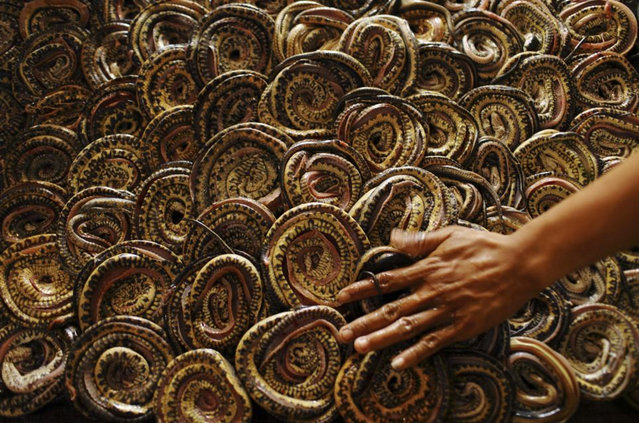
Images from a snake slaughterhouse at Kapetakan village in Indonesia’s West Java province. Wakira, who is known as “Boss Cobra”, owns the slaughterhouse that produces snake meat and skin. Snake meat is believed by some to be a remedy for skin diseases and asthma, as well as an aid to increase virility. The snake skins, measuring in the hundreds of metres, are sold to bag factories in the West and Central Java provinces on a monthly basis. The price of a bag made from snake skin costs between 150,000 rupiah ($ 15.60) and 300,000 rupiah ($31.20), depending on its size. That snakeskin handbag you’ll buy is costing a hell of a lot more.
Details
20 Feb 2013 12:00:00
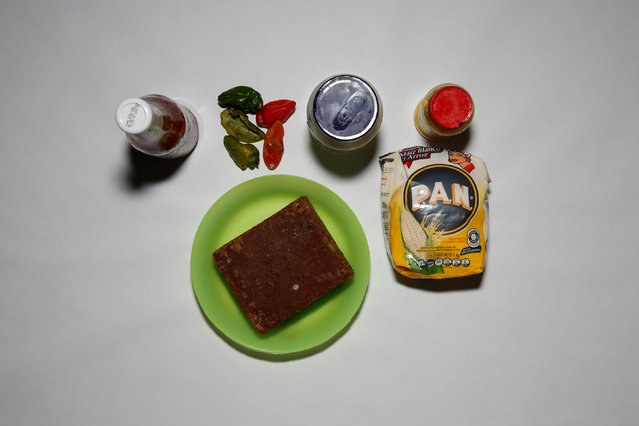
All the food available in the house of Antonia Torres and her family, is pictured at their home in Caracas, Venezuela April 22, 2016. (Photo by Carlos Garcia Rawlins/Reuters)

The combination of Venezuela's sky-rocketing prices and chronic product shortages have left many struggling to put regular food on their tables and maintain a balanced diet. According to one recent study, 87 percent of Venezuelans say their income is now insufficient to purchase their food needs. Here: All the food available in the house of Antonia Torres and her family, is pictured at their home in Caracas, Venezuela April 22, 2016. (Photo by Carlos Garcia Rawlins/Reuters)
Details
28 Apr 2016 12:30:00
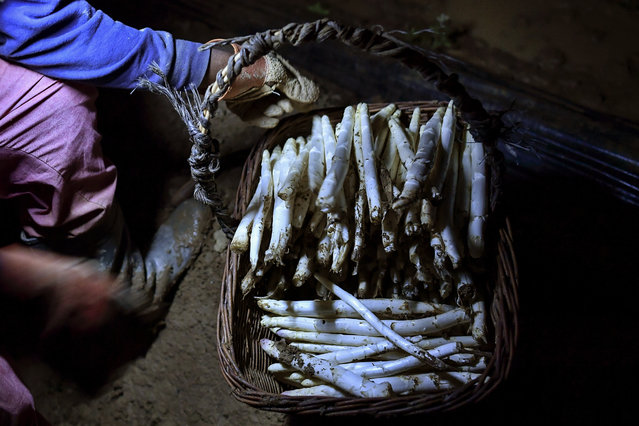
In this Thursday, May 31, 2018 photo, a temporary worker using a lantern collects white asparagus from a field in Caparroso, around 85 km (52 miles) from Pamplona, northern Spain. (Photo by Alvaro Barrientos/AP Photo)

In this Thursday, May 31, 2018 photo, a temporary worker using a lantern collects white asparagus from a field in Caparroso, around 85 km (52 miles) from Pamplona, northern Spain. Dubbed the “white gold” of these northern Spanish farms because of their color and the high price they fetch in markets and restaurants around the world, the stringy delicacy is planted every fall and picked each year between April and June, at the height of the spring. (Photo by Alvaro Barrientos/AP Photo)
Details
09 Jun 2018 00:03:00
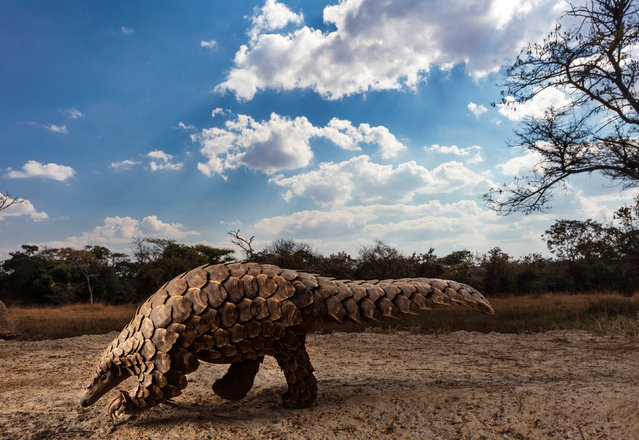
Pangolins in Crisis: Brent Stirton, South Africa; 1st place, Natural world and wildlife. “Pangolins are the world’s most illegally trafficked mammals, with an estimated one million trafficked to Asia in the last 10 years. Their scales are used in traditional Chinese and Vietnamese medicine, and their meat is sold as a high-priced delicacy. As a result, pangolins are listed as critically endangered and anyone who trades or consumes them is breaking the law. This body of work exposes the trade, while exploring aspects of illegality and celebrating the people who are trying to save these animals”. (Photo by Brent Stirton/Sony World Photography Awards 2020)

Pangolins in Crisis: Brent Stirton, South Africa; 1st place, Natural world and wildlife. “Pangolins are the world’s most illegally trafficked mammals, with an estimated one million trafficked to Asia in the last 10 years. Their scales are used in traditional Chinese and Vietnamese medicine, and their meat is sold as a high-priced delicacy. As a result, pangolins are listed as critically endangered and anyone who trades or consumes them is breaking the law. This body of work exposes the trade, while exploring aspects of illegality and celebrating the people who are trying to save these animals”. (Photo by Brent Stirton/Sony World Photography Awards 2020)
Details
11 Jun 2020 00:05:00


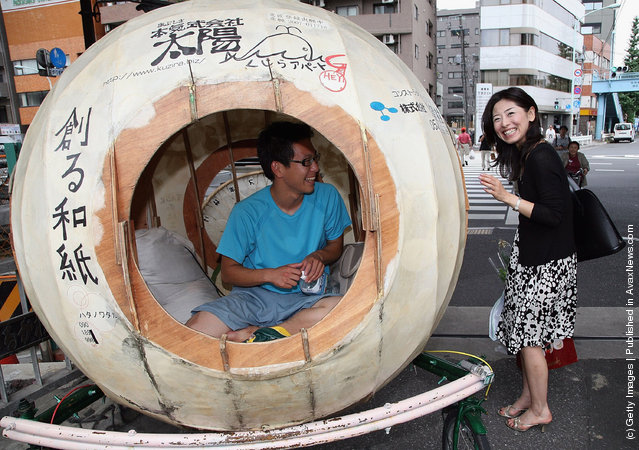
Gohei Hayashi of Kyoto University is seen in side his movable eco and healing house, “Kujira (Whale) House” July 21, 2007 in Tokyo, Japan. The house is made from Japanese paper, bamboo and tatami mat. Hayashi has travelled 500 km from Japan's ancient city, Kyoto to Tokyo with his eco house to promote his house which can be placed both out inside and outside to provide a private space. The Kujira house is available at the price of 800,000 yen (roughly US$6600). (Photo by Koichi Kamoshida/Getty Images)
Details
23 May 2011 06:45:00
A model presents a creation in a subway station during the Sao Paulo Fashion Week in Sao Paulo October 27, 2013. (Photo by Paulo Whitaker/Reuters)

“It’s Fashion Week in Sao Paulo, Brazil and you don’t have to be a celebrity or a designer to check out these couture pieces. Subway stations were used as improvised catwalks in order to give the general public a chance to see these creations up close and at the price of a subway fare”. – Reuters. Photo: A model presents a creation in a subway station during the Sao Paulo Fashion Week in Sao Paulo October 27, 2013. (Photo by Paulo Whitaker/Reuters)
Details
31 Oct 2013 07:18:00
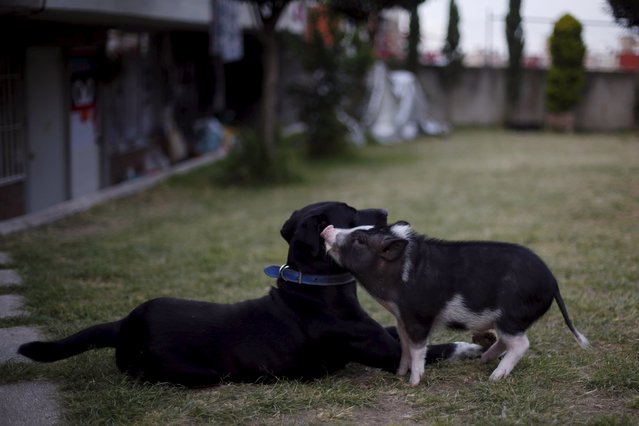
Goyo, an eight-month-old mini pig, plays with a dog in Mexico City, December 21, 2015. (Photo by Edgard Garrido/Reuters)

Goyo, an eight-month-old mini pig, plays with a dog in Mexico City, December 21, 2015. Mini pigs can grow to about 30 kg (66.1 lbs) in weight and about 35 cm (1.1 ft) in height, according to the company Mini Pigs Mexico. The company says that the mini pigs' popularity as pets is growing and around 300 are sold every year in Mexico, with prices ranging from $350 to $1,600. (Photo by Edgard Garrido/Reuters)
Details
29 Dec 2015 08:03:00
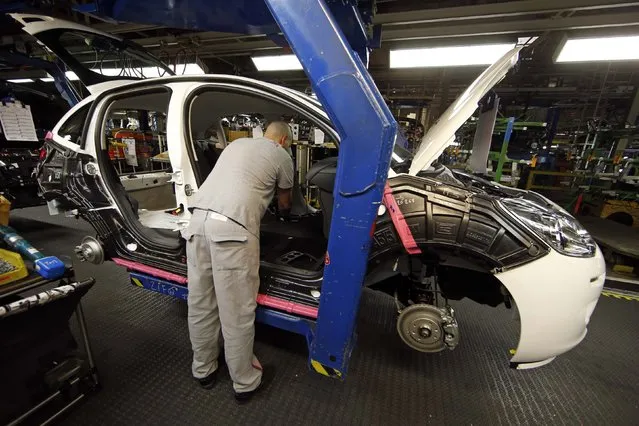
An employee works on the automobile assembly line of a Citroen C3 car at the PSA Peugeot Citroen plant in Poissy, near Paris, France, April 29, 2015. (Photo by Benoit Tessier/Reuters)

An employee works on the automobile assembly line of a Citroen C3 car at the PSA Peugeot Citroen plant in Poissy, near Paris, France, April 29, 2015. PSA Peugeot Citroen said on Wednesday its revenue rose in the first quarter as the recovering French carmaker's efforts to raise prices helped offset weaker volumes. (Photo by Benoit Tessier/Reuters)
Details
30 Apr 2015 11:36:00