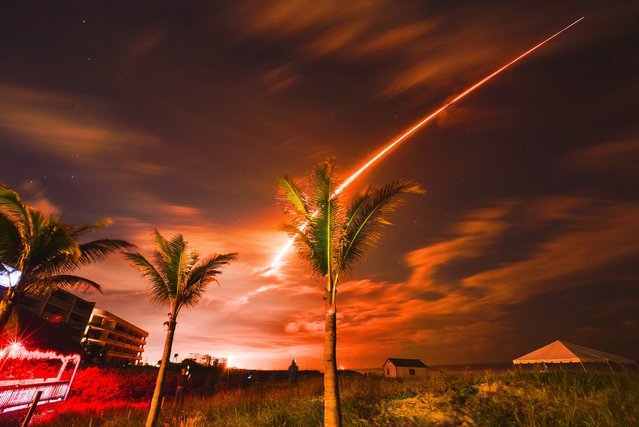
SpaceX launch of a Falcon 9 rocket carrying Starlink satellites on Mission 12-2 on December 23, 2024. The rocket launched from Kennedy Space Center Launch Pad 39A in Florida. (Photo by USA Today)
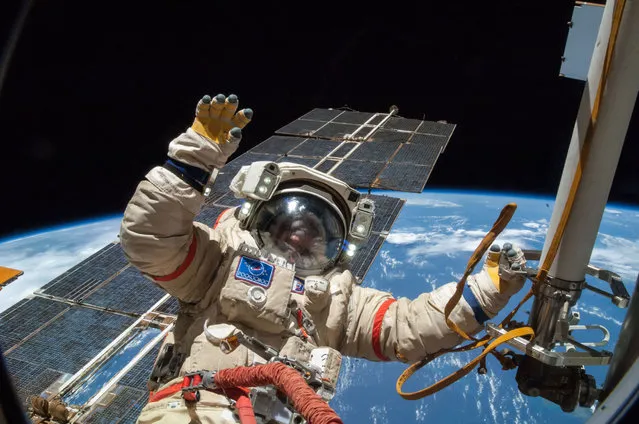
Russian cosmonaut Alexander Skvortsov, Expedition 40 flight engineer, attired in a Russian Orlan spacesuit, participates in a session of extravehicular activity (EVA) in support of science and maintenance on the International Space Station on August 18, 2014. During the five-hour, 11-minute spacewalk, Skvortsov and cosmonaut Oleg Artemyev (out of frame) deployed a small science satellite, retrieved and installed experiment packages and inspected components on the exterior of the orbital laboratory. (Photo by NASA)
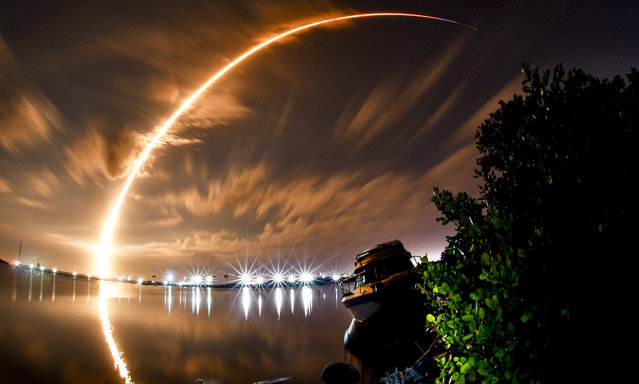
A three minute time exposure shows the launch of a SpaceX Falcon 9 from Cape Canaveral Space Force Station Launch Complex 40, Thursday, January 7, 2021 in Port Canaveral, Fla. The rocket is carrying the Turksat 5A satellite for Turkey. (Photo by Malcolm Denenark/Florida Today via AP Photo)
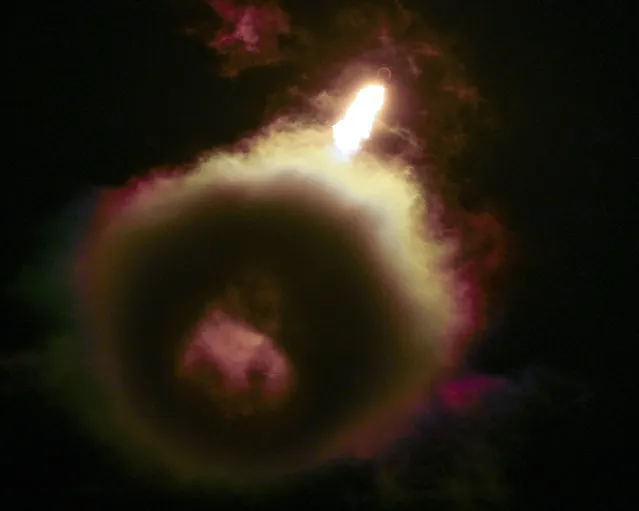
A SpaceX Falcon 9 rocket breaks the sound barrier as it launches the next batch of Starlink satellites (mission; Starlink 6-7), at 12:01 AM from Launch Complex 40 at the Cape Canaveral Space Force Station, Florida on Friday, July 28, 2023. (Photo by Joe Marino/UPI/Rex Features/Shutterstock)
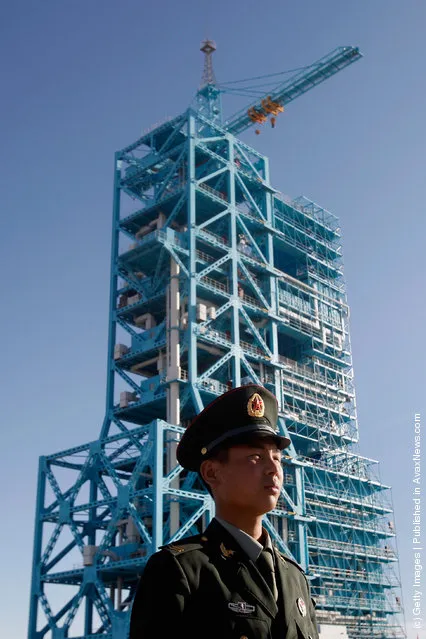
Chinese security stands near a Long March 2F rocket carrying Tiangong-1, China's first unmanned space module, stands at the Jiuquan Satellite Launch Center on September 28, 2011 in Jiuquan, Gansu Province of China. Tiangong-1,a small unmanned space lab, will be launched at 21:19 (Beijing time) on September 29, 2011, and will attempt a docking procedure with a Shenzhou 8 spacecraft later in the mission. (Photo by Lintao Zhang/Getty Images)
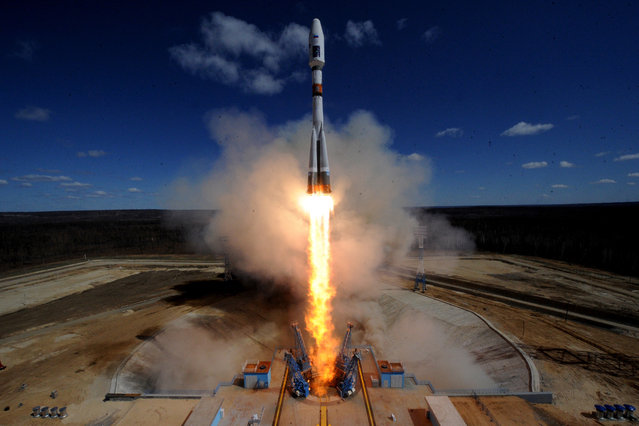
A Russian Soyuz 2.1a rocket carrying Lomonosov, Aist-2D and SamSat-218 satellites lifts off from the launch pad at the new Vostochny Cosmodrome outside the city of Uglegorsk, about 200 kilometers (125 miles) from the city of Blagoveshchensk in the far eastern Amur region Thursday, April 28, 2016. The launch of the first rocket from Russia's new space facility has been delayed after a last-minute problem. (Photo by Kirill Kudryavtsev/Pool Photo via AP Photo)
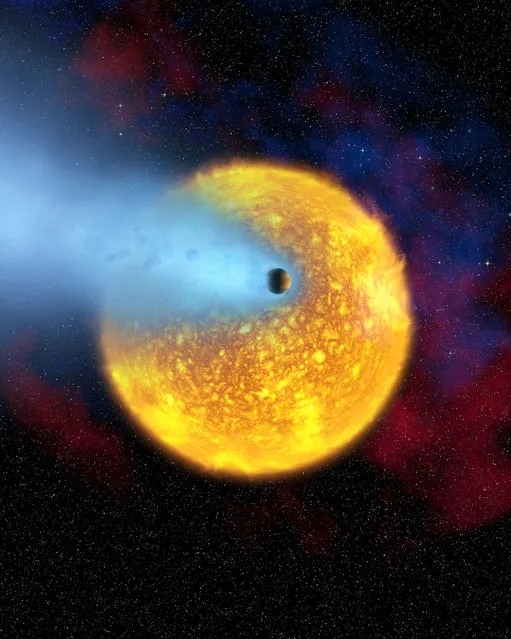
This artist's rendering illustrates the evaporation of HD 189733b's atmosphere in response to a powerful eruption from its host star. NASA's Hubble Space Telescope detected the escaping gases and NASA's Swift satellite caught the stellar flare. (Credit: NASA's Goddard Space Flight Center)