Loading...
Done
Afghanistan: Dogs of War Part 1

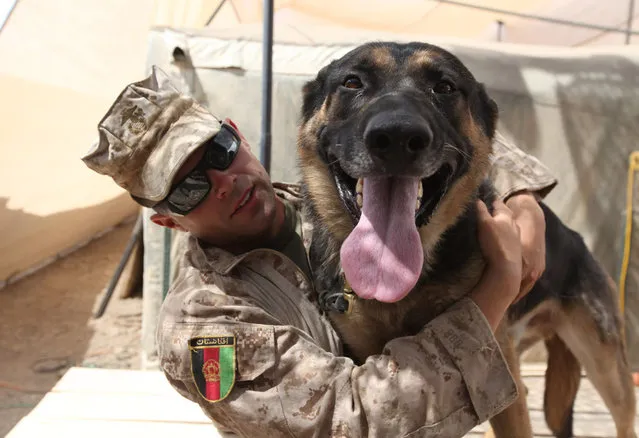
Throughout the course of the long war in Afghanistan, Coalition troops have relied on thousands of military working dogs to help keep them safe, and make their jobs easier. The dogs are trained to detect explosives, to find illegal drugs, to search for missing comrades, or target enemy combatants. Not only are they active on the front lines, but behind the lines they serve as therapy dogs, service dogs, and loyal companions. They also share the same risks as the ground troops, suffering injuries and sometimes death on the battlefields. Gathered here are images of these dogs and their handlers in Afghanistan and back home, from over the past several years, part of the ongoing series here on Afghanistan.
Details
03 Jun 2014 21:02:00
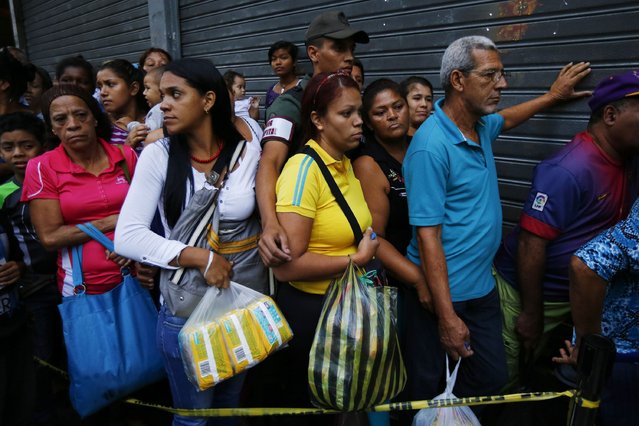
People line up to buy toilet paper and baby diapers at a supermarket in downtown Caracas January 19, 2015. (Photo by Jorge Silva/Reuters)

People line up to buy toilet paper and baby diapers at a supermarket in downtown Caracas January 19, 2015. There's a booming new profession in Venezuela: standing in line. The job usually involves starting before dawn, enduring long hours under the Caribbean sun, dodging or bribing police, and then selling a coveted spot at the front of huge shopping lines. As Venezuela's ailing economy spawns unprecedented shortages of basic goods, panic-buying and a rush to snap up subsidized food, demand is high and the pay is reasonable. (Photo by Jorge Silva/Reuters)
Details
22 Jan 2015 13:51:00
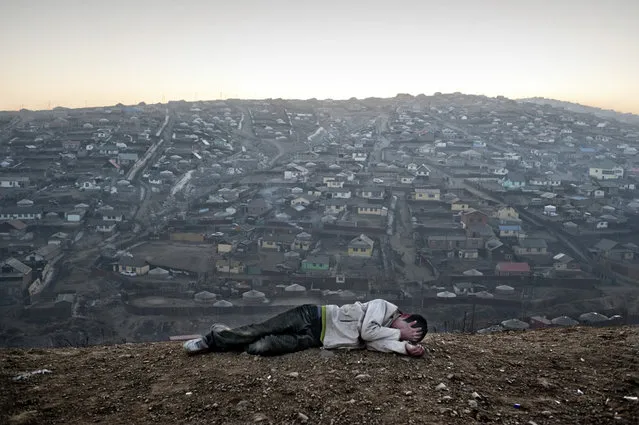
Asia, Mongolia, March 27, 2011. A view of Ulaan Baator over the shoulder of a slumbering drunk. Alcoholism is a huge problem in the city, home to almost half of Mongolia's people. The capital's population has doubled in the past two years, expanding outward in a haphazard sprawl, and many inhabitants live in slums known as the “Gher District”. (Photo by Alessandro Grassani)

“Environmental Migrants: The Last Illusion” by photographer Alessandro Grassani, documents the life of people in Kenya, Mongolia and Bangladesh who migrate to escape environmental stresses to the city of their own countries in hopes for a better life. Here: Asia, Mongolia, March 27, 2011. A view of Ulaan Baator over the shoulder of a slumbering drunk. Alcoholism is a huge problem in the city, home to almost half of Mongolia's people. The capital's population has doubled in the past two years. High levels of unemployment and poverty await herders who abandon rural areas and arrive in the city, illiterate and untrained in any skills necessary for urban jobs. (Photo by Alessandro Grassani)
Details
21 Jul 2015 10:10:00
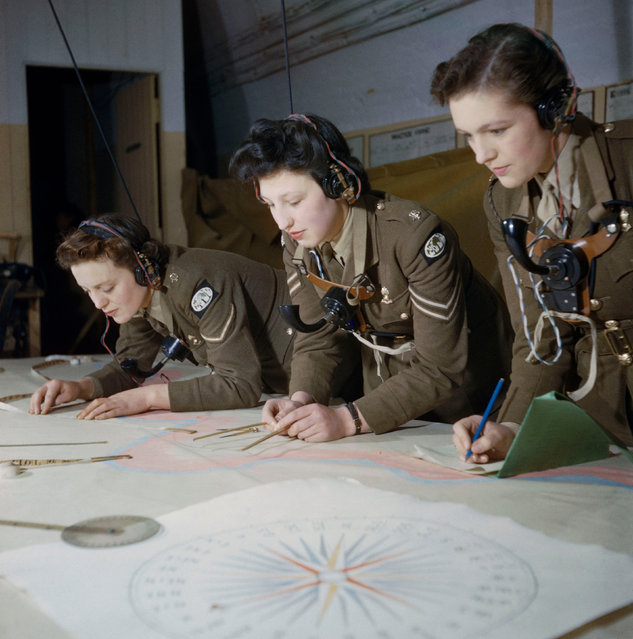
Auxiliary Territorial Service (ATS) plotters at work at Coastal Artillery Headquarters in Dover, December 1942. (Photo by Ted Dearberg/IWM/PA Wire)

Auxiliary Territorial Service (ATS) plotters at work at Coastal Artillery Headquarters in Dover, December 1942. The Auxiliary Territorial Service was the women's branch of the British Army during the Second World War. It was formed on 9 September 1938, initially as a women's voluntary service, and existed until 1 February 1949, when it was merged into the Women's Royal Army Corps. The ATS had its roots in the Women's Auxiliary Army Corps (WAAC), which was formed in 1917 as a voluntary service. During the First World War its members served in a number of jobs including clerks, cooks, telephonists and waitresses. The WAAC was disbanded after four years in 1921. (Photo by Ted Dearberg/IWM/PA Wire)
Details
13 Jul 2017 07:52:00
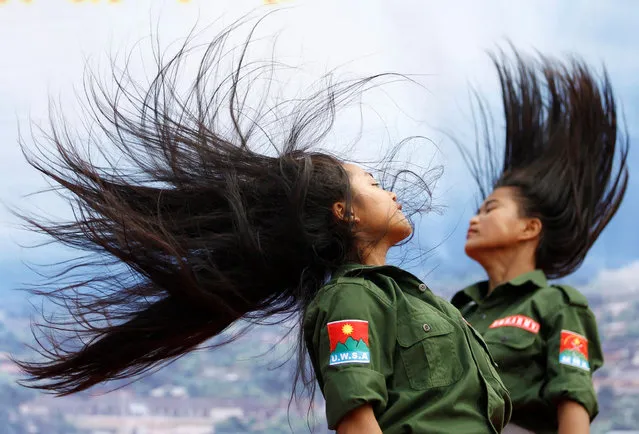
Ethnic Wa performer dressed as United Wa State Army (UWSA) soldiers perform a traditional dance in Mongmao, Wa territory in northeast Myanmar October 1, 2016. (Photo by Soe Zeya Tun/Reuters)

Ethnic Wa performer dressed as United Wa State Army (UWSA) soldiers perform a traditional dance in Mongmao, Wa territory in northeast Myanmar October 1, 2016. Wa State is an unrecognised state in Myanmar (Burma) and is currently subsumed under the official Wa Special Region 2 of northern Shan State. The Wa were once known as the “Wild Wa” by the British due to their practice of headhunting. (Photo by Soe Zeya Tun/Reuters)
Details
30 Dec 2016 10:18:00
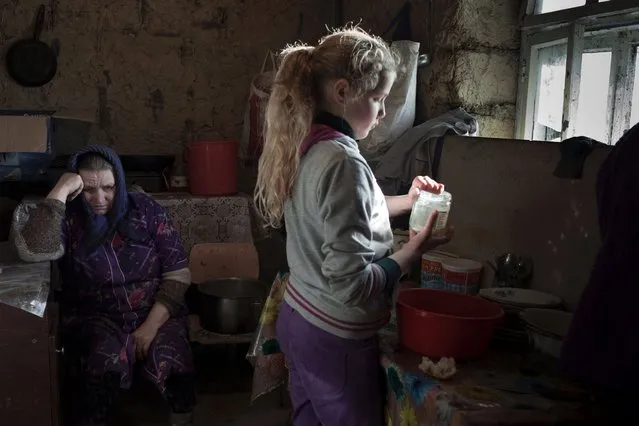
According to the U.S. government, Moldova, one of the poorest countries in Europe, depends on about $1.6 billion annually sent back from the roughly one million Moldovans who left for work in in Europe, Russia, and other former Soviet Bloc countries. Photographer Myriam Meloni went to Moldova to document what she refers to as “social orphans” – children whose parents have emigrated to another country in search of a job and a better future for their families. Here: Lulia is seen washing dishes in her grandmother's house, where she lives. (Photo by Myriam Meloni)

According to the U.S. government, Moldova, one of the poorest countries in Europe, depends on about $1.6 billion annually sent back from the roughly one million Moldovans who left for work in in Europe, Russia, and other former Soviet Bloc countries. Photographer Myriam Meloni went to Moldova to document what she refers to as “social orphans” – children whose parents have emigrated to another country in search of a job and a better future for their families. Here: Lulia is seen washing dishes in her grandmother's house, where she lives. (Photo by Myriam Meloni)
Details
12 Mar 2016 14:57:00
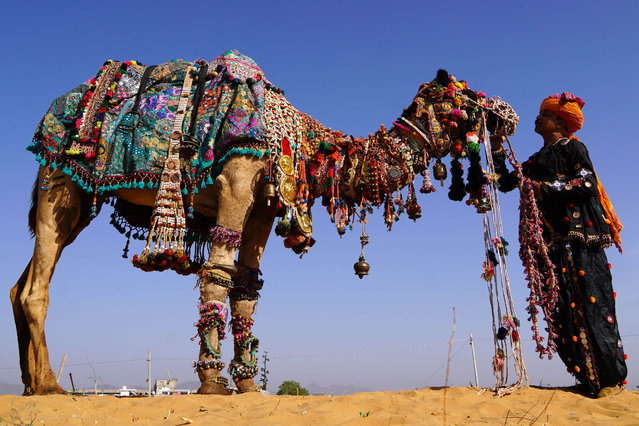
A man interacts with his camel while posing for a picture at the Pushkar Camel Fair in Pushkar in the Indian state of Rajasthan state on November 12, 2021. (Photo by Himanshu Sharma/AFP Photo)

A man interacts with his camel while posing for a picture at the Pushkar Camel Fair in Pushkar in the Indian state of Rajasthan state on November 12, 2021. (Photo by Himanshu Sharma/AFP Photo)
Details
23 Nov 2021 09:07:00
American actor and musician Jared Leto climbs The Empire State Building on November 08, 2023 in New York City. (Photo by Roy Rochlin/Getty Images for Empire State Realty Trust)

American actor and musician Jared Leto climbs The Empire State Building on November 08, 2023 in New York City. (Photo by Roy Rochlin/Getty Images for Empire State Realty Trust)
Details
16 Nov 2023 05:15:00