Loading...
Done
Yana Shcherban of Russia looks at the ball after failing to receive it during their FIVB Women's Volleyball World Grand Prix 2014 final round against Japan in Tokyo August 20, 2014. (Photo by Yuya Shino/Reuters)

Yana Shcherban of Russia looks at the ball after failing to receive it during their FIVB Women's Volleyball World Grand Prix 2014 final round against Japan in Tokyo August 20, 2014. (Photo by Yuya Shino/Reuters)
Details
23 Aug 2014 11:29:00
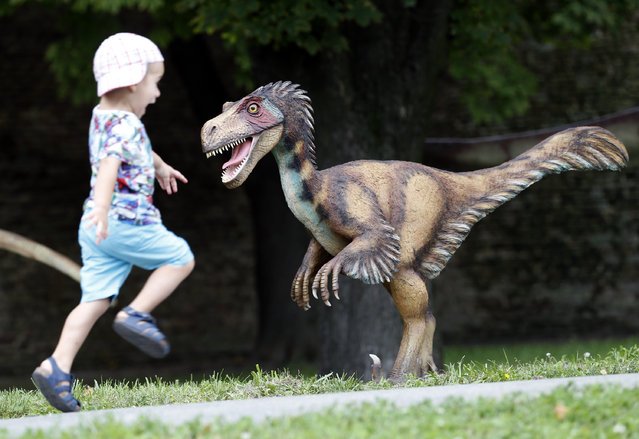
A boy runs past one of the exhibits during the Dinosaurs exhibition in Belgrade, Serbia, Thursday, August 21, 2014. “Dino Park” has opened at Belgrade's Kalemegdan Fortress. (Photo by Darko Vojinovic/AP Photo)

A boy runs past one of the exhibits during the Dinosaurs exhibition in Belgrade, Serbia, Thursday, August 21, 2014. “Dino Park” has opened at Belgrade's Kalemegdan Fortress. (Photo by Darko Vojinovic/AP Photo)
Details
23 Aug 2014 11:56:00
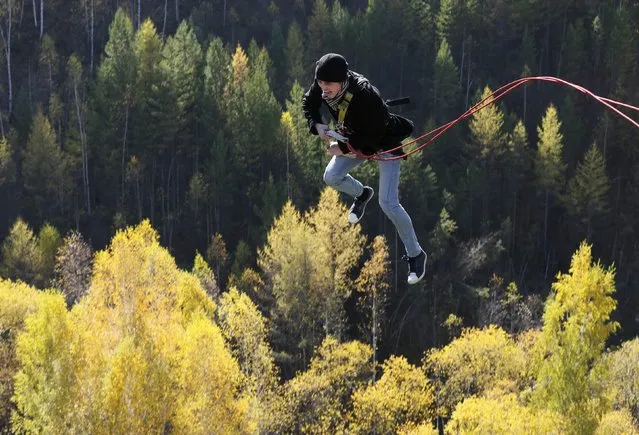
A member of the “Exit Point” amateur rope-jumping group jumps from a 44-metre high (144-feet high) waterpipe bridge in the Siberian Taiga area outside Krasnoyarsk, September 28, 2014. (Photo by Ilya Naymushin/Reuters)

A member of the “Exit Point” amateur rope-jumping group jumps from a 44-metre high (144-feet high) waterpipe bridge in the Siberian Taiga area outside Krasnoyarsk, September 28, 2014. Fans of rope-jumping, a kind of extreme sport involving a jump from a high point using an advanced system of amortization including mountaineering and rope safety equipment, attended the Golden Autumn group's jumping season. (Photo by Ilya Naymushin/Reuters)
Details
04 Oct 2014 11:12:00
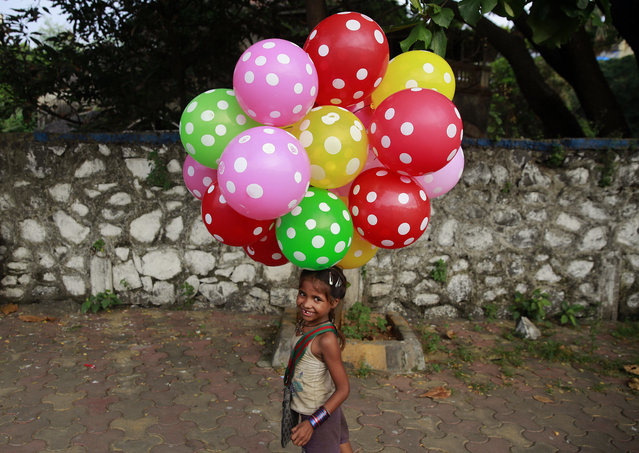
Lali carries balloons to sell on a beach in Mumbai, India, Sunday, October 11, 2015. The United Nations General Assembly marks October 11 as the International Day of the Girl Child, to recognize girls’ rights and the unique challenges girls face around the world. (Photo by Rafiq Maqbool/AP Photo)

Lali carries balloons to sell on a beach in Mumbai, India, Sunday, October 11, 2015. The United Nations General Assembly marks October 11 as the International Day of the Girl Child, to recognize girls’ rights and the unique challenges girls face around the world. (Photo by Rafiq Maqbool/AP Photo)
Details
30 Oct 2015 08:05:00
A street artist dances tango in Buenos Aires, Argentina, Tuesday, January 20, 2015. Tango is a partner dance that originated in the 1890's along the Rio de la Plata, the border between Uruguay and Argentina. UNESCO approved in 2009, a joint proposal by the two nations to include the dance in its Intangible Cultural Heritage List. (Photo by Rodrigo Abd/AP Photo)

A street artist dances tango in Buenos Aires, Argentina, Tuesday, January 20, 2015. Tango is a partner dance that originated in the 1890's along the Rio de la Plata, the border between Uruguay and Argentina. UNESCO approved in 2009, a joint proposal by the two nations to include the dance in its Intangible Cultural Heritage List. (Photo by Rodrigo Abd/AP Photo)
Details
23 Jan 2015 12:56:00
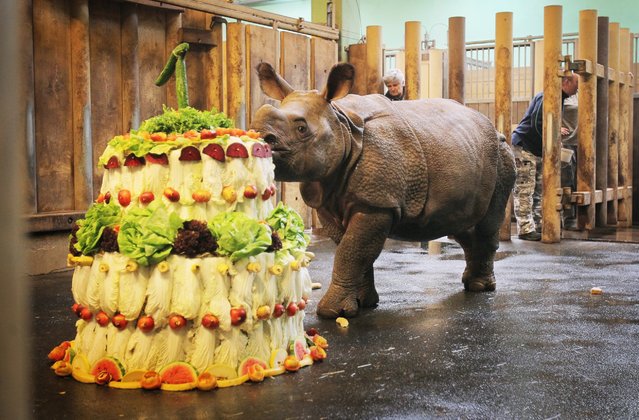
A female Indian rhinoceros called Maruska eats a vegetable birthday cake on her first birthday celebration at the Plzen Zoo on February 3, 2015 in Plzen, Czech Republic. (Photo by Ladislav Nemec/Isifa)

A female Indian rhinoceros called Maruska eats a vegetable birthday cake on her first birthday celebration at the Plzen Zoo on February 3, 2015 in Plzen, Czech Republic. (Photo by Ladislav Nemec/Isifa)
Details
07 Feb 2015 14:55:00
People walk through crop circles in a cornfield near Raisting, Germany, on July 28, 2014. (Photo by Karl-Josef Hildenbrand/DPA)

People walk through crop circles in a cornfield near Raisting, Germany, on July 28, 2014. According to media reports, a balloonist had discovered the circle some days ago. Since then, hundreds of people came to the field to watch it, however it is unclear who did create the pattern. (Photo by Karl-Josef Hildenbrand/DPA)
Details
02 Aug 2014 14:29:00
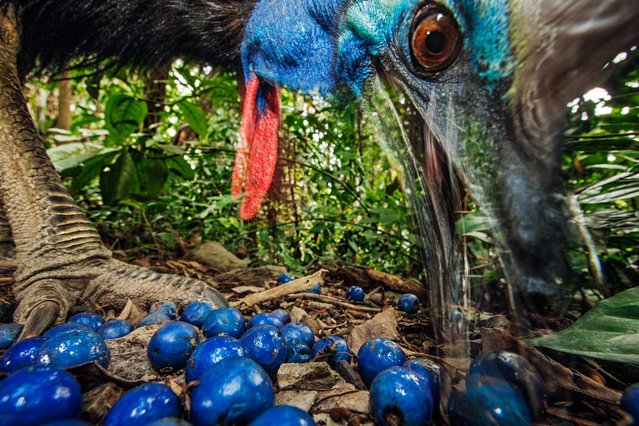
“Cassowaries are large, flightless birds related to emus and (more distantly) to ostriches, rheas, and kiwis”, writes Olivia Judson in the September issue of National Geographic magazine. (Photo by Christian Ziegler/National Geographic)

“Cassowaries are large, flightless birds related to emus and (more distantly) to ostriches, rheas, and kiwis”, writes Olivia Judson in the September issue of National Geographic magazine. How large? People-size: Adult males stand well over five foot five and top 110 pounds. Females are even taller, and can weigh more than 160 pounds. Dangerous when roused, they’re shy and peaceable when left alone. But even birds this big and tough are prey to habitat loss. The dense New Guinea and Australia rain forests where they live have dwindled. Today cassowaries might number 1,500 to 2,000. And because they help shape those same forests – by moving seeds from one place to another – “if they vanish”, Judson writes, “the structure of the forest would gradually change” too. (Photo by Christian Ziegler/National Geographic)

Details
06 Jan 2014 12:21:00