Loading...
Done
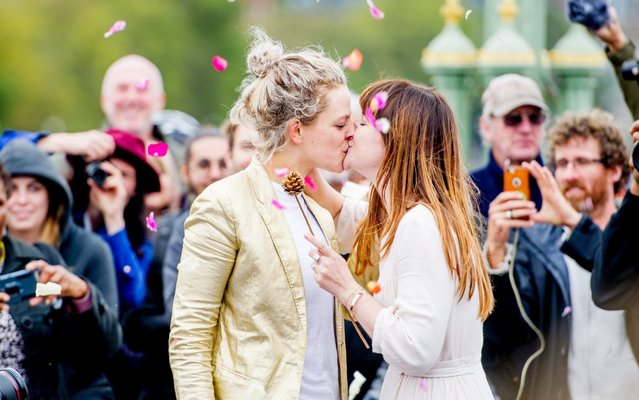
An Extinction Rebellion environmental activist couple getting married at an action site they are calling “The Beacon” on Westminster Bridge on October 7, 2019 in London, England. Primarily made up of London based activists the site is one of 12 situated around key Government locations in central London as actions are also predicted to occur in unto 70 cities around the world. The group aim to occupy the areas in central London for up to two weeks through non violent protest with an estimated 8 times as many people as their April protests which saw over 1,200 people arrested. (Photo by Ollie Millington/Getty Images)

An Extinction Rebellion environmental activist couple getting married at an action site they are calling “The Beacon” on Westminster Bridge on October 7, 2019 in London, England. Primarily made up of London based activists the site is one of 12 situated around key Government locations in central London as actions are also predicted to occur in unto 70 cities around the world. The group aim to occupy the areas in central London for up to two weeks through non violent protest with an estimated 8 times as many people as their April protests which saw over 1,200 people arrested. (Photo by Ollie Millington/Getty Images)
Details
10 Oct 2019 00:05:00
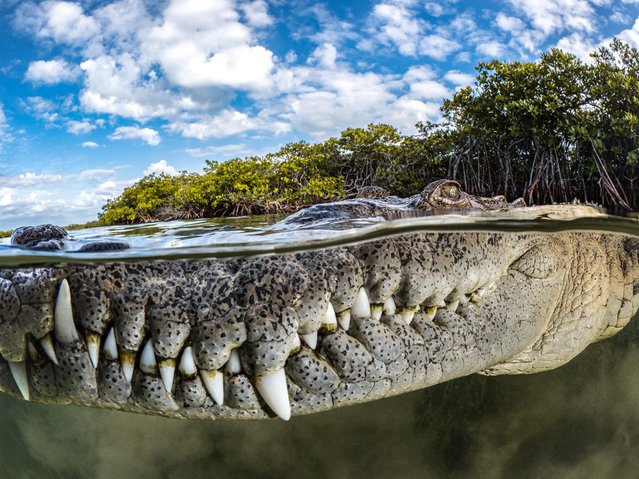
Guardian of the Mangroves – Overall Winner. Tanya Houppermans, Cuba. A curious American crocodile (Crocodylus acutus) swims right up to Tanya, at Gardens of the Queen (Jardines De La Reina), an archipelago off the coast of Cuba. It has been strictly protected since 1996, and is one of the most untouched marine ecosystems in the world. ‍ “The healthy population of American crocodiles is down to the pristine condition of the mangroves and I wanted to capture close ups of this gentle giant in its natural habitat. I hope this image can illustrate that protecting areas like this is so critical”. (Photo by Tanya Griffin Houppermans/Mangrove Photographer of the Year)

Guardian of the Mangroves – Overall Winner. Tanya Houppermans, Cuba. A curious American crocodile (Crocodylus acutus) swims right up to Tanya, at Gardens of the Queen (Jardines De La Reina), an archipelago off the coast of Cuba. It has been strictly protected since 1996, and is one of the most untouched marine ecosystems in the world. ‍ “The healthy population of American crocodiles is down to the pristine condition of the mangroves and I wanted to capture close ups of this gentle giant in its natural habitat. I hope this image can illustrate that protecting areas like this is so critical”. (Photo by Tanya Griffin Houppermans/Mangrove Photographer of the Year)
Details
05 Nov 2022 04:24:00


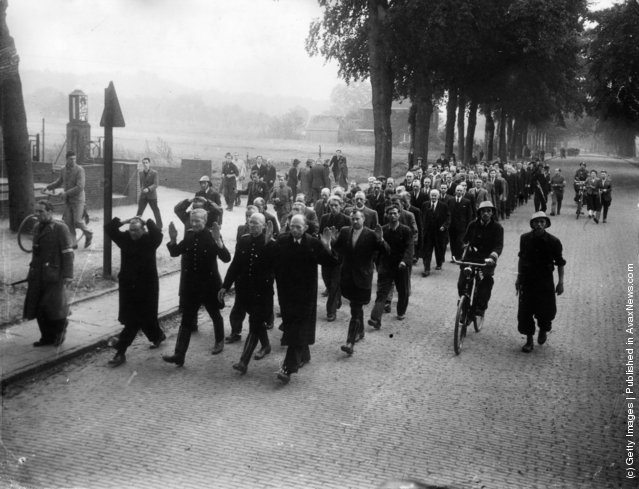
Dutch collaborators under arrest at Nijmegan, Holland. They were rounded up after the capture of Nijmegan Bridge by the Allies. (Photo by H. Warhurst/PNA Rota/Getty Images). 1945
Details
10 Apr 2011 10:52:00


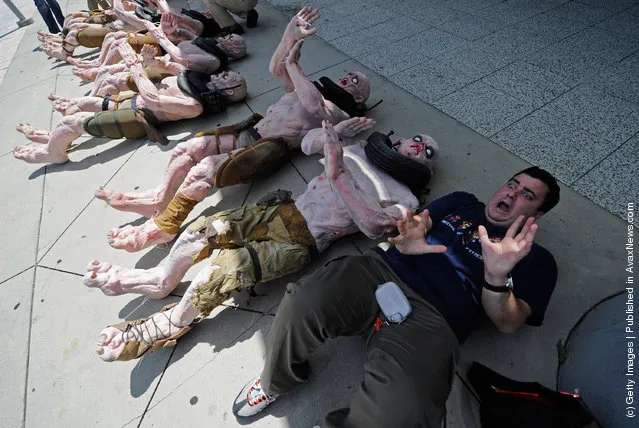
Adam Ghiggio from Australia poses next to mutant mannequins which are lined up to be used as displays for the new video game “Rage” at the Los Angeles Convention Center on June 5, 2011 in Los Angeles, California. The Electronic Entertainment Expo officially starts on Tuesday. (Photo by Kevork Djansezian/Getty Images)
Details
06 Jun 2011 08:46:00
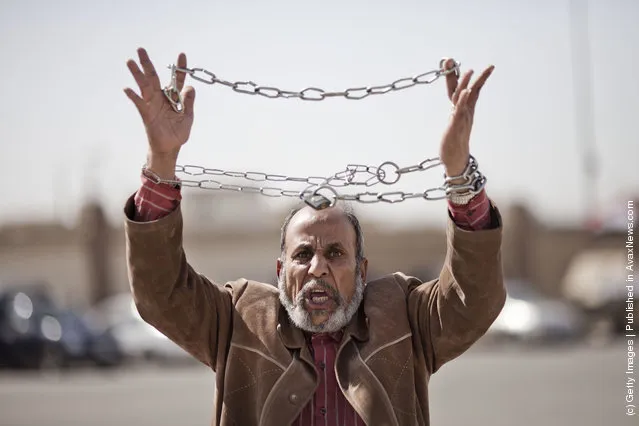
Former President Hosni Mubarak's Trial Continues

A protester holds up a symbolic chain as the trial of ousted Egyptian president Hosni Mubarak continues on February 16, 2012 in Cairo, Egypt. (Photo by Carsten Koall/Getty Images)
Details
17 Feb 2012 11:58:00
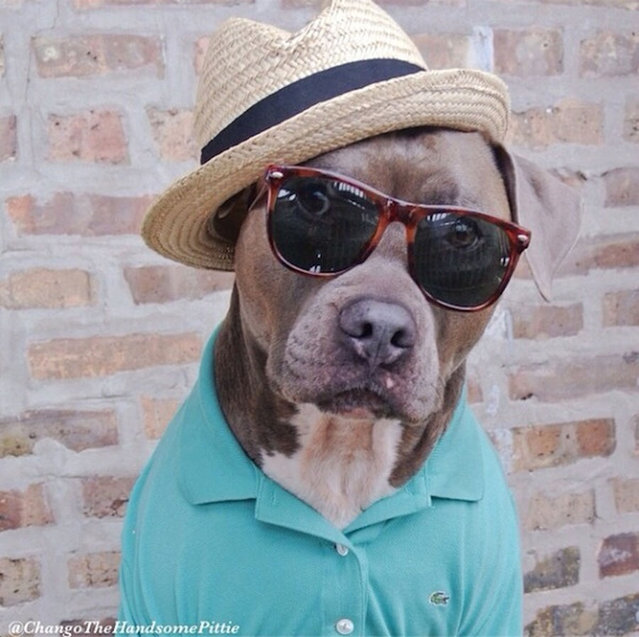
Most Handsome Dogs On The Internet

Evelyn Ramirez and Juan Manuel enjoy posting adorable photos of their pit bull on Instagram. However, their photos seem to be gaining traction online, thanks to their pet’s dapper get-ups.
Details
04 Sep 2014 12:29:00
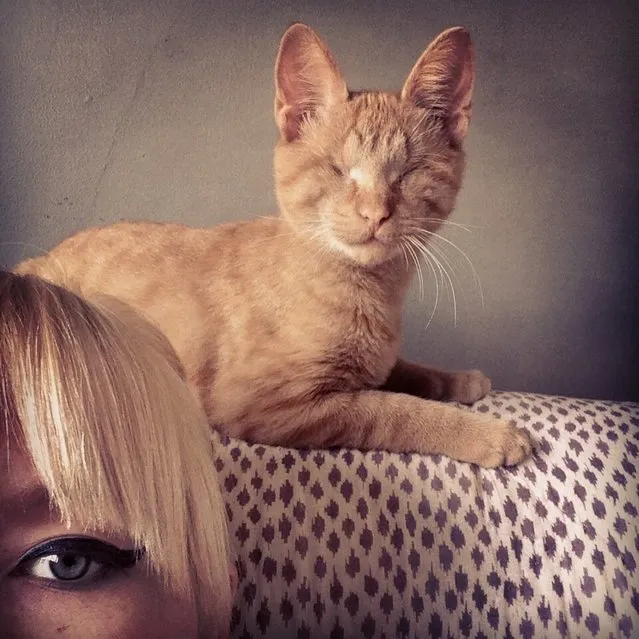
Dillon The Blind Cat

Dillon was born in the spring of 2013. He lived for four months on the streets near Boston, MA before being scooped up by the Animal Rescue League of Boston.
Details
11 Sep 2014 13:52:00
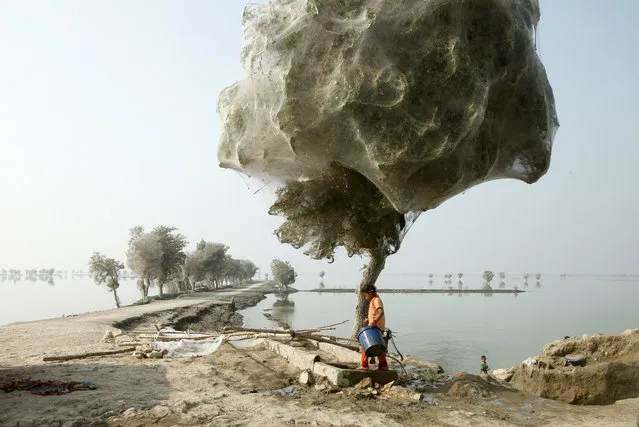
Spiderweb Cocooned Trees In Pakistan

An unexpected side-effect of the flooding in parts of Pakistan has been that millions of spiders climbed up into the trees to escape the rising flood waters. Because of the scale of the flooding and the fact that the water has taken so long to recede, many trees have become cocooned in spiders’ webs.
Details
15 May 2014 11:22:00