Loading...
Done
Floating on clear deep water and reflections near the cave entrance. Visitors can either bring their own kayaks or rent boats from the local community to paddle deep inside the cave and marvel at its wonders on March 2015 at Tham Khoun Ex, Laos. Tham Khoun Xe, commonly known as the Xe Bang Fai River Cave, in Laos, has over 15km of passages filled with awe-inspiring views and wide expanses of water. (Photo by John Spies/Barcroft Media/ABACAPress)

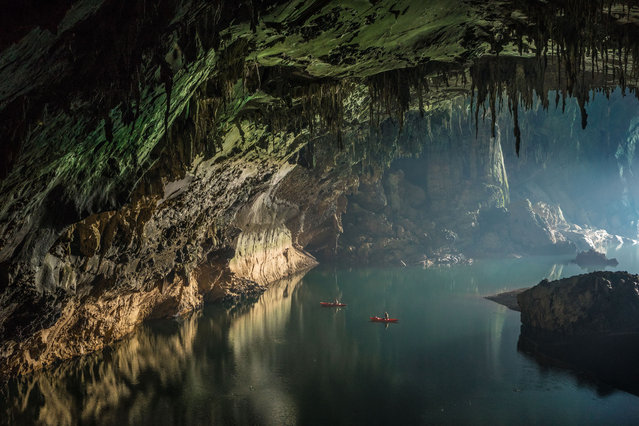
Floating on clear deep water and reflections near the cave entrance. Visitors can either bring their own kayaks or rent boats from the local community to paddle deep inside the cave and marvel at its wonders on March 2015 at Tham Khoun Ex, Laos. Tham Khoun Xe, commonly known as the Xe Bang Fai River Cave, in Laos, has over 15km of passages filled with awe-inspiring views and wide expanses of water. Photographer, John Spies, 59, captured scenes from the entrances of the huge underground river passages, intricate cave formations and views from a passage high above the water. The cave is formed by the Xe Bang Fai river, a major tributary of the Mekong and in the dry season can be traversed using inflatable kayaks. (Photo by John Spies/Barcroft Media/ABACAPress)
Details
11 Apr 2015 09:56:00
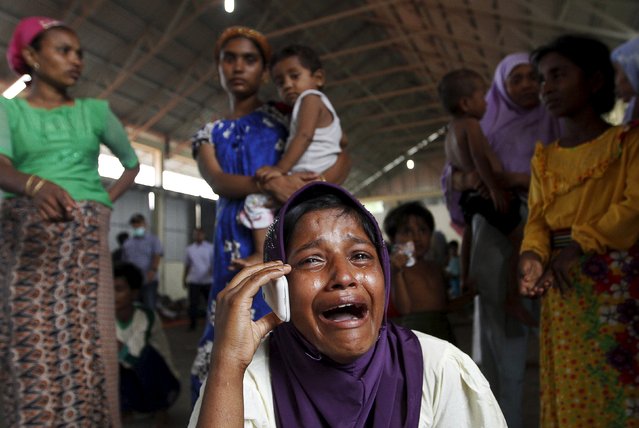
A Rohingya migrant who arrived in Indonesia by boat cries while speaking on a mobile phone with a relative in Malaysia, at a temporary shelter in Kuala Langsa in Indonesia's Aceh Province May 16, 2015. (Photo by Roni Bintang/Reuters)

A Rohingya migrant who arrived in Indonesia by boat cries while speaking on a mobile phone with a relative in Malaysia, at a temporary shelter in Kuala Langsa in Indonesia's Aceh Province May 16, 2015. Nearly 800 migrants were brought ashore in Indonesia on Friday, but other vessels crammed with them were sent back to sea despite a United Nations call to rescue thousands adrift in Southeast Asian waters with dwindling food and water. Thousands of Rohingya Muslims fleeing Myanmar and Bangladesh are stranded on boats as regional governments block them from landing. (Photo by Roni Bintang/Reuters)
Details
20 May 2015 08:53:00
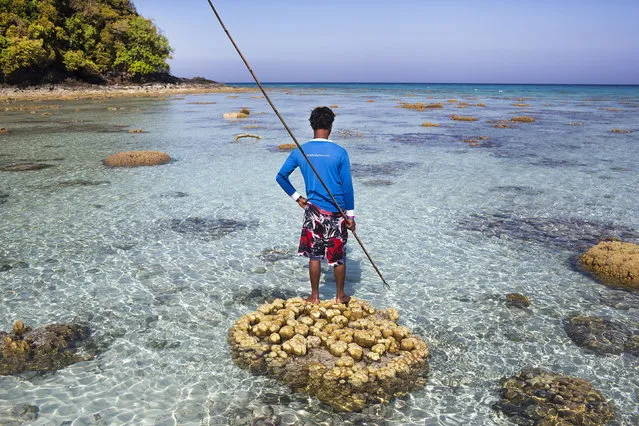
Hook, an indigenous Moken man, holds a three-pronged throwing spear and searches for fish in the waters of Ko Surin National Park. March 1, 2013 – Ko Surin, Thailand. (Photo by Taylor Weidman/zReportage via ZUMA Press)

“For centuries, the Moken sea nomads have traveled the islands between Thailand and Myanmar fishing and foraging for food on the sea floor. Throughout the Mergui Archipelago, Moken migrate in flotillas of Kabangs (traditional boat of the Moken people), stopping at different islands and beaches. Expert freedivers, the Moken have adapted physically to an aquatic life, developing unique characteristics that let them see better and hold their breath longer while underwater”. – Taylor Weidman. Photo: Hook, an indigenous Moken man, holds a three-pronged throwing spear and searches for fish in the waters of Ko Surin National Park. March 1, 2013 – Ko Surin, Thailand. (Photo by Taylor Weidman/zReportage via ZUMA Press)
Details
24 Mar 2014 06:45:00
Spectators pose for a photo upon entry for Derby Day at Flemington Racecourse on October 30, 2021 in Melbourne, Australia. Victoria's COVID-19 restrictions have eased to allow spectators to return to Flemington racecourse for the first time since 2019. Up to 5,500 fully vaccinated fans are permitted to attend Derby Day, while the remainder of the Melbourne Cup Carnival Race days will have a spectator limit of 10,000 people. Under COVID-19 restrictions, all patrons to the Melbourne Cup Carnival will be separated into three zones, with allocated seats for the service of food and drink. Spectators will be required to wear masks at Flemington, despite Victoria's outdoor mask mandate easing on Friday. (Photo by Asanka Ratnayake/Getty Images)

Spectators pose for a photo upon entry for Derby Day at Flemington Racecourse on October 30, 2021 in Melbourne, Australia. Victoria's COVID-19 restrictions have eased to allow spectators to return to Flemington racecourse for the first time since 2019. (Photo by Asanka Ratnayake/Getty Images)
Details
18 Jun 2022 04:34:00
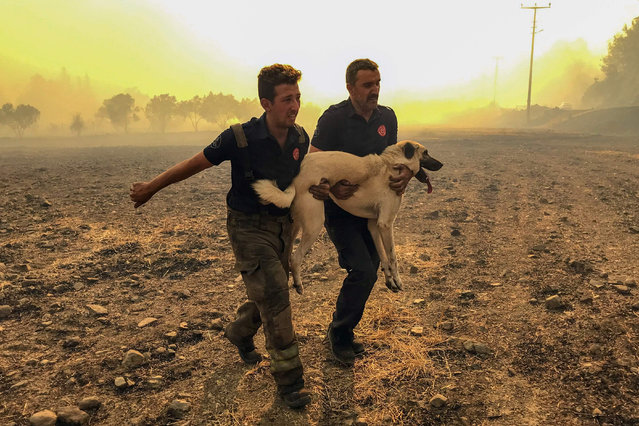
Emergency workers save a shepherd dog from a beach during a forest fire on August 2, 2021 in Mugla, a Marmaris' district, as Turkey struggles against its deadliest wildfires in decades. A roaring blaze raced toward a Turkish thermal power plant and farmers herded panicked cattle toward the sea as wildfires that have killed eight people raged on for a seventh day. The nation of 84 million has been transfixed in horror as the most destructive wildfires in generations erase pristine forests and rich farmland across swaths of Turkey's Mediterranean and Aegean coasts. (Photo by AFP Photo/Stringer)

Emergency workers save a shepherd dog from a beach during a forest fire on August 2, 2021 in Mugla, a Marmaris' district, as Turkey struggles against its deadliest wildfires in decades. A roaring blaze raced toward a Turkish thermal power plant and farmers herded panicked cattle toward the sea as wildfires that have killed eight people raged on for a seventh day. The nation of 84 million has been transfixed in horror as the most destructive wildfires in generations erase pristine forests and rich farmland across swaths of Turkey's Mediterranean and Aegean coasts. (Photo by AFP Photo/Stringer)
Details
05 Aug 2021 08:36:00
This photo taken on November 6, 2023 shows people posing for photos next to the statue of “Hachiko” in front of Shibuya station in central Tokyo, ahead of the 100th anniversary of the legendary dog's birth this month. A century since its birth, the tale of the loyal companion who had waited at the Shibuya train station for its master to come home – not knowing he had already died – continues to inspire the public, who have made the statue a singular landmark at a glitzy hub of Tokyo's street culture. (Photo by Richard A. Brooks/AFP Photo)

This photo taken on November 6, 2023 shows people posing for photos next to the statue of “Hachiko” in front of Shibuya station in central Tokyo, ahead of the 100th anniversary of the legendary dog's birth this month. A century since its birth, the tale of the loyal companion who had waited at the Shibuya train station for its master to come home – not knowing he had already died – continues to inspire the public, who have made the statue a singular landmark at a glitzy hub of Tokyo's street culture. (Photo by Richard A. Brooks/AFP Photo)
Details
27 Nov 2023 00:06:00


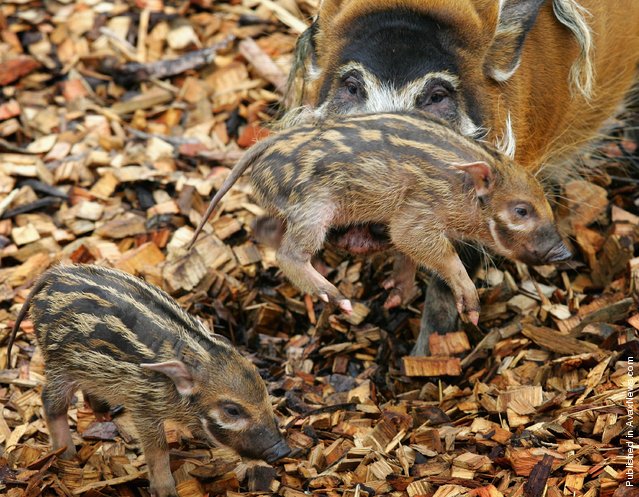
“The Red River Hog (Potamochoerus porcus), also known as the Bush Pig (but not to be confused with P. larvatus, common name “Bushpig”), is a wild member of the pig family living in Africa, with most of its distribution in the Guinean and Congolian forests. It is rarely seen away from rainforests, and generally prefers areas near rivers or swamps.

Red River Hogs eat grass, berries, roots, insects, molluscs, small vertebrates and carrion. They are capable of causing damage to plantations. Red River Hogs typically live in herds of 6-20 members led by a dominant boar. Sows rear 3-6 piglets at a time.”

Photo: Two 17 day old red river hoglet twins forage for food next to their mother Bahiti at London Zoo on August 23, 2007 in London, England. Red River hoglets inhabit the forests and swamps of West and Central Africa. The recent additions to the London Zoo pig pen have been eagerly awaited by zoo keepers. (Photo by Chris Jackson/Getty Images)
Details
18 Mar 2011 15:15:00
Two styles of cleaned bird's nest, Yan Zhan (L) and Su Zhan (R) await repacking at a processing plant in Kuala Lumpur, February 17, 2015. Prized in China for is alleged health benefits for hundreds of years, nests made from swiftlets' saliva are being mixed into coffee and cereal as the Southeast Asian producers of the delicacy seek to broaden its appeal, and their profit margins. (Photo by Olivia Harris/Reuters)

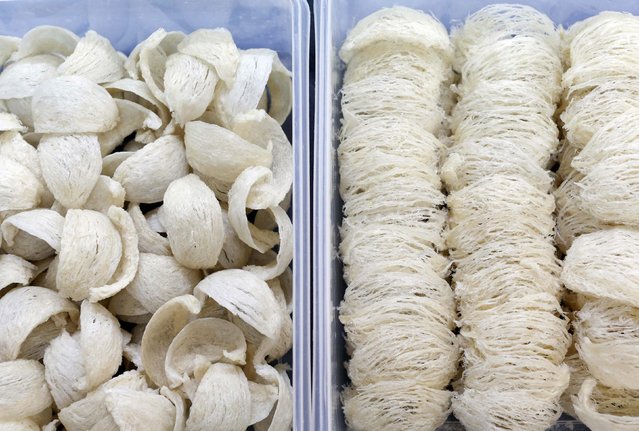
Two styles of cleaned bird's nest, Yan Zhan (L) and Su Zhan (R) await repacking at a processing plant in Kuala Lumpur, February 17, 2015. Prized in China for is alleged health benefits for hundreds of years, nests made from swiftlets' saliva are being mixed into coffee and cereal as the Southeast Asian producers of the delicacy seek to broaden its appeal, and their profit margins. The nests are among the world's most expensive foods, selling for up to $2,500 a kg and the swiftlets that weave them are indigenous to Indonesia, Malaysia, Thailand and Vietnam. (Photo by Olivia Harris/Reuters)
Details
24 Feb 2015 13:57:00