Loading...
Done
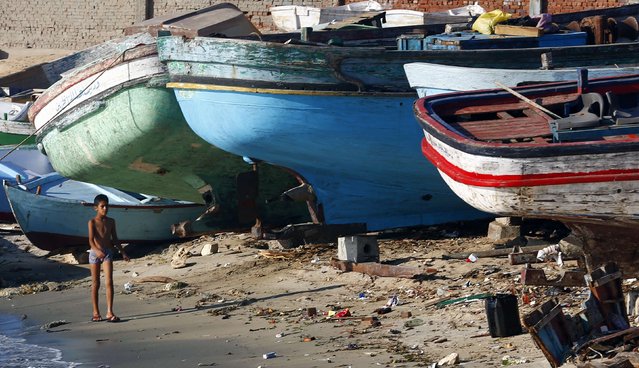
A boy walks past boats docked at the entrance gate of the fishermen's village in the El Max area of the Mediterranean city of Alexandria September 12, 2014.  El Max, where hundreds of boats dart through the canals, has been called the “Venice of Egypt” for its waterways and relaxed atmosphere. Its fishermen, however, worry about how they will make ends meet on meagre earnings they  say are being reduced further by polluted waters that are making fishing more difficult. (Photo by Amr Abdallah Dalsh/Reuters)

A boy walks past boats docked at the entrance gate of the fishermen's village in the El Max area of the Mediterranean city of Alexandria September 12, 2014. El Max, where hundreds of boats dart through the canals, has been called the “Venice of Egypt” for its waterways and relaxed atmosphere. Its fishermen, however, worry about how they will make ends meet on meagre earnings they say are being reduced further by polluted waters that are making fishing more difficult. While the government has tried to fix the state's bloated finances by cutting subsidies and reining in spending, some argue the reforms hurt Egypt's most vulnerable who have long relied on a generous system of fuel and food subsidies to supplement low incomes. (Photo by Amr Abdallah Dalsh/Reuters)
Details
12 Dec 2014 12:42:00
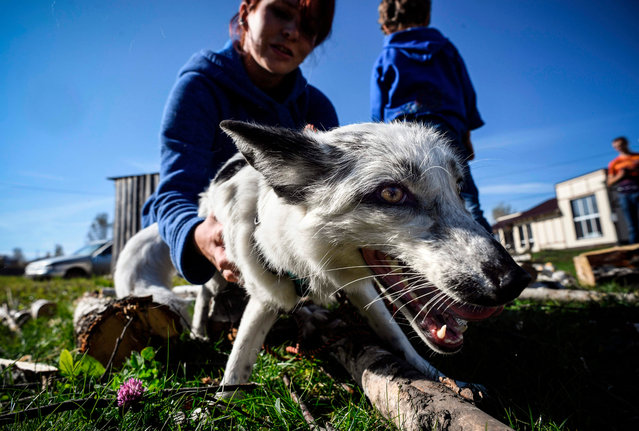
Tatyana Abramova, 33, plays with her home fox Plombir at her countryside house outside Siberian city of Novosibirsk on September 12, 2020. The official start of the Soviet experiment to better understand the domestication of animals by humans began in 1959, and was initiated by geneticists Dmitri Beliaiev and Lioudmila Trout on a farm in Akademgorodok, the scientific center of excellence in Siberia. Their primary objective was to domesticate foxes, to understand how the ancestor of wolves, another canine, evolved into a loyal and loving dog. And understand what this domestication tells us about the genetic evolution of species. (Photo by Alexander Nemenov/AFP Photo)

Tatyana Abramova, 33, plays with her home fox Plombir at her countryside house outside Siberian city of Novosibirsk on September 12, 2020. The official start of the Soviet experiment to better understand the domestication of animals by humans began in 1959, and was initiated by geneticists Dmitri Beliaiev and Lioudmila Trout on a farm in Akademgorodok, the scientific center of excellence in Siberia. Their primary objective was to domesticate foxes, to understand how the ancestor of wolves, another canine, evolved into a loyal and loving dog. And understand what this domestication tells us about the genetic evolution of species. (Photo by Alexander Nemenov/AFP Photo)
Details
25 Oct 2020 00:05:00
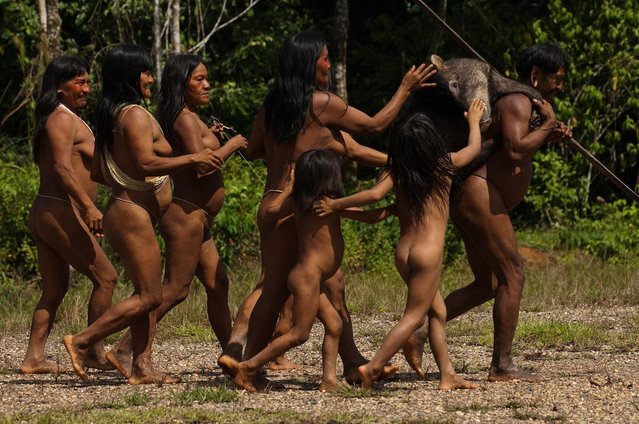
Spectacular images offering insight into the lives of the Huaorani people in the Ecuadorian Amazon have been revealed showing how they use traditional methods to hunt monkeys for food. The stunning pictures were taken by conservation photographer Pete Oxford from Torquay, Devon in the Ecuadorian Amazon. “The Huaorani Indians are a forest people highly in tune with their environment. Many are now totally acculturated since the 1950s by missionaries”, said Pete. “Today they face radical change to their culture to the proximity of oil exploration within their territory and the Yasuni National Park and Biosphere Reserve, they are vastly changed. Some still live very traditionally and for this shoot, through my Huaorani friend, a direct relative of those photographed he wanted to depict them as close to their original culture as possible. They still largely hunt with blow pipes and spears eating a lot of monkeys and peccaries”. The Huaorani are also known as the Waorani, Waodani or the Waos and are native Amerindians. Their lands are located between the Curaray and Napo rivers and speak the Huaorani language. Pete says that during his visit he was welcomed into the group and hopes that ancient cultures can be saved. Here: The tribe were seen celebrating after a hunter returned to camp with a wild pig. (Photo by Pete Oxford/Mediadrumworld.com)

Spectacular images offering insight into the lives of the Huaorani people in the Ecuadorian Amazon have been revealed showing how they use traditional methods to hunt monkeys for food. The stunning pictures were taken by conservation photographer Pete Oxford from Torquay, Devon in the Ecuadorian Amazon. Here: The tribe were seen celebrating after a hunter returned to camp with a wild pig. (Photo by Pete Oxford/Mediadrumworld.com)
Details
20 Jan 2017 07:58:00
A woman passes a mural in Manhattan on October 27, 2019 in New York City. (Photo by Johannes Eisele/AFP Photo)

A woman passes a mural in Manhattan on October 27, 2019 in New York City. (Photo by Johannes Eisele/AFP Photo)
Details
29 Oct 2019 00:01:00
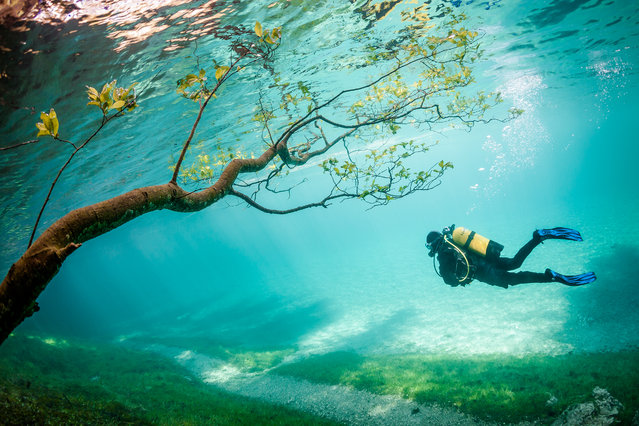
“Diver in Magic Kingdom”. Green Lake (Grüner See) is located Tragöss Austria. In spring snowmelt raises the lake level about 10 meters. This phenomenon, which lasts only a few weeks covering the hiking trails, meadows, trees. The result is magical to watch diving landscapes. Photo location: Grüner See at Tragöss, Austria. (Photo and caption by Marc Henauer/National Geographic Photo Contest)

“Diver in Magic Kingdom”. Green Lake (Grüner See) is located Tragöss Austria. In spring snowmelt raises the lake level about 10 meters. This phenomenon, which lasts only a few weeks covering the hiking trails, meadows, trees. The result is magical to watch diving landscapes. Photo location: Grüner See at Tragöss, Austria. (Photo and caption by Marc Henauer/National Geographic Photo Contest)
Details
22 Apr 2014 09:35:00
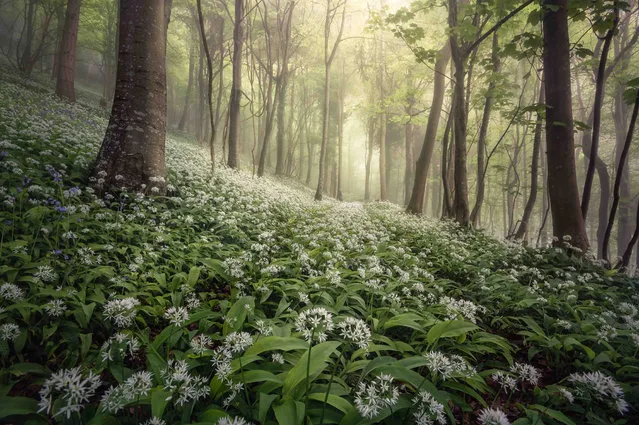
Woolland Woods, Dorset. Landscape photographer of the year 2020. “Taken in spring of 2018 in a wooded area close to Milborne St Andrew in Dorset, this was the third visit to the area in a matter of days. On the previous days, both devoid of morning mists, the light had been harsh and unappealing but the third day delivered stunning conditions with mist swirling through the trees. The low shooting position allowed more emphasis to be placed on the wild garlic and pathway”. (Photo by Chris Frost/UK Landscape Photographer of the Year 2020)

Woolland Woods, Dorset. Landscape photographer of the year 2020. “Taken in spring of 2018 in a wooded area close to Milborne St Andrew in Dorset, this was the third visit to the area in a matter of days. On the previous days, both devoid of morning mists, the light had been harsh and unappealing but the third day delivered stunning conditions with mist swirling through the trees. The low shooting position allowed more emphasis to be placed on the wild garlic and pathway”. (Photo by Chris Frost/UK Landscape Photographer of the Year 2020)
Details
22 Oct 2020 00:03:00
Looking for a reason to visit the Philippines? This mermaid school should do the trick. No, seriously, there’s an actual school that will teach you how to be a mermaid. It’s called the Philippines Mermaid Swimming Academy. A couple of years ago, the academy was founded by Anamie Saenz and Normeth Preglo. The duo was looking for a new fitness craze and thought of mermaids! It’s all pretty simple; students are given mermaid tails that help them focus on their core muscles while they swim around like Ariel. If you’re really looking to get involved, you can kick things up a notch with mermaid scuba diving and mermaid water scootering. The best part about the mermaid school? You can be any age and any gender – it really doesn’t matter! All you need to do is pull together $40 for an introductory class. You get to use a mermaid tail, and you’ll also get photos while taking part in the class. (Photo by Philippine Mermaid Swimming Academy/Exclusivepix Media)

Looking for a reason to visit the Philippines? This mermaid school should do the trick. No, seriously, there’s an actual school that will teach you how to be a mermaid. It’s called the Philippines Mermaid Swimming Academy. (Photo by Philippine Mermaid Swimming Academy/Exclusivepix Media)
Details
21 Dec 2016 10:14:00
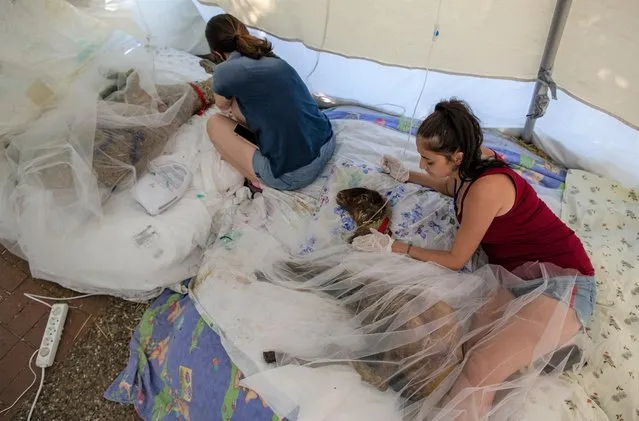
Volunteers care for burned sheeps in a field hospital established by HAYTAP (The Federation of the Animals Rights in Turkey) for animals after a wildfire at the Manavgat district of Antalya, Turkey, 09 August 2021. It is not known how many wild animals living in the forest died in the fires, but about 33,000 farm animals perished. About 30 veterinarians and hundreds of volunteers work around the clock at the field hospital. Sheep, covered in mosquito nets to protect their wounds from flies, lay there in the shade trying to recover, and various animals such as cats, dogs, owls, and cows have been treated or are still being treated there. (Photo by Erdem Sahin/EPA/EFE)

Volunteers care for burned sheeps in a field hospital established by HAYTAP (The Federation of the Animals Rights in Turkey) for animals after a wildfire at the Manavgat district of Antalya, Turkey, 09 August 2021. It is not known how many wild animals living in the forest died in the fires, but about 33,000 farm animals perished. About 30 veterinarians and hundreds of volunteers work around the clock at the field hospital. Sheep, covered in mosquito nets to protect their wounds from flies, lay there in the shade trying to recover, and various animals such as cats, dogs, owls, and cows have been treated or are still being treated there. (Photo by Erdem Sahin/EPA/EFE)
Details
27 Aug 2021 08:30:00