Loading...
Done
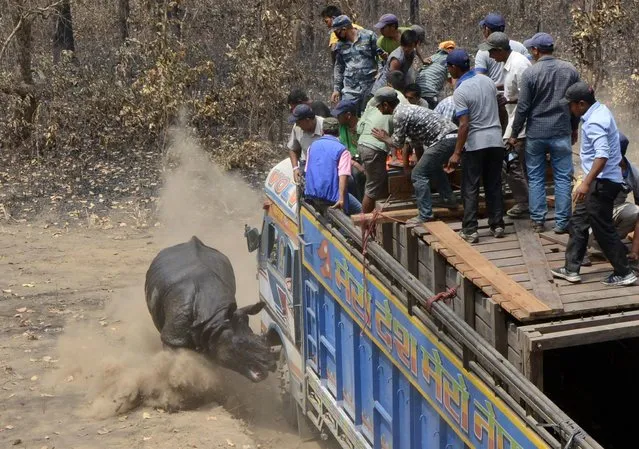
A Nepalese vetinary and technical team release a rhino after it is relocated in Chitwan National Park some of 250 Kilometer South of Kathmandu on April 4, 2017. Conservationists on April 3 captured a rare one-horned rhinoceros in Nepal as part of an attempt to increase the number of the vulnerable animals, which are prized by wildlife poachers. Five rhinos – one male and four female – will be released into a national park in Nepal's far west over the coming week in the hope of establishing a new breeding group. (Photo by Prakash Mathema/AFP Photo)

A Nepalese vetinary and technical team release a rhino after it is relocated in Chitwan National Park some of 250 Kilometer South of Kathmandu on April 4, 2017. Conservationists on April 3 captured a rare one-horned rhinoceros in Nepal as part of an attempt to increase the number of the vulnerable animals, which are prized by wildlife poachers. Five rhinos – one male and four female – will be released into a national park in Nepal's far west over the coming week in the hope of establishing a new breeding group. (Photo by Prakash Mathema/AFP Photo)
Details
05 Apr 2017 09:19:00
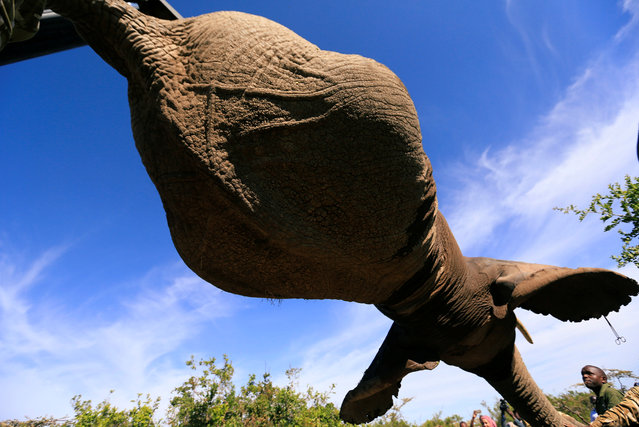
Kenya Wildlife Service (KWS) rangers load a tranquilized elephant onto a truck during a translocation exercise to Ithumba Camp in Tsavo East National Park, in Solio Ranch in Nyeri County, Kenya, February 21, 2018. Wildlife officials in Kenya kicked off a relocation operation for 30 elephants, fitting monitoring collars on the tranquilized animals before using cranes to swing them, inverted with bound feet and scything tusks, onto flatbed trucks. (Photo by Thomas Mukoya/Reuters)

Kenya Wildlife Service (KWS) rangers load a tranquilized elephant onto a truck during a translocation exercise to Ithumba Camp in Tsavo East National Park, in Solio Ranch in Nyeri County, Kenya, February 21, 2018. Wildlife officials in Kenya kicked off a relocation operation for 30 elephants, fitting monitoring collars on the tranquilized animals before using cranes to swing them, inverted with bound feet and scything tusks, onto flatbed trucks. (Photo by Thomas Mukoya/Reuters)
Details
23 Feb 2018 00:04:00
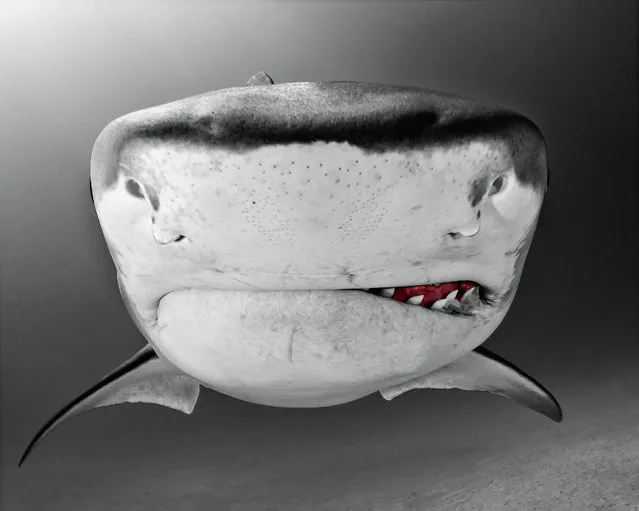
Todd Bretl specializes in underwater photography, and is able to capture striking photos of aquatic life big and small. His photos of sharks are particularly striking; though he rarely faces hostility from the animals, he tries not to spend too much time looking through his viewfinder and many shots are framed by educated guesses and impeccable timing. (Photo by Todd Bretl)

Todd Bretl specializes in underwater photography, and is able to capture striking photos of aquatic life big and small. His photos of sharks are particularly striking; though he rarely faces hostility from the animals, he tries not to spend too much time looking through his viewfinder and many shots are framed by educated guesses and impeccable timing. What follows are photographs taken over the past several years on trips to the Bahamas and Isla Guadalupe, an island off the coast of the Baja California peninsula in Mexico. (Photo by Todd Bretl)
Details
01 Aug 2014 12:35:00
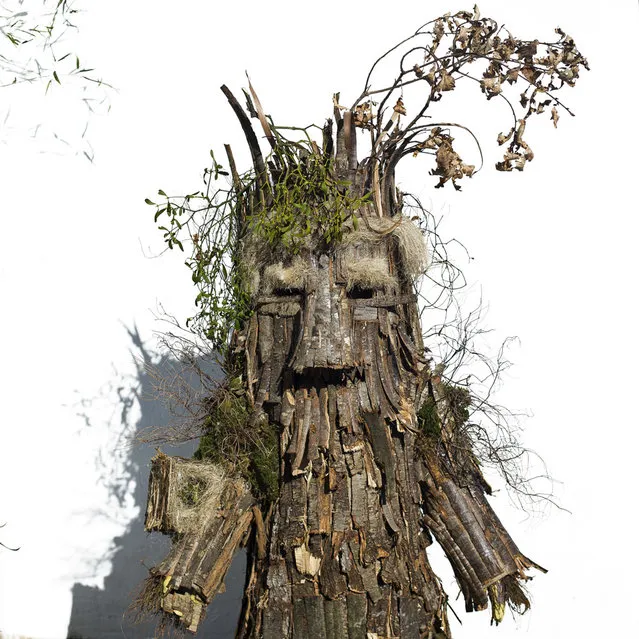
A man dressed as a  “Trapajon”, representing entities of nature, poses for a picture after taking part in the Vijanera Festival in Silio, northern Spain, Sunday, Jan. 6, 2013. The Vijanera masquerade, of pre-Roman origin, is the first carnival of the year in Europe symbolizing the triumph of good over evil and involving the participation of crowds of residents wearing different masks, animal skins and brightly colored clothing with its own complex function and symbolism and becoming the living example of the survival of archaic cults to nature. (Photo by Daniel Ochoa de Olza/AP Photo)

A man dressed as a “Trapajon”, representing entities of nature, poses for a picture after taking part in the Vijanera Festival in Silio, northern Spain, Sunday, Jan. 6, 2013. The Vijanera masquerade, of pre-Roman origin, is the first carnival of the year in Europe symbolizing the triumph of good over evil and involving the participation of crowds of residents wearing different masks, animal skins and brightly colored clothing with its own complex function and symbolism and becoming the living example of the survival of archaic cults to nature. (Photo by Daniel Ochoa de Olza/AP Photo)
Details
19 Jan 2013 13:01:00
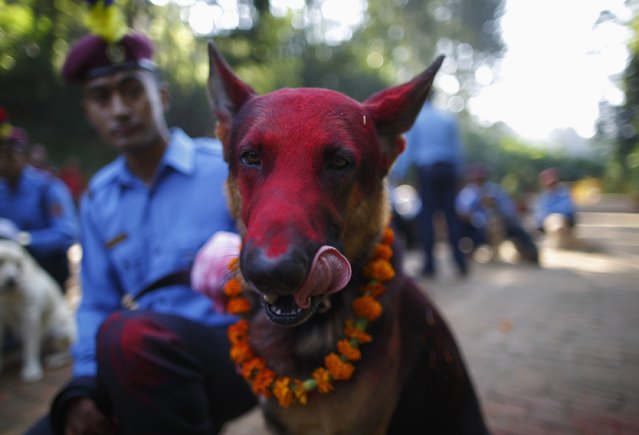
A police dog licks its face after receiving food during the dog festival, as part of celebrations of Tihar at Nepal Police Academy in Kathmandu October 22, 2014. Hindus all over Nepal are celebrating the Tihar festival, also called Diwali, during which they worship cows, which are considered a maternal figure, and other animals. (Photo by Navesh Chitrakar/Reuters)

A police dog licks its face after receiving food during the dog festival, as part of celebrations of Tihar at Nepal Police Academy in Kathmandu October 22, 2014. Hindus all over Nepal are celebrating the Tihar festival, also called Diwali, during which they worship cows, which are considered a maternal figure, and other animals. Also known as the festival of lights, devotees also worship the goddess of wealth Laxmi by illuminating and decorating their homes using garlands, oil lamps, candles and colourful light bulbs. (Photo by Navesh Chitrakar/Reuters)
Details
23 Oct 2014 11:57:00
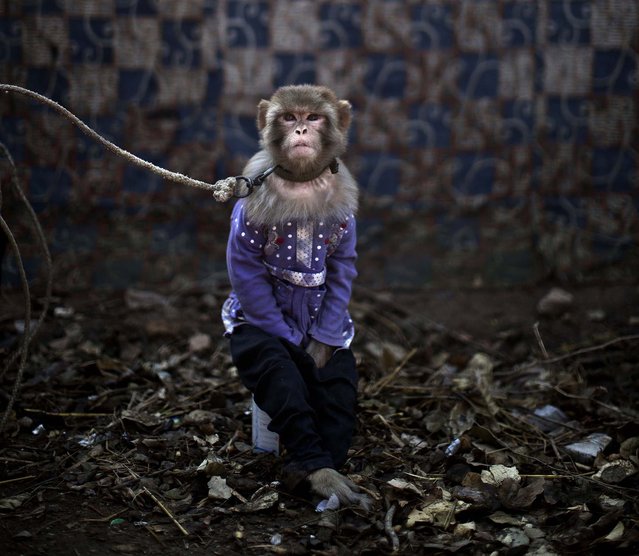
In this Tuesday, February 11, 2014, photo, a trained monkey, that makes a living for her Pakistani owner by performing to a crowd in public and private places, sits held by a leash, in Rawalpindi, Pakistan. For Pakistanis who raise and train the monkeys they are an important source of income in an impoverished country, and they form a strong bond with the animals. The monkeys are usually captured in the wild when they are babies and then trained. A trained monkey can fetch 20,000 to 30,000 rupees ($190 to $285). (Photo by Muhammed Muheisen/Associated Press)

In this Tuesday, February 11, 2014, photo, a trained monkey, that makes a living for her Pakistani owner by performing to a crowd in public and private places, sits held by a leash, in Rawalpindi, Pakistan. For Pakistanis who raise and train the monkeys they are an important source of income in an impoverished country, and they form a strong bond with the animals. The monkeys are usually captured in the wild when they are babies and then trained. A trained monkey can fetch 20,000 to 30,000 rupees ($190 to $285). (Photo by Muhammed Muheisen/Associated Press)
Details
23 Feb 2014 09:50:00
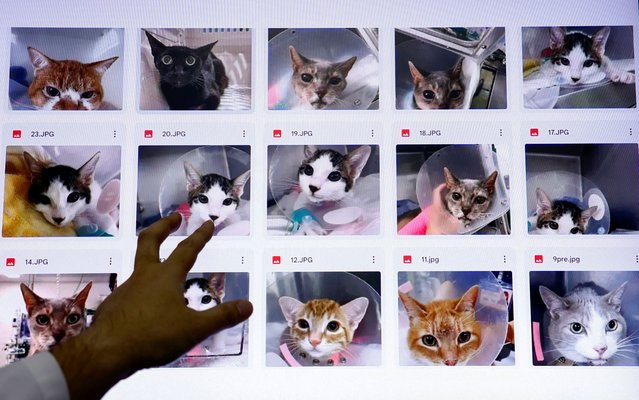
Nihon University professor and head of Nihon University Animal Medical Center Kazuya Edamura, 49, points to cat photos on a computer screen, which are used to train the AI of “CatsMe!”, an AI-driven smartphone application jointly developed by tech startup Carelogy and researchers at Nihon University that purports to tell when a cat is feeling pain, as he gives a lecture to students on diagnosing pain in cats, at the medical center in Fujisawa, south of Tokyo, Japan on June 11, 2024. (Photo by Issei Kato/Reuters)

Nihon University professor and head of Nihon University Animal Medical Center Kazuya Edamura, 49, points to cat photos on a computer screen, which are used to train the AI of “CatsMe!”, an AI-driven smartphone application jointly developed by tech startup Carelogy and researchers at Nihon University that purports to tell when a cat is feeling pain, as he gives a lecture to students on diagnosing pain in cats, at the medical center in Fujisawa, south of Tokyo, Japan on June 11, 2024. (Photo by Issei Kato/Reuters)
Details
29 Jun 2024 02:02:00
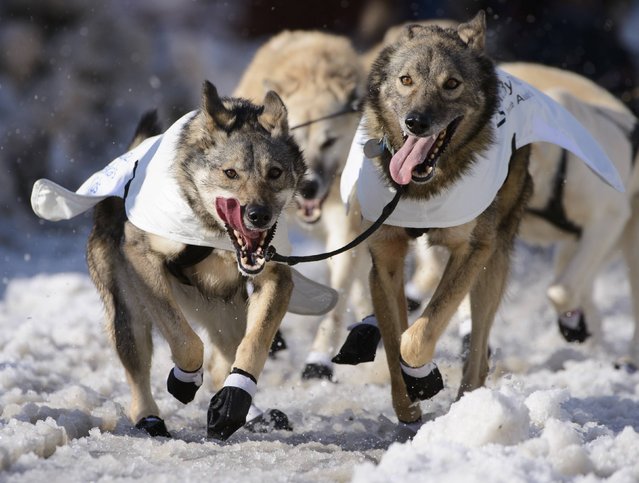
Richie Diehl team charges out of the chute over trucked-in snow at the 2015 ceremonial start of the Iditarod Trail Sled Dog race in downtown Anchorage, Alaska March 7, 2015. The timed portion of the race, which typically lasts nine days or longer, begins on Monday in Fairbanks, about 300 miles (482 km) away. Traditionally held in Willow, the timed start was moved to Fairbanks this year to accommodate an alternate trail selected after race officials deemed sections of the traditional path unsafe.    REUTERS/Mark Meyer  (UNITED STATES - Tags: SPORT ANIMALS SOCIETY)

Richie Diehl team charges out of the chute over trucked-in snow at the 2015 ceremonial start of the Iditarod Trail Sled Dog race in downtown Anchorage, Alaska March 7, 2015. The timed portion of the race, which typically lasts nine days or longer, begins on Monday in Fairbanks, about 300 miles (482 km) away. Traditionally held in Willow, the timed start was moved to Fairbanks this year to accommodate an alternate trail selected after race officials deemed sections of the traditional path unsafe. REUTERS/Mark Meyer (UNITED STATES - Tags: SPORT ANIMALS SOCIETY)
Details
09 Mar 2015 13:22:00