Loading...
Done
“Secrets of the Whales”. Skerry’s photographs celebrate the lives and culture of whales, illuminating recent research and their diverse behaviours. His latest work focuses on four key species: sperm whales, humpbacks, orca and beluga whales. Humpback whales bubble-net feeding off the coast of Alaska. They work cooperatively to feed on herring by blowing a perfect ring of bubbles underwater to form a net encircling the fish. The whales then swim up through the centre of the bubble net with their mouths open. (Photo by Brian Skerry/National Geographic Photo/Visa pour l'Image)

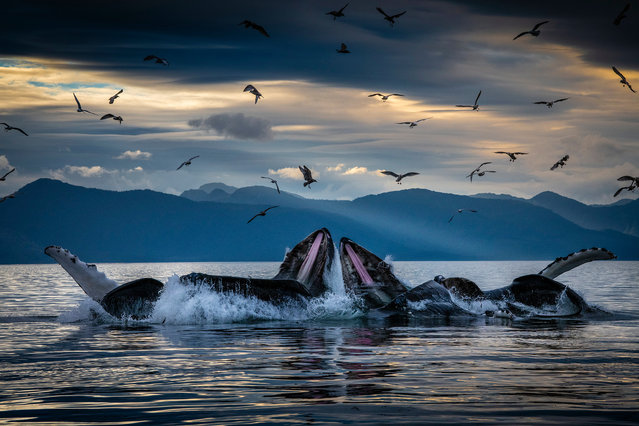
“Secrets of the Whales”. Skerry’s photographs celebrate the lives and culture of whales, illuminating recent research and their diverse behaviours. His latest work focuses on four key species: sperm whales, humpbacks, orca and beluga whales. Humpback whales bubble-net feeding off the coast of Alaska. They work cooperatively to feed on herring by blowing a perfect ring of bubbles underwater to form a net encircling the fish. The whales then swim up through the centre of the bubble net with their mouths open. (Photo by Brian Skerry/National Geographic Photo/Visa pour l'Image)
Details
04 Sep 2021 09:02:00
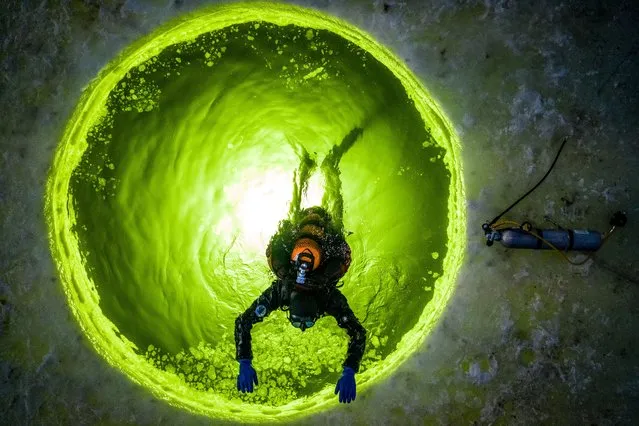
A scuba diver during an ice diving class at the Sea Frogs scuba diving center in the Russian Far Eastern city of Vladivostok, Russia  on January 30, 2022. The air temperature is –11°C (12.2°F), the water temperature is –2°C (28.4°F). Scuba divers undergo theoretical and practical training in ice diving and perform dives in the open water during the day and the night time as part of the Ice Diver NDL special program. (Photo by Yuri Smityuk/TASS)

A scuba diver during an ice diving class at the Sea Frogs scuba diving center in the Russian Far Eastern city of Vladivostok, Russia on January 30, 2022. The air temperature is –11°C (12.2°F), the water temperature is –2°C (28.4°F). Scuba divers undergo theoretical and practical training in ice diving and perform dives in the open water during the day and the night time as part of the Ice Diver NDL special program. (Photo by Yuri Smityuk/TASS)
Details
03 Mar 2023 03:30:00
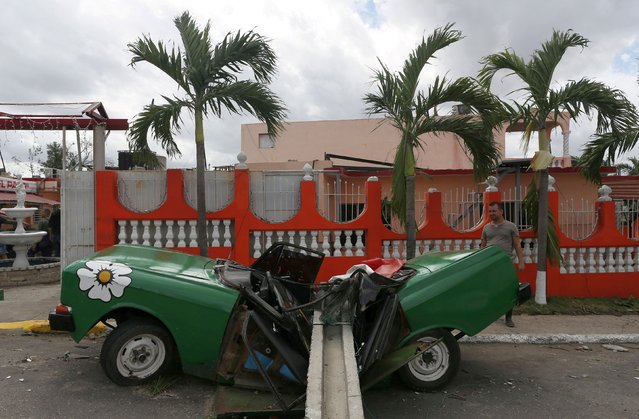
A man looks at a car hit by a post after a tornado ripped through a neighbourhood in Havana, Cuba on January 28, 2019. (Photo by Fernando Medina/Reuters)

A man looks at a car hit by a post after a tornado ripped through a neighbourhood in Havana, Cuba on January 28, 2019. (Photo by Fernando Medina/Reuters)
Details
02 Feb 2019 00:05:00
Chris Hondros RetrospectivePart2

Chris Hondros, a Getty Images photographer, was fatally wounded on April 20, 2011, in a mortar attack by government forces while covering the civil war in Libya. Hondros' work is woven in our history as he covered everything from politics to marathons. A new film will focus on his life as told through his images. Here's a look at some of his finest and final work. Some of these images are graphic in nature
Details
23 Aug 2013 17:38:00
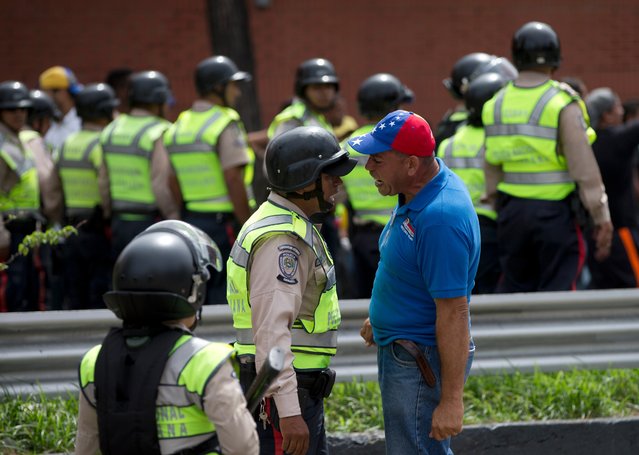
An anti-government demonstrator argues with a Bolivarian National Police officer during a march toward the headquarters of the national electoral body, CNE, in Caracas, Venezuela, Wednesday, May 18, 2016. (Photo by Fernando Llano/AP Photo)

An anti-government demonstrator argues with a Bolivarian National Police officer during a march toward the headquarters of the national electoral body, CNE, in Caracas, Venezuela, Wednesday, May 18, 2016. Opposition protesters were blocked from reaching the CNE as they demand the government allow it to pursue a recall referendum against Venezuela's President Nicolas Maduro. (Photo by Fernando Llano/AP Photo)
Details
19 May 2016 11:15:00
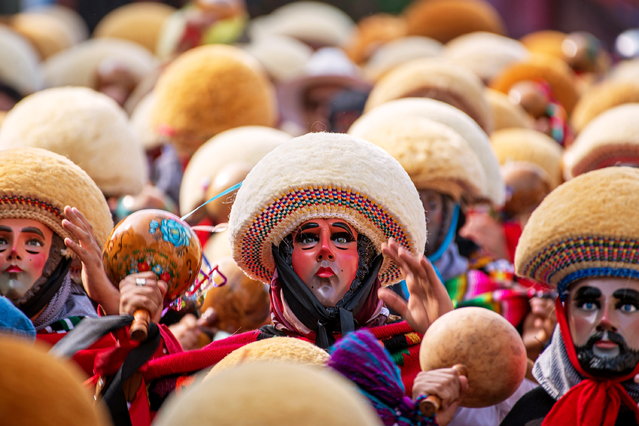
Indigenous men perfom the “Danza del Parachicos” (Parachicos dance) to honor the Lord of Esquipulas during a pilgrimage in the municipality of Chiapa de Corzo, Mexico, 15 January 2024. (Photo by Carlos López/EPA)

Indigenous men perfom the “Danza del Parachicos” (Parachicos dance) to honor the Lord of Esquipulas during a pilgrimage in the municipality of Chiapa de Corzo, Mexico, 15 January 2024. (Photo by Carlos López/EPA)
Details
15 Apr 2025 03:50:00
“Asaro from the Eastern Highlands”. The mudmen could not cover their faces with mud because the people of Papua New Guinea thought that the mud from the Asaro river was poisonous. So instead of covering their faces with this alleged poison, they made masks from pebbles that they heated and water from the waterfall, with unusual designs such as long or very short ears either going down to the chin or sticking up at the top, long joined eyebrows attached to the top of the ears, horns and sideways mouths. (Jimmy Nelson)

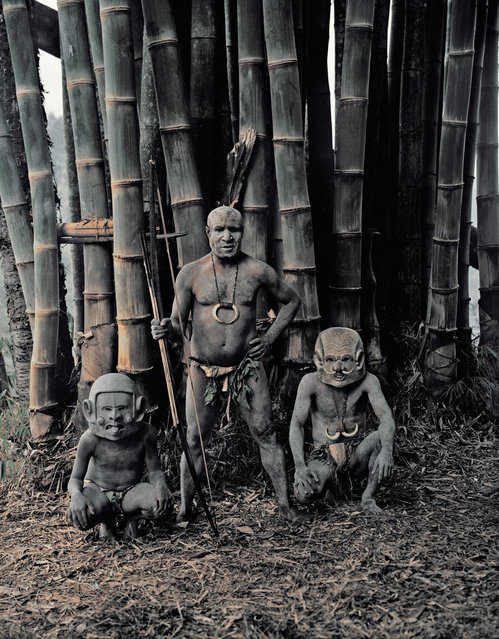
“Asaro from the Eastern Highlands”. The mudmen could not cover their faces with mud because the people of Papua New Guinea thought that the mud from the Asaro river was poisonous. So instead of covering their faces with this alleged poison, they made masks from pebbles that they heated and water from the waterfall, with unusual designs such as long or very short ears either going down to the chin or sticking up at the top, long joined eyebrows attached to the top of the ears, horns and sideways mouths. (Photo and caption by Jimmy Nelson)
Details
20 Oct 2013 08:54:00
This green-skinned trio were happy to pose for the camera – with one little frog smiling happily for its close up. The three Reinwardt's Flying Frog, commonly known as the black webbed tree frog or the green flying frog, were spotted playing in a tree by photographer Hendy Mp. (Photo by Hendy Mp/SOLENT News)

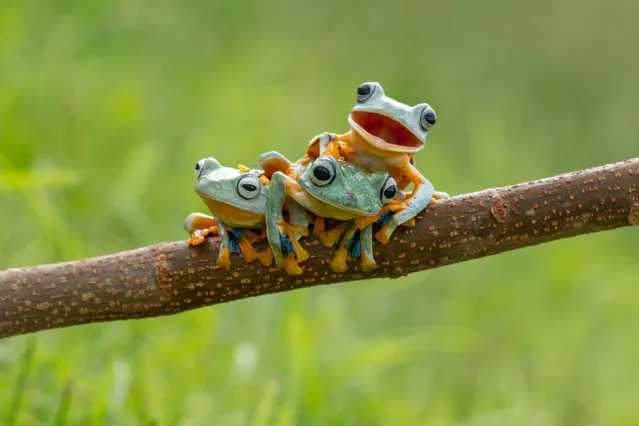
This green-skinned trio were happy to pose for the camera – with one little frog smiling happily for its close up. The three Reinwardt's Flying Frog, commonly known as the black webbed tree frog or the green flying frog, were spotted playing in a tree by photographer Hendy Mp. The 25-year-old who saw the frogs near his home in Sambas, Kalimantan Barat, in Indonesia, said they reminded him of three brothers playing together. (Photo by Hendy Mp/SOLENT News)
Details
03 Feb 2015 13:27:00