Loading...
Done
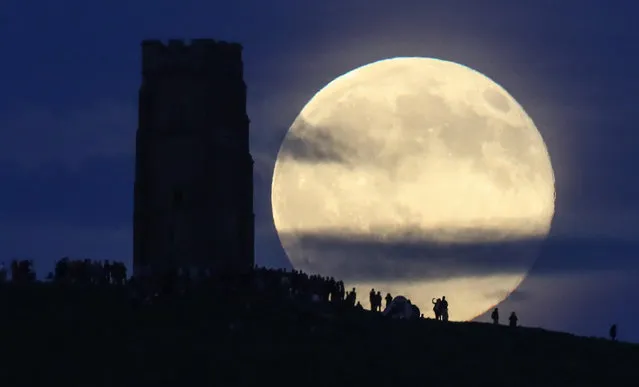
A full moon rises behind Glastonbury Tor as people gather to celebrate the summer solstice on June 20, 2016 in Somerset, England. Tonight's strawberry moon, a name given to the full moon in June by Native Americans because it marks the beginning of strawberry picking season, last occurred on the solstice on June 22, 1967 and it will not happen again on the summer solstice for another 46 years until June 21, 2062. (Photo by Matt Cardy/Getty Images)

A full moon rises behind Glastonbury Tor as people gather to celebrate the summer solstice on June 20, 2016 in Somerset, England. Tonight's strawberry moon, a name given to the full moon in June by Native Americans because it marks the beginning of strawberry picking season, last occurred on the solstice on June 22, 1967 and it will not happen again on the summer solstice for another 46 years until June 21, 2062. (Photo by Matt Cardy/Getty Images)
Details
23 Jun 2016 12:09:00
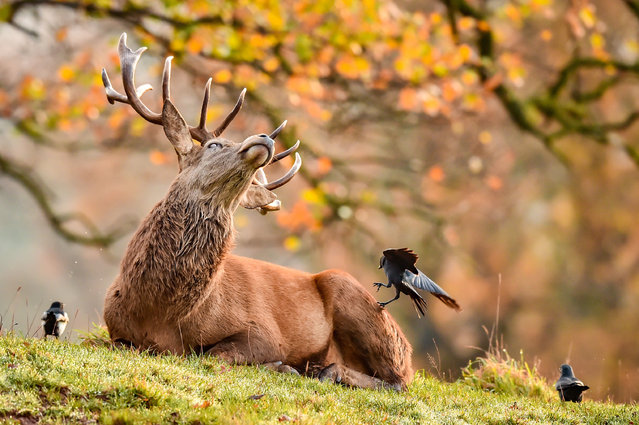
A stag reacts as magpies and crows fuss over a resting stag as they feed on ticks from the fur of the deer herd roaming on the Ashton Court Estate, Bristol, in crisp and cold Autumnal weather on November 23, 2020. (Photo by Ben Birchall/PA Images via Getty Images)

A stag reacts as magpies and crows fuss over a resting stag as they feed on ticks from the fur of the deer herd roaming on the Ashton Court Estate, Bristol, in crisp and cold Autumnal weather on November 23, 2020. (Photo by Ben Birchall/PA Images via Getty Images)
Details
29 Nov 2020 00:03:00
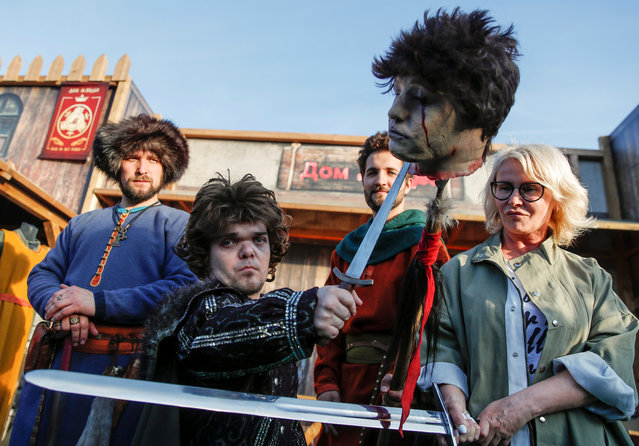
An actor dressed as Tyrion Lannister, poses for photographers with fake severed head before the screening of final episode of “Game of Thrones” on 20-meter-high screen at RZD Arena in Moscow, Russia on May 20, 2019. (Photo by Maxim Shemetov/Reuters)

An actor dressed as Tyrion Lannister, poses for photographers with fake severed head before the screening of final episode of “Game of Thrones” on 20-meter-high screen at RZD Arena in Moscow, Russia on May 20, 2019. (Photo by Maxim Shemetov/Reuters)
Details
03 Jan 2020 00:05:00
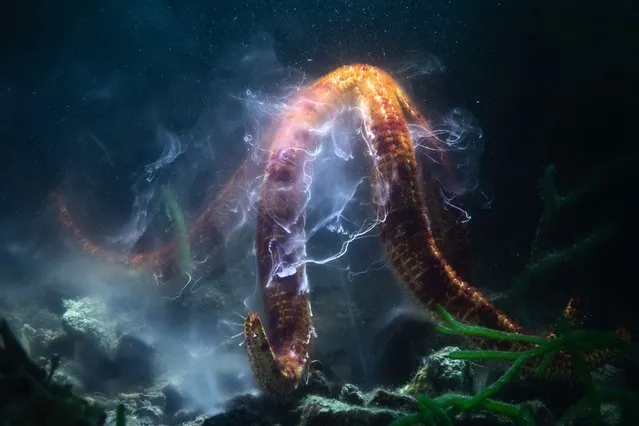
Shooting star by Tony Wu, US/Japan. Winner, underwater. The electrifying reproductive dance of a giant sea star. As the surrounding water filled with sperm and eggs from spawning sea stars, Wu faced several challenges. Stuck in a small, enclosed bay with only a macro lens for photographing small subjects, he backed up to squeeze the undulating sea star into his field of view. The dancing posture of spawning sea stars rising and swaying may help release eggs and sperm, or may help sweep the eggs and sperm into the currents where they fertilise together in the water. Kinko Bay, Japan. (Photo by Tony Wu/Wildlife Photographer of the Year)

Shooting star by Tony Wu, US/Japan. Winner, underwater. The electrifying reproductive dance of a giant sea star. As the surrounding water filled with sperm and eggs from spawning sea stars, Wu faced several challenges. Stuck in a small, enclosed bay with only a macro lens for photographing small subjects, he backed up to squeeze the undulating sea star into his field of view. The dancing posture of spawning sea stars rising and swaying may help release eggs and sperm, or may help sweep the eggs and sperm into the currents where they fertilise together in the water. Kinko Bay, Japan. (Photo by Tony Wu/Wildlife Photographer of the Year)
Details
15 Oct 2022 03:50:00
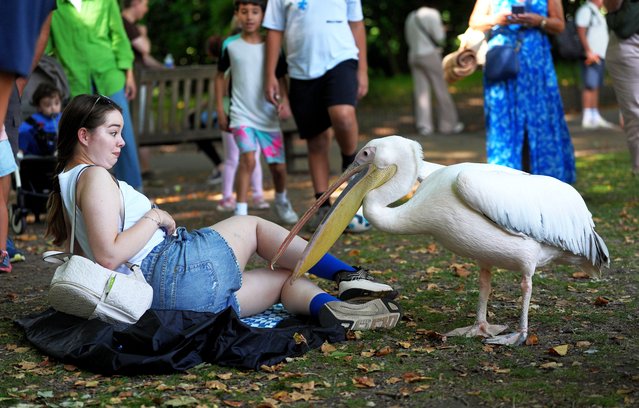
A Pelican attempts to take a persons belongings while they are sat in St James' Park, London on Monday, August 11, 2025. Temperatures will soar above 30°C in parts of the UK in the coming days, with another heatwave possible in some areas. (Photo by Yui Mok/PA Images via Getty Images)

A Pelican attempts to take a persons belongings while they are sat in St James' Park, London on Monday, August 11, 2025. Temperatures will soar above 30°C in parts of the UK in the coming days, with another heatwave possible in some areas. (Photo by Yui Mok/PA Images via Getty Images)
Details
17 Aug 2025 02:47:00
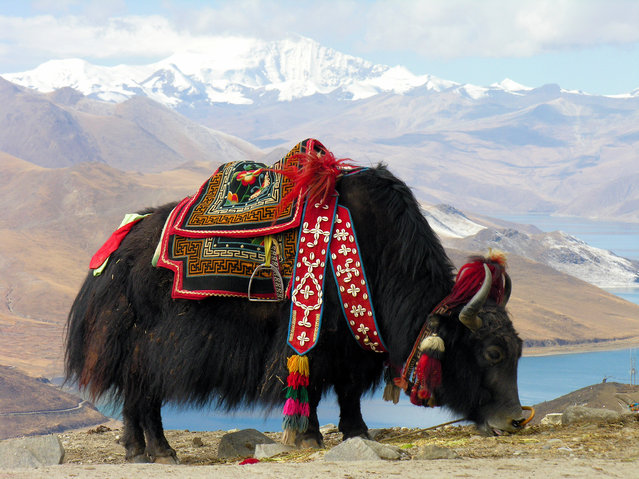
Yak near Yamdrok lake, Tibet. It is a long-haired bovinae found throughout the Himalayan region of south Central Asia, the Tibetan Plateau and as far north as Mongolia and Russia. The Tibetan economy is dominated by subsistence agriculture. Due to limited arable land, the primary occupation of the Tibetan Plateau is raising livestock, such as sheep, cattle, goats, camels, yaks, dzo, and horses. The Tibetan yak is an integral part of Tibetan life. (Photo by Dennis Jarvis)

Yak near Yamdrok lake, Tibet. It is a long-haired bovinae found throughout the Himalayan region of south Central Asia, the Tibetan Plateau and as far north as Mongolia and Russia. The Tibetan economy is dominated by subsistence agriculture. Due to limited arable land, the primary occupation of the Tibetan Plateau is raising livestock, such as sheep, cattle, goats, camels, yaks, dzo, and horses. The Tibetan yak is an integral part of Tibetan life. (Photo by Dennis Jarvis)
Details
10 Jun 2015 10:48:00
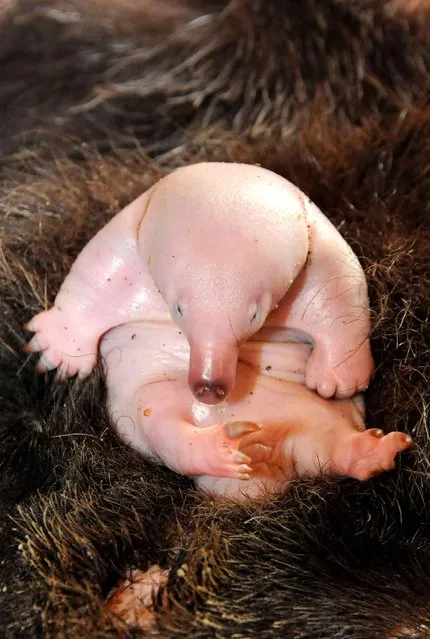
It's a 30-day-old Echidna baby, known as a “puggle” – one of only 24 ever bred in captivity. The proud parents are Tippy and Pickle of Australia Zoo. The tiny baby, whose s*x has not yet been identified, hatched from a soft egg and will continue to develop and nurse inside Tippy's warm pouch. (Photo by Australia Zoo/Rex/Sipa Press)

It's a 30-day-old Echidna baby, known as a “puggle” – one of only 24 ever bred in captivity. The proud parents are Tippy and Pickle of Australia Zoo. The tiny baby, whose s*x has not yet been identified, hatched from a soft egg and will continue to develop and nurse inside Tippy's warm pouch. (Photo by Australia Zoo/Rex/Sipa Press)
Details
21 Sep 2013 10:30:00
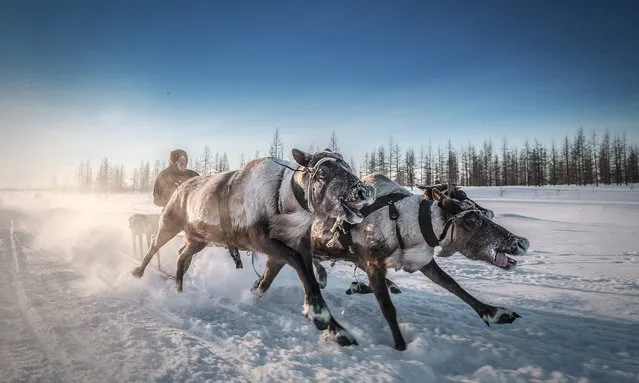
Take me away, deer, Russia. The Nenet people of Arctic Russia use reindeer and sledges as a prime mode of transport. The animals’ navigational ability means that in severe conditions they are sometimes the only hope of survival. (Photo by Kamil Nureev/Smithsonian Photo Contest)

Take me away, deer, Russia. The Nenet people of Arctic Russia use reindeer and sledges as a prime mode of transport. The animals’ navigational ability means that in severe conditions they are sometimes the only hope of survival. (Photo by Kamil Nureev/Smithsonian Photo Contest)
Details
06 Mar 2017 00:05:00