A train attendant helps a passenger to adjust her seat at the business class carriage on a CRH 380A bullet train Thursday, June 16, 2011. (Photo by Reuters/China Daily)
Lawmakers from the main opposition Republican People's Party (CHP) and ruling AK Party (R) scuffle during a debate on a legislation to boost police powers, at the Turkish Parliament in Ankara, Turkey, February 19, 2015. (Photo by Reuters/Stringer)
A Muslim bride waits for the start of a mass marriage ceremony in Mumbai, India, January 27, 2016. A total of 12 Muslim couples took their wedding vows during the mass marriage ceremony organised by a Muslim voluntary organisation, organisers said. (Photo by Danish Siddiqui/Reuters)
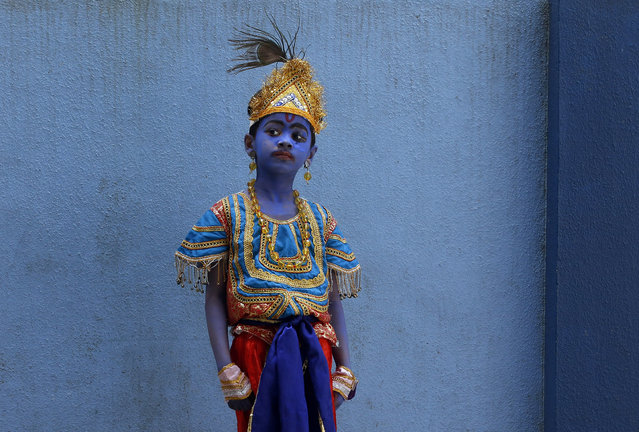
A boy dressed like Hindu Lord Krishna waits to attend celebrations on the eve of Janmashtami at a school in Mumbai, India, Friday, September 4, 2015. The day marks the birth of Krishna. (Photo by Rajanish Kakade/AP Photo)
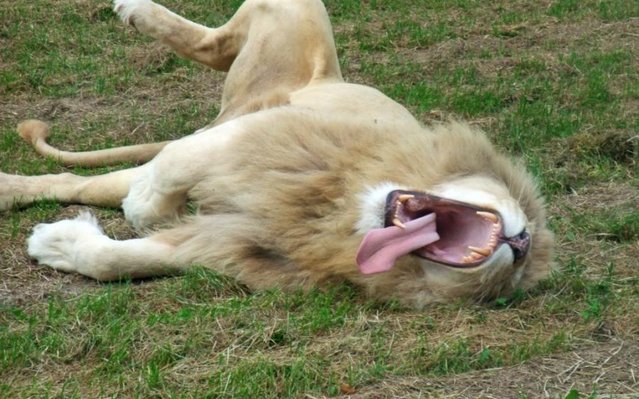
In animals, yawning can serve as a warning signal. For example, Charles Darwin, in his book The Expression of the Emotions in Man and Animals, mentioned that baboons yawn to threaten their enemies, possibly by displaying large canine teeth. Similarly, Siamese fighting fish yawn only when they see a conspecific (same species) or their own mirror-image, and their yawn often accompanies aggressive attack. Guinea pigs also yawn in a display of dominance or anger, displaying their impressive incisor teeth. This is often accompanied by teeth chattering, purring and scent marking.
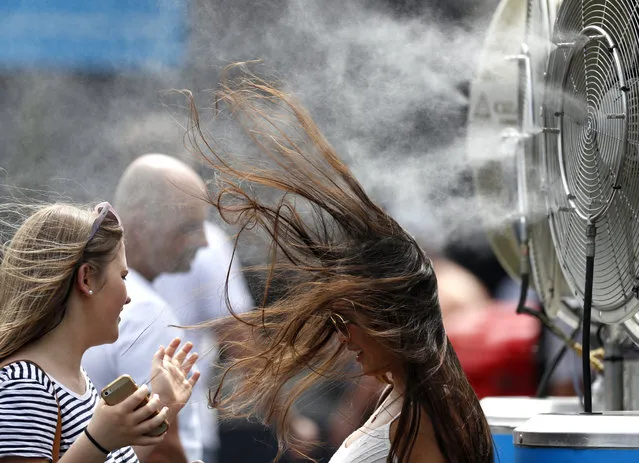
A spectator cools herself at a water spraying fan at the Australian Open tennis championships in Melbourne, Australia, Tuesday, January 17, 2017. (Photo by Kin Cheung/AP Photo)