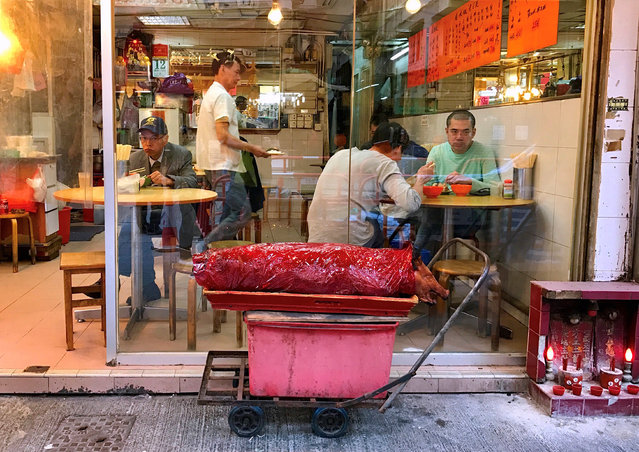
CHINA: Customers eat at a restaurant as a cooked pig sits on a cart on the street outside in Hong Kong, China, December 12, 2016. (Photo by David Gray/Reuters)
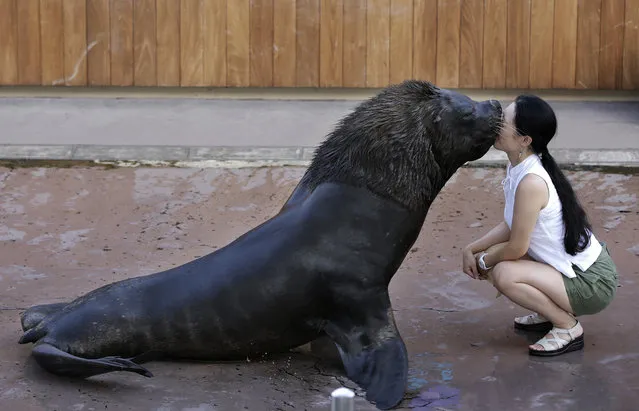
A walrus kisses a visitor during a sea animal show at the Hakkeijima Sea Paradise aquarium-amusement park complex in Yokohama, southwest of Tokyo, Monday, September 11, 2017. (Photo by Shizuo Kambayashi/AP Photo)
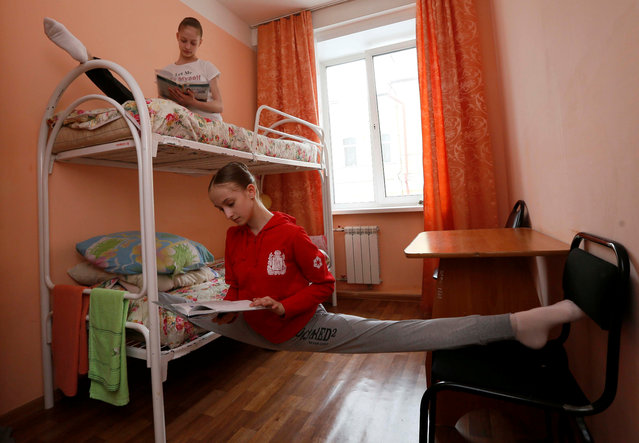
Students of the Krasnoyarsk choreographic college Anastasia Shevtsova (R) and Yulia Lyakhovykh do leg-splits as they study for an exam and a performance by the graduates at the State Theatre of Opera and Ballet, at the college's campus in the Siberian city of Krasnoyarsk, Russia, May 4, 2017. (Photo by Ilya Naymushin/Reuters)
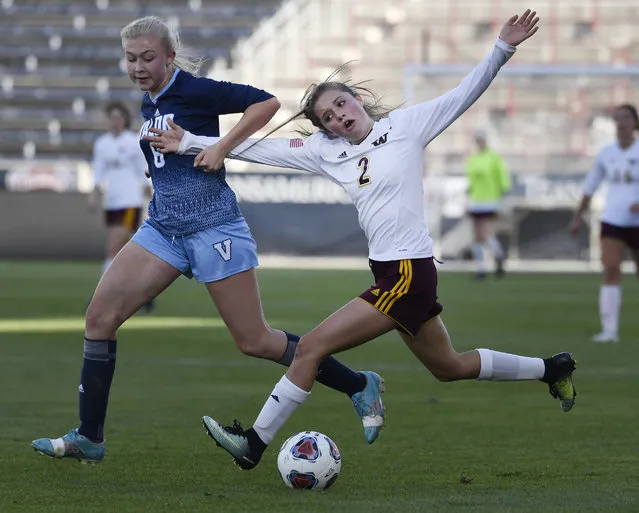
Emma Sees, Valor Christian, #6, accidentally grabs Windsor's Alexa Kopren's hair while both were chasing after the ball in the second half of the Colorado State girls 4A soccer championship at Dick's Sporting Goods Park May 23, 2018. (Photo by Andy Cross/The Denver Post)
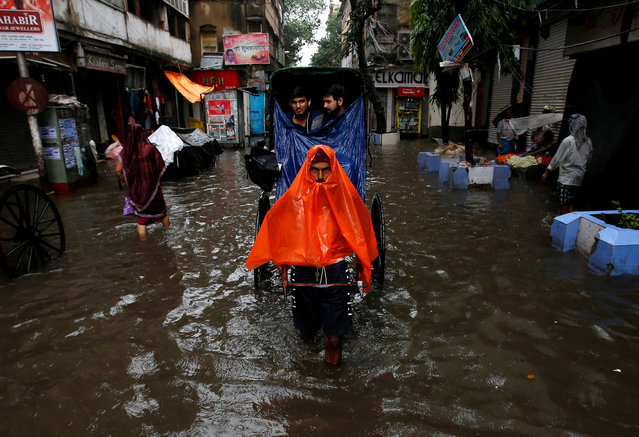
A rickshaw puller transports passengers through a water-logged street after heavy rain in Kolkata, India on June 26, 2018. (Photo by Rupak De Chowdhuri/Reuters)
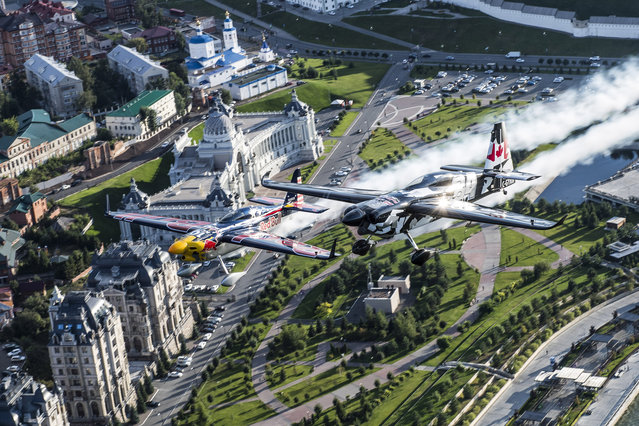
A handout photo made available by Limex Images of Pete McLeod of Canada (R) and Kirby Chambliss of the United States flying over the city of Kazan prior to the fifth stage of the Red Bull Air Race World Championship in Russia on August 22, 2018. (Photo by Joerg Mitter/EPA/EFE/Limex Images)
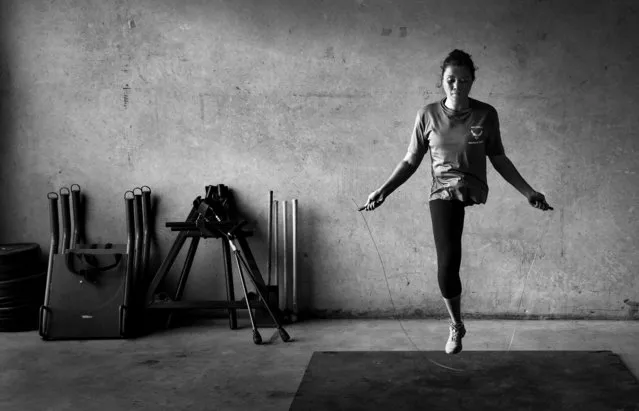
U.S. Air Force wounded warrior, Capt. Sarah Evans, jumps rope in a gym in San Antonio, Texas. Evans was diagnosed with cancer while deployed to Afghanistan and was medically evacuated back to the United States where her leg was amputated. (Photo by Master Sgt. Jeffrey Allen/U.S. Air Force)