Loading...
Done
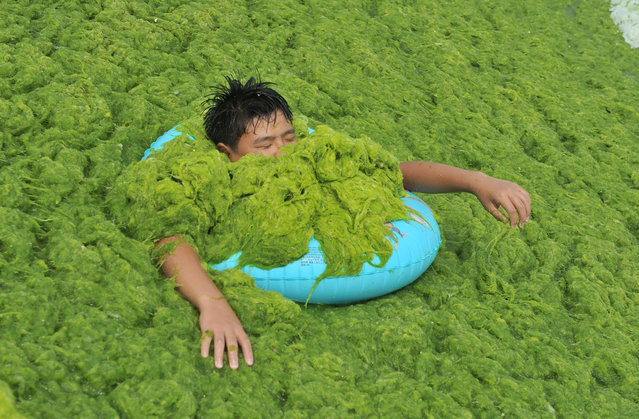
A man lies in the sea grass at a beach on July 18, 2016 in Qingdao, Shandong Province of China. The enteromorpha prolifera spread on the beaches in Qingdao and were under clearing. (Photo by VCG/VCG via Getty Images)

A man lies in the sea grass at a beach on July 18, 2016 in Qingdao, Shandong Province of China. The enteromorpha prolifera spread on the beaches in Qingdao and were under clearing. (Photo by VCG/VCG via Getty Images)
Details
20 Jul 2016 10:23:00
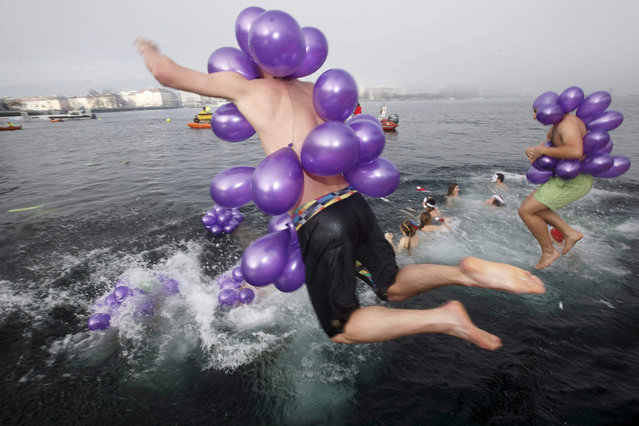
Participants of the 77th edition of the annual Christmas swimming 'Coupe de Noel' jump into the waters of Lake Geneva, in Geneva, Switzerland, 20 December 2015. More than 1,540 men and women braved the water temperature of just 8 degrees Celsius as they swam a 120 meters distance at the traditional Christmas swimming in Geneva. (Photo by Salvatore Di Nolfi/EPA)

Participants of the 77th edition of the annual Christmas swimming 'Coupe de Noel' jump into the waters of Lake Geneva, in Geneva, Switzerland, 20 December 2015. More than 1,540 men and women braved the water temperature of just 8 degrees Celsius as they swam a 120 meters distance at the traditional Christmas swimming in Geneva. (Photo by Salvatore Di Nolfi/EPA)
Details
21 Dec 2015 11:27:00
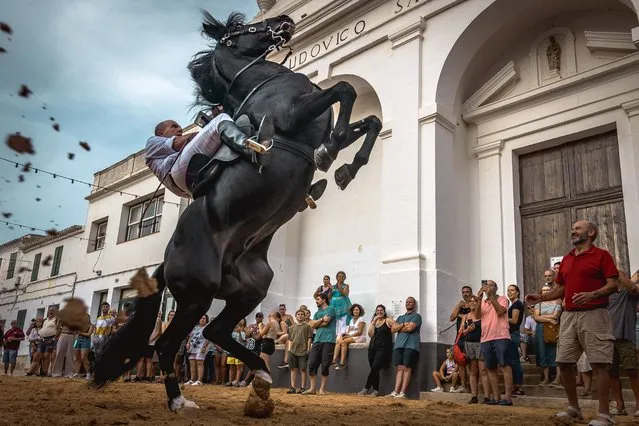
A “caixer” (horse rider) rears up on his horse during the traditional “Jaleo” at the Sant Lluiset Festival in Sant Lluis, Spain on September 3, 2022. (Photo by Matthias Oesterle/Rex Features/Shutterstock)

A “caixer” (horse rider) rears up on his horse during the traditional “Jaleo” at the Sant Lluiset Festival in Sant Lluis, Spain on September 3, 2022. (Photo by Matthias Oesterle/Rex Features/Shutterstock)
Details
03 Dec 2023 03:28:00
Actor Candis Cayne performs at John Varvatos + OUT Support the Gay Men's Chorus of LA on September 29, 2016 in Los Angeles, California. (Photo by Matt Winkelmeyer/Getty Images for John Varvatos)

Actor Candis Cayne performs at John Varvatos + OUT Support the Gay Men's Chorus of LA on September 29, 2016 in Los Angeles, California. (Photo by Matt Winkelmeyer/Getty Images for John Varvatos)
Details
01 Oct 2016 11:34:00
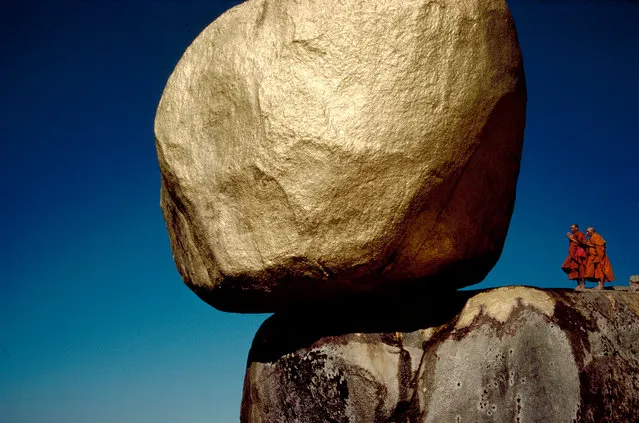
Kyaiktiyo, Burma, 1978. The Golden Rock at Shwe Pyi Daw (the Golden Country), the Buddhist holy place. Hiroji Kubota writes: “I was desperate to keep a distance from America for a while; luckily, I found Burma and its gentle and compassionate people. In the spring of 1978, on the top of the hill where I took this photo, I had two Leica bodies: the one with Tri-X and the other with Kodachrome 64. Soon after, I realised that the colour one looked very colourful and was more powerful. That was my decisive moment, to become a colour photographer”. (Photo by Hiroji Kubota/Magnum Photos)

Kyaiktiyo, Burma, 1978. The Golden Rock at Shwe Pyi Daw (the Golden Country), the Buddhist holy place. Hiroji Kubota writes: “I was desperate to keep a distance from America for a while; luckily, I found Burma and its gentle and compassionate people. In the spring of 1978, on the top of the hill where I took this photo, I had two Leica bodies: the one with Tri-X and the other with Kodachrome 64. Soon after, I realised that the colour one looked very colourful and was more powerful. That was my decisive moment, to become a colour photographer”. (Photo by Hiroji Kubota/Magnum Photos)
Details
10 Jun 2016 13:30:00
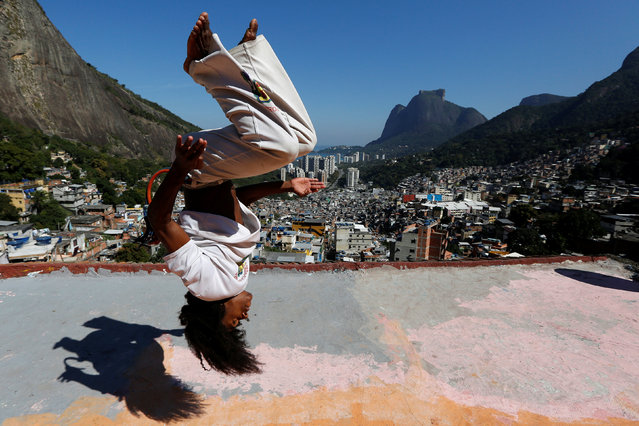
A member of the Acorda Capoeira (Awaken Capoeira) group performs on a rooftop in the Rocinha favela in Rio de Janeiro, Brazil, July 24, 2016. (Photo by Bruno Kelly/Reuters)

A member of the Acorda Capoeira (Awaken Capoeira) group performs on a rooftop in the Rocinha favela in Rio de Janeiro, Brazil, July 24, 2016. In a favela with a history of violence between police and drug gangs, or armed battles between traffickers themselves, capoeira is an outlet that gives kids a sense of community – its practice a collective exercise blending characteristics of drum circles, sparring and tag-team gymnastics. (Photo by Bruno Kelly/Reuters)
Details
30 Jul 2016 11:11:00
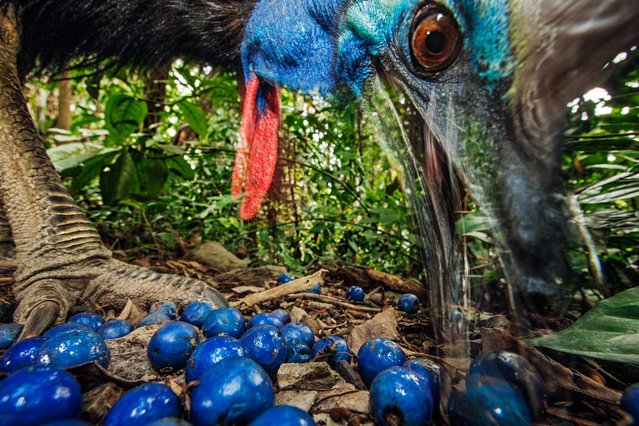
“Cassowaries are large, flightless birds related to emus and (more distantly) to ostriches, rheas, and kiwis”, writes Olivia Judson in the September issue of National Geographic magazine. (Photo by Christian Ziegler/National Geographic)

“Cassowaries are large, flightless birds related to emus and (more distantly) to ostriches, rheas, and kiwis”, writes Olivia Judson in the September issue of National Geographic magazine. How large? People-size: Adult males stand well over five foot five and top 110 pounds. Females are even taller, and can weigh more than 160 pounds. Dangerous when roused, they’re shy and peaceable when left alone. But even birds this big and tough are prey to habitat loss. The dense New Guinea and Australia rain forests where they live have dwindled. Today cassowaries might number 1,500 to 2,000. And because they help shape those same forests – by moving seeds from one place to another – “if they vanish”, Judson writes, “the structure of the forest would gradually change” too. (Photo by Christian Ziegler/National Geographic)

Details
06 Jan 2014 12:21:00
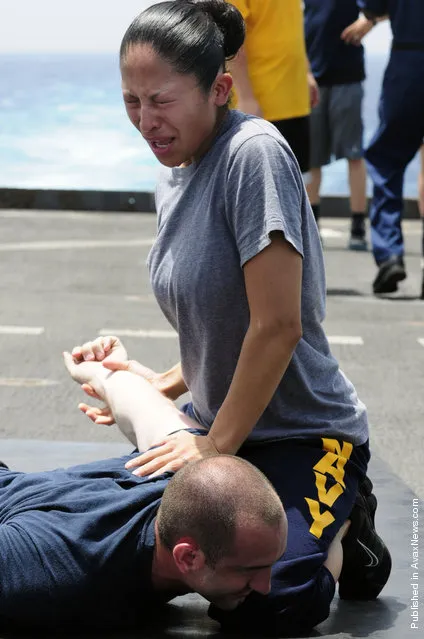
Culinary Specialist 2nd Class Jaqueline Rodriguez subdues a simulated suspect after being sprayed with oleoresin capsicum (OC) spray during security training aboard the amphibious dock landing ship USS Comstock (LSD 45)

Culinary Specialist 2nd Class Jaqueline Rodriguez subdues a simulated suspect after being sprayed with oleoresin capsicum (OC) spray during security training aboard the amphibious dock landing ship USS Comstock (LSD 45). (U.S. Navy photo by Mass Communication Specialist 2nd Class Joseph M. Buliavac/Released). May 10, 2011
Details
10 Apr 2012 14:56:00