Loading...
Done
In this Sunday, September 23, 2012 file photo, masked and armed Somali pirate Hassan stands near a Taiwanese fishing vessel washed ashore after the pirates were paid a ransom and the crew were released in the once-bustling pirate den of Hobyo, Somalia. Pirates have hijacked an oil tanker off the coast of Somalia, Somali officials and piracy experts said Tuesday, March 14, 2017, in the first hijacking of a large commercial vessel there since 2012. (Photo by Farah Abdi Warsameh/AP Photo)

In this Sunday, September 23, 2012 file photo, masked and armed Somali pirate Hassan stands near a Taiwanese fishing vessel washed ashore after the pirates were paid a ransom and the crew were released in the once-bustling pirate den of Hobyo, Somalia. Pirates have hijacked an oil tanker off the coast of Somalia, Somali officials and piracy experts said Tuesday, March 14, 2017, in the first hijacking of a large commercial vessel there since 2012. (Photo by Farah Abdi Warsameh/AP Photo)
Details
19 Aug 2020 00:01:00
A one-and-a-half-month-old orphaned two-toed sloth clings a sloth plush toy at the Panamerican Conservation Association (APPC) during a conservation activity for International Sloth Day, in Panama City, Panama, on October 19, 2025. (Photo by Enea Lebrun/Reuters)

A one-and-a-half-month-old orphaned two-toed sloth clings a sloth plush toy at the Panamerican Conservation Association (APPC) during a conservation activity for International Sloth Day, in Panama City, Panama, on October 19, 2025. (Photo by Enea Lebrun/Reuters)
Details
26 Oct 2025 05:07:00
Hiroto Ishizawa of Japan falls while competing on the pommel horse during qualifications at the World Artistic Gymnastics Championships in Jakarta, Indonesia on October 19, 2025. (Photo by Ajeng Dinar Ulfiana/Reuters)

Hiroto Ishizawa of Japan falls while competing on the pommel horse during qualifications at the World Artistic Gymnastics Championships in Jakarta, Indonesia on October 19, 2025. (Photo by Ajeng Dinar Ulfiana/Reuters)
Details
29 Oct 2025 03:55:00
Coca growers chew coca leaves during a celebration for the reincorporation of Bolivia to the UN Convention Against Illicit Traffic in Narcotic Drugs in La Paz on January 14, 2013. "The coca leaf is not any more seen as cocaine (..), it is a victory of our identity" said Bolivian President Evo Morales. AFP PHOTO/Jorge Bernal        (Photo credit should read JORGE BERNAL/AFP/Getty Images)

Coca growers chew coca leaves during a celebration for the reincorporation of Bolivia to the UN Convention Against Illicit Traffic in Narcotic Drugs in La Paz on January 14, 2013. “The coca leaf is not any more seen as cocaine (...), it is a victory of our identity” said Bolivian President Evo Morales. (Photo by Jorge Bernal/AFP Photo)
Details
15 Jan 2013 10:16:00
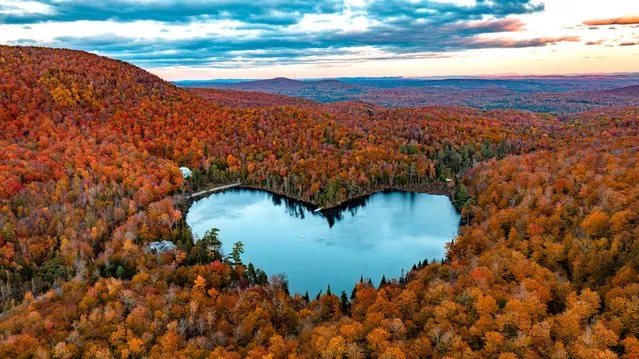
In this aerial image, Baker Lake is surrounded by Fall colors on October 8, 2022 near East Bolton, Quebec, Canada. (Photo by Sébastien St-Jean/AFP Photo)

In this aerial image, Baker Lake is surrounded by Fall colors on October 8, 2022 near East Bolton, Quebec, Canada. (Photo by Sébastien St-Jean/AFP Photo)
Details
22 Nov 2022 05:08:00
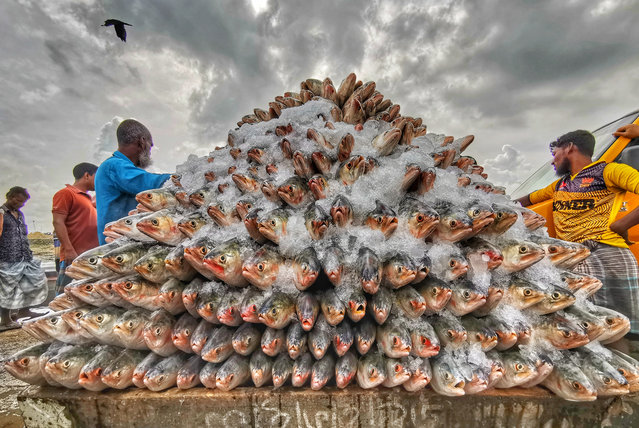
On the phone – Fishes of Hilsa by Azim Khan Ronnie. (Photo by Azim Khan Ronnie/Pink Lady Food Photographer Award 2020)

A selection of winning images from the Pink Lady food photographer of the year awards. Here: On the phone – Fishes of Hilsa by Azim Khan Ronnie. (Photo by Azim Khan Ronnie/Pink Lady Food Photographer Award 2020)
Details
03 May 2020 00:03:00
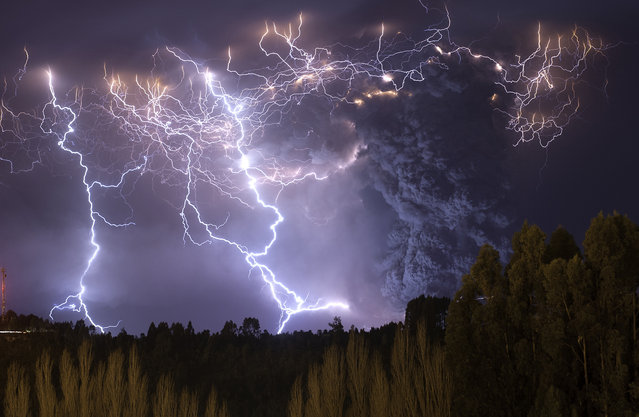
The eruption of Cordon Caulle began on June 4, 2011, located in the Region of Los Rios in Chile. For about 12 months, people and animals became accustomed to living with the daily fall of ash, which also caused problems in the air traffic in South America. The explosions and lightning during first days of the eruption could be seen from hundreds of miles around. This photograph was taken on the second night of eruption from the town of Lago Ranco. (Photo and caption by Francisco Negroni/National Geographic Traveler Photo Contest)

The eruption of Cordon Caulle began on June 4, 2011, located in the Region of Los Rios in Chile. For about 12 months, people and animals became accustomed to living with the daily fall of ash, which also caused problems in the air traffic in South America. The explosions and lightning during first days of the eruption could be seen from hundreds of miles around. This photograph was taken on the second night of eruption from the town of Lago Ranco. (Photo and caption by Francisco Negroni/National Geographic Traveler Photo Contest)

ATTENTION! All pictures are presented in high resolution. To see Hi-Res images – just TWICE click on any picture. In other words, click small picture – opens the BIG picture. Click BIG picture – opens VERY BIG picture.
Details
23 Jun 2013 11:24:00
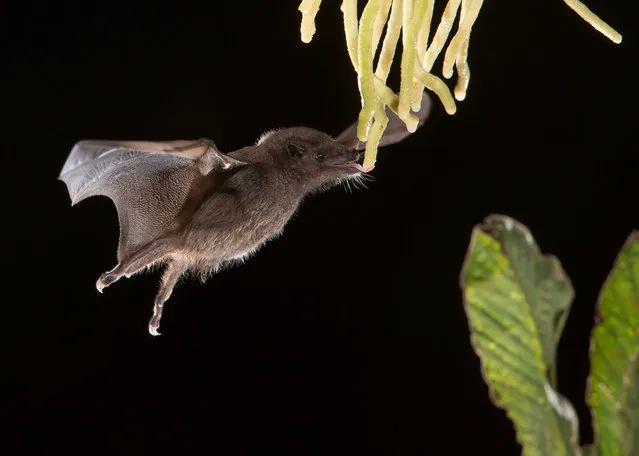
Anoura Geoffroy’s tailless bat by Nicolas Reusens. The Perfect Moment category; Adult runner up. (Photo by Nicolas Reusens/ZSL Animal Photography Prize 2015)

Attracting more than 450 entries from around the world, the winners are selected by a panel of expert judges including ZSL honorary conservation fellow and television presenter Kate Humble, and renowned ornithologist Bill Oddie. Here: Anoura Geoffroy’s tailless bat by Nicolas Reusens. The Perfect Moment category; Adult runner up. (Photo by Nicolas Reusens/ZSL Animal Photography Prize 2015)
Details
22 Nov 2015 08:04:00