Content creator & Founder of Shop ARL, Amanda Rach Lee hosted the brand’s first New York City Pop-Up At Shopify NY in the last decade of January 2025. (Photo by Steve Alicea)
“Grit and Glamour”, a retrospective of the late British photographer Elsbeth Juda, who fled Nazi occupation and came to England in 1933, is at the Jewish Museum, in London, until July 1, 2018. Here: Shelagh Wilson, Copacabana beach, Rio de Janeiro, 1951. (Photo by Elsbeth Juda Archive/Victoria and Albert Museum)
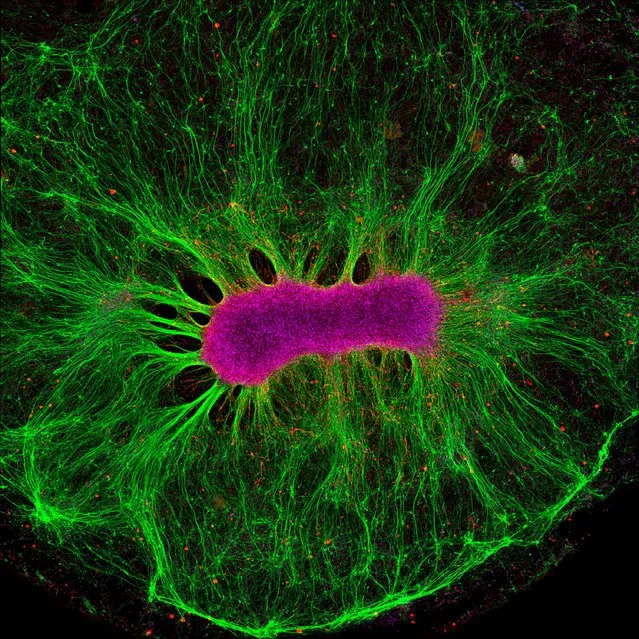
Brain-on-a-chip. Dazzling in green and magenta this image shows the nerve fibres (in green) produced by neural stem cells (in magenta) as they grow on a synthetic gel. Captured by a technique known as confocal microscopy, the image is part of research shedding light on how tinkering with the environment can affect the way in which nerve fibres grow. (Photo by Collin Edington and Iris Lee/Massachusetts Institute of Technology/Wellcome Images)
A man lays in front of a tank in the entrance to Istanbul's Ataturk airport, early Saturday, July 16, 2016. Members of Turkey's armed forces said they had taken control of the country, but Turkish officials said the coup attempt had been repelled early Saturday morning in a night of violence, according to state-run media. (Photo by Ismail Coskun/IHA via AP Photo)
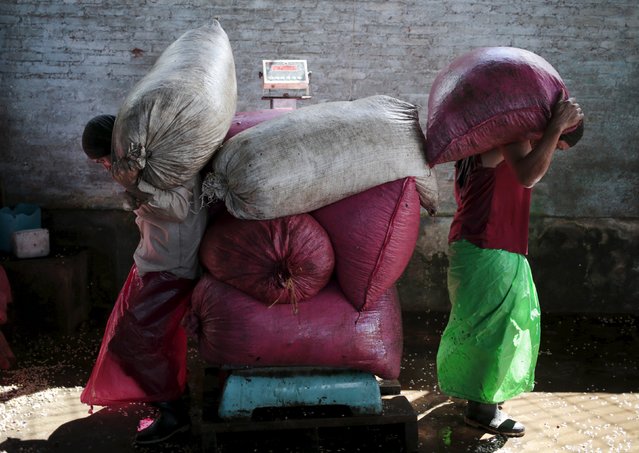
Workers carry sacks of coffee beans at a warehouse at the Nogales farm in Jinotega, Nicaragua January 7, 2016. Soaring temperatures in Central America due to climate change are forcing farmers to pull up coffee trees and replace them with cocoa, spurring a revival in the cultivation of a crop once so essential to the region's economy. (Photo by Oswaldo Rivas/Reuters)
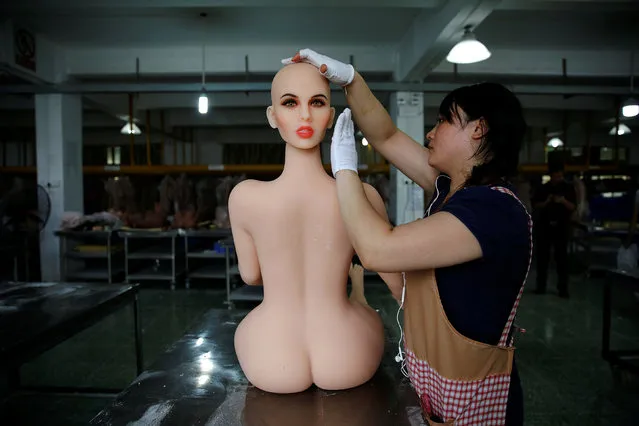
A worker assembles a sеx doll at the WMDOLL factory in Zhongshan, Guangdong Province, China, July 11, 2018. The factory has over 200 full-time workers, all dolls are handmade and each requires the cooperation of at least five workers. (Photo by Aly Song/Reuters)
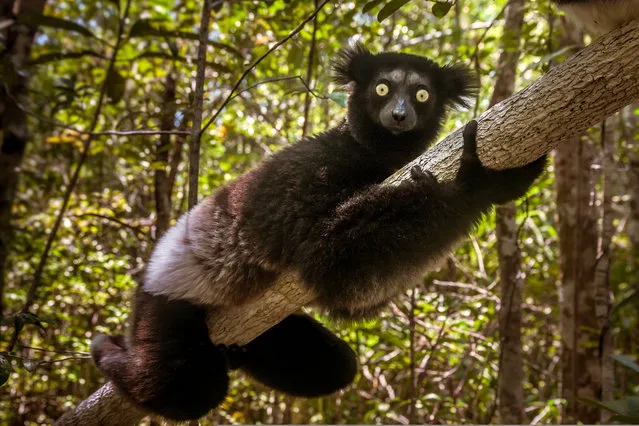
The secretive indri (Indri indri) of Madagascar, the largest living lemur. It is also critically endangered and highly evolutionarily distinct with no close relatives, which makes its branch one of most precarious on the mammal evolutionary tree. In the likely event that the indri goes extinct, we will lose 19m years of unique evolutionary history from the mammal tree of life. (Photo by Pierre-Yves Babelon/Aarhus University)